
 Previzualizare
 Trimite
 Distribuie
 Detalii despre lucrare

 Descarcă
 Produse similare
 Radiografie
 Diapozitive automate
Untitled (19)


 Vezi mai mult
Achiziționați o imagine digitală de înaltă rezoluție, îmbunătățită, mult superioară previzualizării online.
Fiecare fișier este pregătit cu meticulozitate de specialiștii noștri interni, utilizând instrumente avansate și retușare manuală expertă. Ne asigurăm că fiecare imagine beneficiază de o claritate excepțională, o acuratețe precisă a culorilor și detalii fine.
Fișierul final este livrat prin e-mail în termen de 72 de ore, optimizat pentru utilizare imediată în medii profesionale, editoriale și de imprimare. Aceasta este aceeași calitate în care au încredere studiouri de design, edituri și galerii de top.
Imagine Digitală
Descărcați un fișier la rezoluție înaltă pentru afișare personală, imprimare și proiecte creative. ( Comandă printul Comandă pictură lucrată manual)
Inclus în fiecare comandă de imagini digitale
Livrare digitală de expertiză, garantată
Când alegeți OriginalUniqueArt.com, nu primiți doar o simplă imagine – primiți o operă de artă digitală îmbunătățită profesional, creată cu precizie și susținută de o garanție de satisfacție. Iată tot ceea ce primești odată cu comanda ta, în mod automat:

Livrare rapidă prin e-mail
Fișierul imaginii digitale la rezoluție înaltă vă va fi trimis prin e-mail în termen de 72 de ore de la finalizarea comenzii – gata pentru utilizare imediată.

Fișier digital optimizat prin IA
Opera ta de artă este optimizată profesional prin intermediul unor instrumente AI avansate și al editării manuale, asigurând un nivel maxim de detalii, claritate și acuratețe a culorilor.

Retransmitere gratuită pe viață
Ai șters sau ai pierdut din greșeală fișierul? Nu îți face griji – ți-l vom retrimite oricând, gratuit.

Fără taxe de import – Întotdeauna
Bucură-te instant de noua ta operă de artă, fără taxe vamale, taxe de import sau costuri de livrare – descărcările digitale sunt întotdeauna fără taxe.

Garanția acurateții culorilor
Asigurăm o reflectare cât mai fidelă a culorilor originale în imaginea ta digitală, prin utilizarea unor instrumente profesionale și a proceselor de gestionare a culorii.

Garanție de satisfacție de 60 de zile
Dacă nu sunteți mulțumit de imaginea digitală achiziționată, o vom revizui sau vă vom returna 100% în termen de 60 de zile – fără nicio explicație necesară.

Garanție de returnare 100% a banilor
Nu ești mulțumit? Obține o rambursare completă în termen de 60 de zile de la primirea fișierului tău digital – fără întrebări.

Reduceri pentru comenzi în volum
Cumpără 3 imagini, economisește 10% - Cumpără 5, economisește 15% - Cumpără 10+, economisește 20%. Ideal pentru proiecte creative, galerii și agenții.
Descriere obiect de colecție
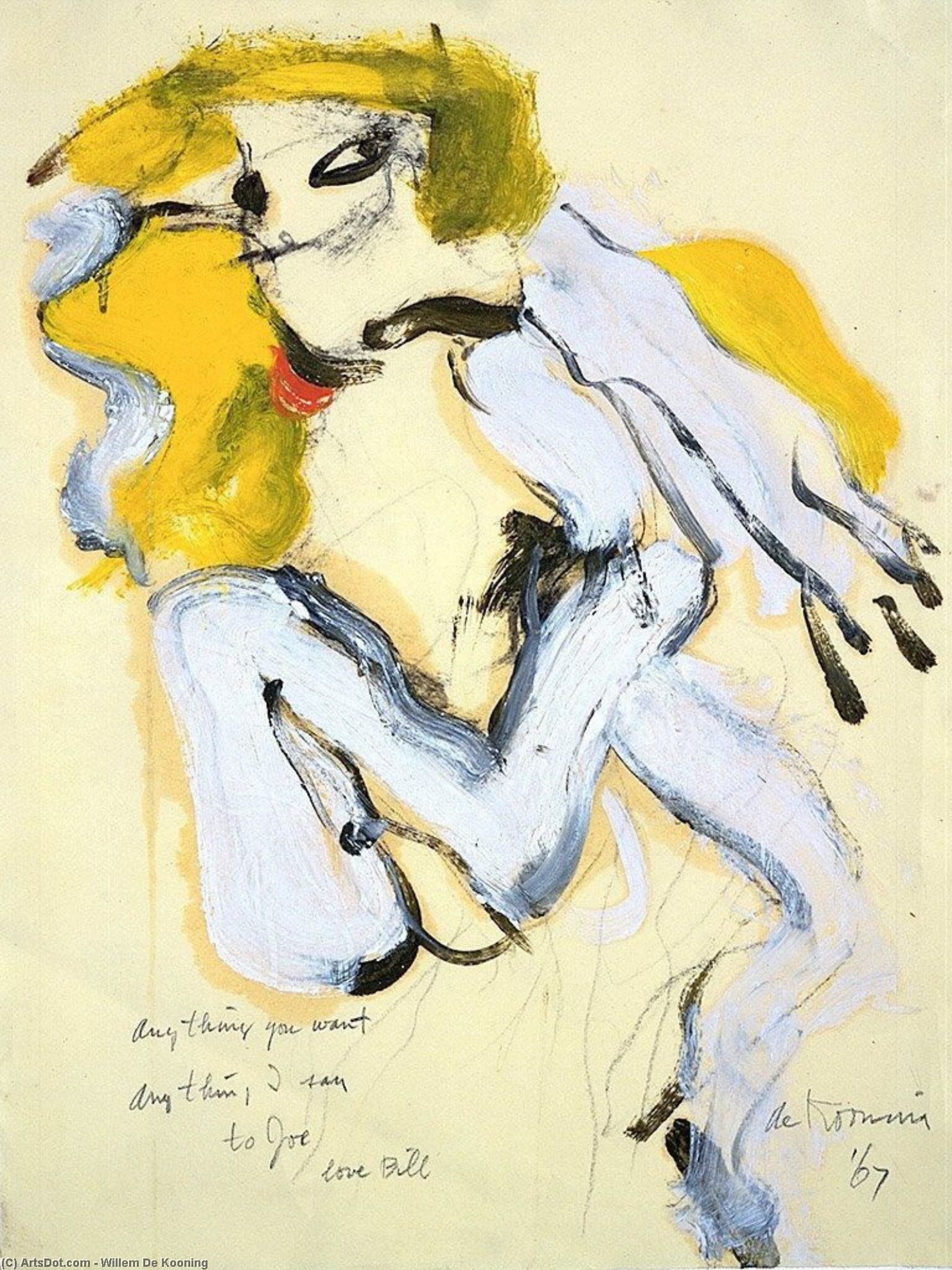
A Vision of Turbulent Emotion: Willem de Kooning’s Untitled (19)
Willem de Kooning's "Untitled (19)" stands as a monumental testament to the fervor and dynamism of Abstract Expressionism, capturing a moment frozen in time—a visceral reaction to the anxieties and uncertainties of the mid-1960s. This large canvas embodies De Kooning’s signature approach: bold brushstrokes, fractured planes, and an unapologetic exploration of raw emotion, resulting in an artwork that continues to provoke contemplation and admiration decades after its creation. The painting depicts a woman—a recurring motif in De Kooning's oeuvre—rendered in striking hues of yellow and white against a textured background. Her posture exudes vulnerability yet defiance, arms outstretched as if embracing another figure whose form remains obscured, adding layers of ambiguity to the composition.Style and Technique: Embracing Gestural Freedom
De Kooning’s technique is characterized by an almost violent physicality—a deliberate rejection of academic precision in favor of spontaneous gesture. Thick impasto paint application dominates the surface, creating ridges and valleys that convey a palpable sense of movement and energy. The artist eschewed meticulous blending, preferring instead to build up color through successive layers of brushstrokes, resulting in a textured surface that vibrates with visual intensity. This approach aligns perfectly with the broader ethos of Abstract Expressionism, where artists sought to liberate painting from representational constraints and prioritize emotional expression above all else. It’s a technique rooted in Picasso's influence, specifically his Guernica, demonstrating De Kooning’s commitment to conveying profound psychological states through visual language.Historical Context: The Crucible of Artistic Innovation
“Untitled (19)” emerged during a period of significant upheaval and artistic experimentation—the Second Wave of Abstract Expressionism following the initial breakthroughs of Jackson Pollock and Mark Rothko. This movement represented a decisive break from European traditions, asserting American dominance in the art world and redefining notions of artistic creativity. The painting reflects the anxieties surrounding Cold War tensions and societal shifts, mirroring the turbulent emotional landscape of its time. De Kooning’s work engaged directly with these concerns, presenting an unflinching portrayal of human vulnerability amidst chaos—a powerful statement about the complexities of the human condition.Symbolism: Exploring Female Archetypes
The woman depicted in “Untitled (19)” is not merely a subject; she functions as a potent symbol representing feminine strength and resilience within a context of perceived instability. Recurring throughout De Kooning’s ‘Woman’ series, this figure embodies both vulnerability and defiance—a duality that speaks to the challenges faced by women navigating societal expectations during the era. The obscured form of the second figure adds another layer of interpretation, suggesting perhaps an unspoken connection or mirroring the woman's own internal struggles. Color plays a crucial role in conveying emotion; the dominant yellows evoke warmth and optimism alongside anxiety, while the whites represent purity and innocence juxtaposed against the darker undertones of the composition.Emotional Impact: A Window into De Kooning’s Soul
Ultimately, “Untitled (19)” transcends mere visual representation—it plunges viewers into a realm of raw emotion. The painting's unsettling dynamism compels contemplation, inviting us to confront uncomfortable truths about human experience. It is precisely this unflinching honesty that secures its place as one of De Kooning’s most enduring masterpieces and exemplifies the transformative power of Abstract Expressionism: an art form dedicated to capturing the essence of feeling rather than merely depicting the external world.Biografie artist
A Life Forged in Abstraction
Willem de Kooning, a name synonymous with the raw energy and emotional depth of Abstract Expressionism, was born in Rotterdam, Netherlands, in 1904. His early life was marked by a familial split – his parents divorced when he was young – which perhaps instilled within him a sense of restless searching that would permeate his artistic journey. Leaving formal schooling at twelve, de Kooning apprenticed with a commercial art firm, laying the groundwork for his technical skill while simultaneously fueling a desire to break free from conventional constraints. Evening classes at the Academie van Beeldende Kunsten en Technische Wetenschappen in Rotterdam provided further foundational training, but it was a yearning for something more – a bolder, more expressive language – that ultimately propelled him towards America in 1926. His arrival wasn’t straightforward; he famously stowed away on a ship, embodying the spirit of an outsider seeking new horizons. New York City became his adopted home, and its vibrant, often gritty energy profoundly shaped his evolving style. He navigated various jobs – house painter, carpenter – all while relentlessly pursuing his artistic vision, absorbing the city’s pulse into his work.From Urban Scenes to Abstract Fury
De Kooning's early paintings reflected his immediate surroundings: urban landscapes and portraits that captured the dynamism of New York life. These works, rendered in a realistic style, offered glimpses into the bustling streets and diverse faces of the burgeoning metropolis. However, these were merely stepping stones towards a more profound exploration of form and emotion. A pivotal moment came with his connection to Arshile Gorky, whose influence proved transformative. Gorky encouraged de Kooning’s experimentation with abstraction, fostering a willingness to dismantle traditional representation in pursuit of something deeper. De Kooning began to loosen his brushwork, simplifying forms, and introducing elements of distortion – techniques that would become hallmarks of his later style. The 1930s saw de Kooning engage with social realism and mural projects through the Works Progress Administration (WPA), a period that honed his skills but also highlighted the limitations of purely representational art. He found himself drawn to the work of Stuart Davis and John Graham, artists who were pushing boundaries in their own right, exploring new ways to capture movement and energy on canvas. This confluence of influences gradually steered him away from literal depiction and toward an increasingly abstract vocabulary. It wasn’t a sudden shift, but rather a slow burn – a deliberate dismantling of established norms fueled by intellectual curiosity and a relentless pursuit of artistic truth.The Woman Series: A Landmark Achievement
Following World War II, de Kooning emerged as a central figure in the burgeoning Abstract Expressionist movement. This period marked a turning point, culminating in his iconic “Woman” series (1950-1953). These paintings – including the monumental *Woman I*, *Woman II*, and *Woman III* – are not merely depictions of female figures; they are visceral explorations of femininity, sexuality, and the complexities of human emotion. Characterized by aggressive brushstrokes, fragmented forms, and a jarring juxtaposition of colors, the “Woman” series challenged conventional notions of beauty and representation. They were controversial, even shocking to some, but their power lay precisely in their refusal to conform. De Kooning wasn’t interested in creating idealized images; he sought to capture the raw, untamed essence of his subjects. The paintings are often unsettling, almost violent in their depiction, yet they possess a strange and compelling beauty. *Woman I*, in particular, became an emblem of the era's anxieties and uncertainties. Beyond the "Woman" series, works like *The Glazier* and *Excavation* further demonstrated his dynamic approach to painting, showcasing a masterful command of texture, color, and composition. He didn’t shy away from chaos or ambiguity; instead, he embraced them as integral components of his artistic language.Evolving Landscapes and Enduring Legacy
In the 1960s, de Kooning’s style underwent another significant evolution. While abstraction remained central to his work, landscape elements began to play a more prominent role, often rendered with a brighter palette and a looser, more fluid brushstroke. He continued to experiment relentlessly throughout his life, exploring different techniques and materials, never content to rest on his laurels. He moved away from the frenetic energy of the "Woman" series, embracing a more contemplative approach to painting. This period saw him returning to figurative work, but always with an abstract sensibility. De Kooning’s historical significance is undeniable. He helped establish New York City as a global center for art, challenging the dominance of European traditions and paving the way for future generations of artists. His work continues to inspire awe and provoke debate, reminding us of the power of abstraction to convey profound emotional truths. His influence can be seen in countless contemporary artists who continue to push the boundaries of painting. Willem de Kooning passed away in 1997, leaving behind a vast and influential body of work that stands as a testament to his unwavering commitment to artistic innovation and his enduring legacy as one of the most important American artists of the 20th century. His paintings remain powerful statements about the human condition.
Willem de Kooning
1904 - 1997 , Olanda
Detalii rapide
- Artistic Movement Or Style: Expresionism Abstract
- Artists Or Movements Influenced By This Artist: ['New York School']
- Artists Who Influenced This Artist:
- Arshile Gorky
- Stuart Davis
- John Graham
- Date Of Birth: 24 aprilie 1904
- Date Of Death: 19 martie 1997
- Full Name: Willem de Kooning
- Nationality: Nederlandez-American
- Notable Artworks:
- Woman I
- Marilyn Monroe
- Reclining Man (JFK)
- Excavation
- Place Of Birth: Rotterdam, Olanda

