

 Previzualizare
 Trimite prin felicitare
 Distribuie
 Detalii despre lucrare
 Ghid
Ghid

 Descarcă imaginea
 Produse similare
 Radiografie
 Galerie foto
 Q&A
Q&A Statistici
Saturday Night


 Vezi mai mult
Lucrarea de artă afișată pe această pagină este protejată de legile privind drepturile de autor, ceea ce înseamnă că nu putem crea sau vinde în mod legal o reproducere identică. Această protecție este garantată prin acorduri internaționale, precum Convenția de la Berna și de legile naționale, inclusiv cele prevăzute de Legea dreptului de autor din S.U.A. – Titlul 17. Toate drepturile rezervate. Orice reproducere neautorizată este interzisă.
Această metodă respectă pe deplin reglementările privind drepturile de autor, deoarece nu implică copierea sau duplicarea operei protejate. În schimb, este o reinterpretare creativă – o pictură nouă, influențată de original, dar care nu este identică cu acesta.
Giclée / Imprimare artistică
Printuri giclée sau pe canvas de calitate muzeală, cu proces de producție rapid și opțiuni flexibile de finisare. ( Comandă pictură realizată manual Comută pe Imagine Digitală)




P118B lei10

P118H lei10

P118W lei10

P438Z lei10

P508JH lei12

P508YH lei12

P805H lei10

P805Z lei10

P919BZ lei10

P919G lei10

P919XJ lei10

P959ZH lei10

P968JZ lei12

W106C lei8

W218G lei10

W218JH lei8

W218Y lei10

W307PJ lei10

W316G lei10

W316PJ lei8

W316Y lei10

W398PJ lei8

W4111J lei10

W500HY lei15

W500JH lei15

W692G lei12

W849H lei8

W940BG lei15

W953PJ lei8




Alegeți dintre dimensiunile noastre prestabilite, care respectă proporțiile originale ale operei de artă.

Introduceți lățimea și înălțimea necesare pentru a se potrivi ramei sau peretelui dumneavoastră. O printare poate fi doar tăiată, niciodată extinsă dincolo de dimensiunea imaginii originale, astfel încât o dimensiune cu o formă diferită va pierde o parte din imagine. Vă trimitem o simulare digitală pentru aprobare înainte de a imprima orice. Imaginea afișată pe această pagină nu prezintă tăierea reală — doar simularea arată acest lucru.
Livrare în întreaga lume () în 2 săptămâni, în loc de cele 4/5 săptămâni standard. (29 Octombrie)

Livrare expres gratuită la nivel mondial

Pânză de in de înaltă calitate

Asigurare completă pentru transport

Garanție de rambursare a taxelor vamale

Garanția fidelității culorilor

Politica de retur în 100 de zile (doar pentru defecte de fabricație)

Garanție de rambursare 100%

Ofertă pentru comenzi multiple
 Opțiunea cu sticlă este disponibilă doar pentru dimensiuni de sub 110 cm

Saturday Night
Giclée / Imprimare artistică
Dimensiune reproducere
-


Preț total calculat
lei 372
A Night of Raw Emotion: De Kooning’s ‘Saturday Night’
Willem de Kooning's *Saturday Night*, painted in 1956, is a powerful and visceral example of Abstract Expressionism at its most compelling. This isn’t a depiction of a leisurely evening; it’s an explosion of energy, anxiety, and the complexities of human experience rendered through dynamic brushwork and a bold color palette. The painting eschews traditional representation, instead immersing the viewer in a world of pure sensation and emotional intensity. It stands as a testament to de Kooning's ability to distill profound feelings into visual form—a feat that continues to resonate with audiences today.Deconstructing the Abstract Form
Unlike many abstract works that strive for serene contemplation, *Saturday Night* feels deliberately turbulent. There are no easily discernible figures or objects; rather, we encounter a swirling vortex of layered paint, fragmented shapes, and gestural lines. The composition is built upon overlapping planes and forms, creating a sense of depth and movement that draws the eye across the canvas. The absence of clear subject matter forces us to engage with the painting on a purely emotional level, responding to its energy and rhythm rather than attempting to decipher a narrative. This deliberate rejection of conventional artistic conventions was central to de Kooning’s contribution to the burgeoning Abstract Expressionist movement—a reaction against European dominance in the art world and an assertion of American artistic innovation.Technique & Materials: A Masterclass in Impasto
De Kooning’s masterful technique is central to the impact of *Saturday Night*. He employed a vigorous, almost violent application of oil paint, utilizing thick impasto – layers of paint so dense they create a tactile surface. Visible brushstrokes are not concealed but celebrated, becoming integral to the artwork's expressive power. This physicality emphasizes the act of painting itself, reminding us that this is a record of De Kooning’s physical and emotional engagement with his materials. The colors themselves seem to generate their own light, contributing to the painting’s overall vibrancy—a characteristic hallmark of Abstract Expressionism.Historical Context: Post-War Anxiety & Abstract Expressionism
*Saturday Night* emerged during a pivotal moment in art history – the height of the Abstract Expressionist movement in post-World War II America. This period was marked by a sense of existential anxiety and a rejection of traditional artistic conventions. Artists like De Kooning sought to express profound emotions and universal themes through non-representational forms. Abstract Expressionism represented a significant departure from established artistic traditions, establishing New York City as a new epicenter for artistic creativity and challenging viewers to reconsider their expectations of what art could achieve. The movement’s influence extended far beyond the canvas itself, shaping cultural attitudes and influencing subsequent generations of artists.Symbolism & Emotional Resonance
While *Saturday Night* lacks explicit symbolism in the conventional sense—no recognizable figures or allegorical references—the intensity of its colors – fiery reds, deep blues, and stark whites – can be interpreted as representing a range of powerful emotions: passion, aggression, loneliness, or perhaps even the chaotic energy of urban life. The painting’s title itself is intriguing; “Saturday Night” evokes images of social gatherings and revelry, yet the artwork conveys a sense of unease and internal conflict—a duality that mirrors the complexities of human experience. It's possible De Kooning intended to capture the darker undercurrents beneath the surface of seemingly carefree moments—a feat accomplished through his masterful manipulation of color and texture.Interior Design & Collecting Considerations
A reproduction of *Saturday Night* can serve as a striking focal point in any modern or contemporary interior. Its dynamic composition and bold colors demand attention, adding energy and sophistication to a space. The painting’s abstract nature allows it to complement a wide range of décor styles, from minimalist to eclectic. For collectors, owning a print of this iconic work is an opportunity to connect with one of the most influential artists of the 20th century and appreciate the enduring legacy of Abstract Expressionism—a movement that continues to inspire artists and captivate audiences worldwide.Întrebări și răspunsuri
Unde ar trebui expusă o reproducere a "Saturday Night" de Willem de Kooning?
Formatul (Format peisaj) și spațiul recomandat (Living Room) sunt cele două detalii de amplasare înregistrate pentru "Saturday Night" de Willem de Kooning.
Pot examina "Saturday Night" mai detaliat?
Pagina Raze X a operei "Saturday Night" de Willem de Kooning este un vizualizator interactiv care vă permite să parcurgeți onze straturi optice ale imaginii lucrării, inclusiv o perspectivă de tip radiografie.
Cum se îmbină suportul și mișcarea în "Saturday Night"?
"Saturday Night" de Willem de Kooning îmbină tehnica Ulei pe pânză cu stilul Abstract Expressionism. Tehnica și mișcarea definesc modul de execuție și estetica operei.
Biografie artist
A Life Forged in Abstraction
Willem de Kooning, a name synonymous with the raw energy and emotional depth of Abstract Expressionism, was born in Rotterdam, Netherlands, in 1904. His early life was marked by a familial split – his parents divorced when he was young – which perhaps instilled within him a sense of restless searching that would permeate his artistic journey. Leaving formal schooling at twelve, de Kooning apprenticed with a commercial art firm, laying the groundwork for his technical skill while simultaneously fueling a desire to break free from conventional constraints. Evening classes at the Academie van Beeldende Kunsten en Technische Wetenschappen in Rotterdam provided further foundational training, but it was a yearning for something more – a bolder, more expressive language – that ultimately propelled him towards America in 1926. His arrival wasn’t straightforward; he famously stowed away on a ship, embodying the spirit of an outsider seeking new horizons. New York City became his adopted home, and its vibrant, often gritty energy profoundly shaped his evolving style. He navigated various jobs – house painter, carpenter – all while relentlessly pursuing his artistic vision, absorbing the city’s pulse into his work.From Urban Scenes to Abstract Fury
De Kooning's early paintings reflected his immediate surroundings: urban landscapes and portraits that captured the dynamism of New York life. These works, rendered in a realistic style, offered glimpses into the bustling streets and diverse faces of the burgeoning metropolis. However, these were merely stepping stones towards a more profound exploration of form and emotion. A pivotal moment came with his connection to Arshile Gorky, whose influence proved transformative. Gorky encouraged de Kooning’s experimentation with abstraction, fostering a willingness to dismantle traditional representation in pursuit of something deeper. De Kooning began to loosen his brushwork, simplifying forms, and introducing elements of distortion – techniques that would become hallmarks of his later style. The 1930s saw de Kooning engage with social realism and mural projects through the Works Progress Administration (WPA), a period that honed his skills but also highlighted the limitations of purely representational art. He found himself drawn to the work of Stuart Davis and John Graham, artists who were pushing boundaries in their own right, exploring new ways to capture movement and energy on canvas. This confluence of influences gradually steered him away from literal depiction and toward an increasingly abstract vocabulary. It wasn’t a sudden shift, but rather a slow burn – a deliberate dismantling of established norms fueled by intellectual curiosity and a relentless pursuit of artistic truth.The Woman Series: A Landmark Achievement
Following World War II, de Kooning emerged as a central figure in the burgeoning Abstract Expressionist movement. This period marked a turning point, culminating in his iconic “Woman” series (1950-1953). These paintings – including the monumental *Woman I*, *Woman II*, and *Woman III* – are not merely depictions of female figures; they are visceral explorations of femininity, sexuality, and the complexities of human emotion. Characterized by aggressive brushstrokes, fragmented forms, and a jarring juxtaposition of colors, the “Woman” series challenged conventional notions of beauty and representation. They were controversial, even shocking to some, but their power lay precisely in their refusal to conform. De Kooning wasn’t interested in creating idealized images; he sought to capture the raw, untamed essence of his subjects. The paintings are often unsettling, almost violent in their depiction, yet they possess a strange and compelling beauty. *Woman I*, in particular, became an emblem of the era's anxieties and uncertainties. Beyond the "Woman" series, works like *The Glazier* and *Excavation* further demonstrated his dynamic approach to painting, showcasing a masterful command of texture, color, and composition. He didn’t shy away from chaos or ambiguity; instead, he embraced them as integral components of his artistic language.Evolving Landscapes and Enduring Legacy
In the 1960s, de Kooning’s style underwent another significant evolution. While abstraction remained central to his work, landscape elements began to play a more prominent role, often rendered with a brighter palette and a looser, more fluid brushstroke. He continued to experiment relentlessly throughout his life, exploring different techniques and materials, never content to rest on his laurels. He moved away from the frenetic energy of the "Woman" series, embracing a more contemplative approach to painting. This period saw him returning to figurative work, but always with an abstract sensibility. De Kooning’s historical significance is undeniable. He helped establish New York City as a global center for art, challenging the dominance of European traditions and paving the way for future generations of artists. His work continues to inspire awe and provoke debate, reminding us of the power of abstraction to convey profound emotional truths. His influence can be seen in countless contemporary artists who continue to push the boundaries of painting. Willem de Kooning passed away in 1997, leaving behind a vast and influential body of work that stands as a testament to his unwavering commitment to artistic innovation and his enduring legacy as one of the most important American artists of the 20th century. His paintings remain powerful statements about the human condition.
Willem de Kooning
1904 - 1997 , Olanda
Detalii rapide
- Artistic Movement Or Style: Expresionism Abstract
- Artists Or Movements Influenced By This Artist: ['New York School']
- Artists Who Influenced This Artist:
- Arshile Gorky
- Stuart Davis
- John Graham
- Date Of Birth: 24 aprilie 1904
- Date Of Death: 19 martie 1997
- Full Name: Willem de Kooning
- Nationality: Nederlandez-American
- Notable Artworks:
- Woman I
- Marilyn Monroe
- Reclining Man (JFK)
- Excavation
- Place Of Birth: Rotterdam, Olanda
Articole similare
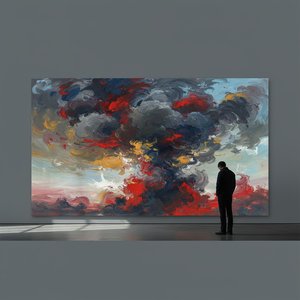
Beyond Representation: Exploring the Emotional Landscape of Abstract Expressionism
Explore the profound emotional world of Abstract Expressionism with OriginalUniqueArt. Discover key artists like Pollock & Rothko, learn about collecting, and find museum-quality reproductions to inspire your space.

Top 10 Capodopere ale Expresionismului Abstract: Artă, Artiști și Decorațiuni de Lux | OriginalUniqueArt.ro
Descoperă Top 10 capodopere ale Expresionismului Abstract! Explorează poveștile lui Pollock, Rothko și De Kooning. Reproduceri de artă de lux & inspirație decor pe OriginalUniqueArt.ro. Găsește pictura perfectă pentru spațiul tău!

Wassily Kandinsky: Cele Mai Iconice 25 De Opere – Artă Abstractă pentru Decor Rafinat
Descoperă cele mai emblematice 25 de opere ale lui Wassily Kandinsky, pionierul artei abstracte! Explorează culorile vibrante, compozițiile unice și istoria fascinantă din spatele fiecărei picturi. Reproduceri de calitate muzeală pe OriginalUniqueArt.com – inspiră-ți decorul cu artă modernă!

Goya: Cele Mai Iconice Capodopere – Artă Spaniolă pentru Decor Rafinat | OriginalUniqueArt.ro
Descoperă cele mai frumoase 25 de picturi ale lui Francisco Goya! Explorează capodoperele romantice, portretele impresionante și gravurile puternice. Reproduceri artă spaniolă de calitate muzeală pentru un decor rafinat. Explorează colecția completă online pe OriginalUniqueArt.com

Willem de Kooning: Abstraction, Gesture & the Evolution of Post-War American Painting
Explore the evolution of Willem de Kooning's iconic Abstract Expressionist paintings. Discover his signature style, key themes & investment potential with expert insights for discerning art collectors.


