 Vezi mai mult


 Pentru opere de artă sau reproduceri care depășesc 105 cm (aproximativ 41 de inch) pe oricare dintre laturi, cadrul va fi livrat demontat, sub formă de kit. Această metodă asigură o livrare sigură și previne deteriorarea în timpul transportului.


Mai multe detalii despre această pictură
Dimensiune text

() ·
O pictură creată pentru tine, lucrată manual
Reproducere pictată manual în ulei
Pictură în ulei pe pânză, pictată manual de artiștii noștri la dimensiunea și ramele dorite de dumneavoastră, pe comandă. ( Comută pe versiunea Print Comută pe Imagine Digitală)
Descriere obiect de colecție
Explore Wilhelm Leibl’s ‘Friedrich rauert,’ a realistic portrait showcasing Impressionistic brushwork & dramatic lighting. A captivating glimpse into 19th-century German art.
Biografie artist
Wilhelm Leibl (1844-1900) was a leading German Realist painter renowned for evocative portraits & scenes of peasant life. Admired for his alla prima technique, clarity, and influence on the Leibl Circle. Explore his masterpieces!
de la ·
Capitolul 1
Ce dimensiune ar trebui să aibă?
Glisați pentru a schimba dimensiunea; imaginea din stânga prezintă cadrul la lățimea sa reală. Proporțiile originale sunt păstrate.
Standard
personalizat
CM
INCH
Alegeți dintre dimensiunile noastre prestabilite, care respectă proporțiile originale ale operei de artă.
Se încarcă dimensiunile...

lățime
înălțime
Introduceți lățimea și înălțimea necesare pentru a se potrivi ramei sau peretelui dumneavoastră. Această lucrare este pictată manual, așa că, pentru o dimensiune cu o formă diferită, artistul poate picta puțin mai mult în jurul imaginii sau poate tăia puțin din margini — dumneavoastră decideți. Vă vom trimite o simulare digitală pentru aprobare înainte de a începe pictarea. Imaginea afișată pe această pagină nu reprezintă rezultatul real — doar simularea este reprezentativă.
Capitolul 2
Cum ar trebui să ajungă?
Alege marginile tabloului pe pânză întinsă
Alege cadrul tău

Alb lei1

Margini difuze lei1

Extins lei1

P118B lei10

P118H lei10

P118W lei10

P438Z lei10

P508JH lei12

P508YH lei12

P805H lei10

P805Z lei10

P919BZ lei10

P919G lei10

P919XJ lei10

P959ZH lei10

P968JZ lei12

W106C lei8

W218G lei10

W218JH lei8

W218Y lei10

W307PJ lei10

W316G lei10

W316PJ lei8

W316Y lei10

W398PJ lei8

W4111J lei10

W500HY lei15

W500JH lei15

W692G lei12

W849H lei8

W940BG lei15

W953PJ lei8

H24-GOLD lei30

H24-SILVER lei30

H36-GOLD lei45

H36-SILVER lei45
Înramat
Ramă: . Dimensiuni cu ramă: .
Capitolul 3
Cine îl pictează și ar trebui să se schimbe ceva?
Exemple de elemente care pot fi modificate: Înlocuirea feței cu fotografia clientului; Adăugarea unui animal de companie (de ex., înlocuirea unei pisici cu un câine); Includerea unui mesaj ascuns în fundal; Modificarea peisajului sau a elementelor din fundal.
După plasarea comenzii, echipa OriginalUniqueArt.com va contacta clientul prin e-mail pentru instrucțiuni și va furniza o previzualizare (mockup)
După plasarea comenzii, echipa OriginalUniqueArt.com va contacta clientul prin e-mail pentru instrucțiuni și va furniza o previzualizare (mockup)
Livrare în întreaga lume () în 3-4 săptămâni, în loc de cele 5 săptămâni standard. (5 Noiembrie). Fără compromisuri în ceea ce privește calitatea.
Capitolul 4
Ultimele retușuri
O plăcuță de identificare, ca la muzeu?
Detalii plăcuță din bronz gravat
This elegant plaque features the artist's name and the title of the artwork, finely engraved for a timeless presentation.
It is made from bronze with a refined, elegant finish. The text is precisely laser-engraved for a sharp and permanent result. Measuring 9x2 cm, the plaque is compact yet easy to read. It's built to be durable and scratch-resistant, offering a professional, museum-quality look. Mounting is simple thanks to the included adhesive backing.
Detalii plăcuță din acril transparent
The plaque includes essential engraved details such as the artist's name, the title of the artwork, the date it was created, the type of media used-like oil on canvas or watercolor-a brief description of the piece, and a QR code that links to the complete artwork information.
It is crafted from clear acrylic, offering a sleek, modern appearance. The text is UV-engraved in black to ensure strong visual contrast. With a size of 10x15 cm, it ensures optimal readability. It comes equipped with two metal hooks for secure wall mounting. The plaque is designed to be weather-resistant, making it suitable for various environments, and it includes interactive features that work seamlessly with smartphone scanning.
Detalii placă din acril negru
This elegant plaque includes engraved information such as the artist's name, the title of the artwork, the date it was created, the type of media used (like oil on canvas or watercolor), a short description of the artwork, and a QR code for quick access to more information.
The plaque itself is made from refined black acrylic with a premium finish. The text is laser-engraved in white for high contrast and readability. Its size is 10x15 cm, designed to be easy to read. It comes with two metal hooks for professional mounting. The design is sleek and fits any interior style. It is also weather-resistant and durable, with built-in digital integration for mobile compatibility.
Un lac protector?
Când aveți nevoie de el?
Capitolul 5
Tabloul tău, exact așa cum l-ai comandat
Friedrich rauert
Tehnică de reproducere
Dimensiune reproducere
-
Selecție de artiști de elită
Mai multe detalii, rafinament și timp suplimentar de execuție
-
Ramă pentru reproducere artistică
-
-
Pentru opere de artă sau reproduceri care depășesc 105 cm (aproximativ 41 de inch) pe oricare dintre laturi, cadrul va fi livrat demontat, sub formă de kit. Această metodă asigură o livrare sigură și previne deteriorarea în timpul transportului.
Este necesară asamblarea profesională – acest produs nu este de tip DIY (de făcut singur).
Kitul trebuie asamblat, iar pânza întinsă, de către un legător de cadre experimentat, utilizând adeziv pentru lemn (neinclus în colet), o cheie pentru întinderea pânzei și cleme pentru a menține barele la unghi drept în timp ce adezivul se usucă. Asamblarea incorectă sau tensiunea neuniformă a pânzei pot deteriora permanent opera de artă și nu sunt acoperite de garanția noastră.
Toate barele din lemn masiv sunt incluse, tăiate cu precizie la dimensiunea necesară.
Asamblat cu șuruburile incluse, plus adeziv pentru lemn pentru îmbinările de colț, care nu este furnizat și trebuie achiziționat de către tâmplarul dumneavoastră.
Sunt necesare unelte profesionale care nu sunt incluse: o șipte de întindere a pânzei (tensionator) și cleme pentru a menține barele la unghi drept în timp ce adezivul se usucă.
Important:
Îmbinările de colț necesită adeziv pentru lemn, barele trebuie fixate cu clești de strângere până când adezivul este complet uscat, iar întinderea pânzei pe cadrul asamblat necesită un clește pentru întins pânza. Niciunul dintre aceste elemente nu este inclus în kit. Vă rugăm să consultați un încadrator profesionist cu experiență înainte de a comanda această dimensiune.
Etichetă de prezentare
-
-
Lac de protecție
Lac lucios (intensifică nuanțele și oferă protecție împotriva luminii și a umidității)
-
Personalizează opera mea de artă
Exemple de elemente ce pot fi personalizate: Înlocuirea feței cu fotografia clientului; Adăugarea unui animal de companie (de exemplu, înlocuirea unei pisici cu un câine); Includerea unui mesaj ascuns în fundal; Modificarea peisajului sau a elementelor din fundal.
-
Livrare rapidă
Livrare la nivel mondial () în 3-4 săptămâni, în loc de cele 5 săptămâni standard. (5 Noiembrie). Fără compromisuri când vine vorba de calitate.
-
Livrare rapidă
Livrare la nivel mondial () în 5 săptămâni. (12 Noiembrie).
Inclus
Preț total calculat
lei 1435
Opțiunea cu sticlă este disponibilă doar pentru dimensiuni de sub 110 cm
Inclus în fiecare comandă
- Livrare expres gratuită la nivel mondial
- Pânză de in de înaltă calitate
- Asigurare completă pentru transport
- Garanție de rambursare a taxelor vamale
- Garanția fidelității culorilor
- Politica de retur în 100 de zile (doar pentru defecte de fabricație)
- Garanție de rambursare 100%
- Ofertă pentru comenzi multiple
 Previzualizare
 Trimite prin felicitare
 Distribuie
 Detalii despre lucrare
 Ghid
Ghid

 Descarcă imaginea
 Produse similare
 Radiografie
 Galerie foto
 Întrebări și răspunsuri
 Statistici
În cifre
- 29rame din care puteți alege
- dimensiuni standard, în propriile proporții
- 5săptămâni pentru pictare și livrare
Despre original


Wilhelm Maria Hubertus Leibl
1844 - 1900, Germany
Informații rapide despre Wilhelm Maria Hubertus Leibl
- Full Name: Wilhelm Maria Hubertus Leibl
- Nationality: German
- Date Of Birth: 1844
- Date Of Death: 1900
- Place Of Birth: Cologne, Germany
- Notable Artworks:
- Three Women in Church
- Friedrich rauert
- The spinner
- In der Bauernstube
- Artistic Movement Or Style: Realism
- Artists Who Influenced This Artist:
- Gustave Courbet
- Hans Holbein
- Artists Or Movements Influenced By This Artist: ['Leibl Circle']
Biografie artist
A Life Rooted in Realism: Wilhelm Leibl and the Depiction of Bavarian Existence
Wilhelm Maria Hubertus Leibl, born in Cologne in 1844, emerged as a pivotal figure in German painting during a period grappling with artistic identity. His father’s position as director of the cathedral choir instilled an early appreciation for discipline and form, yet Leibl's path wasn’t immediately destined for canvas. An apprenticeship to a locksmith preceded his formal artistic training under Hermann Becker in 1861, signaling a pragmatic grounding before embracing creative pursuits. This initial experience perhaps contributed to the solidity and directness that would later characterize his work. In 1864, he entered the Munich Academy, immersing himself in the established art world but soon seeking alternatives to prevailing Romantic sensibilities. His studies with artists like Carl Theodor von Piloty provided technical foundation, yet it was the arrival of Gustave Courbet in Munich around 1869 that proved truly transformative.The Influence of Courbet and the Pursuit of ‘Alla Prima’
Courbet's exhibition and demonstrations of *alla prima* painting – working directly from nature with bold, immediate brushstrokes – resonated deeply with Leibl and a cohort of young German artists. This approach liberated them from the meticulous academic style then dominant, encouraging a more visceral connection to their subjects. Leibl’s existing admiration for Dutch Old Masters, particularly their mastery of light and character, found new expression through Courbet's influence. His paintings began to loosen in style, embracing thicker applications of paint against darker backgrounds, capturing fleeting moments with an unprecedented immediacy. A brief sojourn to Paris in 1869, facilitated by Courbet’s suggestion, introduced Leibl to Édouard Manet, further broadening his artistic horizons. However, the outbreak of the Franco-Prussian War forced a premature return to Germany in 1870, curtailing what might have been an extended period of Parisian immersion.Bavarian Landscapes and the Essence of Peasant Life
In 1873, Leibl deliberately retreated from Munich’s artistic center, seeking solitude and authenticity in the isolated Bavarian countryside. This marked a turning point in his career. He dedicated himself to depicting the lives of local peasants, not with romanticized idealization, but with unflinching realism. He eschewed sentimentality or anecdotal storytelling, instead focusing on capturing the dignity and hardship inherent in their daily existence. The sketchlike quality of his earlier works gave way to greater precision and a meticulous attention to drawing. Living in Berbling from 1878 to 1882, he produced some of his most celebrated paintings, including Three Women in Church, now housed at the Kunsthalle Hamburg. This masterpiece exemplifies his intensely realistic style, recalling the clarity and psychological depth of Hans Holbein.A Legacy of Realism: The Leibl Circle and Lasting Impact
Leibl’s commitment to representing reality as he perceived it – without embellishment or pretense – earned him recognition as a leading figure in German art. He became the central influence for a group known as the “Leibl-Kreis” (Leibl Circle), which included artists such as Carl Schuch, Wilhelm Trübner, Otto Scholderer, and Hans Thoma. These artists shared Leibl’s dedication to realism and his rejection of academic conventions. He painted directly with color, without preliminary drawings, a technique paralleling the innovations of Impressionism while remaining firmly rooted in observational accuracy. His later works, created during periods living in Bad Aibling and Kutterling, demonstrated a refined balance between disciplined drawing and a newfound luminosity. Wilhelm Leibl died in Würzburg in 1900, leaving behind a body of work that continues to resonate for its honesty, technical mastery, and profound empathy for the lives of ordinary people. His paintings stand as powerful testaments to the beauty and dignity found within the everyday realities of Bavarian existence.Articole similare
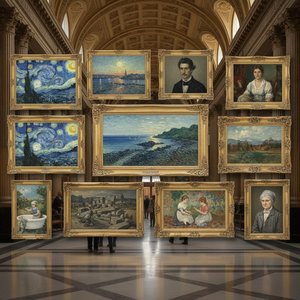
Capodopere ale Secolului al XIX-lea: 10 Lucrări de Artă Esențiale pentru Decorul Tău
Descoperă 10 capodopere ale secolului al XIX-lea! Explorează romantismul lui Delacroix, impresionismul lui Monet și realismul lui Courbet. Găsește inspirație pentru decorul tău cu reproduceri de artă de calitate muzeală pe OriginalUniqueArt.com.

The Timeless Charm of Oil on Board: Reimagining Texture and Light through the Impressionist Lens
Discover the profound intimacy of oil on panel. Explore how Impressionist masters used rigid supports to capture light, texture, and impasto depth through exquisite, handmade oil reproductions for discerning collectors.

Oil on Canvas: A Historical & Technical Exploration of a Timeless Artistic Medium
Explore the rich history & enduring techniques of oil painting on canvas. Discover the science behind its longevity, conservation practices, and contemporary relevance. Expert insights for art enthusiasts.

The Enduring Power of Painting: A Historical & Contemporary Exploration of Form and Emotion
Explore the rich history & enduring techniques of oil painting with OriginalUniqueArt. Discover masterpieces, learn about art collecting, and find authentic handmade reproductions crafted by skilled artists.
Explorați opere de artă organizate pe teme, stiluri și caracteristici.
