() ·

A painting made for you, by hand

Softened Construction

Reproducere pictată manual în ulei

Pictură în ulei pe pânză, pictată manual de artiștii noștri la dimensiunea și ramele dorite de dumneavoastră, pe comandă. ( Comută pe versiunea Print Comută pe Imagine Digitală)

Descriere obiect de colecție

Wassily Kandinsky's 'Softened Construction' explodes with vibrant color and dynamic geometric forms – circles, triangles, and more! Explore this pioneering abstract masterpiece.

Biografie artist

Descoperă Wassily Kandinsky, pionierul artei abstracte! Explorează expresionismul său vibrant, temele spirituale și moștenirea Bauhaus prin reproduceri picturale uimitoare.

from ·

Chapter 1

How large should it be?

Slide to change the size; the picture on the left shows the frame at its real width. The proportions of the original are kept.

Standard
personalizat
CM
INCH

Alegeți dintre dimensiunile noastre prestabilite, care respectă proporțiile originale ale operei de artă.

lățime
înălțime

Introduceți lățimea și înălțimea necesare pentru a se potrivi ramei sau peretelui dumneavoastră. Această lucrare este pictată manual, așa că, pentru o dimensiune cu o formă diferită, artistul poate picta puțin mai mult în jurul imaginii sau poate tăia puțin din margini — dumneavoastră decideți. Vă vom trimite o simulare digitală pentru aprobare înainte de a începe pictarea. Imaginea afișată pe această pagină nu reprezintă rezultatul real — doar simularea este reprezentativă.

Chapter 2

How should it arrive?

Choose the edges of the stretched canvas

Choose your frame

Corner sample of the WhiteWrap canvas edge finish, stretched on lemn masiv bars
White lei1
Corner sample of the BlurSideWrap canvas edge finish, stretched on lemn masiv bars
Blurside lei1
Corner sample of the ExtendedWrap canvas edge finish, stretched on lemn masiv bars
Extended lei1
Corner sample of the P118B picture frame: polistiren turnat, 5 cm wide and 3 cm thick
P118B lei10
Corner sample of the P118H picture frame: polistiren turnat, 5 cm wide and 3 cm thick
P118H lei10
Corner sample of the P118W picture frame: polistiren turnat, 5 cm wide and 3 cm thick
P118W lei10
Corner sample of the P438Z picture frame: polistiren turnat, 5.5 cm wide and 3.5 cm thick
P438Z lei10
Corner sample of the P508JH picture frame: polistiren turnat, 7 cm wide and 3.5 cm thick
P508JH lei12
Corner sample of the P508YH picture frame: polistiren turnat, 7 cm wide and 3.5 cm thick
P508YH lei12
Corner sample of the P805H picture frame: polistiren turnat, 5 cm wide and 3.5 cm thick
P805H lei10
Corner sample of the P805Z picture frame: polistiren turnat, 5 cm wide and 3.5 cm thick
P805Z lei10
Corner sample of the P919BZ picture frame: polistiren turnat, 7 cm wide and 3.5 cm thick
P919BZ lei10
Corner sample of the P919G picture frame: polistiren turnat, 7 cm wide and 3.5 cm thick
P919G lei10
Corner sample of the P919XJ picture frame: polistiren turnat, 7 cm wide and 3.5 cm thick
P919XJ lei10
Corner sample of the P959ZH picture frame: polistiren turnat, 5 cm wide and 3 cm thick
P959ZH lei10
Corner sample of the P968JZ picture frame: polistiren turnat, 6 cm wide and 4 cm thick
P968JZ lei12
Corner sample of the W106C picture frame: lemn masiv, 5 cm wide and 3 cm thick
W106C lei8
Corner sample of the W218G picture frame: lemn masiv, 5 cm wide and 3 cm thick
W218G lei10
Corner sample of the W218JH picture frame: lemn masiv, 5 cm wide and 3 cm thick
W218JH lei8
Corner sample of the W218Y picture frame: lemn masiv, 5 cm wide and 3 cm thick
W218Y lei10
Corner sample of the W307PJ picture frame: lemn masiv, 6 cm wide and 3 cm thick
W307PJ lei10
Corner sample of the W316G picture frame: lemn masiv, 6 cm wide and 3 cm thick
W316G lei10
Corner sample of the W316PJ picture frame: lemn masiv, 6 cm wide and 3 cm thick
W316PJ lei8
Corner sample of the W316Y picture frame: lemn masiv, 6 cm wide and 3 cm thick
W316Y lei10
Corner sample of the W398PJ picture frame: lemn masiv, 5 cm wide and 3 cm thick
W398PJ lei8
Corner sample of the W4111J picture frame: lemn masiv, 6.5 cm wide and 3.5 cm thick
W4111J lei10
Corner sample of the W500HY picture frame: lemn masiv, 7 cm wide and 5 cm thick
W500HY lei15
Corner sample of the W500JH picture frame: lemn masiv, 7 cm wide and 5 cm thick
W500JH lei15
Corner sample of the W692G picture frame: lemn masiv, 8 cm wide and 4 cm thick
W692G lei12
Corner sample of the W849H picture frame: lemn masiv, 5 cm wide and 3 cm thick
W849H lei8
Corner sample of the W940BG picture frame: lemn masiv, 7.5 cm wide and 4.5 cm thick
W940BG lei15
Corner sample of the W953PJ picture frame: lemn masiv, 6 cm wide and 3.5 cm thick
W953PJ lei8
Corner sample of the H24-GOLD picture frame: lemn sculptat cu gesso, 10 cm wide and 6 cm thick
H24-GOLD lei30
Corner sample of the H24-SILVER picture frame: lemn sculptat cu gesso, 10 cm wide and 6 cm thick
H24-SILVER lei30
Corner sample of the H36-GOLD picture frame: lemn sculptat cu gesso, 15 cm wide and 6.5 cm thick
H36-GOLD lei45
Corner sample of the H36-SILVER picture frame: lemn sculptat cu gesso, 15 cm wide and 6.5 cm thick
H36-SILVER lei45

Moulding: . Overall size with the frame: .

Chapter 3

Who paints it, and should anything change?

Examples of what can be changed: Replace face with customer photo; Add pet (e.g., replace cat with dog); Include hidden message in background; Change background landscape or elements.
After order, OriginalUniqueArt.com team will email client for instructions and provide a mockup preview

Livrare în întreaga lume () în 3-4 săptămâni, în loc de cele 5 săptămâni standard. (1 Noiembrie). Fără compromisuri în ceea ce privește calitatea.

Chapter 4

The finishing touches

A nameplate, as in a museum?

Detalii plăcuță din bronz gravat

This elegant plaque features the artist's name and the title of the artwork, finely engraved for a timeless presentation.

It is made from bronze with a refined, elegant finish. The text is precisely laser-engraved for a sharp and permanent result. Measuring 9x2 cm, the plaque is compact yet easy to read. It's built to be durable and scratch-resistant, offering a professional, museum-quality look. Mounting is simple thanks to the included adhesive backing.

Detalii plăcuță din acril transparent

The plaque includes essential engraved details such as the artist's name, the title of the artwork, the date it was created, the type of media used-like oil on canvas or watercolor-a brief description of the piece, and a QR code that links to the complete artwork information.

It is crafted from clear acrylic, offering a sleek, modern appearance. The text is UV-engraved in black to ensure strong visual contrast. With a size of 10x15 cm, it ensures optimal readability. It comes equipped with two metal hooks for secure wall mounting. The plaque is designed to be weather-resistant, making it suitable for various environments, and it includes interactive features that work seamlessly with smartphone scanning.

Detalii placă din acril negru

This elegant plaque includes engraved information such as the artist's name, the title of the artwork, the date it was created, the type of media used (like oil on canvas or watercolor), a short description of the artwork, and a QR code for quick access to more information.

The plaque itself is made from refined black acrylic with a premium finish. The text is laser-engraved in white for high contrast and readability. Its size is 10x15 cm, designed to be easy to read. It comes with two metal hooks for professional mounting. The design is sleek and fits any interior style. It is also weather-resistant and durable, with built-in digital integration for mobile compatibility.

A protective varnish?

When do you need it?

Chapter 5

Your painting, as you ordered it

Softened Construction

Tehnică de reproducere

Dimensiune reproducere

-

Selecție de artiști de elită

Mai multe detalii, rafinament și timp suplimentar de execuție

-

Ramă pentru reproducere artistică

-

-

Pentru opere de artă sau reproduceri care depășesc 105 cm (aproximativ 41 de inch) pe oricare dintre laturi, cadrul va fi livrat demontat, sub formă de kit. Această metodă asigură o livrare sigură și previne deteriorarea în timpul transportului.

Este necesară asamblarea profesională – acest produs nu este de tip DIY (de făcut singur).
Kitul trebuie asamblat, iar pânza întinsă, de către un legător de cadre experimentat, utilizând adeziv pentru lemn (neinclus în colet), o cheie pentru întinderea pânzei și cleme pentru a menține barele la unghi drept în timp ce adezivul se usucă. Asamblarea incorectă sau tensiunea neuniformă a pânzei pot deteriora permanent opera de artă și nu sunt acoperite de garanția noastră.

  • Toate barele din lemn masiv sunt incluse, tăiate cu precizie la dimensiunea necesară.

  • Asamblat cu șuruburile incluse, plus adeziv pentru lemn pentru îmbinările de colț, care nu este furnizat și trebuie achiziționat de către tâmplarul dumneavoastră.

  • Sunt necesare unelte profesionale care nu sunt incluse: o șipte de întindere a pânzei (tensionator) și cleme pentru a menține barele la unghi drept în timp ce adezivul se usucă.

Important:
Îmbinările de colț necesită adeziv pentru lemn, barele trebuie fixate cu clești de strângere până când adezivul este complet uscat, iar întinderea pânzei pe cadrul asamblat necesită un clește pentru întins pânza. Niciunul dintre aceste elemente nu este inclus în kit. Vă rugăm să consultați un încadrator profesionist cu experiență înainte de a comanda această dimensiune.

Etichetă de prezentare

-

-

Lac de protecție

Lac lucios (intensifică nuanțele și oferă protecție împotriva luminii și a umidității)

-

Personalizează opera mea de artă

Exemple de elemente ce pot fi personalizate: Înlocuirea feței cu fotografia clientului; Adăugarea unui animal de companie (de exemplu, înlocuirea unei pisici cu un câine); Includerea unui mesaj ascuns în fundal; Modificarea peisajului sau a elementelor din fundal.

-

Livrare rapidă

Livrare la nivel mondial () în 3-4 săptămâni, în loc de cele 5 săptămâni standard. (1 Noiembrie). Fără compromisuri când vine vorba de calitate.

-

Livrare rapidă

Livrare la nivel mondial () în 5 săptămâni. (8 Noiembrie).

Inclus

Preț total calculat

lei 1423

Preț total lei 1423

Opțiunea cu sticlă este disponibilă doar pentru dimensiuni de sub 110 cm

Included with every order

  • Livrare expres gratuită la nivel mondial
  • Pânză de in de înaltă calitate
  • Asigurare completă pentru transport
  • Garanție de rambursare a taxelor vamale
  • Garanția fidelității culorilor
  • Politica de retur în 100 de zile (doar pentru defecte de fabricație)
  • Garanție de rambursare 100%
  • Ofertă pentru comenzi multiple

The Genesis of Abstraction: Unveiling "Softened Construction"

Wassily Kandinsky, a name synonymous with the birth of modern art, didn't simply paint; he orchestrated visual experiences. “Softened Construction,” created in 1927, stands as a pivotal moment in his artistic evolution – a vibrant testament to his burgeoning belief that color and form could transcend representational imagery and directly communicate emotion and spiritual ideas. Born in Moscow amidst a landscape of burgeoning cultural change, Kandinsky’s early life was marked by exposure to both the rigid structures of law and economics and the transformative power of art, particularly through his encounter with Claude Monet's Impressionistic landscapes. This initial spark ignited a lifelong quest to unlock the expressive potential of pure abstraction, a journey culminating in works like “Softened Construction” that sought to bypass the intellect and speak directly to the soul.

Softened Construction by Wassily Kandinsky

A Symphony of Shapes and Colors

“Softened Construction” is a dazzling explosion of geometric forms rendered in a rich, emotive palette. Dominated by circles – some pulsating with an inner light, others subtly overlapping – the composition immediately draws the eye into its complex interplay. These aren’t merely decorative elements; they are building blocks of feeling, arranged according to Kandinsky's own theories of synesthesia, where colors evoke sounds and vice versa. Scattered throughout this central vortex are triangles, strategically placed to create a sense of dynamic tension and movement. The painting isn’t static; it feels like a living, breathing entity, constantly shifting and evolving as the viewer’s eye navigates its depths. Notice the strategic use of pink, a color Kandinsky associated with tenderness and spirituality, juxtaposed against the assertive blues and yellows – hues he linked to intellect and energy. The inclusion of orange and purple adds layers of complexity, hinting at both passion and introspection.

The Language of Oil: Technique and Texture

Kandinsky’s masterful use of oil paint is crucial to the painting's impact. Oil, a medium known for its versatility and ability to build rich textures and luminous colors, allowed him to achieve the velvety softness that gives “Softened Construction” its title. The brushstrokes are visible yet blended seamlessly, creating an illusion of depth and movement. He employed layering techniques, building up color gradually to create subtle gradations and shimmering effects. The texture itself contributes to the painting’s emotional resonance – it feels both solid and ethereal, grounded in materiality yet imbued with a sense of spiritual lightness. Kandinsky's meticulous attention to detail—the precise placement of each shape, the nuanced blending of colors—demonstrates his deep understanding of the medium and its expressive potential.

Beyond Representation: Symbolism and Spiritual Intent

“Softened Construction” isn’t about depicting a specific scene or object; it's about conveying an inner state. Kandinsky believed that art should be a vehicle for spiritual experience, a way to bypass the limitations of language and logic. The circles, he argued, represented wholeness and unity – a striving towards a higher consciousness. The triangles, with their inherent dynamism, symbolized movement and transformation. Looking closely at the painting, one can sense Kandinsky’s desire to create a visual equivalent of music—a composition of colors and forms that evokes a specific emotional response in the viewer. It's a deeply personal work, reflecting his own spiritual journey and his belief in the transformative power of art.

Bringing “Softened Construction” Home

OriginalUniqueArt offers meticulously hand-painted reproductions of "Softened Construction" that capture the essence of Kandinsky’s original vision. Each reproduction is created by skilled artists using archival-quality materials, ensuring a faithful and enduring representation of this iconic masterpiece. Whether you're an art enthusiast, a collector seeking to expand your collection, or simply someone looking for a stunning piece of artwork to enhance your interior space, a OriginalUniqueArt reproduction of “Softened Construction” is a beautiful and meaningful addition to any home or office. Explore our range of sizes and framing options today – and allow yourself to be transported by the power of Kandinsky’s abstract vision.

Întrebări și răspunsuri

Ce stare de spirit transmite "Softened Construction" de Wassily Wassilyevich Kandinsky în cadrul mișcării Abstraction?

În cadrul mișcării Abstraction, „Softened Construction” este marcată de un ton Tranchil.

"Softened Construction" de Wassily Wassilyevich Kandinsky este o pictură, un desen sau o printă?

"Softened Construction" de Wassily Wassilyevich Kandinsky este clasificată ca Artă murală. Această categorie descrie tipul de operă de artă din care este compusă originalul.

Ce nivel de contrast prezintă "Softened Construction" de Wassily Wassilyevich Kandinsky?

Contrastul lumină-umbră din "Softened Construction" este înregistrat ca Descriere. Contrastul descrie cât de puternic diferă zonele luminoase de cele întunecate.

More about this painting

Previzualizare Previzualizare AR Comută pe versiunea Print Comută pe Imagine Digitală Trimite prin felicitare
Detalii despre lucrare Ghid Adaugă la favorite Descarcă imaginea Produse similare Radiografie Galerie foto Q&A Statistici

In numbers

  • 29frames to choose from
  • standard sizes, in its own proportions
  • 5weeks to paint and deliver it
Wassily Wassilyevich Kandinsky

Wassily Wassilyevich Kandinsky

1866 - 1944, Русия

Quick facts about Wassily Wassilyevich Kandinsky

  • Artistic Movement Or Style: Abstract, Expresionism
  • Artists Or Movements Influenced By This Artist:
    • Bauhaus
    • Der Blaue Reiter
  • Artists Who Influenced This Artist:
    • Monet
    • Wagner
  • Date Of Birth: 1866
  • Date Of Death: 1944
  • Full Name: Wassily Wassilyevich Kandinsky
  • Nationality: Rus, France
  • Notable Artworks:
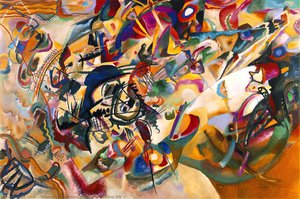
    • Comp. VII
    • Papeln
    • Succesiune
  • Place Of Birth: Moscu, Rusia

Biografie artist

A Life Immersed in Color and Spirit

Wassily Wassilyevich Kandinsky, born in Moscow in 1866, was a revolutionary figure who irrevocably altered the course of modern art. His journey wasn’t one of immediate artistic calling; initially destined for a career in law and economics at the University of Moscow, it was a profound encounter with Impressionist painting – specifically Claude Monet's “Haystacks” – and a deeply moving experience witnessing Wagner’s opera "Lohengrin" that ignited within him an irrepressible desire to pursue art. This pivotal moment, occurring around age thirty, marked not merely a career change but a complete transformation of perspective, setting him on a path toward pioneering abstraction. He soon relocated to Munich, enrolling at the prestigious Academy of Fine Arts and studying under Franz von Stuck, though even within formal training, Kandinsky’s spirit yearned for exploration beyond conventional boundaries. Early influences included Russian folk art, gleaned from an ethnographic expedition to the Vologda region in 1889, which instilled a fascination with vibrant color palettes and symbolic imagery. This foundation would prove crucial as he began to develop his unique artistic language. These early explorations weren’t simply about aesthetic preference; they were rooted in a deep cultural connection and a burgeoning understanding of how art could communicate beyond the literal. He was particularly drawn to the rich symbolism embedded within Russian icons, which informed his initial approach to color and composition.

The Dawn of Abstraction: From Expressionism to Inner Necessity

Kandinsky’s early works reveal a strong expressionistic bent, characterized by bold colors and emotional intensity – pieces like “Papeln (Poplars)” from 1902 exemplify this period. These canvases are imbued with a sense of dynamism and raw feeling, reflecting the artist's personal experiences and emotions. However, he wasn’t content with merely representing the external world; he sought to express inner realities, spiritual truths that transcended mere visual depiction. This quest led him gradually away from representational art and toward a revolutionary exploration of color, form, and their emotional resonance. He believed that art should not simply mirror reality but rather act as a conduit for accessing deeper levels of consciousness. He began to believe that colors possessed inherent psychological effects, capable of evoking specific feelings and sensations in the viewer. This conviction was deeply intertwined with his burgeoning interest in Theosophy, a spiritual movement emphasizing esoteric knowledge and universal brotherhood. As he delved deeper into these ideas, Kandinsky’s paintings became increasingly non-objective, shedding recognizable forms in favor of abstract compositions driven by an “inner necessity.” This wasn't simply about abandoning representation; it was about discovering a new visual language capable of expressing the intangible realms of emotion and spirituality. He sought to create a visual equivalent of music, where color and form harmonized to evoke profound emotional responses.

Geometric Harmony and Spiritual Resonance

The period following his involvement with the influential artist group Der Blaue Reiter (The Blue Rider), which he co-founded in Munich in 1911, saw a further evolution in Kandinsky’s style. While earlier works often featured fluid, organic shapes, he began to explore geometric abstraction, focusing on the interplay of circles, triangles, and squares. “Several Circles” (140 x 140 cm) stands as a prime example of this phase – a dynamic composition where color and form interact in a harmonious yet energetic dance. These works represent a shift towards a more intellectual and conceptual approach to art-making, reflecting Kandinsky’s growing interest in mathematics and the underlying order of the universe. He believed that geometric forms possessed inherent symbolic meaning, and their arrangement within the canvas could evoke specific emotional responses. His theoretical writings, most notably “Concerning the Spiritual in Art” (1911), articulated these beliefs, laying the groundwork for a new understanding of abstract art as a vehicle for expressing profound spiritual truths. He argued that art should not aim to imitate nature but rather to reveal the artist’s inner world and connect with the viewer on a deeper, more intuitive level. The use of primary colors – red, blue, and yellow – was central to his philosophy, representing fundamental forces of nature and human emotion.

Bauhaus Influence and Lasting Legacy

The outbreak of World War I forced Kandinsky’s return to Russia in 1914, but following the Russian Revolution, he found himself increasingly at odds with the prevailing artistic climate. In 1920, he accepted a teaching position at the Bauhaus school in Germany, where he profoundly influenced generations of artists with his theories on color, form, and abstraction. The Bauhaus provided an ideal environment for Kandinsky to further develop his ideas and explore new creative avenues. He emphasized the importance of intuitive feeling alongside rational design principles, advocating for a holistic approach to art education. He continued to experiment with geometric forms and vibrant colors, often incorporating layered impasto techniques to create textured surfaces that added depth and complexity to his compositions – as seen in later works like “An Intimate Party” (1942). After the closure of the Bauhaus by the Nazi regime in 1933, Kandinsky moved to France, where he remained for the rest of his life. His impact on modern art is immeasurable; he is widely recognized as a pioneer of abstract expressionism and a key figure in the development of non-representational painting. His works are held in major museums worldwide, including the Tretyakov Gallery in Moscow, which houses his monumental “Composition VII,” a testament to his artistic vision and enduring legacy. Kandinsky’s exploration of color, form, and spirituality continues to inspire artists today, solidifying his place as one of the most important figures in 20th-century art history. He didn't just paint pictures; he painted emotions, ideas, and the very essence of the human spirit.