Previzualizare
 Trimite prin felicitare
 Distribuie
 Detalii despre lucrare
 Ghid
Ghid

 Descarcă imaginea
 Produse similare
 Radiografie
 Galerie foto
 Întrebări și răspunsuri
 Statistici
Division -Unit


 Vezi mai mult
Giclée / Imprimare artistică
Printuri giclée sau pe canvas de calitate muzeală, cu proces de producție rapid și opțiuni flexibile de finisare. ( Comandă pictură realizată manual Comută pe Imagine Digitală)




P118B lei10

P118H lei10

P118W lei10

P438Z lei10

P508JH lei12

P508YH lei12

P805H lei10

P805Z lei10

P919BZ lei10

P919G lei10

P919XJ lei10

P959ZH lei10

P968JZ lei12

W106C lei8

W218G lei10

W218JH lei8

W218Y lei10

W307PJ lei10

W316G lei10

W316PJ lei8

W316Y lei10

W398PJ lei8

W4111J lei10

W500HY lei15

W500JH lei15

W692G lei12

W849H lei8

W940BG lei15

W953PJ lei8




Alegeți dintre dimensiunile noastre prestabilite, care respectă proporțiile originale ale operei de artă.

Introduceți lățimea și înălțimea necesare pentru a se potrivi ramei sau peretelui dumneavoastră. O printare poate fi doar tăiată, niciodată extinsă dincolo de dimensiunea imaginii originale, astfel încât o dimensiune cu o formă diferită va pierde o parte din imagine. Vă trimitem o simulare digitală pentru aprobare înainte de a imprima orice. Imaginea afișată pe această pagină nu prezintă tăierea reală — doar simularea arată acest lucru.
Livrare în întreaga lume () în 2 săptămâni, în loc de cele 4/5 săptămâni standard. (11 Noiembrie)

Livrare expres gratuită la nivel mondial

Pânză de in de înaltă calitate

Asigurare completă pentru transport

Garanție de rambursare a taxelor vamale

Garanția fidelității culorilor

Politica de retur în 100 de zile (doar pentru defecte de fabricație)

Garanție de rambursare 100%

Ofertă pentru comenzi multiple
 Opțiunea cu sticlă este disponibilă doar pentru dimensiuni de sub 110 cm

Division -Unit
Giclée / Imprimare artistică
Dimensiune reproducere
-


Preț total calculat
lei 386
Division -Unit: A Symphony of Color and Spirit
Wassily Kandinsky’s “Division - Unite,” created in 1934 during his formative Parisian period, stands as an emblem of abstract expressionism and a testament to the artist's relentless pursuit of spiritual resonance within visual art. Born in Moscow in 1866, Kandinsky embarked on a transformative artistic odyssey fueled by encounters with Impressionist painting—particularly Claude Monet’s “Haystacks”—and profoundly moved by Wagner’s opera "Lohengrin." These experiences instilled within him an unwavering conviction that art could transcend mere representation and communicate directly with the soul. This conviction would become the cornerstone of his groundbreaking approach to abstraction, forever altering the landscape of modern artistic endeavor. Early influences extended beyond purely visual stimuli; Kandinsky absorbed the vibrant hues and symbolic narratives of Russian folk art, gleaned from expeditions into the Vologda region. He meticulously documented these observations, recognizing their capacity to evoke emotional responses akin to musical harmonies—a concept he would champion throughout his career. This intellectual framework underpinned his artistic explorations, guiding him toward a deliberate rejection of conventional pictorial conventions in favor of forms that prioritized color and composition as primary expressive vehicles. The painting itself presents a striking visual experience: a square grid serves as the foundational structure for an astonishing array of organic shapes—circles, squares, triangles—interwoven with scattered letters. These elements are not uniformly distributed; rather, they cluster and overlap, generating a palpable sense of controlled chaos that belies Kandinsky’s meticulous planning. Diagonal lines intersect the grid, injecting dynamism into the composition and reinforcing the feeling of movement. The color palette is extraordinarily rich and diverse, encompassing reds, greens, blues, yellows, oranges, and purples—applied in both solid blocks and blended areas to create subtle gradations that heighten visual interest. Dominating the background is a pale grey or off-white hue, allowing the vibrant colors of the shapes to command attention and radiate luminosity. Kandinsky’s technique reflects his unwavering commitment to capturing inner experience. Executed primarily with oil paints on canvas—likely stretched taut—the application appears remarkably smooth, minimizing visible brushstrokes and prioritizing tonal harmony. This deliberate restraint underscores Kandinsky's belief that color alone could convey profound emotional significance. The resulting surface possesses a subtle textural quality, suggestive of the paper-like texture of his preparatory sketches, hinting at the artist’s ongoing engagement with traditional drawing methods alongside his pioneering explorations of abstraction. “Division - Unite” embodies Kandinsky’s mature abstract style—characterized by its rejection of representational imagery and its masterful manipulation of color relationships to evoke spiritual contemplation. It aligns seamlessly with the tenets of Abstract Expressionism, a movement that championed spontaneous gesture and emotional intensity as paramount considerations in artistic creation. More than just a visual spectacle, this artwork invites viewers into a realm where form and color coalesce to communicate unspoken truths—a legacy that continues to inspire artists and collectors alike.Composition & Structure
The square grid serves as the central organizing principle of “Division - Unite,” providing a framework for the arrangement of disparate elements while simultaneously fostering a sense of controlled dynamism. Unlike traditional perspectival representations, Kandinsky eschews depth illusion, opting instead for a flattened surface that emphasizes color and form as independent expressive forces. Diagonal lines intersect the grid, injecting movement into the composition and disrupting any potential static equilibrium. This deliberate disruption mirrors Kandinsky’s philosophical conviction that art should transcend rational thought and tap into primal instincts—a core tenet of his spiritual worldview.Color Palette & Harmony
Kandinsky's masterful use of color is arguably the painting's most striking feature. The palette encompasses a spectrum of hues—reds, greens, blues, yellows, oranges, and purples—each carefully positioned to create visual harmony and convey specific emotional resonances. Solid blocks of color coexist with blended areas, generating subtle gradations that enrich the overall tonal range. The dominant off-white background serves as a counterpoint to the vibrant shapes, maximizing their luminosity and enhancing their impact on the viewer’s eye. Kandinsky's meticulous attention to color theory—informed by Goethean aesthetics—demonstrates his profound understanding of how color can stimulate sensory perception and evoke psychological responses.Technique & Materials
The painting was crafted using oil paints on canvas, a medium favored by Kandinsky for its ability to achieve exceptional tonal fidelity and textural nuance. The application technique prioritizes smoothness and tonal consistency, minimizing visible brushstrokes and emphasizing the artist’s commitment to capturing inner experience through visual form. This deliberate restraint underscores Kandinsky's belief that color alone could convey profound emotional significance—a conviction that underpinned his entire artistic practice.Symbolic Significance & Emotional Impact
“Division - Unite” transcends mere aesthetic beauty; it embodies Kandinsky’s aspiration to communicate spiritual truths through abstraction. The scattered letters within the composition serve as visual anchors, grounding the organic shapes in a realm of intellectual contemplation—a reflection of Kandinsky's engagement with philosophical ideas and his belief that art could illuminate hidden dimensions of human consciousness. Ultimately, this painting invites viewers into a meditative state—a testament to Kandinsky’s enduring legacy as one of the foremost pioneers of abstract expressionism and a visionary artist who dared to explore the uncharted territories of visual perception.Historical Context
Created in 1934, “Division - Unite” emerged during Kandinsky's Parisian period—a time marked by profound intellectual ferment and artistic experimentation. The painting reflects the influence of Bauhaus, where Kandinsky taught from 1922 to 1933, and embodies the broader ethos of Abstract Expressionism—a movement that championed spontaneity and emotional intensity as paramount considerations in artistic creation. It stands as a pivotal work within Kandinsky’s oeuvre, solidifying his reputation as one of the most innovative and influential artists of the 20th century.Size & Dimensions
Unknown Date: 1934Întrebări și răspunsuri
Pot vedea "Division -Unit" de Vasili Kandinski pe propriul meu perete înainte de achiziție?
„Division -Unit” are o previzualizare în realitate augmentată: pagina Previzualizare în AR operei artistice o prezintă în propriul tău spațiu, pe un dispozitiv compatibil.
Ce vârstă avea Vasili Kandinski când a creat "Division -Unit" în 1934?
Când „Division -Unit” a fost creat în 1934, Vasili Kandinski – născut în 1866 – avea 68 ani.
Ce origine națională stă la baza Abstract Expressionism-ului din "Division -Unit"?
"Division -Unit" a fost creat de Vasili Kandinski, născut în Imperiul Rus, în cadrul mișcării Abstract Expressionism. Originea artistului leagă această operă de Abstract Expressionism, așa cum este practicat de artiștii din Imperiul Rus.
Biografie artist
Tinerețe și Formarea Academică
Wassily Kandinsky s-a născut la Moscova, fiind fiul lui Lidia Ticheeva și Vassily Silvestrovich Kandinsky. Primii săi ani au fost modelați de ecourile muzicii, petrecind timp prelungit studiind pianul și violoncelul. Aceste primele lecții despre ritm și sunet i-au rămas întipărite în suflet mult timp după ce a părăsit căminul parental, devenind o componentă esențială a viziunii sale ulterioare.
Drumul său în viață nu a condus imediat către o pânză de pictură. În schimb, a ales o cale academică riguroasă la Universitatea din Moscova, unde s-a concentrat pe studii de drept, economie și etnografie. După absolvire, a ocupat chiar funcția de conferențier. Abia la vârsta de 30 de ani a început studiile formale de pictură, realizând o transformare profundă prin care și-a mutat atenția de la structurile sociale și juridice către actul fizic și visceral al desenului și al schiței.
Această schimbare de paradigmă l-a purt de la Moscova până la München. Acolo, a căutat o instruire și mai exigentă la Școala Anton Ažbe și la Academia de Arte Fine. Și-a dedicat timpul învățării mecanicii formei și a modului în care lumina interacționează cu obiectele, îndepărtându-se de viața sa academică anterioară pentru a se lăsa absorbit de viața plină de sens a unui student în artă.
Tranziția către viața artistică
Această transformare a început în anul 1896, în timpul unei expoții de la Moscova. Privind „Stocuri de fân” de Claude Monet, modul în care percepea lumina și culoarea s-a schimbat radical. Această întâlnire cu Impresionismul a aprins în el o atracție profundă și persistentă către pictură, fiind o redirecționare silențioasă a unei vieți care, până atunci, fusese dedicată lumii structurate a dreptului și economiei. Atracția pânzei de pictură s-a dovedit a fi mult mai puternică decât stabilitatea drumului său academic.
În cele din urmă, Wassily Kandinsky a renunțat la funcția de profesor de drept la Universitatea din Dorpat pentru a urma acest nou impuls creativ. În jurul anului 1896, s-a mutat la München pentru a începe studiile formale de artă. A căutat cunoștințe la Școala Anton Ažbe și la Academia de Arte Fine pentru a învăța mecanica meseriei pe care o alesese. Această tranziție a reprezentat trecerea de la sala de curs la atelier, schimbând teoria juridică cu studiul formei și al pigmentului.
- Der Blaue Reiter (1903)
Perioada Murnau și Expresionismul
În anul 1901, Wassily Kandinsky a cunoscut artista Gabriele Münter. Legătura lor s-a adâncit pe măsură ce împărtășeau aceeași obsesie pentru puterea expresivă a culorii. Până în 1909, cei doi își cumpăraseră o casă în Murnau, un cadru care a oferit fundalul perfect pentru o serie de peisaje în care formele lumii naturale au început să se transforme radical. Lucrările din această perioadă poartă amprenta studiilor sale timpurii, fiind marcate în mod deosebit de influența artei populare rusești. Artistul utiliza culori vibrante, plasate pe fundaluri întunecate, un obicei care reflecta profund rădăcinile sale și tradițiile tinereții sale.
Peisajele din Murnau nu erau simple copii ale realității vizibile. El privea dealurile și casele printr-o lentilă care privilegia intensitatea emoțională în detrimentul acurateței literale. Culorile au devenit mai asertive, îndepărtându-se de liniștea reprezentării tradiționale. Wassily Kandinsky căuta o metodă de a face ca pânza să pulseze de viață, utilizând peisajul ca punct de plecare pentru o explorare a lumii interioare. Păturile de vopsea au devenit mai generoase, iar contururile dintre obiecte au început să se estompeze, lăsând loc unei viziuni mult mai spirituale.
- Murnau. Peisaj cu casa verde (1909)
Der Blaue Reiter și Abstracția
În München, perspectiva sa artistică a început să se orienteze către o nouă modalitate de a percepe realitatea. Wassily Kandinsky a cofondat grupul Der Blaue Reiter (Călărețul Albastru), un cerc de intelectuali și artiști care urmăreau transcenderea suprafeței aparente a lucrurilor. Această perioadă l-a legat strâns de mișcarea Expresionismului, având ca scop principal descoperirea unui limbaj vizual capabil să exprime spiritul interior. El a început să se îndepărteze de formele recognoscibile ale peisajului, preferând un stil care prioritiza greutatea emoțională a culorii și a formei. Aceasta a reprezentat o plecare de la lumea literală, o incursiune în universul non-obiectiv.
Opera sa a devenit un studiu profund despre modul în care o linie sau o nuanță pot acționa asemenea unei note muzicale. Ca pionier al mișcării artei abstracte, Wassily Kandinsky a eliminat necesitatea ca subiectul unei picturi să fie un obiect recunoscut de privitor. În schimb, s-a concentrat pe interacțiunea formelor și pe modul în care acestea pot comunica fără a recurge la referințe directe la natură. Această evoluție a picturii non-reprezentative nu a fost o ruptură bruscă, ci o mișcare constantă spre esența sentimentului. Pânza a devenit un spațiu dedicat compoziției pure, unde aranjarea elementelor vorbea direct cu intuiția spectatorului.
- 1913: Studiu de culoare cu pătrate și cercuri
- 1914: Im Kreis (În cerc)
- 1923: Compoziția VIII
- 1926: Mai multe cercuri
Anii de predare și perioada Bauhaus
După perioada petrecută în Rusia, unde a servit ca prim director al Institutului de Cultură Artistică din Moscova, Wassily Kandinsky s-a îndreptat spre cercurile academice ale Germaniei. În 1921, a fost invitat să participe la Bauhaus în Weimar, un moment care a marcat o tranziție spre o explorare mult mai structurată a modului în care culoarea și forma interacționează pe suprafața pânzei. Această etapă a fost una de o implicare profundă, petrecându-și mare parte din timp la școala de artă și arhitectură Bauhaus, unde a predat din 1922 până în 1933.
Prezența sa în sălile de curs a fost definită de o atenție minuțioasă pentru mecanica limbajului vizual. Wassily Kandinsky analiza modul în care un simplu cerc sau o linie puteau deține greutate și semnificație, fără a fi nevoie să semene cu un obiect fizic din lumea reală. Aceasta a fost o perioadă de experimentare intensă cu geometria și cu impactul psihologic al unor nuanțe specifice. Lucrările din acești ani poartă adesea o senzație de precizie matematică, îndepărtându-se de formele fluide și organice ale primilor sale ani de creație, în favoarea unei compoziții mult mai calculate a elementelor vizuale.
Era predării sale a fost întreruptă brusc atunci când regimul nazist a închis Bauhaus în 1933. Această decizie l-a forțat să părăsească mediul structurat al școlii, conducându-l spre un nou capitol în Franța. Totuși, timpul petrecut în Germania rămâne o perioadă de dezvoltare teoretică profundă, în care abstractul a devenit o metodă de a cartografia peisajul interior al minții umane.
Anii de final și ultima rezidență
Închiderea Bauhaus-ului în anul 1933 a determinat o mutare spre Franța, țara care avea să îi devină refugiu. Wassily Kandinsky s-a stabilit acolo, rămânând în acest peisaj cultural de la începutul anilor 1930 până la sfârșitul vieții sale. Pe parcursul acestui interval, legătura sa cu noua sa patrie s-a adâncit profund, culminând cu obținerea cetățeniei franceze în anul 1939.
Anii de final au fost petrecuti în mijlocul acestui peisaj francez, continuând să exploreze tehnici de impasto stratificat, care confereau picturilor sale o prezență fizică, plină de textură și vibrație. O astfel de lucrare din această perioadă este An Intimate Party (1942). Artistul a plecat dintre această lume pe 13 decembrie 1944.
Lucrări Cheie și Momente de Referință în Evoluția Sa Artistică
Analizând cu atenție perioada incipientă a creației sale, putem descoperi rădăcinile profunde ale tranziției sale către abstractivism. În anul 1903, a pictat The Blue Rider, o operă în care o figură îmbrăcată într-o mantie albastru închis călărește un cal printr-un peisaj luxuriant și rarefiat. Această piesă captează un moment de tranziție, în care formele recognosabile ale lumii încep să își piardă autoritatea în fața forței magnetice a culorii. Păturile de vopsea aplicate în această perioadă foloseau adesea brushwork generos, sugerând direcțiile non-obiective pe care opera sa le-ar fi luat în cele din urmă.
Pe măsură ce atenția sa s-a mutat către precizia geometrică și interacțiunea dintre forme, compozițiile sale au devenit tot mai structurate. În 1923, a realizat Composition VIII, o lucrare definită de dialogul dintre cercuri și linii. Până în 1925, paleta sa cromatică a suferit o nouă transformare în Yellow, Red, Blue, unde culorile însăși au devenit subiectul principal. Acești ani demonstrează o mișcare constantă de îndepărtare de peisajele tinereții sale către un limbaj al formei și al nuanței pure. Chiar și în ultimii ani, experimentarea a continuat; Composition X a fost creată în jurul anului 1939, dovedind evoluția neîntreruptă a vocabularului său vizual.
- Abschied (versiune mică) (1903)
- Improvisation. Gorge (1914)
- Im in the Circle (1914)
- Several Circles (1926)
Unde poți descoperi astăzi capodoperele sale
Pânzele sale sunt împrăștiate printre numeroase instituții de renume, oferind o invitație la o privire atentă asupra modului în care utilizarea culorii și a formei s-a evoluat sub viziunea sa. În Paris, Centre Pompidou găzduiește numeroase dintre picturile sale, oferind ocazia de a observa tranziția către compozițiile non-obiective. De asemenea, Solomon R. Guggenheim Museum din New York păstrează o colecție valoroasă a lucrărilor sale, incluzând piese din fazele sale mai geometrice.
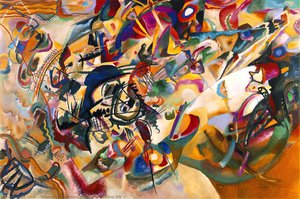
La München, Lenbachhaus adăpostește o selecție semnificativă de picturi, care reflectă perioada sa de activitate în cadrul grupului Blue Rider. Pentru cei care doresc să admire aranjamentele sale complexe și de mari dimensiuni, Tretyakov Gallery din Moscova găzduiește monumentalul său „Composition VII”. Aceste locații oferă perspective diverse asupra dezvoltării sale artistice, de la peisajele expresive de început până la abstractizările mai structurate din perioada ulterioară.
- Composition VII
- Several Circles
- Yellow, Red, Blue
- An Intimate Party

Vasili Kandinski
1866 - 1944 , Imperiul Rus
Detalii rapide
- Artistic Movement Or Style:
- Expresionism
- Pictură abstractă
- Der Blaue Reiter
- Artists Or Movements Influenced By This Artist: ['Expresionism abstract']
- Artists Who Influenced This Artist: ['Claude Monet']
- Date Of Birth: 1866
- Date Of Death: 1944
- Full Name: Wassily Wassilyevich Kandinsky
- Nationality: Rus
- Notable Artworks:
- Papeln (Plopii)
- Câteva cercuri
- Compoziția VIII
- Compoziția VII
- O petrecere intimă
- Place Of Birth: Moscova, Rusia
Articole similare

Wassily Kandinsky: Cele Mai Iconice 25 De Opere – Artă Abstractă pentru Decor Rafinat
Descoperă cele mai emblematice 25 de opere ale lui Wassily Kandinsky, pionierul artei abstracte! Explorează culorile vibrante, compozițiile unice și istoria fascinantă din spatele fiecărei picturi. Reproduceri de calitate muzeală pe OriginalUniqueArt.com – inspiră-ți decorul cu artă modernă!

Mastering Abstraction: The Top 25 Essential Works by Wassily Kandinsky
Explore 25 iconic Kandinsky masterpieces and the birth of abstraction. Discover the full collection online at OriginalUniqueArt.com.

Mastering Abstraction: The Top 25 Essential Works by Wassily Kandinsky
Embark on a journey through the soul of abstraction with our curated guide to Wassily Kandinsky's top 25 masterpieces. Explore the vibrant colors and spiritual forms that defined modern art. Find museum-quality reproductions for your decor. Discover all masterpieces on OriginalUniqueArt.com.

Mastering Abstraction: The Top 25 Essential Artworks by Wassily Kandinsky
Journey through the vibrant soul of abstraction with our curated guide to the top 25 Wassily Kandinsky masterpieces. Explore the stories behind his iconic colors and shapes. Find museum-quality reproductions and decor inspiration. Discover all masterpieces on OriginalUniqueArt.com.

Mastering Abstraction: The Top 25 Essential Works by Wassily Kandinsky
Journey through the soul of abstraction with our curated guide to the top 25 Wassily Kandinsky masterpieces. Explore the vibrant colors and spiritual forms that defined modern art. Find museum-quality reproductions and decor inspiration. Discover all masterpieces on OriginalUniqueArt.com.