

 Previzualizare
 Trimite prin felicitare
 Distribuie
 Detalii despre lucrare
 Ghid
Ghid

 Descarcă imaginea
 Produse similare
 Radiografie
 Galerie foto
 Statistici
Holy Conversation
 High Renaissance
 1505
1505- Renașterea
 92.0 x 126.0 cm
 Musée du Petit Palais
 Vezi mai mult
Giclée / Imprimare artistică
Printuri giclée sau pe canvas de calitate muzeală, cu proces de producție rapid și opțiuni flexibile de finisare. ( Comandă pictură realizată manual Comută pe Imagine Digitală)




P118B lei10

P118H lei10

P118W lei10

P438Z lei10

P508JH lei12

P508YH lei12

P805H lei10

P805Z lei10

P919BZ lei10

P919G lei10

P919XJ lei10

P959ZH lei10

P968JZ lei12

W106C lei8

W218G lei10

W218JH lei8

W218Y lei10

W307PJ lei10

W316G lei10

W316PJ lei8

W316Y lei10

W398PJ lei8

W4111J lei10

W500HY lei15

W500JH lei15

W692G lei12

W849H lei8

W940BG lei15

W953PJ lei8




Alegeți dintre dimensiunile noastre prestabilite, care respectă proporțiile originale ale operei de artă.

Introduceți lățimea și înălțimea necesare pentru a se potrivi ramei sau peretelui dumneavoastră. O printare poate fi doar tăiată, niciodată extinsă dincolo de dimensiunea imaginii originale, astfel încât o dimensiune cu o formă diferită va pierde o parte din imagine. Vă trimitem o simulare digitală pentru aprobare înainte de a imprima orice. Imaginea afișată pe această pagină nu prezintă tăierea reală — doar simularea arată acest lucru.
Livrare în întreaga lume () în 2 săptămâni, în loc de cele 4/5 săptămâni standard. (26 Octombrie)

Livrare expres gratuită la nivel mondial

Pânză de in de înaltă calitate

Asigurare completă pentru transport

Garanție de rambursare a taxelor vamale

Garanția fidelității culorilor

Politica de retur în 100 de zile (doar pentru defecte de fabricație)

Garanție de rambursare 100%

Ofertă pentru comenzi multiple
 Opțiunea cu sticlă este disponibilă doar pentru dimensiuni de sub 110 cm

Holy Conversation
Giclée / Imprimare artistică
Dimensiune reproducere
-


Preț total calculat
lei 370
Holy Conversation by Vittore Carpaccio
Vittore Carpaccio’s “Holy Conversation,” completed around 1505 in Venice, stands as a testament to the enduring influence of early Netherlandish art blended seamlessly with Venetian Renaissance sensibilities. More than just a depiction of religious iconography—it's an immersive experience into the spiritual landscape of its time.
Style and Technique: Carpaccio’s approach distinguishes itself from the humanist fervor sweeping across Italy during his lifetime. Unlike many contemporaries prioritizing intellectual discourse, he focused on meticulous observation and rendering detail with remarkable precision. The painting utilizes tempera on canvas—a technique favored for its luminosity and durability—allowing Carpaccio to capture subtle gradations of light and color with exceptional subtlety. This careful attention to realism is evident in every brushstroke.
Historical Context: Created during the High Renaissance, “Holy Conversation” reflects a period marked by profound artistic innovation yet rooted in medieval traditions. The painting draws inspiration from Giovanni Bellini’s masterful use of light and color, establishing a connection to Venetian artistic heritage. Simultaneously, Carpaccio incorporates elements characteristic of Northern European art—particularly the expressive handling of drapery and figure composition—demonstrating his cosmopolitan outlook.
Symbolism: The central figures – Jesus Christ and Mary Magdalene – embody profound spiritual significance. Their serene gaze and posture convey a sense of contemplation and divine grace. The inclusion of additional pilgrims underscores the importance of pilgrimage as a path to enlightenment and devotion. Furthermore, the architectural setting—a stylized Venetian palazzo—represents earthly stability amidst spiritual aspiration.
Emotional Impact: “Holy Conversation” transcends mere visual representation; it evokes an atmosphere of solemn reverence and tranquility. Carpaccio’s masterful composition guides the viewer's eye towards the focal point – the two figures – fostering a contemplative response. The painting’s luminous palette and meticulous detailing contribute to its emotional resonance, transporting viewers back to fifteenth-century Venice and inviting them to contemplate themes of faith, humility, and divine communion.
Additional Research: This artwork is housed in Musée du Petit Palais, Avignon, where it continues to captivate audiences with its timeless beauty. WikiArt provides valuable insights into Carpaccio’s artistic style and influences, highlighting his contribution to Venetian Renaissance painting. The Web Gallery of Art showcases high-resolution images of “Holy Conversation,” allowing for detailed examination of Carpaccio's technique and compositional choices.
Întrebări și răspunsuri
Unde pot fi achiziționate copii pictate manual ale operei "Holy Conversation" de Vittore Carpaccio?
„Holy Conversation” este disponibil ca o reproducere pictată manual în ulei pe pânză de in. Comanda poate fi plasată pe pagina de Reproducere pictată în ulei, cu posibilitatea de a alege dimensiunea dorită.
Din ce curent artistic face parte "Holy Conversation" de Vittore Carpaccio?
"Holy Conversation" de Vittore Carpaccio face parte din mișcarea High Renaissance. Acest curent oferă contextul stilistic al operei.
Care sunt proporțiile lui "Holy Conversation" de Vittore Carpaccio și ce dimensiuni are?
Formatul lucrării „Holy Conversation” este Orientare peisaj, iar dimensiunile originale sunt 92 x 126 cm. Ambele informații sunt utile atunci când planificați o reproducere.
Biografie artist
Early Life and Training
Vittore Carpaccio, a Venetian painter of the Early Venetian Renaissance, was born around 1465 in Venice. He descended from a family of fishermen and boat builders—a heritage that instilled in him an appreciation for craftsmanship and observation of nature. His artistic education began under the tutelage of Gentile Bellini, arguably the most influential artist of his time and a cornerstone of Venetian painting tradition. Bellini’s workshop fostered Carpaccio's understanding of disegno (drawing) and sfumato (subtle shading), techniques that would become hallmarks of his distinctive style. This formative apprenticeship ensured Carpaccio’s future success as one of Venice’s foremost artists.Artistic Style and Influences
Carpaccio’s artistic approach was remarkably conservative, diverging significantly from the humanist fervor sweeping across Italy during his lifetime. Unlike many contemporaries who embraced innovative ideas and experimented with new compositional strategies, Carpaccio adhered to established conventions—a deliberate choice that reflects a deep respect for Venetian artistic heritage. His style bears the unmistakable imprint of Antonello da Messina’s influence, particularly in its meticulous attention to detail and masterful use of color. However, Carpaccio's work also absorbed elements from Early Netherlandish painting, notably the dramatic lighting effects and expressive emotionalism characteristic of artists like Rogier van der Weyden and Hans Memling. This unique synthesis resulted in a Venetian style that possessed both solidity and lyricism—a captivating blend of realism and spiritual contemplation.Notable Works
Carpaccio’s prolific output spanned from 1490 to 1519, cementing his position as one of the earliest masters of the Venetian Renaissance. Among his most celebrated achievements is undoubtedly “The Legend of Saint Ursula,” a monumental cycle of nine paintings housed in the Gallerie dell'Accademia in Florence. This ambitious undertaking showcases Carpaccio’s unparalleled skill in narrative painting—capturing complex stories with breathtaking visual clarity and conveying profound moral lessons. The altarpiece "Glory of St. Ursula" exemplifies Carpaccio’s masterful manipulation of light and color, mirroring Bellini’s stylistic brilliance and demonstrating his ability to evoke a sense of ethereal beauty. Furthermore, “Miracle of the Relic of the Cross at the Ponte di Rialto” stands as a testament to Carpaccio's compositional prowess—balancing intricate detail with harmonious balance and conveying palpable emotion through expressive gestures and facial expressions.Career Highlights and Legacy
Carpaccio’s artistic career flourished during a period of considerable artistic dynamism in Venice, where he competed alongside luminaries like Bellini and Giorgione. His exploration of orientalist themes—evident in “St. George Baptizing the Selenites”—reflects the burgeoning interest in the Levant during the Renaissance, fueled by Venetian trade routes and scholarly expeditions. Despite being somewhat overshadowed by his more flamboyant contemporaries, Carpaccio’s enduring legacy resides in his unwavering commitment to artistic integrity and his contribution to establishing Venetian painting as a bastion of humanist tradition. His meticulous technique and profound understanding of narrative storytelling continue to inspire artists today.References and Further Reading

Vittore Carpaccio
1465 - 1526 , Italia
Detalii rapide
- Artistic Movement Or Style: Early Venetian Renaissance
- Artists Who Influenced This Artist:
- Gentile Bellini
- Antonello da Messina
- Date Of Birth: Venice, Italia (c. 1465)
- Date Of Death: Koper, Italia (1526)
- Full Name: Vittore Carpaccio
- Nationality: Italian
- Notable Artworks:
- La Legenda di Sant'Ursula
- Gloria di Sant'Ursula Altarpiece
- Miracolo della Reliquia del Crocifisso al Ponte Rialto
- Place Of Birth: Venice
Articole similare
The Venetian Renaissance: A Masterclass in Colorito, Light, and the Birth of Atmospheric Brilliance
Explore the breathtaking mastery of the Venetian Renaissance. Discover how legends like Titian revolutionized art through Colorito, capturing the luminous light and vibrant pigments of the Venetian lagoon in a visual journey of unparalleled color and texture.
Venetian Renaissance: The Golden Age of Color, Light, and Luminous Artistry
Embark on a journey through the Venetian Renaissance. Discover how masters like Giorgione and Titian revolutionized art through luminous color and light. Explore the profound legacy of the Venetian School and its enduring influence on the world of fine art.
Jacopo Tintoretto: Cele Mai Remarcabile 25 de Capodopere – Artă Clasică pentru Decorul Tău
Descoperă cele mai frumoase 25 de picturi ale lui Jacopo Tintoretto! Explorează capodopere renascentiste venețiene, scene biblice dramatice și stilul unic al artistului. Reproduceri artă de calitate muzeală pentru decorul tău pe OriginalUniqueArt.com.
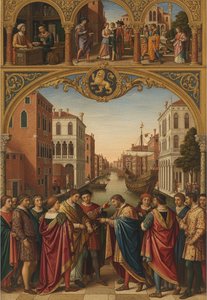
Vittore Carpaccio: Venetian Renaissance Narrative & the Poetics of Detail
Explore the captivating world of Vittore Carpaccio, a master storyteller of the Venetian Renaissance. Discover his intricate details, narrative cycles like 'The Legend of St. Ursula,' and unique artistic style.

Venetian Renaissance: The Mastery of Color, Light, and the Art of Colorito
Explore the luminous mastery of the Venetian Renaissance. Discover how masters like Titian and Giorgione revolutionized art through colorito, light, and atmosphere. An expert guide to the golden age of Italian painting for collectors and enthusiasts.


