 Comută pe versiunea Print
 Vezi mai mult







































 Pentru opere de artă sau reproduceri care depășesc 105 cm (aproximativ 41 de inch) pe oricare dintre laturi, cadrul va fi livrat demontat, sub formă de kit. Această metodă asigură o livrare sigură și previne deteriorarea în timpul transportului.


A Window Into Van Gogh’s Soul
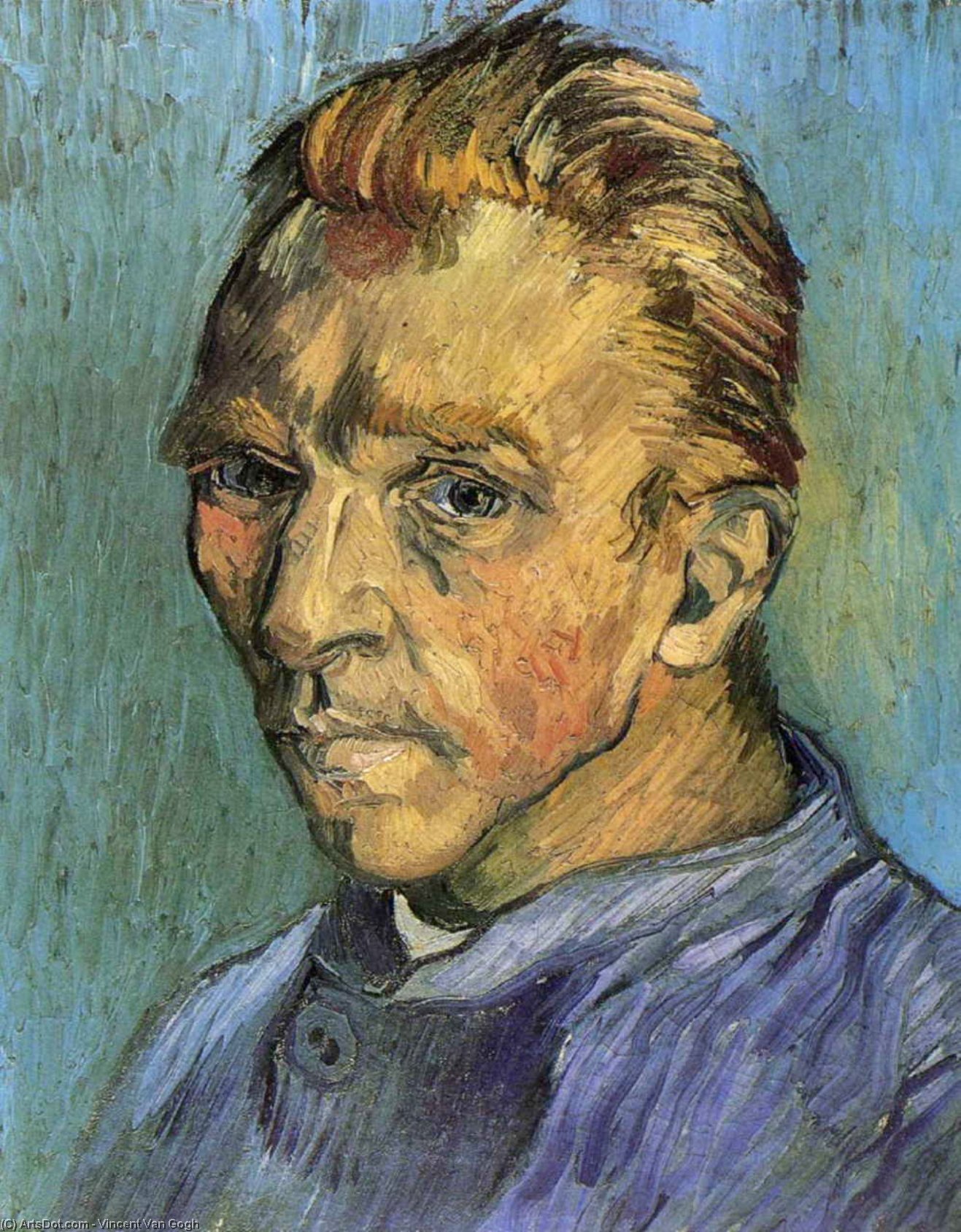
Painted in 1889 during a period of intense self-examination while residing at the Saint-Paul-de-Mausole asylum in Saint-Rémy, this compelling self-portrait offers an intimate and profoundly moving glimpse into the inner world of Vincent van Gogh. More than just a likeness, it’s a raw and honest portrayal of vulnerability, anxiety, and artistic fervor.
Post-Impressionist Mastery & Bold Technique
This artwork exemplifies Van Gogh's signature Post-Impressionistic style. Rejecting the purely optical concerns of Impressionism, he employed expressive brushstrokes and vibrant color to convey emotion and subjective experience. The thick impasto – the visibly textured application of paint – is particularly striking, lending a tactile quality that draws the viewer in. Notice how the swirling strokes around his head echo the turbulent emotions within, while the verticality of the background emphasizes a sense of contained energy.
Color & Composition: A Study in Contrast
The palette is dominated by earthy tones – ochres, yellows, and browns – used to depict Van Gogh’s gaunt features. These warm hues are dramatically contrasted with the cool teal/blue backdrop and his dark jacket, creating a visual tension that mirrors the artist’s internal struggles. The composition, cropped closely around his head and shoulders, intensifies this sense of immediacy and intimacy. His direct gaze compels connection, demanding attention from the viewer.
Historical Context & Artistic Evolution
Van Gogh produced over 40 self-portraits throughout his career, often utilizing himself as a readily available model during times of isolation or financial hardship. This particular work, created near the end of his life, reflects a growing maturity and psychological depth in his artistic expression. It stands alongside other poignant works from this period, like “Self-Portrait with Bandaged Ear,” offering valuable insight into his mental state and creative process.
Symbolism & Emotional Resonance
The painting transcends mere representation; it’s a powerful symbol of the artist's inner turmoil. The intense gaze suggests both vulnerability and defiance, while the slightly distorted features hint at psychological strain. The colors themselves carry symbolic weight: blue often representing melancholy, contrasted with the flickering warmth of his hair and skin suggesting a persistent spark of life. This self-portrait is not simply *of* Van Gogh; it *is* Van Gogh – a distillation of his emotions, anxieties, and artistic vision.
Bringing Artistic Legacy into Your Space
A reproduction of this iconic work adds depth and emotional resonance to any interior. Its bold colors and dynamic brushwork make it a captivating focal point in a living room, study, or bedroom. Whether you are an art collector seeking a timeless masterpiece or an interior designer looking to create a space that inspires contemplation, this self-portrait offers a powerful statement of artistic expression.
- Size: 40 x 31 cm
- Date: 1889
Biography:
Vincent Willem van Gogh, a name synonymous with artistic passion and turbulent genius, remains one of the most recognizable and beloved figures in Western art history. Born on March 30, 1853, in Groot-Zundert, Netherlands, his journey was not one of immediate acclaim but rather a slow burn of dedication, struggle, and ultimately, profound influence. The eldest of six children born to a Protestant minister, Theodorus van Gogh, Vincent’s early life was steeped in religious contemplation, a sensibility that would subtly permeate much of his later work. Though he displayed an inclination towards drawing from a young age, his path wasn't immediately clear; he explored various vocations – art dealer, teacher, and missionary – before fully embracing the artist’s life.
These experiences, though seemingly disparate, proved formative, instilling in him a deep empathy for the working class and a profound se
Întrebări și răspunsuri
Cine este autorul și din ce an este "Autoportret"?
Vincent Van Gogh a creat "Autoportret" în 1889.
Ce dimensiuni are originalul "Autoportret"?
„Autoportret” măsoară 40 x 31 cm în formatul său original. Dimensiunile originale reprezintă o referință utilă atunci când alegeți dimensiunea unei reproduceri.
Unde pot găsi opere de artă similare cu "Autoportret" de Vincent Van Gogh?
Pagina Lucrări similare pentru "Autoportret" de Vincent Van Gogh prezintă opere de artă similare.
 Previzualizare
 Trimite prin felicitare
 Distribuie
 Detalii despre lucrare
 Ghid
Ghid

 Descarcă imaginea
 Produse similare
 Radiografie
 Galerie foto
 Q&A
Q&A Statistici
 Top100