Dimensiune text

() ·

O pictură creată pentru tine, lucrată manual

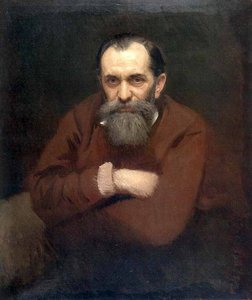
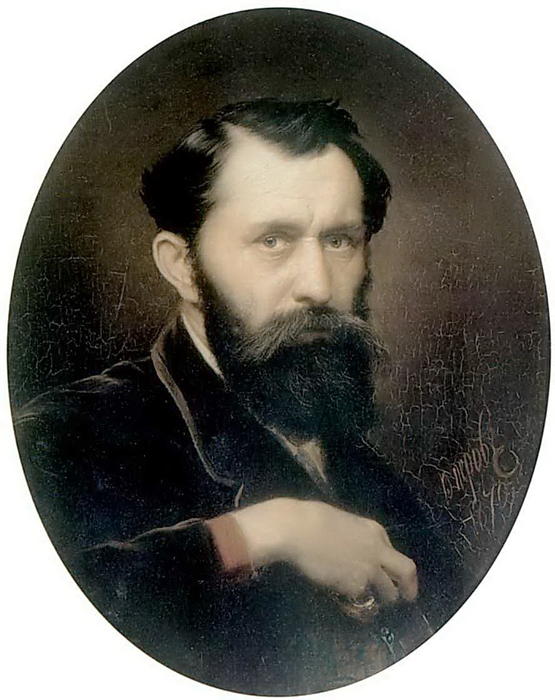
Self-portrait

Reproducere pictată manual în ulei

Pictură în ulei pe pânză, pictată manual de artiștii noștri la dimensiunea și ramele dorite de dumneavoastră, pe comandă. ( Comută pe versiunea Print Comută pe Imagine Digitală)

Descriere obiect de colecție

Explore Vasily Perov's captivating Self-Portrait (1870), a masterpiece of Russian Realism. Witness the artist’s skill & emotional depth in this iconic oil painting.

Biografie artist

"meta_description": "Vasily Perov (1834-1882) a fost un pictor realist de renume în Rusia, cunoscut pentru operele sale puternice care ilustrează viața rurală și probleme sociale din epocă. Stilul său distinctiv și realismul său au influențat generații de artiști."

de la ·

Capitolul 1

Ce dimensiune ar trebui să aibă?

Glisați pentru a schimba dimensiunea; imaginea din stânga prezintă cadrul la lățimea sa reală. Proporțiile originale sunt păstrate.

Standard
personalizat
CM
INCH

Alegeți dintre dimensiunile noastre prestabilite, care respectă proporțiile originale ale operei de artă.

lățime
înălțime

Introduceți lățimea și înălțimea necesare pentru a se potrivi ramei sau peretelui dumneavoastră. Această lucrare este pictată manual, așa că, pentru o dimensiune cu o formă diferită, artistul poate picta puțin mai mult în jurul imaginii sau poate tăia puțin din margini — dumneavoastră decideți. Vă vom trimite o simulare digitală pentru aprobare înainte de a începe pictarea. Imaginea afișată pe această pagină nu reprezintă rezultatul real — doar simularea este reprezentativă.

Capitolul 2

Cum ar trebui să ajungă?

Alege marginile tabloului pe pânză întinsă

Alege cadrul tău

Corner sample of the WhiteWrap canvas edge finish, stretched on lemn masiv bars
Alb lei1
Corner sample of the BlurSideWrap canvas edge finish, stretched on lemn masiv bars
Margini difuze lei1
Corner sample of the ExtendedWrap canvas edge finish, stretched on lemn masiv bars
Extins lei1
Corner sample of the P118B picture frame: polistiren turnat, 5 cm wide and 3 cm thick
P118B lei10
Corner sample of the P118H picture frame: polistiren turnat, 5 cm wide and 3 cm thick
P118H lei10
Corner sample of the P118W picture frame: polistiren turnat, 5 cm wide and 3 cm thick
P118W lei10
Corner sample of the P438Z picture frame: polistiren turnat, 5.5 cm wide and 3.5 cm thick
P438Z lei10
Corner sample of the P508JH picture frame: polistiren turnat, 7 cm wide and 3.5 cm thick
P508JH lei12
Corner sample of the P508YH picture frame: polistiren turnat, 7 cm wide and 3.5 cm thick
P508YH lei12
Corner sample of the P805H picture frame: polistiren turnat, 5 cm wide and 3.5 cm thick
P805H lei10
Corner sample of the P805Z picture frame: polistiren turnat, 5 cm wide and 3.5 cm thick
P805Z lei10
Corner sample of the P919BZ picture frame: polistiren turnat, 7 cm wide and 3.5 cm thick
P919BZ lei10
Corner sample of the P919G picture frame: polistiren turnat, 7 cm wide and 3.5 cm thick
P919G lei10
Corner sample of the P919XJ picture frame: polistiren turnat, 7 cm wide and 3.5 cm thick
P919XJ lei10
Corner sample of the P959ZH picture frame: polistiren turnat, 5 cm wide and 3 cm thick
P959ZH lei10
Corner sample of the P968JZ picture frame: polistiren turnat, 6 cm wide and 4 cm thick
P968JZ lei12
Corner sample of the W106C picture frame: lemn masiv, 5 cm wide and 3 cm thick
W106C lei8
Corner sample of the W218G picture frame: lemn masiv, 5 cm wide and 3 cm thick
W218G lei10
Corner sample of the W218JH picture frame: lemn masiv, 5 cm wide and 3 cm thick
W218JH lei8
Corner sample of the W218Y picture frame: lemn masiv, 5 cm wide and 3 cm thick
W218Y lei10
Corner sample of the W307PJ picture frame: lemn masiv, 6 cm wide and 3 cm thick
W307PJ lei10
Corner sample of the W316G picture frame: lemn masiv, 6 cm wide and 3 cm thick
W316G lei10
Corner sample of the W316PJ picture frame: lemn masiv, 6 cm wide and 3 cm thick
W316PJ lei8
Corner sample of the W316Y picture frame: lemn masiv, 6 cm wide and 3 cm thick
W316Y lei10
Corner sample of the W398PJ picture frame: lemn masiv, 5 cm wide and 3 cm thick
W398PJ lei8
Corner sample of the W4111J picture frame: lemn masiv, 6.5 cm wide and 3.5 cm thick
W4111J lei10
Corner sample of the W500HY picture frame: lemn masiv, 7 cm wide and 5 cm thick
W500HY lei15
Corner sample of the W500JH picture frame: lemn masiv, 7 cm wide and 5 cm thick
W500JH lei15
Corner sample of the W692G picture frame: lemn masiv, 8 cm wide and 4 cm thick
W692G lei12
Corner sample of the W849H picture frame: lemn masiv, 5 cm wide and 3 cm thick
W849H lei8
Corner sample of the W940BG picture frame: lemn masiv, 7.5 cm wide and 4.5 cm thick
W940BG lei15
Corner sample of the W953PJ picture frame: lemn masiv, 6 cm wide and 3.5 cm thick
W953PJ lei8
Corner sample of the H24-GOLD picture frame: lemn sculptat cu gesso, 10 cm wide and 6 cm thick
H24-GOLD lei30
Corner sample of the H24-SILVER picture frame: lemn sculptat cu gesso, 10 cm wide and 6 cm thick
H24-SILVER lei30
Corner sample of the H36-GOLD picture frame: lemn sculptat cu gesso, 15 cm wide and 6.5 cm thick
H36-GOLD lei45
Corner sample of the H36-SILVER picture frame: lemn sculptat cu gesso, 15 cm wide and 6.5 cm thick
H36-SILVER lei45

Ramă: . Dimensiuni cu ramă: .

Capitolul 3

Cine îl pictează și ar trebui să se schimbe ceva?

Exemple de elemente care pot fi modificate: Înlocuirea feței cu fotografia clientului; Adăugarea unui animal de companie (de ex., înlocuirea unei pisici cu un câine); Includerea unui mesaj ascuns în fundal; Modificarea peisajului sau a elementelor din fundal.
După plasarea comenzii, echipa OriginalUniqueArt.com va contacta clientul prin e-mail pentru instrucțiuni și va furniza o previzualizare (mockup)

Livrare în întreaga lume () în 3-4 săptămâni, în loc de cele 5 săptămâni standard. (7 Noiembrie). Fără compromisuri în ceea ce privește calitatea.

Capitolul 4

Ultimele retușuri

O plăcuță de identificare, ca la muzeu?

Detalii plăcuță din bronz gravat

This elegant plaque features the artist's name and the title of the artwork, finely engraved for a timeless presentation.

It is made from bronze with a refined, elegant finish. The text is precisely laser-engraved for a sharp and permanent result. Measuring 9x2 cm, the plaque is compact yet easy to read. It's built to be durable and scratch-resistant, offering a professional, museum-quality look. Mounting is simple thanks to the included adhesive backing.

Detalii plăcuță din acril transparent

The plaque includes essential engraved details such as the artist's name, the title of the artwork, the date it was created, the type of media used-like oil on canvas or watercolor-a brief description of the piece, and a QR code that links to the complete artwork information.

It is crafted from clear acrylic, offering a sleek, modern appearance. The text is UV-engraved in black to ensure strong visual contrast. With a size of 10x15 cm, it ensures optimal readability. It comes equipped with two metal hooks for secure wall mounting. The plaque is designed to be weather-resistant, making it suitable for various environments, and it includes interactive features that work seamlessly with smartphone scanning.

Detalii placă din acril negru

This elegant plaque includes engraved information such as the artist's name, the title of the artwork, the date it was created, the type of media used (like oil on canvas or watercolor), a short description of the artwork, and a QR code for quick access to more information.

The plaque itself is made from refined black acrylic with a premium finish. The text is laser-engraved in white for high contrast and readability. Its size is 10x15 cm, designed to be easy to read. It comes with two metal hooks for professional mounting. The design is sleek and fits any interior style. It is also weather-resistant and durable, with built-in digital integration for mobile compatibility.

Un lac protector?

Când aveți nevoie de el?

Capitolul 5

Tabloul tău, exact așa cum l-ai comandat

Self-portrait

Tehnică de reproducere

Dimensiune reproducere

-

Selecție de artiști de elită

Mai multe detalii, rafinament și timp suplimentar de execuție

-

Ramă pentru reproducere artistică

-

-

Pentru opere de artă sau reproduceri care depășesc 105 cm (aproximativ 41 de inch) pe oricare dintre laturi, cadrul va fi livrat demontat, sub formă de kit. Această metodă asigură o livrare sigură și previne deteriorarea în timpul transportului.

Este necesară asamblarea profesională – acest produs nu este de tip DIY (de făcut singur).
Kitul trebuie asamblat, iar pânza întinsă, de către un legător de cadre experimentat, utilizând adeziv pentru lemn (neinclus în colet), o cheie pentru întinderea pânzei și cleme pentru a menține barele la unghi drept în timp ce adezivul se usucă. Asamblarea incorectă sau tensiunea neuniformă a pânzei pot deteriora permanent opera de artă și nu sunt acoperite de garanția noastră.

  • Toate barele din lemn masiv sunt incluse, tăiate cu precizie la dimensiunea necesară.

  • Asamblat cu șuruburile incluse, plus adeziv pentru lemn pentru îmbinările de colț, care nu este furnizat și trebuie achiziționat de către tâmplarul dumneavoastră.

  • Sunt necesare unelte profesionale care nu sunt incluse: o șipte de întindere a pânzei (tensionator) și cleme pentru a menține barele la unghi drept în timp ce adezivul se usucă.

Important:
Îmbinările de colț necesită adeziv pentru lemn, barele trebuie fixate cu clești de strângere până când adezivul este complet uscat, iar întinderea pânzei pe cadrul asamblat necesită un clește pentru întins pânza. Niciunul dintre aceste elemente nu este inclus în kit. Vă rugăm să consultați un încadrator profesionist cu experiență înainte de a comanda această dimensiune.

Etichetă de prezentare

-

-

Lac de protecție

Lac lucios (intensifică nuanțele și oferă protecție împotriva luminii și a umidității)

-

Personalizează opera mea de artă

Exemple de elemente ce pot fi personalizate: Înlocuirea feței cu fotografia clientului; Adăugarea unui animal de companie (de exemplu, înlocuirea unei pisici cu un câine); Includerea unui mesaj ascuns în fundal; Modificarea peisajului sau a elementelor din fundal.

-

Livrare rapidă

Livrare la nivel mondial () în 3-4 săptămâni, în loc de cele 5 săptămâni standard. (7 Noiembrie). Fără compromisuri când vine vorba de calitate.

-

Livrare rapidă

Livrare la nivel mondial () în 5 săptămâni. (14 Noiembrie).

Inclus

Preț total calculat

lei 1430

Preț total lei 1430

Opțiunea cu sticlă este disponibilă doar pentru dimensiuni de sub 110 cm

Inclus în fiecare comandă

  • Livrare expres gratuită la nivel mondial
  • Pânză de in de înaltă calitate
  • Asigurare completă pentru transport
  • Garanție de rambursare a taxelor vamale
  • Garanția fidelității culorilor
  • Politica de retur în 100 de zile (doar pentru defecte de fabricație)
  • Garanție de rambursare 100%
  • Ofertă pentru comenzi multiple

Self-Portrait by Vasily Grigoryevich Perov: A Glimpse into the Soul of a Realist

The Self-portrait by Vasily Grigoryevich Perov, created in 1870, is a captivating example of Realism that continues to fascinate art enthusiasts worldwide. This oil on canvas painting measures 63 x 52 cm and stands as a testament to the artist's skill in capturing an accurate depiction of visual reality while simultaneously revealing profound psychological depth.

Artistic Context and Style: The Rise of Russian Realism

Perov was a key figure in the Russian Realist movement, which emerged in the mid-19th century as a reaction against Romantic idealism. Realism sought to depict life as it truly was, focusing on everyday subjects and social issues with unflinching honesty. Perov’s work had a significant impact on the development of art in Russia, influencing subsequent generations of artists who embraced this commitment to portraying reality without embellishment. The Self-portrait showcases Perov's ability to blend elements of realism with a deep understanding of human emotion. The painting is characterized by its use of earthy tones, subtle lighting, and an emphasis on texture, which creates a sense of depth and dimensionality. This meticulous attention to detail was central to the Realist aesthetic.

A Detailed Examination: Technique and Composition

The Self-portrait demonstrates Perov’s mastery of oil painting techniques. The artist employs subtle gradations of color and light to model the face and clothing, creating a sense of volume and realism. Noticeable brushstrokes add texture and vitality to the surface, preventing the image from appearing overly smooth or artificial. The composition is carefully considered; the subject's face is centrally positioned within an oval frame, drawing the viewer’s eye directly to his gaze. The dark background serves to isolate Perov, intensifying the focus on his expression and conveying a sense of introspection. The lighting appears soft and diffused, highlighting the textures of the man’s clothing and facial features.

Symbolism and Emotional Impact: A Portrait of Introspection

Beyond its technical brilliance, the Self-portrait resonates with viewers due to its emotional depth. Perov's expression is serious, perhaps even melancholic, inviting speculation about his inner thoughts and feelings. The long beard and hair, rendered with meticulous detail, suggest a man of intellect and experience. The overall somber mood, created by the muted color palette and dark background, contributes to an atmosphere of formality and introspection. While Perov was known for depicting scenes of social hardship in his other works (such as The Queue at The Fountain and A Meal in the Monastery), this self-portrait offers a more personal glimpse into the artist's own psyche.

Perov and His Contemporaries: A Legacy of Realism

Vasily Grigoryevich Perov (1834 – 1882) was born in Tobolsk, Russia. His early life was marked by complexity due to his illegitimacy, a circumstance that likely informed his later social commentary through art. He received training at the Alexander Stupin Art School and the Moscow School of Painting. Perov’s contributions to the art world are not limited to his Self-portrait. Other artists who explored the Realist style include Jean Baptiste Camille Corot and Albert Edelfelt. For example, Corot’s A Ford with Large Trees and Edelfelt's Conveying a Child showcase the versatility and range of Realism.

Întrebări și răspunsuri

Este "Self-portrait" de Vasilii Perov în domeniul public și care este motivul?

„Self-portrait” de Vasilii Perov este în domeniul public – drepturile de autor au expirat. Termenul de protecție a drepturilor de autor se calculează de la data decesului artistului, iar Vasilii Perov a decedat în 1882.

Ce vârstă avea Vasilii Perov când a creat "Self-portrait" în 1870?

Vasilii Perov a creat "Self-portrait" la vârsta de 37. Artistul s-a născut în 1833, iar lucrarea datează din 1870.

Ce nivel de contrast prezintă "Self-portrait" de Vasilii Perov?

Contrastul lumină-umbră din "Self-portrait" este înregistrat ca Statement. Contrastul descrie cât de puternic diferă zonele luminoase de cele întunecate.

Mai multe detalii despre această pictură

Previzualizare Previzualizare AR Comută pe versiunea Print Comută pe Imagine Digitală Trimite prin felicitare
Detalii despre lucrare Ghid Adaugă la favorite Descarcă imaginea Produse similare Radiografie Galerie foto Întrebări și răspunsuri Statistici

În cifre

  • 1870anul în care a fost pictată
  • 29rame din care puteți alege
  • dimensiuni standard, în propriile proporții
  • 5săptămâni pentru pictare și livrare
Vasilii Perov

Vasilii Perov

1833 - 1882, Rusia

Informații rapide despre Vasilii Perov

  • Artistic Movement Or Style: Realism critic
  • Artists Or Movements Influenced By This Artist:
    • Repin
    • Surikov
  • Artists Who Influenced This Artist: ['Stupin']
  • Date Of Birth: 2 Ianuarie 1834
  • Date Of Death: 29 Mai 1882
  • Full Name: Vasily Grigorevich Perov
  • Nationality: Rusă
  • Notable Artworks:
    • Sermon în sat
    • Coada la fântână
    • Ultima călătorie
  • Place Of Birth: Tobolsk, Rusia

Biografie artist

A Life Etched in Realism: Vasily Perov and the Soul of Russia

Vasily Grigoryevich Perov, born Vasily Vasiliev on January 21st, 1834, in the remote Siberian town of Tobolsk, was not merely a painter; he was a chronicler of his time, a social observer who wielded his brush to expose the realities—both beautiful and brutal—of 19th-century Russia. His life story is inextricably linked to his art, shaped by an unconventional upbringing that instilled within him a profound empathy for the marginalized and a relentless desire to capture the essence of ordinary Russian life. Born out of wedlock to Baron Grigory Kridener and Akulina Ivanova, Perov’s early years were marked not by privilege but by a sense of displacement and a keen awareness of social inequalities—themes that would become central to his artistic vision. The adoption of the surname “Perov,” derived from the Russian word for ‘feather,’ a reference to his early skill in calligraphy, subtly foreshadowed his meticulous attention to detail and his dedication to rendering the world around him with painstaking accuracy. His formal artistic journey began at the Alexander Stupin Art School in Arzamas, where he honed fundamental skills before enrolling at the Moscow School of Painting, Sculpture and Architecture in 1853—a pivotal step that exposed him to a wider range of artistic influences and solidified his commitment to pursuing a career as an artist.

Early Recognition and Artistic Development

Perov’s early works quickly garnered attention within the Imperial Academy of Arts, culminating in silver and gold medals for paintings like “Commissary of Rural Police Investigating” (1857) and, most notably, "Sermon in a Village" (1861). The latter painting, depicting a disengaged congregation during a church service, became an instant sensation, catapulting Perov into the national spotlight and securing him the extraordinary opportunity to study abroad. This period in Europe—primarily Paris and various German cities—proved transformative, exposing him to new artistic techniques and broadening his understanding of the world beyond Russia. However, it was not simply exposure that shaped his style; Perov’s time abroad deepened his commitment to realism, a movement he would later champion as a founding member of the Peredvizhniki (Wanderers). He absorbed the lessons of artists like Gustave Courbet and Jean-François Millet, masters of depicting everyday life with unflinching honesty. Returning to Russia in 1865, Perov embarked on a prolific period of artistic production, creating some of his most enduring masterpieces—works that would come to define his legacy as one of Russia’s greatest realist painters.

The Voice of the Voiceless: Themes and Techniques

Perov's artistic vision was profoundly rooted in a commitment to portraying Russian society with an uncompromising honesty. He deliberately rejected the idealized depictions favored by many of his contemporaries, choosing instead to focus on the lives of ordinary people—peasants, laborers, the forgotten, and those struggling against poverty and injustice. His paintings are not mere representations; they are powerful social commentaries that expose the hardships, inequalities, and spiritual emptiness prevalent in 19th-century Russia. "Sermon in a Village," for example, subtly critiques religious hypocrisy by depicting a congregation largely detached from the sermon, while “The Queue at the Fountain” starkly illustrates the daily struggles of rural life—the long wait for water, the weariness etched on faces, and the palpable sense of hardship. His technique was characterized by meticulous detail, somber color palettes dominated by browns, grays, and muted greens, and a masterful use of light and shadow to create dramatic effect. He wasn’t interested in romanticizing poverty or suffering; rather, he sought to present it with dignity and empathy, forcing viewers to confront uncomfortable truths about their own society. Works like “The Last Journey,” depicting a peasant funeral procession, and "Troika: Apprentice Workmen Carrying Water" are poignant examples of his ability to evoke profound emotional responses through realistic portrayals of everyday life. Perov’s skill extended beyond oil painting; he also excelled in etching, as demonstrated by the powerful monochromatic work “Naushnitsa. Before the storm,” which showcases his mastery of chiaroscuro and intricate detail.

Founding a Movement: The Peredvizhniki

Perov's dedication to realism aligned perfectly with the burgeoning spirit of artistic rebellion that led to the formation of the Peredvizhniki (Wanderers) in 1870. This collective of Russian realist painters broke away from the constraints of the Academy, establishing an independent society dedicated to exhibiting art throughout Russia—reaching audiences beyond the confines of St. Petersburg and Moscow. The Peredvizhniki aimed to bring art directly to the people, to address social issues through their work, and to promote a uniquely Russian artistic identity. Perov was not merely a member; he was a founding force, instrumental in shaping the movement’s ideals and advocating for its principles. His commitment to portraying the lives of ordinary Russians resonated deeply with the Peredvizhniki's mission, solidifying his position as a leading figure within the group. The Wanderers’ exhibitions became immensely popular, attracting large crowds and sparking important conversations about art, society, and national identity.

Legacy and Enduring Influence

Vasily Perov’s untimely death from tuberculosis in 1882 at the age of 48 marked a significant loss for Russian art. However, his legacy continued to inspire generations of artists who followed in his footsteps. His influence can be seen in the works of Ilya Repin and Vasily Surikov, both masters of realist painting who further developed the tradition he helped establish. Perov’s paintings remain relevant today not only for their artistic merit but also for their enduring social commentary. They serve as a powerful reminder of the hardships faced by ordinary people throughout history and continue to provoke empathy and understanding. His works are now housed in prominent collections, including the Tropinin and Contemporary Moscow Artists Museum, ensuring that his vision continues to resonate with audiences worldwide. Perov’s contribution extends beyond mere artistic skill; he was a social conscience etched onto canvas, a voice for the voiceless, and a pioneer of Russian realism.

Informații rapide

  • Movement: Realism
  • Dimensions: 63 x 52 cm
  • Subject or theme: Self-portrait
  • Year: 1870
  • Medium: Oil on canvas
  • Notable elements or techniques: Earthy tones, subtle lighting

Test de cunoștințe despre artă

Fiecare întrebare are un singur răspuns corect.

Întrebare 1:
What artistic movement is Vasily Perov’s ‘Self-Portrait’ most closely associated with?
Întrebare 2:
Approximately what year was the 'Self-Portrait' created?
Întrebare 3:
What is a prominent characteristic of the lighting in the ‘Self-Portrait’?
Întrebare 4:
Which of the following best describes the overall mood conveyed by the painting, considering its color palette and subject's expression?
Întrebare 5:
What is a notable aspect of Perov’s artistic contributions, as highlighted in the description?