

 Previzualizare
 Trimite prin felicitare
 Distribuie
 Detalii despre lucrare
 Ghid
Ghid

 Descarcă imaginea
 Produse similare
 Radiografie
 Galerie foto
 Q&A
Q&A Statistici
Positano


 Vezi mai mult
Lucrarea de artă afișată pe această pagină este protejată de legile privind drepturile de autor, ceea ce înseamnă că nu putem crea sau vinde în mod legal o reproducere identică. Această protecție este garantată prin acorduri internaționale, precum Convenția de la Berna și de legile naționale, inclusiv cele prevăzute de Legea dreptului de autor din S.U.A. – Titlul 17. Toate drepturile rezervate. Orice reproducere neautorizată este interzisă.
Această metodă respectă pe deplin reglementările privind drepturile de autor, deoarece nu implică copierea sau duplicarea operei protejate. În schimb, este o reinterpretare creativă – o pictură nouă, influențată de original, dar care nu este identică cu acesta.
Giclée / Imprimare artistică
Printuri giclée sau pe canvas de calitate muzeală, cu proces de producție rapid și opțiuni flexibile de finisare. ( Comandă pictură realizată manual Comută pe Imagine Digitală)




P118B lei10

P118H lei10

P118W lei10

P438Z lei10

P508JH lei12

P508YH lei12

P805H lei10

P805Z lei10

P919BZ lei10

P919G lei10

P919XJ lei10

P959ZH lei10

P968JZ lei12

W106C lei8

W218G lei10

W218JH lei8

W218Y lei10

W307PJ lei10

W316G lei10

W316PJ lei8

W316Y lei10

W398PJ lei8

W4111J lei10

W500HY lei15

W500JH lei15

W692G lei12

W849H lei8

W940BG lei15

W953PJ lei8




Alegeți dintre dimensiunile noastre prestabilite, care respectă proporțiile originale ale operei de artă.

Introduceți lățimea și înălțimea necesare pentru a se potrivi ramei sau peretelui dumneavoastră. O printare poate fi doar tăiată, niciodată extinsă dincolo de dimensiunea imaginii originale, astfel încât o dimensiune cu o formă diferită va pierde o parte din imagine. Vă trimitem o simulare digitală pentru aprobare înainte de a imprima orice. Imaginea afișată pe această pagină nu prezintă tăierea reală — doar simularea arată acest lucru.
Livrare în întreaga lume () în 2 săptămâni, în loc de cele 4/5 săptămâni standard. (30 Octombrie)

Livrare expres gratuită la nivel mondial

Pânză de in de înaltă calitate

Asigurare completă pentru transport

Garanție de rambursare a taxelor vamale

Garanția fidelității culorilor

Politica de retur în 100 de zile (doar pentru defecte de fabricație)

Garanție de rambursare 100%

Ofertă pentru comenzi multiple
 Opțiunea cu sticlă este disponibilă doar pentru dimensiuni de sub 110 cm

Positano
Giclée / Imprimare artistică
Dimensiune reproducere
-


Preț total calculat
lei 372
A Sun-Drenched Escape: The Vibrant Spirit of Positano
In this captivating 1925 masterpiece, Vaclav Vytlacil invites the viewer to step into a world where light and color dance across the rugged Italian coastline. Positano is not merely a landscape; it is a sensory experience that captures the very essence of Mediterranean vitality. The painting presents a bustling village scene, where the architecture seems to cling to the cliffs with a rhythmic grace. A striking red roof serves as the visual heartbeat of the composition, drawing the eye toward a distant church that anchors the horizon. Through Vytlacil’s lens, the village becomes a stage for life itself, populated by figures that move through the sunlit streets, creating a sense of continuous, joyful motion.
The technique employed in this work reflects a profound mastery of atmosphere and light. Even before his later evolution into more radical abstraction, Vytlacil demonstrated an uncanny ability to manipulate color to evoke temperature and mood. The interplay between the warm tones of the architecture and the bright, clear light suggests a midday sun that illuminates every corner of the scene. One can almost feel the warmth radiating from the stone walls and hear the distant hum of conversation near the village bench. For the discerning collector or interior designer, this piece offers a brilliant focal point, bringing an infusion of Mediterranean warmth and historical elegance to any sophisticated space.
Historical Resonance and Artistic Legacy
Created during a transformative period in Vytlacil’s early career, Positano stands as a testament to the artist's foundational explorations of form and light. While he would later become a pivotal figure in American modernism and a dedicated disciple of Hans Hofmann, this earlier work reveals his deep connection to the classical beauty of the European landscape. The painting captures a moment in time—1925—when the world was caught between the traditional romanticism of the past and the burgeoning energy of the modern era. There is a nostalgic charm in the depiction of the village clock and the quiet moments of repose on the street benches, yet the vibrancy of the palette hints at the expressive power that would define his later, more abstract achievements.
Beyond its aesthetic appeal, the artwork carries a profound emotional weight. It evokes a sense of wanderlust and a longing for the timeless beauty of the Amalfi Coast. The composition, with its layers of depth and scattered figures, creates an inviting narrative that allows the viewer to lose themselves in the details of the village life. Whether placed in a sunlit gallery or a curated residential collection, this reproduction serves as a window into a more luminous era, offering an enduring sense of peace, energy, and Mediterranean splendor.
Întrebări și răspunsuri
Cine este autorul și din ce an este "Positano"?
Vaclav Vytlacil a creat "Positano" în 1925.
În ce muzeu se află originalul "Positano"?
Puteți vedea originalul "Positano" la Boca Raton Museum of Art, Boca Raton, Statele Unite ale Americii.
"Positano" de Vaclav Vytlacil folosește contrastul puternic sau armonii delicate?
Compoziția cromatică a operei "Positano" de Vaclav Vytlacil îmbină un Bold contrast cu o Discordant Palette armonie.
Biografie artist
The Architect of Abstraction: The Life and Legacy of Vaclav Vytlacil
In the vibrant tapestry of American modernism, few threads are as intricately woven or as profoundly influential as those spun by Vaclav Vytlacil. Born in New York City on November 1, 1892, to Czech immigrants, Vytlacil’s journey was one of constant movement and artistic evolution. Though his roots were planted in the bustling energy of Manhattan, his early years in Chicago provided a diverse cultural backdrop that would later inform the rich, layered textures of his work. His formal odyssey began at the Art Institute of Chicago in 1906, where he first learned to translate the physical world into pigment and form. This foundational period was marked by a rigorous pursuit of technical mastery, a trait that would remain a cornerstone of his practice even as he ventured into the radical territories of abstraction.
The trajectory of Vytlacil’s career took a decisive turn when he moved to New York to study at the prestigious Art Students League in 1913. Under the watchful eye of the portraitist John C. Johansen, Vytlacil developed an acute sensitivity to tonal control and meticulous observation. However, the boundaries of traditional representation could not long contain his burgeoning curiosity. Seeking the vanguard of innovation, he turned his gaze toward Europe, immersing himself in the artistic currents of Munich. It was during this transformative period that he encountered the legendary Hans Hofmann. This meeting would become the defining moment of his life, establishing a profound intellectual and aesthetic bond. As one of Hofmann’s most devoted disciples, Vytlacil embraced the revolutionary principles of spatial tension and color dynamics, eventually becoming a vital conduit for these ideas as they crossed the Atlantic to reshape American art.
A Symphony of Form and Color
Vytlacil’s oeuvre serves as a breathtaking chronicle of an artist transitioning from the tangible to the transcendental. His early works often found beauty in the quietude of the domestic sphere, utilizing still life compositions to explore the interplay of light and volume. In masterpieces such as Still Life with Grapes, Vase, and Fish, one can witness the delicate tension between classical subject matter and modern experimentation. He possessed a singular ability to elevate the mundane—a cluster of grapes or the curve of a vase—into something monumental through deliberate brushwork and a sophisticated understanding of weight and balance. These compositions were not merely depictions of objects but were explorations of how light breathes life into form, creating a sense of three-dimensional presence that pulls the viewer into a shared, tactile space.
As his relationship with Cubist aesthetics deepened, Vytlacil’s work underwent a radical metamorphosis. The structured reality of his early still lifes gave way to the rhythmic energy of abstraction. His later compositions, such as the striking Abstract Composition [Triptych], demonstrate a mastery of geometric shapes, bold lines, and textured surfaces. In these works, the artist moved beyond the representation of objects to focus on the pure emotional resonance of color and space. He utilized the lessons learned from Hofmann to create canvases that felt alive with movement, where the boundaries between foreground and background dissolved into a harmonious dialogue of energetic strokes. This evolution reflects a lifelong commitment to pushing the limits of what paint could communicate, moving from the observation of the external world to the expression of an internal, rhythmic truth.
Historical Significance and Enduring Influence
Beyond his individual canvases, Vaclav Vytlacil played a crucial role in the pedagogical landscape of mid-century America. He was not merely a practitioner of modernism but one of its most dedicated educators and advocates. Following World War II, he became instrumental in disseminating the transformative teachings of Hans Hofmann across the United States, lecturing at various institutions and fostering a new generation of artists who would go on to define the American avant-garde. His ability to bridge the gap between European innovation and American experimentation helped solidify a unique identity for American abstraction, making it a formidable force on the global stage.
Today, the legacy of Vytlacil is preserved in the permanent collections of the world's most esteemed institutions, including:
- The Museum of Modern Art (MoMA)
- The Metropolitan Museum of Art
- The Smithsonian American Art Museum
Vytlacil’s contribution to art history lies in his role as a bridge-builder—between tradition and revolution, between the figurative and the abstract, and between the teachings of the Old World and the burgeoning spirit of the New. His life remains a testament to the power of artistic devotion and the enduring impact of a vision that seeks to find the infinite within the finite.

Vaclav Vytlacil
1890 - 1984
Detalii rapide
- Full Name: Vaclav Vytlacil
- Nationality: American
- Date Of Birth: 1890
- Date Of Death: 1984
- Place Of Birth: New York City, USA
- Notable Artworks:
- Abstract Composition [Triptych]
- Still Life
- Artistic Movement Or Style: Abstract American Art; Hans Hofmann's teachings
- Artists Who Influenced This Artist: Hans Hofmann
- Artists Or Movements Influenced By This Artist: Cubist Movement
Articole similare

Katsushika Hokusai: Cele Mai Iubite 25 de Opere de Artă – Inspirație pentru Decorul Casei Tale
Descoperă cele mai frumoase 25 de opere de artă semnate de Katsushika Hokusai, maestru ukiyo-e. Explorează istoria valului Kanagawa și a picturilor japoneze iconice. Reproduceri de calitate muzeală pentru decorul casei tale pe OriginalUniqueArt.com!

Crimson Threads of Narrative: Exploring Symbolism & Representation in Artworks Featuring the Red Dress
Explore the rich symbolism of the red dress in art history! From ancient power displays to iconic portraits like Cézanne’s 'Madame Cezanne', discover the cultural and artistic significance behind this captivating color. Expert analysis & insights.

Mark Rothko: Cele Mai Iconice 25 De Capodopere – Artă Abstractă pentru Decor Rafinat
Descoperă cele mai iconice 25 de picturi abstracte ale lui Mark Rothko! Explorează istoria, culorile și emoțiile din spatele fiecărei capodopere. Reproduceri artă de calitate muzeală & inspirație decor pe OriginalUniqueArt.com.
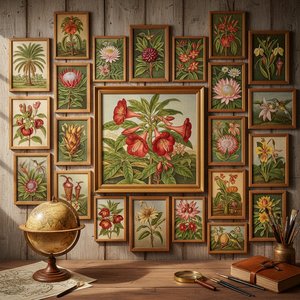
Marianne North: Cele Mai Frumoase 25 de Opere – Artă Botanică Excepțională pentru Decorul Casei Tale
Descoperă cele mai frumoase 25 de picturi ale lui Marianne North, o pionieră a artei botanice victoriene. Explorează acuarelele vibrante și peisajele exotice care au capturat natura într-un stil unic. Reproduceri artă de calitate muzeală disponibile pe OriginalUniqueArt.com!
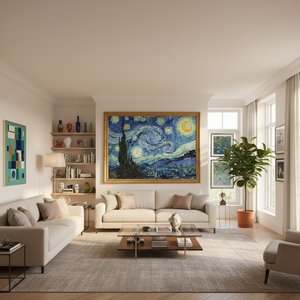
Top 10 Tablouri Celebre pentru un Living de Poveste | OriginalUniqueArt.ro
Descoperă top 10 tablouri celebre perfecte pentru livingul tău! De la Van Gogh la Da Vinci, explorează istoria și frumusețea fiecărei opere de artă. Reproduceri de calitate muzeală pe OriginalUniqueArt.ro. Inspiră-te acum!