

 Previzualizare
 Trimite
 Distribuie
 Detalii despre lucrare

 Descarcă
 Produse similare
 Radiografie
 Diapozitive automate
Screen


 Vezi mai mult
Reproducere pictată manual în ulei
Pictură în ulei pe pânză, realizată manual de artiștii noștri la dimensiunea și ramele dorite de dumneavoastră, pe comandă. ( Comandă printul Cumpără imaginea)




































Alegeți dintre dimensiunile noastre prestabilite, care respectă proporțiile originale ale operei de artă.

Puteți introduce propriile dimensiuni pentru a se potrivi unui anumit cadru sau spațiu. Dacă dimensiunea selectată nu corespunde proporțiilor imaginii originale, vom decupa opera de artă sau vom extinde pictura cu elemente suplimentare pictate manual. O simulare digitală vă va fi trimisă pentru aprobare înainte de începerea producției.
Vă rugăm să rețineți că previzualizarea de pe ecran nu reflectă decuparea sau extinderea reală. Doar macheta va arăta cu exactitate compoziția finală.
Deși sunt disponibile dimensiuni personalizate, vă recomandăm să selectați o dimensiune din lista predefinită pentru a păstra proporțiile originale.
După plasarea comenzii, echipa OriginalUniqueArt.com va contacta clientul prin e-mail pentru instrucțiuni și îi va furniza o previzualizare a machetei
Livrare în întreaga lume () în 3-4 săptămâni, în loc de cele 5 săptămâni standard. (29 August). Fără compromisuri în ceea ce privește calitatea.

Livrare expres gratuită la nivel mondial

Pânză de in de înaltă calitate

Asigurare completă pentru transport

Garanție de rambursare a taxelor vamale

Garanția fidelității culorilor

Politica de retur în 60 de zile (doar pentru defecte)

Garanție de rambursare 100%

Ofertă pentru comenzi multiple
 Opțiunea cu sticlă este disponibilă doar pentru dimensiuni de sub 110 cm

Screen
Tehnică de reproducere
Dimensiune reproducere
-


Preț total calculat
$ 300
Biografie artist
The Visionary Synthesis of Tsuda Sen
In the twilight of the Edo period, a time of profound transition for Japan, the works of Tsuda Sen emerged as a breathtaking bridge between ancient tradition and the encroaching modern world. Born into the disciplined atmosphere of a samurai family in Tokyo, Sen possessed a unique intellectual lineage that allowed him to look beyond the borders of his nation. While many of his contemporaries remained anchored in the established aesthetics of Japanese calligraphy, Sen was driven by an insatiable curiosity for the scientific and the structural. His early education, heavily influenced by his father’s foresight regarding Western knowledge, instilled in him a rare ability to observe the natural world through a lens of both botanical precision and artistic grace. This duality—the scientist's eye for detail and the artist's soul for expression—would become the hallmark of his enduring legacy.
The true brilliance of Sen’s career lies in his pioneering development of what is now recognized as Namban grammar, a revolutionary decorative art form. This was not merely an aesthetic choice but a profound linguistic experiment translated into visual media. By studying the rhythmic structures and geometric complexities of European grammatical forms, Sen sought to create a new visual language for Japan. He moved away from the fluid, often organic strokes of traditional ink wash toward a more structured, deliberate use of shapes and stylized lettering. This innovation allowed for a level of precision and complexity that could convey intricate ideas with a newfound elegance, effectively mimicking the structural logic of Western thought while maintaining a distinctly Japanese spirit.
A Legacy of Botanical Precision and Decorative Innovation
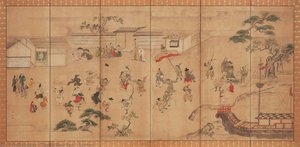
Beyond his linguistic experiments, Sen’s work was deeply rooted in the tangible beauty of the natural world. His training in botany at Tokyo Imperial University provided him with an unparalleled understanding of organic forms, which he seamlessly integrated into his decorative compositions. This scientific rigor breathed life into his screens and paintings, where every leaf, petal, and insect was rendered with a meticulousness that bordered on the hyper-realistic, yet always remained harmoniously balanced within his stylized frameworks. His ability to marry the rigid geometry of his Namban style with the delicate textures of nature created a tension that was both captivating and avant-garde for his era.
The historical significance of Tsuda Sen cannot be overstated, as he stood at the precipice of Japan's modernization. His collaborative efforts, most notably alongside his son, Tsuda Umeko, helped to forge a path where Eastern decorative traditions could dialogue with Western structural principles. Through his trade-themed screens and innovative use of geometric motifs, he prepared the Japanese visual consciousness for the globalized era that was to follow. Today, his work remains a testament to the power of cross-cultural synthesis, reminding us that true innovation often occurs at the intersection of disparate worlds, where the precision of science meets the boundless imagination of art.
tsuda dou-sen
1804 - 1856 , Japan
Detalii rapide
- Artistic Movement Or Style: Namban-jin Xu-ekizu
- Date Of Birth: August 6, 1837
- Date Of Death: April 24, 1908
- Full Name: Tsuda Sen
- Nationality: Japanese
- Notable Artworks: ['Trade Screens']
- Place Of Birth: Tokyo, Japan

