

 Vezi în context
 Trimite
 Distribuie
 Detalii
 Ghidul

 Descarcă
 Produse similare
 Radiografie
 Diaporama
 Statistici
The Fly Agaric


 Citește mai mult
Lucrarea de artă afișată pe această pagină este protejată de legile privind drepturile de autor, ceea ce înseamnă că nu putem crea sau vinde în mod legal o reproducere identică. Această protecție este garantată prin acorduri internaționale, precum Convenția de la Berna și de legile naționale, inclusiv cele prevăzute de Legea dreptului de autor din S.U.A. – Titlul 17. Toate drepturile rezervate. Orice reproducere neautorizată este interzisă.
Această metodă respectă pe deplin reglementările privind drepturile de autor, deoarece nu implică copierea sau duplicarea operei protejate. În schimb, este o reinterpretare creativă – o pictură nouă, influențată de original, dar care nu este identică cu acesta.
Giclée / Imprimare artistică
Printuri giclée sau pe canvas de calitate muzeală, cu proces de producție rapid și opțiuni flexibile de finisare. ( Comandă pictură realizată manual Treci la imagine digitală)




P118B lei10

P118H lei10

P118W lei10

P438Z lei10

P508JH lei12

P508YH lei12

P805H lei10

P805Z lei10

P919BZ lei10

P919G lei10

P919XJ lei10

P959ZH lei10

P968JZ lei12

W106C lei8

W218G lei10

W218JH lei8

W218Y lei10

W307PJ lei10

W316G lei10

W316PJ lei8

W316Y lei10

W398PJ lei8

W4111J lei10

W500HY lei15

W500JH lei15

W692G lei12

W849H lei8

W940BG lei15

W953PJ lei8




Alegeți dintre dimensiunile noastre prestabilite, care respectă proporțiile originale ale operei de artă.

Introduceți lățimea și înălțimea de care aveți nevoie, pentru a se potrivi ramei sau peretelui dumneavoastră. O printare poate fi doar tăiată, niciodată extinsă dincolo de dimensiunea imaginii originale, astfel încât o dimensiune cu o formă diferită va pierde o parte din imagine. Vă trimitem o simulare digitală pentru aprobare înainte de a imprima orice. Imaginea afișată pe această pagină nu prezintă tăierea reală — doar simularea arată acest lucru.
Livrare în întreaga lume () în 2 săptămâni, în loc de cele 4/5 săptămâni standard. (25 Octombrie)

Livrare expres gratuită la nivel mondial

Pânză de in premium

Asigurare completă pentru transport

Garanție de rambursare a taxelor vamale

Garanția fidelității culorilor

Politica de retur în 100 de zile (doar pentru defecte)

Garanție de rambursare 100%

Reducere pentru comenzi multiple
 Opțiunea cu sticlă este disponibilă doar pentru dimensiuni de sub 110 cm

The Fly Agaric
Giclée / Imprimare artistică
Dimensiune reproducere
-


Preț total
lei 370
A Botanical Symphony of Beauty and Peril
In the quiet, focused realm of botanical naturalism, Timothy John Williamson’s The Fly Agaric emerges as a breathtaking testament to the delicate balance between fascination and fear. This exquisite oil painting serves as an intimate encounter with one of nature's most iconic specimens, capturing the vibrant, scarlet caps of the Amanita muscaria with a precision that borders on the scientific. The composition is masterfully tight, pulling the viewer into a shallow, immersive space where the mushrooms command the entirety of the frame against a soft, pale beige backdrop. This deliberate lack of deep perspective forces an immediate, visceral connection with the subject, making the velvety textures and the intricate, white-speckled patterns of the fungal caps feel almost tangible to the touch.
The technique employed by Williamson is nothing short of masterful, echoing the meticulous traditions of 19-century botanical illustrators while maintaining a contemporary vitality. Through the careful layering of oil paints, the artist builds a rich, multidimensional surface that captures the subtle interplay of light and shadow. One can trace the soft, diffused illumination as it dances across the rounded contours of the caps and settles into the delicate, rhythmic gills beneath. The brushwork is both controlled and expressive, particularly in the rendering of the organic, branching mycelial networks and the sturdy, cylindrical stalks. This level of detail provides a sensory experience that transcends mere representation, offering a tactile quality that makes the artwork a centerpiece of profound depth.
The Philosophical Eye: Symbolism and Emotional Resonance
Beyond its technical brilliance, The Fly Agaric carries a heavy symbolic weight that resonates with both the intellect and the soul. As an artist who is equally renowned for his contributions to epistemology, Williamson brings a unique philosophical depth to his botanical studies. The fly agaric mushroom is a potent symbol of duality; it is visually enchanting with its brilliant oranges and reds, yet it possesses a notorious toxicity. This tension between aesthetic allure and inherent danger creates a subtle, unsettling undertone within the piece—a reminder that nature’s most captivating wonders often harbor hidden risks. It is an exploration of the boundary between knowledge and the unknown, much like the philosophical inquiries that define the artist's broader career.
For the discerning collector or interior designer, this artwork offers a sophisticated emotional landscape. It possesses the ability to anchor a room with its warm, earthy palette and organic forms, providing a sense of grounded, natural elegance. Whether placed in a curated gallery setting or as a focal point in a refined living space, the painting invites contemplation and conversation. It is not merely a decoration but an intellectual invitation to observe the minute complexities of life. Owning a reproduction of this caliber allows one to bring a piece of this profound, quiet drama into their own environment, celebrating the intricate, often overlooked beauty of the natural world.
Întrebări și răspunsuri
Care sunt tehnica și dimensiunile lucrării "The Fly Agaric" de Timothy John Williamson?
"The Fly Agaric" a fost realizat în Oil On Canvas și măsoară 20 x 30 cm în forma sa originală.
Este "The Fly Agaric" liber de drepturi de autor?
"The Fly Agaric" de Timothy John Williamson este în încă protejată de drepturile de autor. Acest statut reglementează modul în care imaginea lucrării poate fi reprodusă.
Există o prezentare de diapozitive pentru "The Fly Agaric" de Timothy John Williamson?
"The Fly Agaric" de Timothy John Williamson poate fi vizualizată sub formă de diaporama pe pagina dedicată operei, Diapozitive.
Biografie artist
A Dual Pursuit: The Philosophical Eye of Timothy John Williamson
Timothy John Williamson, born in Uppsala, Sweden in 1955, presents a truly remarkable convergence of intellectual and artistic pursuits. He’s not merely a philosopher who occasionally ventures into art, nor an artist whose work is solely inspired by philosophical concepts; rather, he embodies a rare synthesis – a rigorous analytical mind coupled with meticulous observational skill. His journey represents a beautiful demonstration of how seemingly disparate disciplines can enrich one another, resulting in creations that are both intellectually stimulating and profoundly aesthetically compelling. While globally recognized as a leading figure in contemporary philosophy—particularly for his groundbreaking contributions to epistemology, most notably detailed in *Knowledge and Its Limits* (2000)—Williamson has quietly cultivated an impressive body of botanical illustrations, specializing in the intricate beauty and often overlooked world of fungi. This artistic endeavor isn’t simply a pastime; it's an extension of his philosophical inquiry, a tangible exploration of perception, detail, and fundamentally, the very nature of knowledge itself.From Logic to Lichens: The Development of a Unique Vision
Williamson’s intellectual foundation was firmly rooted in the traditions of British analytic philosophy. He was deeply influenced by giants of the field – figures like Bertrand Russell and Ludwig Wittgenstein – absorbing their emphasis on precision, clarity, and logical structure. This philosophical lineage profoundly shaped his approach to both his academic work and his artistic practice. He developed what he termed ‘knowledge-first epistemology’ – a perspective that places knowledge at the very core of epistemological investigation. This wasn't an arbitrary shift; it stemmed from a deep and abiding appreciation for the natural world, specifically its hidden complexities. He found in fungi—often dismissed as unremarkable or even slightly unsettling—a subject perfectly suited to his meticulous nature and analytical mind. Their complex forms, subtle color variations, and delicate structures demanded careful study, mirroring the painstaking analysis he applied to philosophical problems. The act of painting became a form of visual thinking – a way to explore the boundaries between what we perceive and how we understand it. It was a deliberate attempt to translate abstract thought into a concrete, tangible representation.The Art of Observation: Style and Themes
Williamson’s botanical illustrations are characterized by an unwavering commitment to realism and scientific accuracy. He doesn't simply *depict* fungi; he dissects them visually, revealing their intricate morphology with astonishing detail. Each painting is a testament to hours spent observing, meticulously capturing the subtle nuances of texture, color, and form. His style evokes the tradition of 19th-century botanical illustration – reminiscent of the detailed work produced for scientific documentation during that era. However, Williamson’s paintings transcend mere technical skill; they possess an aesthetic sensibility that elevates them to the realm of fine art. The compositions are often deceptively simple, focusing attention on the inherent beauty and unique character of the subject matter itself. He deliberately avoids imposing a narrative or symbolic meaning onto his work; instead, he allows the fungi themselves to speak, revealing their individual qualities through precise representation. Key themes consistently emerge: detailed realism, botanical accuracy, and a powerful demonstration of the interconnectedness between art and scientific documentation. He seeks not to romanticize nature, but to present it with an honest and unvarnished portrayal.Notable Works and Growing Recognition
Williamson’s portfolio encompasses a diverse range of fungal studies, each showcasing his exceptional skill and dedication to detail. Paintings like *An Unknown Mahogany Cortinarius*, *The Lobster Mushroom*, and detailed studies of species such as *Boletinus porosu*, *Clitocybe Multiceps*, and *Paxillus atrotomentosus* demonstrate his ability to capture the subtle variations within fungal species. Works like *Cortinarius glaucopus* highlight his fascination with complex forms and textures, while pieces like *The Fly Agaric* – a striking depiction of this well-known but often misunderstood fungus – stand as particularly iconic examples of his work. While not widely exhibited in mainstream art galleries, Williamson’s paintings have gained increasing recognition within specialized circles for their precision, beauty, and unwavering commitment to capturing the natural world with scientific accuracy. The availability of his works through platforms like OriginalUniqueArt.com is steadily bringing this exceptional talent to a wider audience.A Legacy Bridging Disciplines
Timothy John Williamson’s legacy extends beyond his philosophical contributions and his botanical illustrations; it lies in the very act of demonstrating the profound interconnectedness between seemingly disparate fields. He embodies the idea that rigorous intellectual inquiry can inform and enrich artistic expression, and vice versa. His work challenges us to reconsider the boundaries between science and art, logic and intuition, observation and understanding. In a world increasingly defined by specialization, Williamson stands as a powerful advocate for interdisciplinary thinking – a holistic approach to knowledge. His paintings serve as a reminder that true insight often emerges from the intersection of different perspectives, and that beauty can be found in the most unexpected places—even within the intricate structures of a humble fungus. He represents a rare convergence of mind and vision, leaving behind a body of work that is both intellectually stimulating and profoundly beautiful.
Timothy John Williamson
1955 - , Suedia
Informații rapide
- Artistic Movement Or Style: Realism detaliat
- Artists Or Movements Influenced By This Artist:
- Tubism
- Art botanic
- Artists Who Influenced This Artist:
- Russell
- Wittgenstein
- Date Of Birth: 1955
- Full Name: Timothy John Williamson
- Nationality: Britanic
- Notable Artworks:
- Cortinarius
- Agaric
- Boletinus
- Place Of Birth: Uppsala, Suedia
Articole conexe
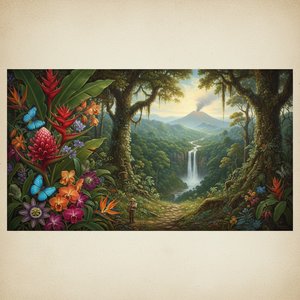
Exploring the Vibrant World of Marianne North: A Journey Through Botanical and Exotic Landscapes
Discover the breathtaking botanical world of Marianne North. Explore her vibrant Victorian oil paintings of exotic landscapes, from Brazil to Jamaica, through an expert art-historical lens. Perfect for classic art enthusiasts and collectors of fine natural history art.
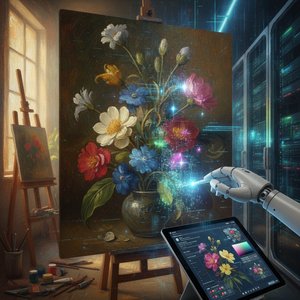
Digital Flora to Fine Art: Transform Your Botanical Photos into Bespoke AI-Driven Oil Masterpieces
Elevate your space with bespoke botanical art. Transform your nature photography into hand-painted oil masterpieces using our cutting-edge AI style transformation and professional artistry. Discover a timeless legacy of texture, color, and unmatched craftsmanship at OriginalUniqueArt.

Oil on Canvas: A Historical & Technical Exploration of a Timeless Artistic Medium
Explore the rich history & enduring techniques of oil painting on canvas. Discover the science behind its longevity, conservation practices, and contemporary relevance. Expert insights for art enthusiasts.
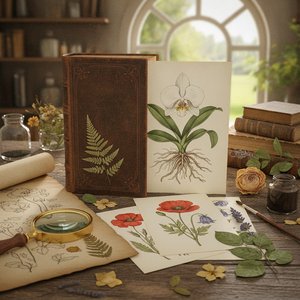
Nature Unveiled: The Timeless Elegance and Art History of Botanical Realism
Explore the exquisite world of botanical realism. From the Victorian legacy of Marianne North to masterfully hand-painted oil reproductions, discover how timeless floral art brings elegance and nature's precision into your home collection.

The Enduring Legacy of Oil on Canvas: Technique, History & Aesthetic Impact
Explore the rich history & techniques of oil painting – from Renaissance masters to Impressionism. Discover pigments, layering methods, and why this timeless medium endures. Expert insights for artists & art enthusiasts.


