

 Vezi în context
 Trimite
 Distribuie
 Detalii
 Ghidul

 Descarcă
 Produse similare
 Radiografie
 Diaporama
 Statistici
Cortinarius glaucopus
 Contemporary Realism
 Contemporary
 15.0 x 28.0 cm
 Canadian Museum of Nature
 Citește mai mult
Lucrarea de artă afișată pe această pagină este protejată de legile privind drepturile de autor, ceea ce înseamnă că nu putem crea sau vinde în mod legal o reproducere identică. Această protecție este garantată prin acorduri internaționale, precum Convenția de la Berna și de legile naționale, inclusiv cele prevăzute de Legea dreptului de autor din S.U.A. – Titlul 17. Toate drepturile rezervate. Orice reproducere neautorizată este interzisă.
Această metodă respectă pe deplin reglementările privind drepturile de autor, deoarece nu implică copierea sau duplicarea operei protejate. În schimb, este o reinterpretare creativă – o pictură nouă, influențată de original, dar care nu este identică cu acesta.
Giclée / Imprimare artistică
Printuri giclée sau pe canvas de calitate muzeală, cu proces de producție rapid și opțiuni flexibile de finisare. ( Comandă pictură realizată manual Treci la imagine digitală)




P118B lei10

P118H lei10

P118W lei10

P438Z lei10

P508JH lei12

P508YH lei12

P805H lei10

P805Z lei10

P919BZ lei10

P919G lei10

P919XJ lei10

P959ZH lei10

P968JZ lei12

W106C lei8

W218G lei10

W218JH lei8

W218Y lei10

W307PJ lei10

W316G lei10

W316PJ lei8

W316Y lei10

W398PJ lei8

W4111J lei10

W500HY lei15

W500JH lei15

W692G lei12

W849H lei8

W940BG lei15

W953PJ lei8




Alegeți dintre dimensiunile noastre prestabilite, care respectă proporțiile originale ale operei de artă.

Introduceți lățimea și înălțimea de care aveți nevoie, pentru a se potrivi ramei sau peretelui dumneavoastră. O printare poate fi doar tăiată, niciodată extinsă dincolo de dimensiunea imaginii originale, astfel încât o dimensiune cu o formă diferită va pierde o parte din imagine. Vă trimitem o simulare digitală pentru aprobare înainte de a imprima orice. Imaginea afișată pe această pagină nu prezintă tăierea reală — doar simularea arată acest lucru.
Livrare în întreaga lume () în 2 săptămâni, în loc de cele 4/5 săptămâni standard. (21 Octombrie)

Livrare expres gratuită la nivel mondial

Pânză de in premium

Asigurare completă pentru transport

Garanție de rambursare a taxelor vamale

Garanția fidelității culorilor

Politica de retur în 100 de zile (doar pentru defecte)

Garanție de rambursare 100%

Reducere pentru comenzi multiple
 Opțiunea cu sticlă este disponibilă doar pentru dimensiuni de sub 110 cm

Cortinarius glaucopus
Giclée / Imprimare artistică
Dimensiune reproducere
-


Preț total
lei 368
A Botanical Symphony: The Intricate World of Cortinarius glaucopus
In the delicate intersection of scientific precision and artistic soul lies Timothy John Williamson’s Cortinarius glaucopus. This exquisite painting serves as a profound meditation on the quiet, often overlooked cycles of life within the forest floor. At first glance, the viewer is greeted by a captivating tableau of five mushrooms, each captured in a unique stage of development. From the diminutive, pristine white specimens adorned with subtle brown flecks to the more robust, mature fungi emerging forcefully from a weathered tree stump, the composition tells a story of temporal progression. The artist masterfully guides the eye across the canvas, navigating through a lush landscape where scattered flora and verdant greenery frame the central subjects, creating a sense of depth that pulls the observer into a miniature, breathing ecosystem.
The technique employed in this work reflects Williamson’s unique dual identity as both a philosopher and a meticulous botanical illustrator. There is an undeniable rigor in the way each spore, cap, and stem is rendered, yet it never descends into mere clinical documentation. Instead, the brushwork possesses a soft, organic quality that breathes life into the fungal forms. The interplay of light and shadow across the varying textures—the smoothness of a young cap versus the rugged, textured bark of the stump—demonstrates a sophisticated command of tonal range. This balance of hyper-realistic detail with an atmospheric, almost dreamlike softness allows the painting to transcend simple illustration, becoming a piece of fine art that celebrates the tactile reality of nature.
Beyond its aesthetic charm, Cortinarius glaucopus carries a deeper symbolic weight, inviting contemplation on the themes of growth, decay, and the continuity of existence. The presence of the mushrooms in different stages of maturity serves as a poignant memento mori, reminding us that life is a constant flux of emergence and dissolution. For the discerning collector or interior designer, this piece offers more than just visual beauty; it provides an intellectual anchor for a room. Its organic subject matter and earthy palette make it an ideal centerpiece for spaces designed to evoke tranquility, such as a study, a sunlit library, or a sophisticated contemporary living area. To possess a reproduction of this work is to bring a fragment of the forest's silent wisdom into one's personal sanctuary, fostering a permanent connection to the intricate wonders of the natural world.
Întrebări și răspunsuri
Pot examina "Cortinarius glaucopus" mai detaliat?
Vizualizarea X-Ray a operei "Cortinarius glaucopus" de Timothy John Williamson se regăsește pe pagina Raze X a lucrării: o examinare interactivă a imaginii prin eleven straturi optice.
Cum se încadrează stilul operei „Cortinarius glaucopus” în contextul epocii creatorului său?
„Cortinarius glaucopus” aparține mișcării Contemporary Realism, iar creatorul său a activat în epoca Contemporan.
Ce atmosferă ar aduce "Cortinarius glaucopus" într-un spațiu?
Cu atmosfera sa Natural, „Cortinarius glaucopus” este recomandată pentru o Office.
Biografie artist
A Dual Pursuit: The Philosophical Eye of Timothy John Williamson
Timothy John Williamson, born in Uppsala, Sweden in 1955, presents a truly remarkable convergence of intellectual and artistic pursuits. He’s not merely a philosopher who occasionally ventures into art, nor an artist whose work is solely inspired by philosophical concepts; rather, he embodies a rare synthesis – a rigorous analytical mind coupled with meticulous observational skill. His journey represents a beautiful demonstration of how seemingly disparate disciplines can enrich one another, resulting in creations that are both intellectually stimulating and profoundly aesthetically compelling. While globally recognized as a leading figure in contemporary philosophy—particularly for his groundbreaking contributions to epistemology, most notably detailed in *Knowledge and Its Limits* (2000)—Williamson has quietly cultivated an impressive body of botanical illustrations, specializing in the intricate beauty and often overlooked world of fungi. This artistic endeavor isn’t simply a pastime; it's an extension of his philosophical inquiry, a tangible exploration of perception, detail, and fundamentally, the very nature of knowledge itself.From Logic to Lichens: The Development of a Unique Vision
Williamson’s intellectual foundation was firmly rooted in the traditions of British analytic philosophy. He was deeply influenced by giants of the field – figures like Bertrand Russell and Ludwig Wittgenstein – absorbing their emphasis on precision, clarity, and logical structure. This philosophical lineage profoundly shaped his approach to both his academic work and his artistic practice. He developed what he termed ‘knowledge-first epistemology’ – a perspective that places knowledge at the very core of epistemological investigation. This wasn't an arbitrary shift; it stemmed from a deep and abiding appreciation for the natural world, specifically its hidden complexities. He found in fungi—often dismissed as unremarkable or even slightly unsettling—a subject perfectly suited to his meticulous nature and analytical mind. Their complex forms, subtle color variations, and delicate structures demanded careful study, mirroring the painstaking analysis he applied to philosophical problems. The act of painting became a form of visual thinking – a way to explore the boundaries between what we perceive and how we understand it. It was a deliberate attempt to translate abstract thought into a concrete, tangible representation.The Art of Observation: Style and Themes
Williamson’s botanical illustrations are characterized by an unwavering commitment to realism and scientific accuracy. He doesn't simply *depict* fungi; he dissects them visually, revealing their intricate morphology with astonishing detail. Each painting is a testament to hours spent observing, meticulously capturing the subtle nuances of texture, color, and form. His style evokes the tradition of 19th-century botanical illustration – reminiscent of the detailed work produced for scientific documentation during that era. However, Williamson’s paintings transcend mere technical skill; they possess an aesthetic sensibility that elevates them to the realm of fine art. The compositions are often deceptively simple, focusing attention on the inherent beauty and unique character of the subject matter itself. He deliberately avoids imposing a narrative or symbolic meaning onto his work; instead, he allows the fungi themselves to speak, revealing their individual qualities through precise representation. Key themes consistently emerge: detailed realism, botanical accuracy, and a powerful demonstration of the interconnectedness between art and scientific documentation. He seeks not to romanticize nature, but to present it with an honest and unvarnished portrayal.Notable Works and Growing Recognition
Williamson’s portfolio encompasses a diverse range of fungal studies, each showcasing his exceptional skill and dedication to detail. Paintings like *An Unknown Mahogany Cortinarius*, *The Lobster Mushroom*, and detailed studies of species such as *Boletinus porosu*, *Clitocybe Multiceps*, and *Paxillus atrotomentosus* demonstrate his ability to capture the subtle variations within fungal species. Works like *Cortinarius glaucopus* highlight his fascination with complex forms and textures, while pieces like *The Fly Agaric* – a striking depiction of this well-known but often misunderstood fungus – stand as particularly iconic examples of his work. While not widely exhibited in mainstream art galleries, Williamson’s paintings have gained increasing recognition within specialized circles for their precision, beauty, and unwavering commitment to capturing the natural world with scientific accuracy. The availability of his works through platforms like OriginalUniqueArt.com is steadily bringing this exceptional talent to a wider audience.A Legacy Bridging Disciplines
Timothy John Williamson’s legacy extends beyond his philosophical contributions and his botanical illustrations; it lies in the very act of demonstrating the profound interconnectedness between seemingly disparate fields. He embodies the idea that rigorous intellectual inquiry can inform and enrich artistic expression, and vice versa. His work challenges us to reconsider the boundaries between science and art, logic and intuition, observation and understanding. In a world increasingly defined by specialization, Williamson stands as a powerful advocate for interdisciplinary thinking – a holistic approach to knowledge. His paintings serve as a reminder that true insight often emerges from the intersection of different perspectives, and that beauty can be found in the most unexpected places—even within the intricate structures of a humble fungus. He represents a rare convergence of mind and vision, leaving behind a body of work that is both intellectually stimulating and profoundly beautiful.
Timothy John Williamson
1955 - , Suedia
Informații rapide
- Artistic Movement Or Style: Realism detaliat
- Artists Or Movements Influenced By This Artist:
- Tubism
- Art botanic
- Artists Who Influenced This Artist:
- Russell
- Wittgenstein
- Date Of Birth: 1955
- Full Name: Timothy John Williamson
- Nationality: Britanic
- Notable Artworks:
- Cortinarius
- Agaric
- Boletinus
- Place Of Birth: Uppsala, Suedia
Articole conexe

The Flourishing Canvas: A Historical Journey Through Botanical Illustration
Explore the captivating history of botanical illustration! Discover renowned artists like Robert Havell & Mary Walcott, learn about techniques, and find museum-quality art at OriginalUniqueArt.com.

Top 10 Capodopere Alb-Negru: Frumusețe Atemporală în Artă | OriginalUniqueArt.ro
Descoperă top 10 picturi celebre dominate de alb, de la Monet la Kandinsky! Explorează istoria artei, tehnicile artistice și frumusețea atemporală a capodoperelor clasice. Reproduceri de calitate muzeală pe OriginalUniqueArt.com – inspiră-ți decorul!
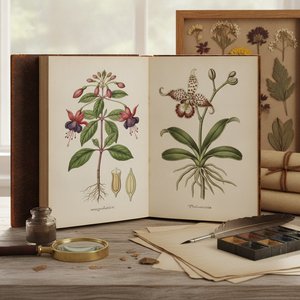
Nature's Precision: The Art and History of Botanical Illustration
Explore the profound intersection of science and beauty in botanical illustration. From ancient herbals to Renaissance masters, discover the history, technical mastery, and enduring elegance of nature's most precise artistic records.

Nature’s Precision: The Art History and Scientific Elegance of Botanical Illustration
Explore the exquisite intersection of science and art in botanical illustration. Discover the history, technical mastery, and timeless beauty of scientific floral studies from Renaissance masters to modern collectors.
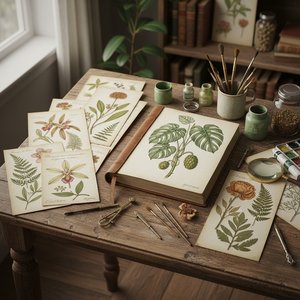
The Flourishing Canvas: A Historical & Artistic Exploration of Botanical Illustration
Explore the rich history of botanical illustration! Discover key artists like Havell & Barraband, learn about scientific accuracy & aesthetic beauty. Shop museum-quality reproductions at OriginalUniqueArt.


