

 Vezi în context
 Trimite
 Distribuie
 Detalii
 Ghidul

 Descarcă
 Produse similare
 Radiografie
 Diaporama
 Statistici
Dr. Edward Hudson


 Citește mai mult
Giclée / Imprimare artistică
Printuri giclée sau pe canvas de calitate muzeală, cu proces de producție rapid și opțiuni flexibile de finisare. ( Comandă pictură realizată manual Treci la imagine digitală)




P118B lei10

P118H lei10

P118W lei10

P438Z lei10

P508JH lei12

P508YH lei12

P805H lei10

P805Z lei10

P919BZ lei10

P919G lei10

P919XJ lei10

P959ZH lei10

P968JZ lei12

W106C lei8

W218G lei10

W218JH lei8

W218Y lei10

W307PJ lei10

W316G lei10

W316PJ lei8

W316Y lei10

W398PJ lei8

W4111J lei10

W500HY lei15

W500JH lei15

W692G lei12

W849H lei8

W940BG lei15

W953PJ lei8




Alegeți dintre dimensiunile noastre prestabilite, care respectă proporțiile originale ale operei de artă.

Introduceți lățimea și înălțimea de care aveți nevoie, pentru a se potrivi ramei sau peretelui dumneavoastră. O printare poate fi doar tăiată, niciodată extinsă dincolo de dimensiunea imaginii originale, astfel încât o dimensiune cu o formă diferită va pierde o parte din imagine. Vă trimitem o simulare digitală pentru aprobare înainte de a imprima orice. Imaginea afișată pe această pagină nu prezintă tăierea reală — doar simularea arată acest lucru.
Livrare în întreaga lume () în 2 săptămâni, în loc de cele 4/5 săptămâni standard. (23 Octombrie)

Livrare expres gratuită la nivel mondial

Pânză de in premium

Asigurare completă pentru transport

Garanție de rambursare a taxelor vamale

Garanția fidelității culorilor

Politica de retur în 100 de zile (doar pentru defecte)

Garanție de rambursare 100%

Reducere pentru comenzi multiple
 Opțiunea cu sticlă este disponibilă doar pentru dimensiuni de sub 110 cm

Dr. Edward Hudson
Giclée / Imprimare artistică
Dimensiune reproducere
-


Preț total
lei 370
Dr. Edward Hudson: A Portrait of Victorian Patronage
Thomas Sully’s “Mrs. Edward Hudson,” completed in 1814, stands as an emblem of the Victorian era's fascination with portraiture and its celebration of aristocratic status. More than just a likeness of Dr. Edward Hudson—a prominent physician and influential figure within London society—the painting embodies the ideals of refinement, intellect, and moral virtue that defined the period’s artistic sensibilities.
- Subject Matter: The portrait depicts Dr. Hudson seated in a richly upholstered armchair, gazing calmly outwards. His wife accompanies him, presenting an aura of serene dignity alongside her husband.
- Style & Technique: Sully employed the “Grand Manner,” championed by Joshua Reynolds and favored by the Royal Academy during this time. This style prioritized idealized beauty and meticulous detail, striving to capture not merely physical appearance but also inner character. The artist skillfully utilized soft brushstrokes and subtle tonal gradations to achieve a luminous effect, conveying both realism and an emotional depth that transcends mere representation.
- Historical Context: Hudson’s patronage of the arts—particularly sculpture—was instrumental in fostering artistic innovation during his lifetime. “Mrs. Edward Hudson” reflects this cultural milieu, aligning with the broader Victorian preoccupation with moral seriousness and the pursuit of excellence in all endeavors.
Composition & Color Palette: Orchestrating Light and Emotion
Sully’s compositional choices contribute significantly to the painting's impact. The central positioning of Hudson and his wife establishes a formal balance, while the slight turn of his head introduces dynamism and directs the viewer’s gaze outwards—suggesting contemplation and engagement with ideas beyond the immediate frame. The color palette is dominated by muted browns and blacks, punctuated by highlights of white – primarily in the collar – and a striking crimson envelope held by Hudson's hand.
- Color Harmony: The reddish hue serves as a focal point, symbolizing passion or perhaps representing Hudson’s scholarly pursuits.
- Lighting: Soft, diffused light emanates from the left side, sculpting Hudson’s face and creating gentle shadows that accentuate his features—enhancing both realism and conveying an atmosphere of quiet contemplation.
Symbolism & Artistic Legacy
"Mrs. Edward Hudson" transcends its surface appearance to communicate profound symbolic meanings. The opulent furnishings underscore Hudson's wealth and social standing, while the envelope symbolizes correspondence – perhaps representing his intellectual engagement with fellow scholars or conveying a message of refined thoughtfulness. Sully’s masterful technique—characterized by meticulous brushwork and subtle tonal variations—established him as one of the foremost portraitists of his era, influencing generations of artists who followed.
- Influence: Hudson's work continues to inspire admiration for its elegance, psychological insight, and unwavering commitment to artistic excellence.
Provenance & Reproduction Considerations
This remarkable portrait has traversed time and ownership, culminating in its current residence at the Detroit Institute of Arts. Its journey underscores the enduring value of art history—and the importance of preserving cultural treasures for future generations.
- Reproductions: High-quality reproductions offer an accessible pathway to experiencing Sully’s artistic vision – allowing viewers to appreciate the painting's beauty and nuance without incurring the expense or logistical challenges associated with acquiring original artwork.
Întrebări și răspunsuri
În ce etapă a evoluției lui Thomas Sully se încadrează „Dr. Edward Hudson”?
În cariera lui Thomas Sully, „Dr. Edward Hudson” aparține perioadei Mature Romanticism. Această etapă facilitează compararea sa cu celelalte opere ale artistului.
Din ce motive statutul drepturilor de autor pentru "Dr. Edward Hudson" este cel actual?
Statutul drepturilor de autor pentru "Dr. Edward Hudson" - în domeniul public - drepturile de autor au expirat - derivă din decesul artistului în anul 1872.
Ce tehnică și stil caracterizează "Dr. Edward Hudson" de Thomas Sully?
"Dr. Edward Hudson" este realizată în Oil On Canvas, în stilul Romantic British Portraiture.
Biografie artist
A Transatlantic Brushstroke: The Life and Art of Thomas Sully
Thomas Sully’s story is one woven from threads of performance, migration, and artistic transformation – a journey that took him from the stages of Charleston to the hallowed halls of Philadelphia. Born in Horncastle, Lincolnshire, England, in 1783, his early life was far removed from the world of portraiture he would ultimately dominate. His parents, Matthew and Sarah Chester Sully, were actors, and young Thomas spent his childhood traveling with them, experiencing the vibrant energy of theatrical productions across America. This immersion in performance—the study of expressions, gestures, and the ability to embody a character—laid the foundation for his keen eye for capturing human psychology within his paintings. It was a formative experience that instilled in him an understanding of how to convey emotion and personality through visual means – a skill he would later hone into a remarkable artistic style.From Miniature to Monumental: Forging an American Style
Sully’s artistic development wasn't a sudden shift, but rather a gradual evolution shaped by diverse influences. Initially apprenticed to an insurance broker, his talent for detail and observation quickly became apparent. However, it was the guidance of Charles Fraser, a local artist, and later his brother-in-law Jean Belzons, that truly ignited his passion for miniature painting – a technique he mastered with remarkable precision. This early work provided him with invaluable skills in rendering delicate details, capturing textures, and working on a small scale—skills that would prove essential as he transitioned to larger-scale portraiture. Crucially, his time spent studying under Benjamin West in London from 1808 onward proved pivotal. While West was a celebrated figure in his own right, it was the influence of Thomas Lawrence – known for his elegant style, mastery of light and texture, and ability to capture both likeness and character – that profoundly shaped Sully’s artistic sensibilities. Returning to America imbued with this aesthetic, he earned the moniker “the Sir Thomas Lawrence of America,” a testament to the striking similarities between their styles. However, Sully didn't simply imitate; he adapted and refined these influences, forging a distinctly American style—a blend of European sophistication and a uniquely New World sensibility. His portraits weren’t merely representations of wealth or status; they were explorations of personality, imbued with psychological depth and emotional resonance.Capturing the Essence: Portraits of Prominence
Sully's career flourished in Philadelphia, where he quickly established himself as one of the city’s leading portrait painters. He possessed a remarkable ability to capture not just physical likenesses but also the essence of his subjects—their personalities, their aspirations, and their social standing. His portraits adorned the homes of prominent figures from across Pennsylvania and Maryland: Thomas Jefferson, John Quincy Adams, Andrew Jackson, and countless other influential citizens. He wasn’t simply painting faces; he was creating lasting impressions, preserving the memories of an era through his art. The meticulous detail in his brushwork—the subtle shading, the delicate rendering of fabrics, the carefully observed expressions—all contributed to the captivating realism of his portraits. His ability to convey a sense of dignity and gravitas made him highly sought after by wealthy patrons eager to immortalize themselves and their families.Beyond Likeness: Historical Narratives and Artistic Legacy
While celebrated for his portraits, Sully’s artistic ambition extended beyond capturing individual faces. He ventured into historical painting with works like *The Passage of the Delaware* (1819), a grand depiction of Washington's iconic crossing—a piece that demonstrated his ability to handle large-scale compositions and imbue them with dramatic power. This willingness to engage with historical narratives broadened his appeal and cemented his place in the American art world. His prolific output—over 2,000 paintings over seven decades—testifies to both his skill and his relentless dedication. He wasn’t merely a painter of the elite; he documented an era, preserving the faces and stories of a nation undergoing rapid transformation. Sully's influence extended beyond his own canvases. He was a dedicated teacher, mentoring numerous artists including Marcus Aurelius Root, who would later become a pioneer in photography.A Patron of Culture: Music, Society, and Enduring Influence
Sully’s contributions weren’t limited to the visual arts. As a founding member of Philadelphia's Musical Fund Society, he demonstrated a deep commitment to fostering cultural life within his community. This involvement speaks to a broader artistic sensibility – an understanding that art in all its forms enriches society and elevates the human spirit. His work was even adapted for use on United States coinage, further solidifying his place in the national consciousness. Though Romanticism and Neoclassicism were dominant movements during his lifetime, Sully’s style transcended easy categorization. He skillfully blended elements of both, creating a unique aesthetic that prioritized emotional depth, technical precision, and psychological insight. Today, Thomas Sully's paintings hang in prestigious museums across the country, continuing to captivate audiences with their beauty, elegance, and enduring power. His legacy remains as a testament to the transformative potential of art and the enduring allure of the human face.
Thomas Sully
1783 - 1872 , Regatul Unit
Informații rapide
- Artistic Movement Or Style: Romanticism, Neoclassicism
- Artists Or Movements Influenced By This Artist: ['American portraiture']
- Artists Who Influenced This Artist:
- West
- Lawrence
- Date Of Birth: 1783
- Date Of Death: 1872
- Full Name: Thomas Sully
- Nationality: British-American
- Notable Artworks:
- Passage Delaware
- Portrete Jefferson
- Portrete Adams
- Place Of Birth: Horncastle, UK
Articole conexe
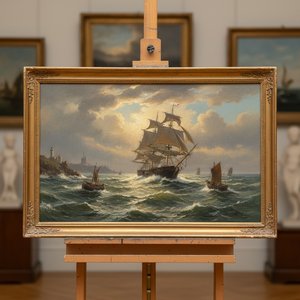
Henry Thomas Dawson: Navigating Light, Sea & Sentiment in Victorian Marine Painting
Explore the captivating world of Henry Thomas Dawson (1811-1878), a master of Victorian marine painting. Discover his evocative coastal scenes, landscapes & lasting artistic legacy. Learn about collecting Dawson's work and find reproductions at OriginalUniqueArt.
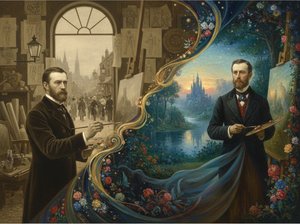
Thomas Edwin Mostyn: A Victorian Genre Painter's Journey from Realism to Romantic Enchantment
Discover the captivating world of Thomas Edwin Mostyn (1864-1930), a Victorian artist renowned for his romantic garden scenes and evocative portraits. Explore his artistic journey, legacy & find high-quality reproductions at OriginalUniqueArt.
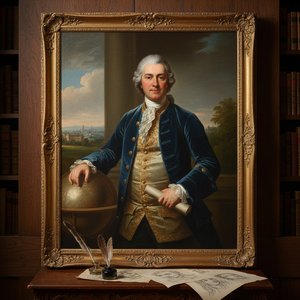
Thomas Hudson: A Study in 18th-Century Portraiture & British Artistic Identity
Explore the life & work of Thomas Hudson, a leading 18th-century British portraitist. Discover his mastery of the 'Grand Manner,' influential style, and lasting impact on British art. Learn about his notable portraits like Judge William Noel & Alexander Van Aken.

Thomas Stuart Smith: A Study in British Impressionism & the Poetic Landscape
Explore the captivating world of Thomas Stuart Smith (1815-1869), a Scottish painter bridging Romantic realism and British Impressionism. Discover his genre scenes, philanthropic legacy & stunning interiors.

The Hudson River School: A Definitive Guide to America's Romantic Landscape Tradition
Explore the profound legacy of the Hudson River School. Discover how masters like Thomas Cole captured the American sublime through Romanticism and Luminism. A definitive guide for art historians and collectors seeking to understand America's wild beauty.