

 Vezi în context
 Trimite
 Distribuie
 Detalii
 Ghidul

 Descarcă
 Produse similare
 Radiografie
 Diaporama
 Statistici
The South Gate, Exeter


 Citește mai mult
Reproducere pictată manual în ulei
Pictură în ulei pe pânză, realizată manual de artiștii noștri la dimensiunea și ramele dorite de dumneavoastră, pe comandă. ( Comută pe versiunea Print Treci la imagine digitală)




P118B lei10

P118H lei10

P118W lei10

P438Z lei10

P508JH lei12

P508YH lei12

P805H lei10

P805Z lei10

P919BZ lei10

P919G lei10

P919XJ lei10

P959ZH lei10

P968JZ lei12

W106C lei8

W218G lei10

W218JH lei8

W218Y lei10

W307PJ lei10

W316G lei10

W316PJ lei8

W316Y lei10

W398PJ lei8

W4111J lei10

W500HY lei15

W500JH lei15

W692G lei12

W849H lei8

W940BG lei15

W953PJ lei8




Alegeți dintre dimensiunile noastre prestabilite, care respectă proporțiile originale ale operei de artă.

Introduceți lățimea și înălțimea de care aveți nevoie, pentru a se potrivi ramei sau peretelui dumneavoastră. Această lucrare este pictată manual, așa că pentru o dimensiune cu o formă diferită, artistul poate picta puțin mai mult în jurul imaginii sau poate tăia puțin din margini — dumneavoastră decideți. Vă vom trimite o simulare digitală pentru aprobare înainte de a începe pictarea. Imaginea afișată pe această pagină nu reprezintă rezultatul real — doar simularea este reprezentativă.
După plasarea comenzii, echipa OriginalUniqueArt.com va contacta clientul prin e-mail pentru instrucțiuni și îi va furniza o previzualizare a machetei
Livrare în întreaga lume () în 3-4 săptămâni, în loc de cele 5 săptămâni standard. (25 Octombrie). Fără compromisuri în ceea ce privește calitatea.

Livrare expres gratuită la nivel mondial

Pânză de in premium

Asigurare completă pentru transport

Garanție de rambursare a taxelor vamale

Garanția fidelității culorilor

Politica de retur în 100 de zile (doar pentru defecte)

Garanție de rambursare 100%

Reducere pentru comenzi multiple
 Opțiunea cu sticlă este disponibilă doar pentru dimensiuni de sub 110 cm

The South Gate, Exeter
Tip de reproducere
Dimensiune reproducere
-


Preț total
lei 2199
A Snapshot of a Bustling Era: Thomas Rowlandson’s “The South Gate, Exeter”
Thomas Rowlandson's watercolor, "The South Gate, Exeter," isn’t merely a depiction of a street scene; it’s a vibrant portal into the heart of Georgian England. Painted around 1810, this work captures a moment of intense urban life within the historic South Gate area of Exeter, offering a captivating glimpse into the daily rhythms and social dynamics of the time. Rowlandson, a master of satirical observation, doesn’t simply record; he breathes life into his subject, imbuing it with a palpable sense of energy and human interaction.
The composition immediately draws the eye to the central focus: the South Gate itself, rendered as a sturdy, imposing structure that anchors the scene. Flanking this grand entrance are buildings – shops and residences – layered with detail, each contributing to the overall density of the streetscape. Notice the careful arrangement of figures; they aren’t isolated individuals but rather part of a complex tapestry of activity—a merchant haggling over prices, children playing near a horse-drawn cart, shoppers navigating the crowded thoroughfare, and even a gentleman observing the scene with an air of detached amusement. Rowlandson's skill lies in his ability to compress this multitude of elements into a single, dynamic image.
The Art of Satirical Observation: Rowlandson’s Technique
Rowlandson’s distinctive style is immediately recognizable through his loose, expressive brushwork and the watercolor medium itself. The colors are rich and layered, creating a sense of depth and texture that belies the relatively flat perspective. He employs washes of color to build up form, allowing for subtle gradations in tone and light – a diffused daylight suggesting an overcast day. The lines are predominantly loose and gestural, conveying movement and immediacy. The artist’s hand is clearly visible in the application of paint, adding to the work's authenticity and charm.
Crucially, Rowlandson wasn’t interested in photographic realism; he prioritized capturing the *essence* of a scene – its atmosphere, its energy, and its social commentary. The slightly exaggerated proportions of figures, the crowded composition, and the overall sense of bustling activity all contribute to this effect. The artist's use of color is particularly noteworthy, with vibrant hues used for clothing and details, contrasting against the more muted tones of the buildings.
Historical Context: Exeter in the Early 19th Century
To fully appreciate “The South Gate, Exeter,” it’s essential to understand its historical context. Exeter, a significant trading center in Devon, was experiencing considerable growth during this period. The city's South Gate, as depicted by Rowlandson, represented the gateway to this thriving commercial hub. The scene captures a moment of relative prosperity, reflecting the economic vitality of the region. The presence of shops and merchants suggests a bustling marketplace, while the diverse array of figures hints at the social stratification within the community.
Furthermore, Rowlandson’s work reflects the broader artistic trends of the time – particularly the rise of Romanticism. While not strictly adhering to the movement's idealized aesthetic, his focus on capturing everyday life and portraying human emotion aligns with its core principles. The painting offers a glimpse into the lives of ordinary people, inviting viewers to contemplate their experiences and interactions.
Symbolic Layers: A Window into Georgian Society
Beyond its immediate visual appeal, “The South Gate, Exeter” is rich in symbolic meaning. The crowded marketplace represents the social hub of the city, a place where commerce, gossip, and community life intersected. The figures themselves embody various aspects of Georgian society – merchants, laborers, shoppers, and onlookers—each contributing to the complex tapestry of urban existence. Even the gate itself can be interpreted as a symbol of authority and control, guarding access to the heart of the city.
Rowlandson’s work serves as a valuable historical document, offering insights into the social customs, economic activities, and cultural values of 19th-century England. It's a testament to his keen eye for detail and his ability to capture the essence of a bygone era.
Întrebări și răspunsuri
„The South Gate, Exeter” are o previzualizare în realitate augmentată?
„The South Gate, Exeter” are o previzualizare în realitate augmentată: pagina Previzualizare AR a operei artistice o prezintă în propriul tău spațiu, pe un dispozitiv compatibil.
Cine a creat "The South Gate, Exeter" și în ce an?
Autorul operei „The South Gate, Exeter” este Thomas Rowlandson, iar lucrarea datează din 1810.
Ce stare și ce emoție se regăsesc în "The South Gate, Exeter"?
Starea de spirit surprinsă în "The South Gate, Exeter" de Thomas Rowlandson este Romantic, iar tonul său emoțional este Nostalgic.
Biografie artist
A Life Etched in Satire: The World of Thomas Rowlandson
Thomas Rowlandson, a name synonymous with Georgian England’s sharpest wit and most biting satire, emerged from the bustling streets of London as a defining voice – and pen – of his era. His life, initially marked by hardship following his father's financial struggles, blossomed into an artistic career characterized by unparalleled observation and a uniquely satirical eye. Rowlandson wasn’t merely documenting his time; he was holding a mirror to its follies, exaggerating its vanities, and immortalizing its characters with a mischievous precision that continues to resonate today. From humble beginnings nurtured by an uncle's support – affording him access to education at Dr. Barwis’ school in Soho Square – he embarked on a path that would establish him as one of the most celebrated, and sometimes controversial, caricaturists of his age. Even as a young boy, his innate talent manifested itself through playful sketches adorning the margins of his books, foreshadowing a career dedicated to visual storytelling with an undeniable edge.Formative Years and Artistic Development
Rowlandson’s formal artistic training began at the Royal Academy in 1772, where he honed his skills for six years, including a period of study in Paris under Jean-Baptiste Pigalle. This exposure to continental techniques proved invaluable, laying the foundation for his distinctive style – a masterful blend of delicate draughtsmanship and bold exaggeration. However, it was upon returning to England that Rowlandson truly found his voice. Initially attempting portraiture, he quickly recognized that his true calling lay not in flattering representation but in pointed satire. The financial pressures following his aunt’s death further propelled him towards caricature as a means of livelihood – a shift that wasn't merely pragmatic; it was an artistic awakening. He began to dissect the social landscape with ruthless accuracy, targeting politicians, aristocrats, and even the everyday citizens who populated London’s vibrant streets. His early works were characterized by a remarkable facility for line and a keen understanding of human expression, qualities that would become hallmarks of his mature style. The influence of artists like Peter Paul Rubens and Thomas Gainsborough is evident in his early watercolors, demonstrating a respect for classical composition and technique while simultaneously forging his own unique path.Collaboration and the Rise to Prominence
The true flowering of Rowlandson’s career came through his fruitful collaboration with Rudolph Ackermann, a prominent publisher and art dealer. This partnership yielded some of his most enduring works, including the immensely popular *The Schoolmaster's Tour* (1809), a series of plates accompanied by verses from Dr. William Combe, and the iconic *Tour of Dr. Syntax in Search of the Picturesque* (1812). The *Dr. Syntax* series – comprising three installments: *Dr. Syntax in Search of Consolation* (1820) and *The Third Tour of Dr. Syntax in Search of a Wife* (1821) – captivated audiences with its whimsical narrative, intricate details, and Rowlandson’s masterful illustrations. These works weren't simply visual accompaniments to text; they were integral to the storytelling, enhancing the humor and social commentary through dynamic compositions and expressive characterizations. The delicate color washes and precise reed-pen outlines became synonymous with Rowlandson’s style, showcasing his technical brilliance and artistic flair. His ability to capture both the grandeur of landscapes and the absurdity of human behavior cemented his reputation as a leading artist of the era. Ackermann's keen eye for marketable art ensured that Rowlandson’s work reached a wide audience, solidifying his position within the London art scene.A Legacy of Satire and Social Observation
Rowlandson's impact extends far beyond the immediate popularity of his works during his lifetime. He left behind an extensive body of art – over 381 artworks are cataloged at OriginalUniqueArt.com alone – that provides a vivid and often unflattering portrait of Georgian society. His caricatures weren’t merely about ridicule; they were astute observations on the political climate, social customs, and human foibles of his time. He fearlessly lampooned figures like the Duchess of Devonshire, William Pitt the Younger, and Napoleon Bonaparte, exposing their vulnerabilities and challenging established power structures. Beyond the overtly satirical, Rowlandson also produced a wealth of illustrations for novels and topographical works, demonstrating his versatility as an artist. His work served as social commentary, often subtly critiquing societal norms and highlighting inequalities. The enduring appeal of his art lies in its timeless relevance – the human tendencies towards vanity, hypocrisy, and absurdity that he so brilliantly captured remain remarkably consistent across centuries. His influence can be seen in subsequent generations of cartoonists and illustrators who have embraced satire as a means of social commentary.Preserving Rowlandson’s Vision
Today, Rowlandson's work is preserved in numerous museum collections worldwide, including those accessible through platforms like OriginalUniqueArt.com, which offers an extensive catalog of his creations alongside works by contemporaries such as Samuel Henry Gordon Alken and William Hogarth. Pieces like *Hengar House the Seat of Matthew Mitchell Esq., Cornwall* (1812) and *Glorious Defeat of the Dutch Navy* (1797) stand as testaments to his artistic skill and historical significance. Exploring these collections allows us to appreciate not only Rowlandson’s technical mastery but also the depth of his social insight. His art serves as a reminder that laughter can be a powerful tool for critique, and that even in the most frivolous of subjects, there is often a profound truth waiting to be revealed. The continued accessibility of his work ensures that Thomas Rowlandson's satirical vision will continue to provoke thought and inspire amusement for generations to come.
Thomas Rowlandson
1756 - 1827 , Regatul Unit al Marii Britanii și Irlandei
Informații rapide
- Artistic Movement Or Style: Caricatură, Satiră
- Artists Or Movements Influenced By This Artist:
- Gillray
- Ackermann
- Artists Who Influenced This Artist:
- Rubens
- Gainsborough
- Date Of Birth: 13 iulie 1757
- Date Of Death: 21 aprilie 1827
- Full Name: Thomas Rowlandson
- Nationality: Britanic
- Notable Artworks:
- Turul Școlarului
- Dr. Syntax
- Înfrângerea Glorioasă
- Place Of Birth: Londra, UK
Articole conexe

Ephemeral Visions: Exploring the Artistic Legacy & Nuances of Watercolor Painting
Explore the captivating world of watercolor painting! Discover its rich history, essential techniques, influential artists & collecting tips from art experts. A comprehensive guide for enthusiasts.

Ephemeral Visions: Exploring the Artistic Legacy & Contemporary Practice of Watercolor Painting
Explore the captivating world of watercolor painting! Discover its rich history, essential techniques, influential artists & collecting tips. A comprehensive guide for art enthusiasts from OriginalUniqueArt.

Top 10 Capodopere Acvarelă Legendară care au Schimbat Arta pentru Totdeauna | OriginalUniqueArt.ro
Descoperă Top 10 capodopere acuarelă legendară de la Sargent, Turner și alți maeștri! Explorează istoria artei, tehnicile unice și paletele vibrante. Reproduceri de artă de calitate muzeală pentru decorul perfect pe OriginalUniqueArt.com.
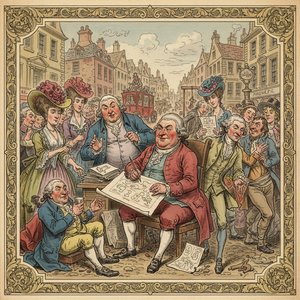
Thomas Rowlandson: Satire, Society & the Art of Caricature in Georgian England
Explore the witty world of Thomas Rowlandson, master Georgian caricaturist! Discover his satirical prints & insightful social commentary on 18th-century England. Learn about his life, techniques, and enduring influence.

Ephemeral Visions: Exploring the History & Emotional Resonance of Watercolor Painting
Explore the captivating history of watercolor painting, from ancient techniques to modern masters like Kandinsky & Blake. Discover essential artists, collecting tips & the emotional power of this luminous medium. Expert insights for art enthusiasts.
