

 Previzualizare
 Trimite
 Distribuie
 Detalii despre lucrare

 Descarcă
 Produse similare
 Radiografie
 Diapozitive automate
The Honourable William Fitzwilliam
 Oil On Canvas
- WallArt
- Baroque
 1775
1775- Early Modern
 76.0 x 64.0 cm
 Muzeul Fitzwilliam din Cambridge
 Vezi mai mult
Giclée / Imprimare artistică
Printuri giclée sau pe canvas de calitate muzeală, cu proces de producție rapid și opțiuni flexibile de finisare. ( Comandă pictură lucrată manual Cumpără imaginea)




P118B $10

P118H $10

P118W $10

P438Z $10

P508JH $12

P508YH $12

P805H $10

P805Z $10

P919BZ $10

P919G $10

P919XJ $10

P959ZH $10

P968JZ $12

W106C $8

W218G $10

W218JH $8

W218Y $10

W307PJ $10

W316G $10

W316PJ $8

W316Y $10

W398PJ $8

W4111J $10

W500HY $15

W500JH $15

W692G $12

W849H $8

W940BG $15

W953PJ $8




Alegeți dintre dimensiunile noastre prestabilite, care respectă proporțiile originale ale operei de artă.

Puteți introduce propriile dimensiuni pentru a se potrivi unui anumit cadru sau spațiu. Dacă dimensiunea selectată nu corespunde proporțiilor imaginii originale, vom decupa lucrarea de artă sau vom extinde imaginea cu margini oglindite sau cu o culoare uniformă. Un mockup digital va fi trimis pentru aprobarea dumneavoastră înainte de începerea producției.
Vă rugăm să rețineți că previzualizarea de pe ecran nu reflectă decuparea sau extinderea reală. Doar mockup-ul va arăta cu exactitate compoziția finală.
Deși dimensiunile personalizate sunt disponibile, vă recomandăm să selectați o dimensiune din lista predefinită pentru a păstra proporțiile originale.
Livrare în întreaga lume () în 2 săptămâni, în loc de cele 4/5 săptămâni standard. (25 August)

Livrare expres gratuită la nivel mondial

Pânză de in de înaltă calitate

Asigurare completă pentru transport

Garanție de rambursare a taxelor vamale

Garanția fidelității culorilor

Politica de retur în 60 de zile (doar pentru defecte)

Garanție de rambursare 100%

Ofertă pentru comenzi multiple
 Opțiunea cu sticlă este disponibilă doar pentru dimensiuni de sub 110 cm

The Honourable William Fitzwilliam
Giclée / Imprimare artistică
Dimensiune reproducere
-


Preț total calculat
$ 80
Descriere obiect de colecție
A Portrait of Dignified Distinction
In the quiet, commanding presence of Thomas Gainsborough’s 1775 masterpiece, The Honourable William Fitzwilliam, one finds much more than a mere likeness of a Georgian gentleman. This painting serves as a profound window into an era defined by social hierarchy, intellectual refinement, and the subtle art of visual storytelling. As the viewer approaches the canvas, they are met with the steady, contemplative gaze of Fitzwilliam, a prominent landowner and politician from Lincolnshire. Gainsborough does not simply record a face; he constructs a tableau of prestige. Seated within a richly upholstered armchair, the subject is framed by an environment of opulent textures—a backdrop of a similarly adorned couch and additional chairs that whisper of wealth and established social standing. There is an unmistakable aura of confidence radiating from his posture, a quality Gainsborough captured with such remarkable accuracy that the sitter seems to inhabit the very room in which the painting hangs.
The emotional resonance of the work lies in its ability to balance authority with an understated grace. While the subject’s position suggests power, his expression avoids the arrogance often found in aristocratic portraiture, opting instead for a sense of thoughtful introspection. For the collector or interior designer, this piece offers a unique psychological depth; it is a work that commands attention through its stillness rather than through loud or garish displays. It invites the observer to linger, to contemplate the man behind the title, and to feel the weight of history held within his steady eyes.
Mastery of Light and Rococo Elegance
Technically, The Honourable William Fitzwilliam represents a sophisticated evolution of Gainsborough’s signature style. While many associate the mid-18th century with the exuberant, swirling ornamentation of the full Rococo movement, Gainsborough introduces a tempered, Classical sensibility that brings a sense of order to the decorative. His palette is a masterclass in restraint, favoring muted browns, creams, and soft earth tones that create an atmosphere of timeless elegance. This deliberate lack of chromatic aggression allows the viewer to focus on the artist's true triumph: his ability to manipulate light and shadow.
Through subtle tonal gradations and fluid, soft brushstrokes, Gainsborough achieves a luminous effect that breathes life into the fabric and wood of the scene. He meticulously renders the tactile reality of the sitter’s attire and the heavy upholstery of the furniture, demonstrating a technical virtuosity that bridges the gap between realism and artistry. The way light catches the edges of the subject's form and settles into the folds of the surrounding textiles creates a sense of three-dimensional depth, making the composition feel remarkably present. For those seeking to adorn a space with high-quality reproductions, this painting provides an exquisite balance of texture and tone, capable of adding a layer of sophisticated luminosity to any curated interior.
A Legacy of British Artistry
To understand the soul of this portrait, one must consider the world from which it emerged. Born in the tranquil market town of Sudbury, Suffolk, Thomas Gainsborough’s artistry was deeply rooted in the English landscape and the rhythms of rural life. This connection to the natural world, even when executing formal portraits, imbues his work with a certain organic vitality. In The Honourable William Fitzwilliam, we see the culmination of a career spent navigating the highest echelons of British society while maintaining the delicate, light-filled touch of a landscape painter.
This painting stands as a testament to the enduring appeal of the Georgian era—a period where art was used to define identity and legacy. Owning or displaying a reproduction of such a significant work allows one to participate in this historical dialogue. It is an invitation to surround oneself with the dignity, the poise, and the masterful craftsmanship of one of Britain’s most celebrated painters, bringing a sense of storied permanence and classical beauty into the modern home.
Biografie artist
A Suffolk Beginning: The Early Life and Artistic Awakening
The story of Thomas Gainsborough, one of Britain’s most celebrated artists, unfolds not within the confines of a grand academy or bustling metropolis, but in the tranquil market town of Sudbury, Suffolk. Born in 1727, the youngest son of John Gainsborough, a weaver and wool merchant, young Thomas displayed an innate artistic sensibility from a remarkably early age. While his siblings pursued more conventional paths, Thomas’s world rapidly became consumed by drawing and painting – miniature self-portraits and delicate landscapes blossoming from his hand even before he reached ten years old. This precocious talent wasn't merely a childhood pastime; it was the burgeoning of a vision that would reshape British art. His father, recognizing this unique gift, encouraged its development, setting young Thomas on a path diverging sharply from the family trade. The Suffolk countryside itself became his first studio, imbuing his later works with a deep and abiding love for the natural world – a characteristic that would distinguish him throughout his career. This early immersion in landscape wasn’t simply about replicating what he saw; it was about *feeling* the essence of the English countryside, an emotional resonance that would permeate his canvases for decades to come.London and the Shaping of a Style: Influences and Early Commissions
In 1740, at the age of thirteen, Gainsborough journeyed to London, embarking on formal artistic training under Hubert Gravelot, a French engraver renowned for his elegant rococo style. This exposure proved pivotal, introducing him to refined techniques and fashionable aesthetics. However, it was his association with William Hogarth and the St Martin’s Lane Academy that truly began to mold his artistic identity. Initially influenced by Hogarth's narrative approach – his focus on social commentary and moral lessons – Gainsborough soon charted his own course, developing a distinctive style characterized by its lightness of touch, fluid brushwork, and subtle color palettes. He absorbed lessons from various masters, yet resisted strict adherence to any single school, forging a path that blended observation with imagination. He studied the works of Dutch landscape painters, appreciating their mastery of light and atmosphere, and was deeply influenced by the portraits of Anthony van Dyck, particularly his ability to capture character and personality. Returning to Sudbury after marrying Margaret Burr in 1746, Gainsborough established himself as a portraitist for the local gentry. This period honed his skills in capturing likenesses and character, but it was during his subsequent move to Ipswich, and later Bath, that he began attracting a more sophisticated clientele – individuals who appreciated not just accurate representation, but also artistic flair and emotional depth.Bath and Beyond: Portraiture, Landscape, and Royal Patronage
The years spent in Bath (1759-1774) marked a significant turning point in Gainsborough’s career. The city was a hub of fashionable society, providing him with ample opportunities to paint portraits of the wealthy and influential. He quickly gained renown for his ability to capture not only physical resemblance but also the personality and social standing of his sitters. His portraits weren't merely depictions; they were statements about identity and status. He experimented with new techniques, incorporating looser brushstrokes and brighter colors – a departure from the more formal style favored by his rival, Sir Joshua Reynolds. However, even amidst the demands of portraiture, Gainsborough never abandoned his passion for landscape painting. In fact, he often seamlessly integrated landscapes into his portraits, creating compositions that celebrated both human subjects and the beauty of the natural world. This innovative approach – a hallmark of his style – set him apart from many of his contemporaries. He sought out dramatic lighting effects, capturing the fleeting moments of daybreak and twilight with remarkable skill. The culmination of his success came with his move to London in 1774, where he established a studio on Pall Mall and became a founding member of the Royal Academy. He also secured royal patronage, becoming a favorite painter of King George III and Queen Charlotte, further solidifying his position as one of Britain’s leading artists. *Mrs. Thomas Gainsborough*, painted in 1785, exemplifies this period – an elegant portrait showcasing rococo style and muted tones.A Legacy of Innovation: Enduring Appeal and Influence
Thomas Gainsborough died in 1788, leaving behind a body of work that continues to captivate audiences today. His influence on subsequent generations of British artists is undeniable. He liberated portraiture from rigid formality, infusing it with spontaneity and emotional resonance. His loose brushwork and atmospheric effects paved the way for the Impressionists, while his lyrical landscapes inspired artists like John Constable, who deeply admired Gainsborough’s ability to capture the spirit of the English countryside. Gainsborough's legacy extends beyond technique; it lies in his profound understanding of human character and his unwavering commitment to artistic expression. He wasn’t simply a painter of portraits or landscapes; he was a storyteller, a poet of light and color, and a visionary who transformed British art. His paintings are a testament to the power of observation, imagination, and the enduring allure of the English landscape.Exploring Gainsborough's World Today
Fortunately, the opportunity to experience Gainsborough’s genius firsthand remains readily available. Gainsborough’s House, in his birthplace of Sudbury, stands as a testament to his life and work, offering visitors an intimate glimpse into his early influences and artistic development. Christchurch Mansion in Ipswich houses a significant collection of Gainsborough paintings alongside works by Constable and other masters. Numerous museums across the United Kingdom and internationally display his masterpieces, including the National Gallery in London and the Metropolitan Museum of Art in New York. His work continues to be studied, analyzed, and celebrated, ensuring that his artistic vision will endure for generations to come.
Thomas Gainsborough
1727 - 1788 , Regatul Unit al Marii Britanii și Irlandei
Detalii rapide
- Artistic Movement Or Style: Rococo, Portraitură
- Artists Or Movements Influenced By This Artist: ['John Constable']
- Artists Who Influenced This Artist:
- Hubert Gravelot
- William Hogarth
- Date Of Birth: 1727
- Date Of Death: 1788
- Full Name: Thomas Gainsborough
- Nationality: British
- Notable Artworks:
- Mrs. Thomas Gainsborough
- Mr și Mrs Andrews
- Place Of Birth (City And Country): Sudbury, UK
Articole similare

Top 10 Capodopere Rococo: Arta, Istorie și Decor Excepțional | OriginalUniqueArt.ro
Descoperă top 10 capodopere Rococo de la Fragonard, Boucher și Watteau! Explorează istoria artei, tehnicile și culorile vibrante ale stilului Rococo. Reproduceri de artă excepționale pentru decorul perfect pe OriginalUniqueArt.ro.

Giclée Prints: Archival Quality & Aesthetic Nuances for the Discerning Collector
Explore the world of giclée prints with OriginalUniqueArt. Learn about archival quality, aesthetic nuances & investment potential. Expert guidance for discerning art collectors seeking museum-quality reproductions and lasting value.
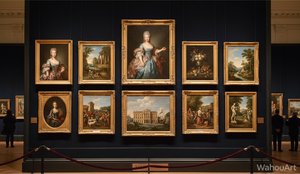
Cele Mai Frumoase Opere de Artă din Secolul al XVIII-lea | OriginalUniqueArt.ro
Descoperă cele mai frumoase picturi din secolul al XVIII-lea! Explorează operele rococo ale lui Fragonard, neoclasicismul lui David și multe altele. Reproduceri de artă de calitate muzeală pentru un decor interior rafinat. Descoperă toate capodoperele pe OriginalUniqueArt.com

The Rococo Aesthetic: Opulence, Rebellion & the Pursuit of Pleasure in 18th-Century Art
Explore the opulent world of Rococo art! Discover its origins, key artists like Watteau & Boucher, and lasting influence on design. Expert insights for collectors & enthusiasts.

The Enduring Legacy of Fine Art Prints: Technique, History & Aesthetic Impact
Explore the rich history & techniques of fine art prints. Discover investment potential, assess authenticity, and learn how to preserve your collection with expert guidance. Trusted insights for discerning collectors.



