Contemporary Realism · 1898
Taking the Count (Thomas Eakins, 1898)
Thomas Eakins (1844–1916) a realizat Taking the Count. Data sa este din 1898. Face parte din mișcarea Contemporary Realism. Este realizată în Oil On Canvas. Este păstrat la Yale University Art Gallery în Hartford, Statele Unite ale Americii.
- 1898
- Oil On Canvas
- Yale University Art Gallery, Hartford

 Previzualizare

 Tablou în ulei pictat manual
 Trimite prin felicitare
 Distribuie
 Fișă informativă


 Descarcă imaginea
 Produse similare
 Radiografie
 Galerie foto
 Întrebări și răspunsuri

 Statistici
Taking the Count, pe scurt
- Titlu
- Taking the Count
- Artist
- Thomas Eakins (1844–1916)
- Artist născut în
- Philadelphia, Statele Unite ale Americii
- Date
- 1898
- Medium
- Oil On Canvas
- Unde poate fi vizualizată
- Yale University Art Gallery, Hartford, Statele Unite ale Americii
- Mișcare
- Contemporary Realism
- Perioadă
- 19th Century
- Subiect
- boxing match, anatomy, crowd spectators, referee, philadelphia, realism
Ce reprezintă Taking the Count?
The Raw Pulse of Philadelphia: A Masterclass in Realism
In the dim, electric atmosphere of Philadelphia’s Arena in 1898, a moment of profound human vulnerability is frozen in time. Thomas Eakins, a titan of American Realism, does not merely paint a boxing match; he dissects the very essence of endurance and physical struggle. In Taking the Count, we are thrust into the center of the ring, where the sweat, the tension, and the heavy breathing of the combatants feel almost palpable. This is not the romanticized, heroic athleticism often found in sporting art; instead, Eakins presents a gritty, unvarnished truth. The scene captures a fallen fighter at his most precarious moment, caught in the agonizing interval between a devastating blow and the referee's decisive count. It is a study of the human body under duress, rendered with a scientific precision that reflects Eakins’ lifelong obsession with anatomy.
The composition draws the eye through a complex web of gazes and physical postures. At the heart of the drama, the kneeling figure embodies a desperate struggle for recovery, his muscles taut and his spirit tested. Surrounding him, the referee and the standing opponent create a triangular tension that anchors the viewer within the ring. Beyond the immediate combatants, the presence of the crowd—a shadowy, watchful collective—adds a layer of psychological depth, reminding us that this private agony is being consumed as public spectacle. For the collector or the lover of fine art, this painting offers more than just a depiction of sport; it provides a window into the late 19th-century urban experience, where the boundaries between physical prowess and human frailty are perpetually blurred.
Anatomy of a Masterpiece: Technique and Light
Eakins’s technical mastery is most evident in his ability to marry scientific rigor with emotional resonance. Having spent years studying the intricacies of musculature and bone structure through dissection, he approaches the canvas with the eye of an anatomist. Every sinew and strained limb in Taking the Count is rendered with an uncompromising accuracy that makes the figures appear to possess weight and volume. His use of light does not serve to beautify the scene but to illuminate its harsh realities. The lighting within the arena creates deep, dramatic shadows that sculpt the bodies of the boxers, emphasizing the physical toll of the fight and adding a sense of cinematic gravity to the composition.
The palette, while grounded in the earthy, somber tones characteristic of Eakins’s realism, is used to direct the viewer's emotional journey. The muted colors of the background allow the pale, strained skin of the athletes to emerge from the gloom, focusing our attention on the visceral reality of the struggle. For interior designers seeking a centerpiece for a sophisticated space, this work offers a profound sense of gravitas. A high-quality reproduction of this masterpiece brings with it an air of intellectual depth and historical weight, making it an ideal choice for galleries, studies, or living spaces that value art which challenges the eye and stirs the soul.
A Legacy of Unflinching Honesty
To understand Taking the Count is to understand the rebellious spirit of Thomas Eakins himself. At a time when many of his contemporaries were retreating into the soft, fleeting impressions of light or the idealized myths of history, Eakins stood firm in his commitment to the real. He found beauty not in perfection, but in the truth of the human condition—in the grit of the city, the precision of science, and the raw intensity of life lived on the edge. This painting remains a testament to that courage.
Owning or displaying a reproduction of this work is an invitation to contemplate the themes of resilience and the cyclical nature of struggle. It serves as a powerful reminder that even in moments of defeat, there is a profound dignity in the attempt to rise again. Whether viewed as a historical document of Philadelphia’s sporting culture or as a timeless exploration of human anatomy, Taking the Count continues to captivate, offering an enduring source of inspiration for those who find beauty in the authentic and the unadorned.
În ce muzeu se află Taking the Count?
Yale University Art Gallery
Hartford, Statele Unite ale Americii
Origini și Istoria Galeriei Povestea Yale University Art Gallery începe în anul 1832, având ca fundament un cadou prețios provenit din colecția lui John Trumbull. În acei ani primitori, privirea se îndrepta în principal către picturile care încapsulează drama Revoluției Americane, acest subiect specific oferind nucleul fundamental al patrimoniului instituției. Această instituție deține distincția de a fi cel mai vechi muzeu de artă universitar din America, deținând, în același timp, statutul de cel mai vechi muzeu de artă universitar din întreaga emisferă nordică.


Imagini la înaltă rezoluție ale lui Taking the Count
Domeniu public: artistul a decedat în 1916.
Thomas Eakins, Taking the Count (1898), Yale University Art Gallery. Domeniu public
Întrebări despre Taking the Count, răspunsuri
Unde pot vedea originalul "Taking the Count" de Thomas Eakins?
"Taking the Count" de Thomas Eakins este expusă la Yale University Art Gallery, Hartford, Statele Unite ale Americii. Mențiunea muzeului se referă la lucrarea originală, nu la reproduceri.
În ce an a fost creat "Taking the Count" de Thomas Eakins?
„Taking the Count” datează din 1898. Această dată plasează lucrarea în cadrul carierei lui Thomas Eakins și în contextul epocii sale.
În ce tehnică este realizată lucrarea "Taking the Count" de Thomas Eakins?
Thomas Eakins a utilizat tehnica Oil On Canvas pentru "Taking the Count". Tehnica definește natura materială a lucrării originale.
Ce reprezintă "Taking the Count"?
"Taking the Count" de Thomas Eakins surprinde: boxing match, anatomy, crowd spectators, referee, philadelphia, realism, athlete.
Este "Taking the Count" în domeniul public?
Statusul drepturilor de autor pentru "Taking the Count" de Thomas Eakins: opera este în domeniul public – drepturile de autor au expirat. Acest lucru determină dacă reproducerile imaginii pot fi realizate liber.
Cine a creat "Taking the Count"?
„Taking the Count” a fost creat de Thomas Eakins. Informațiile de pe această pagină descriu opera originală a lui Thomas Eakins.
Din ce curent artistic face parte "Taking the Count" de Thomas Eakins?
"Taking the Count" de Thomas Eakins face parte din mișcarea Contemporary Realism. Acest curent oferă contextul stilistic al operei.
Din ce perioadă a carierei lui Thomas Eakins face parte „Taking the Count”?
În cariera lui Thomas Eakins, „Taking the Count” aparține perioadei Mature Period. Această etapă facilitează compararea sa cu celelalte opere ale artistului.
La ce vârstă a creat Thomas Eakins opera „Taking the Count”?
Thomas Eakins avea 54 ani când a creat "Taking the Count" în 1898. Vârsta este calculată pe baza anului nașterii artistului, 1844.
Despre artistul Thomas Eakins

1844–1916, Statele Unite ale Americii
Thomas Eakins
Viața lui Thomas Eakins Născut în Philadelphia, Pennsylvania, pe 25 iulie 1844, Thomas Eakins a trăit o viață profund înrădăcinată în orașul nașterii sale. A fost un om al multor discipline, activând ca pictor, fotograf, sculptor și educator în artele frumoase. Deși interesele sale l-au purtat adesea în străinătate pentru studii, geografia existenței sale a rămas, în mare parte, centrată în Philadelphia. El a navigat prin cercurile intelectuale și sociale ale orașului, observând oamenii și realitățile fizice care defineau peisajul local.
Despre Thomas Eakins Lucrări remarcabile ale lui Thomas Eakins
Alte lucrări ale lui Thomas Eakins
 Clinica Gross1875
 Înotul1885
 Max Schmitt în barcă unică1871
 Portrait of Samuel Murray1889
Eseuri despre Taking the Count
 Precision in Portraiture: The Technical Rigor of Anatomical Mastery and Hyper-RealismMaster the technical rigor of hyper-realism and anatomical precision. Explore the evolution of portraiture mastery now.
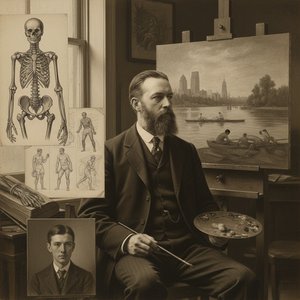 Thomas Eakins: Realism, Anatomy & the American Spirit – A Comprehensive Exploration of Life and LegacyExplore the life & legacy of Thomas Eakins, a pivotal American Realist painter. Discover his groundbreaking techniques, anatomical precisio…
 Romantic Realism's Finest: 10 Masterpieces for Your Home | OriginalUniqueArtExplore 10 defining masterpieces of Romantic Realism! Discover Courbet, Millet & Daumier's powerful paintings—capturing emotion and social …