Romanticism
Study, a man's face (Thomas Cole)
Thomas Cole (1801–1848) a realizat Study, a man's face. Face parte din mișcarea Romanticism.

 Previzualizare

 Tablou în ulei pictat manual
 Trimite prin felicitare
 Distribuie
 Fișă informativă


 Descarcă imaginea
 Produse similare
 Radiografie
 Galerie foto
 Întrebări și răspunsuri

 Statistici
Study, a man's face, pe scurt
- Titlu
- Study, a man's face
- Artist
- Thomas Cole (1801–1848)
- Artist născut în
- Bolton, Regatul Unit
- Mișcare
- Romanticism
- Subiect
- portrait, study, sketch, male face, pencil drawing, monochromatic
Ce reprezintă Study, a man's face?
A Glimpse into Character: Thomas Cole's "Study, a Man's Face"
This evocative pencil sketch by Thomas Cole offers an intimate study of an older gentleman, capturing a moment of quiet contemplation. More than just a portrait, it’s a window into the artist’s process and a testament to his keen observational skills. Executed with remarkable economy of line, this work provides a fascinating insight into the mind of one of America's most important landscape painters, revealing a sensitivity that extended beyond grand vistas to the subtle nuances of human expression. The subject, rendered in shades of gray and white against a cream-colored background, exudes an air of wisdom and experience, inviting viewers to ponder his life story.Style & Technique: A Preparatory Sketch
Cole’s “Study, a Man's Face” exemplifies the style of a preparatory sketch or study. It isn't intended as a finished artwork in itself but rather as an exploration of form and likeness before embarking on a larger composition. The technique is characterized by quick, gestural pencil strokes – hatching and cross-hatching are skillfully employed to create shading and suggest volume without resorting to elaborate blending. This direct approach lends the piece a sense of immediacy and authenticity; it feels like a captured moment, a fleeting observation brought to life with remarkable efficiency. The artist’s mastery lies in his ability to convey depth and character using only lines and subtle tonal variations. The materials used – simple pencil on paper – further emphasize the work's raw and unadorned nature.Historical Context & Cole's Artistic Journey
Created during a period of burgeoning American artistic identity, this study reflects Thomas Cole’s broader engagement with portraiture alongside his celebrated landscape paintings. Born in England and later immigrating to the United States, Cole became a pivotal figure in the Hudson River School movement, known for its romantic depictions of the American wilderness. While renowned for his grand allegorical landscapes like "The Course of Empire," this sketch reveals another facet of his artistic practice – a dedication to capturing individual character with precision and sensitivity. It provides valuable insight into how Cole approached portraiture, likely informing his larger works by establishing a foundation of detailed observation.Symbolism & Emotional Resonance
The aged appearance of the subject immediately suggests wisdom, experience, and perhaps even a touch of melancholy. The sketch-like style itself contributes to an emotional impact; it conveys a sense of immediacy and intimacy, as if we are privy to a private moment. The limited color palette reinforces this feeling of quiet contemplation, drawing attention to the interplay of light and shadow across the man’s face. While seemingly simple, the work evokes a profound sense of human dignity and invites viewers to connect with the subject on an emotional level, prompting reflection on the passage of time and the richness of lived experience.Imagini la înaltă rezoluție ale lui Study, a man's face
Domeniu public: artistul a decedat în 1848.
Thomas Cole, Study, a man's face. Domeniu public
Întrebări despre Study, a man's face, răspunsuri
Ce reprezintă "Study, a man's face"?
"Study, a man's face" de Thomas Cole surprinde: portrait, study, sketch, male face, pencil drawing, monochromatic, head, older man.
Este "Study, a man's face" în domeniul public?
În ceea ce privește drepturile de autor, "Study, a man's face" este în domeniul public – drepturile de autor au expirat.
Cine a creat "Study, a man's face"?
„Study, a man's face” este atribuit lui Thomas Cole.
Din ce curent artistic face parte "Study, a man's face" de Thomas Cole?
"Study, a man's face" de Thomas Cole face parte din mișcarea Romanticism. Acest curent oferă contextul stilistic al operei.
Din ce perioadă a carierei lui Thomas Cole face parte „Study, a man's face”?
"Study, a man's face" reprezintă perioada Early Period a lui Thomas Cole.
Care este motivul statutului drepturilor de autor pentru "Study, a man's face"?
„Study, a man's face” de Thomas Cole este în domeniul public – drepturile de autor au expirat. Termenul de protecție a drepturilor de autor se calculează de la data decesului artistului, iar Thomas Cole a decedat în 1848.
Unde se încadrează "Study, a man's face" în întreaga creație a lui Thomas Cole?
În creația lui Thomas Cole, „Study, a man's face” se înscrie în stilul Romanticism, alături de temele emphasis on observation & detail., likely influenced by academic drawing., preparatory study for larger works., demonstrates cole's drawing skills., illustrates his focus on realism., exploration of individual character., reflects early 19th-century portraiture..
Este "Study, a man's face" reprezentativ pentru temele abordate de obicei de Thomas Cole?
Temele recurente ale lui Thomas Cole includ emphasis on observation & detail., likely influenced by academic drawing., preparatory study for larger works., demonstrates cole's drawing skills., illustrates his focus on realism., exploration of individual character., reflects early 19th-century portraiture.; „Study, a man's face” se concentrează pe portrait, study, sketch, male face, pencil drawing, monochromatic, head, older man.
Despre artistul Thomas Cole

1801–1848, Regatul Unit
Thomas Cole
Viața și Arta lui Thomas Cole Născut pe 1 februarie 1801, în Bolton le Moors, Lancashire, Anglia, Thomas Cole și-a început călătoria departe de peisajele care, în cele din urmă, i-ar fi definit numele. Familia sa a emigrat în Statele Unite în 1818, căutând un nou început într-o țară a unor teritorii vaste și necunoscute. În acei ani de început, a fost un om cu multiple vocații, lucrând ca gravor și, ulterior, găsind un domeniu de activitate stabil ca pictor de portrete, începând din anul 1822. S-a format în mare parte prin autoinstruire, dezvoltându-și privirea prin observație și prin studiul cărților, mai degrabă decât printr-o instruire academică formală.
Alte lucrări ale lui Thomas Cole
 Oxbow
 Visul arhitectului1840
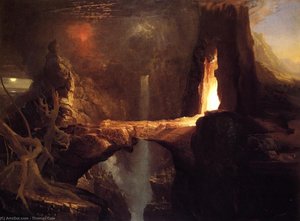 Expulzii. Lună și Lumină de Fațadă1828
 Vederea asupra Florenței din San Miniato1837
Eseuri despre Study, a man's face
 The Soul of the Sketch: Unveiling the Raw Beauty and Creative Intimacy of Artist StudiesDiscover the profound intimacy of artist studies. Explore how raw sketches and preparatory works capture the true soul of Impressionism, fr…
 Defining the American Sublime: The History and Legacy of the Hudson River SchoolMaster the history of the American Sublime and the Hudson River School. Explore the legacy of Cole and Church now.
 Francis Bacon: Cele Mai Iconice Lucrări – Artă Expresionistă pentru Decor RafinatDescoperă cele mai iconice 25 de lucrări ale lui Francis Bacon – picturi expresioniste pline de emoție și forță. Explorează biografia artis…