Hudson River School · 1847
Prometheus Bound (Thomas Cole, 1847)
Thomas Cole (1801–1848) a realizat Prometheus Bound. Data sa este din 1847. Face parte din mișcarea Hudson River School. Este realizată în Oil. Este păstrat la Fine Arts Museums of San Francisco în San Francisco, Statele Unite ale Americii. Dimensiunile sunt 162 × 243 cm.
- 1847
- Oil
- 162 × 243 cm
- Fine Arts Museums of San Francisco

 Previzualizare

 Tablou în ulei pictat manual
 Trimite prin felicitare
 Distribuie
 Fișă informativă


 Descarcă imaginea
 Produse similare
 Radiografie
 Galerie foto
 Întrebări și răspunsuri

 Statistici
Prometheus Bound, pe scurt
- Titlu
- Prometheus Bound
- Artist
- Thomas Cole (1801–1848)
- Artist născut în
- Bolton, Regatul Unit
- Date
- 1847
- Medium
- Oil
- Dimensiuni
- 162 × 243 cm
- Unde poate fi vizualizată
- Fine Arts Museums of San Francisco, San Francisco, Statele Unite ale Americii
- Mișcare
- Hudson River School
- Subiect
- landscape, prometheus, mythology, mountains, allegory, romanticism
Ce reprezintă Prometheus Bound?
The Weight of Myth: Thomas Cole’s “Prometheus Bound”
Thomas Cole's "Prometheus Bound," painted in 1847, isn’t merely a landscape; it’s a profound meditation on defiance, punishment, and the enduring human spirit. This monumental canvas, now residing within the Fine Arts Museums of San Francisco, transcends its subject matter to become a powerful allegory for the struggles inherent in challenging authority and forging one's own destiny. Cole, a pivotal figure in the Hudson River School movement, masterfully blends Romanticism with an underlying moral urgency, creating an image that continues to resonate deeply with viewers today.
The scene depicts Prometheus, chained to a towering rock formation amidst a desolate, snow-laden mountainscape. The composition is strikingly dramatic – a vast expanse of jagged peaks dominates the background, dwarfing the solitary figure of the Titan and emphasizing his isolation and vulnerability. A vulture circles overhead, a constant reminder of Zeus’s relentless retribution, while a subtle hint of Jupiter, the Roman equivalent of Zeus, watches from above, embodying the cold indifference of divine power. Cole's use of light is particularly masterful; a diffused, almost ethereal glow illuminates the scene, casting long shadows and creating an atmosphere of both grandeur and despair. The color palette—primarily cool blues, grays, and whites—reinforces this sense of bleakness, punctuated by the fiery red underpaint used to render the snow-covered mountains – a deliberate choice that subtly hints at Prometheus’s stolen fire.
A Myth Made Manifest: Exploring the Narrative
The painting draws directly from Aeschylus's Greek tragedy, “Prometheus Bound,” a story of rebellion against the gods. Prometheus, in this narrative, is not simply a titan but a symbol of humanity’s relentless pursuit of knowledge and progress. He steals fire from Mount Olympus, gifting it to mankind – an act of defiance that ultimately earns him eternal torment at the hands of Zeus. Cole doesn't shy away from the brutality of the punishment; the stark depiction of Prometheus’s chains and the looming threat of the vulture vividly convey the weight of his transgression. However, within this scene of suffering, there is also a palpable sense of resilience. Prometheus’s gaze, fixed upon the viewer, exudes an almost defiant serenity—a refusal to succumb to despair.
The inclusion of the chorus, comprised of figures emerging from the depths of the mountains, adds another layer of complexity to the narrative. They represent the forces of nature, witnesses to Prometheus's plight, and perhaps even a subtle acknowledgment of his heroic struggle. Their hesitant approach, marked by curiosity and apprehension, suggests that even those seemingly untouched by divine wrath recognize the significance of Prometheus’s actions.
The Hudson River School: A New American Vision
“Prometheus Bound” is a quintessential example of the Hudson River School's artistic philosophy. Unlike earlier European landscape paintings that often focused on idyllic pastoral scenes, Cole sought to capture the raw power and sublime beauty of the American wilderness. He employed a technique known as “atmospheric perspective,” subtly blurring distant elements to create a sense of depth and vastness. This approach wasn’t simply about replicating reality; it was about conveying an emotional response—a feeling of awe and reverence for nature's grandeur.
Cole’s work also reflects the burgeoning American identity of the mid-19th century, grappling with themes of independence, self-reliance, and the relationship between humanity and the natural world. The painting can be interpreted as a metaphor for America’s own struggle to assert its sovereignty against established powers – a sentiment particularly relevant in the context of westward expansion and the nation's growing tensions with European empires.
A Timeless Masterpiece: Reproduction & Beyond
Reproductions of “Prometheus Bound” offer an exceptional opportunity to bring this powerful image into any setting. The meticulous detail, evocative atmosphere, and profound symbolism ensure that a high-quality reproduction will serve as both a beautiful work of art and a compelling conversation piece. Consider framing the artwork in a manner that complements its dramatic scale and reinforces its thematic resonance – perhaps within a contemporary interior space to juxtapose the ancient myth with modern life.
For those seeking an authentic experience, exploring the original painting at the Fine Arts Museums of San Francisco is highly recommended. It’s a truly immersive encounter with one of America's most significant artistic achievements—a testament to Thomas Cole’s genius and a timeless exploration of human courage in the face of overwhelming adversity.
În ce muzeu se află Prometheus Bound?
Fine Arts Museums of San Francisco
San Francisco, Statele Unite ale Americii
Istoria Fine Arts Museums of San Francisco Povestea Fine Arts Museums of San Francisco începe odată cu înființarea sa în anul 1871. Instituția a cunoscut o expansiune constantă, fiind marcată de deschiderea de Young Museum în 1895 și a Legion of Honor în 1924. Aceste două entități distincte au funcționat independent timp de câteva decenii, până când au fost fuzionate oficial în 1972, sub îndrumarea lui Ian McKibbin White.


Imagini la înaltă rezoluție ale lui Prometheus Bound

Domeniu public: artistul a decedat în 1848.
Alte dimensiuni, cadrări și citări →Thomas Cole, Prometheus Bound (1847), Fine Arts Museums of San Francisco. Domeniu public
Întrebări despre Prometheus Bound, răspunsuri
Unde pot vedea originalul "Prometheus Bound" de Thomas Cole?
Originalul "Prometheus Bound" de Thomas Cole este păstrat la Fine Arts Museums of San Francisco, San Francisco, Statele Unite ale Americii. O reproducere permite expunerea operei în propria locuință.
În ce an a fost creată "Prometheus Bound" de Thomas Cole?
Opera "Prometheus Bound" de Thomas Cole a fost creată în 1847.
Din ce materiale este realizată „Prometheus Bound”?
Thomas Cole a utilizat tehnica Oil pentru "Prometheus Bound". Tehnica definește natura materială a lucrării originale.
Care sunt dimensiunile originalului "Prometheus Bound" de Thomas Cole?
Lucrarea originală "Prometheus Bound" de Thomas Cole are dimensiunile de 243 x 162 cm.
Ce reprezintă "Prometheus Bound" de Thomas Cole?
Subiectele din "Prometheus Bound" sunt landscape, prometheus, mythology, mountains, allegory, romanticism, wilderness.
"Prometheus Bound" de Thomas Cole face parte din domeniul public?
În ceea ce privește drepturile de autor, "Prometheus Bound" este în domeniul public – drepturile de autor au expirat.
La ce artist este atribuită opera „Prometheus Bound”?
Artistul din spatele operei „Prometheus Bound” este Thomas Cole. Lucrarea este catalogată sub numele lui Thomas Cole.
Din ce curent artistic face parte "Prometheus Bound" de Thomas Cole?
"Prometheus Bound" de Thomas Cole face parte din mișcarea Hudson River School. Acest curent oferă contextul stilistic al operei.
În ce etapă a evoluției lui Thomas Cole se încadrează „Prometheus Bound”?
În cariera lui Thomas Cole, „Prometheus Bound” aparține perioadei Late Period. Această etapă facilitează compararea sa cu celelalte opere ale artistului.
Despre artistul Thomas Cole

1801–1848, Regatul Unit
Thomas Cole
Viața și Arta lui Thomas Cole Născut pe 1 februarie 1801, în Bolton le Moors, Lancashire, Anglia, Thomas Cole și-a început călătoria departe de peisajele care, în cele din urmă, i-ar fi definit numele. Familia sa a emigrat în Statele Unite în 1818, căutând un nou început într-o țară a unor teritorii vaste și necunoscute. În acei ani de început, a fost un om cu multiple vocații, lucrând ca gravor și, ulterior, găsind un domeniu de activitate stabil ca pictor de portrete, începând din anul 1822. S-a format în mare parte prin autoinstruire, dezvoltându-și privirea prin observație și prin studiul cărților, mai degrabă decât printr-o instruire academică formală.
Alte lucrări ale lui Thomas Cole
 Oxbow
 Visul arhitectului1840
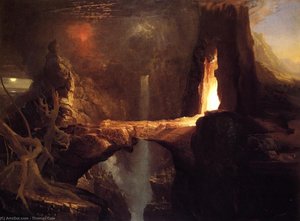 Expulzii. Lună și Lumină de Fațadă1828
 Vederea asupra Florenței din San Miniato1837

Eseuri despre Prometheus Bound
 Masterpieces of Light: The Top 25 Artworks by Duccio di BuoninsegnaJourney through the Sienese brilliance of Duccio di Buoninsegna. Explore 25 iconic masterpieces, from the Rucellai Madonna to the Maestà, f…
 Nature's Nation: The Hudson River School and the Art of the American SublimeExplore the spiritual depth of the Hudson River School through its masters. Discover the power of the American Sublime today.
 Renașterea Înaltă: 10 Capodopere Iconice pentru Decorul Casei TaleDescoperă 10 capodopere ale Renașterii Înalte – Leonardo da Vinci, Michelangelo, Rafael și alții. Află poveștile din spatele picturilor cel…