

 Vezi în context
 Trimite
 Distribuie
 Detalii
 Ghidul

 Descarcă
 Produse similare
 Radiografie
 Diaporama
 Statistici
Card players
 Acrylic On Canvas
- WallArt
- Neoplasticism / De Stijl
 1917
1917 1562.0 x 1262.0 cm
 Kunstmuseum
 Citește mai mult
Giclée / Imprimare artistică
Printuri giclée sau pe canvas de calitate muzeală, cu proces de producție rapid și opțiuni flexibile de finisare. ( Comandă pictură realizată manual Treci la imagine digitală)




P118B lei10

P118H lei10

P118W lei10

P438Z lei10

P508JH lei12

P508YH lei12

P805H lei10

P805Z lei10

P919BZ lei10

P919G lei10

P919XJ lei10

P959ZH lei10

P968JZ lei12

W106C lei8

W218G lei10

W218JH lei8

W218Y lei10

W307PJ lei10

W316G lei10

W316PJ lei8

W316Y lei10

W398PJ lei8

W4111J lei10

W500HY lei15

W500JH lei15

W692G lei12

W849H lei8

W940BG lei15

W953PJ lei8




Alegeți dintre dimensiunile noastre prestabilite, care respectă proporțiile originale ale operei de artă.

Puteți introduce propriile dimensiuni pentru a se potrivi unui anumit cadru sau spațiu. Dacă dimensiunea selectată nu corespunde proporțiilor imaginii originale, vom decupa lucrarea de artă sau vom extinde imaginea cu margini oglindite sau cu o culoare uniformă. Un mockup digital va fi trimis pentru aprobarea dumneavoastră înainte de începerea producției.
Vă rugăm să rețineți că previzualizarea de pe ecran nu reflectă decuparea sau extinderea reală. Doar mockup-ul va arăta cu exactitate compoziția finală.
Deși dimensiunile personalizate sunt disponibile, vă recomandăm să selectați o dimensiune din lista predefinită pentru a păstra proporțiile originale.
Livrare în întreaga lume () în 2 săptămâni, în loc de cele 4/5 săptămâni standard. (7 Octombrie)

Livrare expres gratuită la nivel mondial

Pânză de in premium

Asigurare completă pentru transport

Garanție de rambursare a taxelor vamale

Garanția fidelității culorilor

Politica de retur în 100 de zile (doar pentru defecte)

Garanție de rambursare 100%

Reducere pentru comenzi multiple
 Opțiunea cu sticlă este disponibilă doar pentru dimensiuni de sub 110 cm

Card players
Giclée / Imprimare artistică
Dimensiune reproducere
-


Preț total
lei 362
The Genesis of Abstraction: Van Doesburg’s “Card Players”
Theo van Doesburg's "Card Players," painted in the spring of 1917, isn’t merely a depiction of a game; it’s a pivotal moment in the evolution of modern art. Emerging from the fertile ground of early 20th-century experimentation, this work embodies the core tenets of De Stijl and Neoplasticism – a radical departure from representational painting towards pure abstraction. The canvas itself is a carefully constructed stage, dominated by a stark white background that serves to amplify the geometric forms and their interplay. Van Doesburg, deeply influenced by Bart van der Leck’s earlier explorations of fragmented figures, took this concept to its logical extreme, dissolving human form into a series of interlocking, simplified shapes – circles, squares, and lines – arranged with meticulous precision.

Image: Card Players by Theo van Doesburg (Kunstmuseum Den Haag)
Deconstructing the Human Form: A Geometric Language
The figures within “Card Players” are not portraits in the traditional sense. Instead, they’ve been meticulously broken down and rebuilt using a vocabulary of pure geometry. The seated man, leaning forward with an air of focused concentration, is rendered as a collection of overlapping rectangles and circles. His posture, his hands – even the suggestion of his face – are conveyed through these abstracted shapes, creating a sense of both familiarity and detachment. The other figures share this treatment, their bodies dissolving into a dynamic arrangement of lines and forms that suggest movement and interaction without explicitly depicting action. This deliberate fragmentation reflects Van Doesburg’s belief that art should transcend the limitations of imitation and instead communicate directly through its formal elements – color, line, shape.
The painting's composition is remarkably balanced, achieved through a careful consideration of negative space and the relationships between the geometric forms. The stark contrast between the white background and the dark shapes creates a powerful visual impact, drawing the viewer’s eye to the intricate arrangement of elements on the canvas. It’s a testament to Van Doesburg's mastery of abstraction – a demonstration that beauty and meaning can be found not in representation but in the precise manipulation of form.
Historical Context: The Birth of De Stijl
“Card Players” was created during a period of intense artistic ferment, as European artists grappled with the challenges of modernity. The rise of industrialization, urbanization, and new technologies were profoundly impacting society, leading to a questioning of traditional values and aesthetics. Van Doesburg, along with Piet Mondrian and other members of De Stijl, sought to create a new visual language that reflected this changing world – one based on clarity, simplicity, and geometric harmony. The movement’s core principles extended beyond painting to encompass architecture, design, and even music, aiming for a total synthesis of art and life.
Van Doesburg's encounter with Bart van der Leck’s earlier work in 1916 proved crucial to the development of this aesthetic. Van der Leck’s fragmented figures provided a springboard for Van Doesburg’s own explorations, leading him to embrace abstraction as a means of expressing universal truths and spiritual values. “Card Players” stands as a direct result of this intellectual and artistic dialogue – a culmination of these ideas into a single, powerful image.
Symbolism and Emotional Resonance
While seemingly simple in its composition, "Card Players" is rich with symbolic meaning. The game itself represents human interaction, competition, and the pursuit of pleasure. The abstracted figures suggest a detachment from individual identity, inviting viewers to contemplate the universal themes of social dynamics and the nature of reality. The stark white background symbolizes purity and clarity, while the geometric forms represent order and harmony – values that were central to De Stijl’s philosophy.
Ultimately, “Card Players” is a work of profound emotional resonance. Despite its abstract form, it evokes a sense of quiet contemplation and intellectual curiosity. It's an invitation to engage with the complexities of modern life through the lens of geometric abstraction – a timeless masterpiece that continues to inspire artists and art lovers alike.
Întrebări și răspunsuri
Ce nivel de saturație și intensitate prezintă "Card players" de Theo van Doesburg?
Culoarea operei "Card players" are o Subtle Color în saturație și o Balanced în intensitate.
Ce tehnică a fost utilizată pentru "Card players" de Theo van Doesburg?
Theo van Doesburg a utilizat tehnica Acrylic On Canvas pentru "Card players". Tehnica definește natura materială a lucrării originale.
Care sunt drepturile de reproducere pentru "Card players" la Kunstmuseum?
Statutul drepturilor de autor pentru "Card players" de Theo van Doesburg este clar: opera este în domeniul public - drepturile de autor au expirat. Prezența sa la Kunstmuseum nu schimbă acest statut.
La ce vârstă a creat Theo van Doesburg opera „Card players”?
Theo van Doesburg avea 34 ani când a creat "Card players" în 1917. Vârsta este calculată pe baza anului nașterii artistului, 1883.
Cine este artistul din spatele "Card players"?
„Card players” a fost creat de Theo van Doesburg. Informațiile de pe această pagină descriu opera originală a lui Theo van Doesburg.
Care este data creației pentru "Card players" de Theo van Doesburg?
„Card players” datează din 1917. Această dată plasează lucrarea în cadrul carierei lui Theo van Doesburg și în contextul epocii sale.
"Card players" de Theo van Doesburg face parte din domeniul public?
În ceea ce privește drepturile de autor, "Card players" este în domeniul public - drepturile de autor au expirat.
Biografie artist
The Architect of Abstraction: A Life in Geometric Harmony
Theo van Doesburg, born Christian Emil Marie Küpper in 1883 in Utrecht, Netherlands, wasn’t merely a painter; he was a revolutionary force who fundamentally reshaped the very foundations of modern art. His journey began amidst the lingering echoes of Impressionism and Post-Impressionism, initially mirroring styles reminiscent of Vincent van Gogh – both in subject matter and emotional intensity. However, this early phase served as a crucial prelude, a necessary stepping stone toward the radical transformation that would define his enduring legacy. A pivotal moment arrived in 1913 with his encounter with Wassily Kandinsky’s *Rückblicke*. This text sparked within van Doesburg a profound realization: true artistic expression lay not in replicating the external world but in channeling an inner, spiritual reality through pure abstraction. It was this conviction that birthed Neoplasticism, more commonly known as De Stijl – a movement he founded and fiercely championed, becoming its most ardent advocate.Forging a New Visual Language: The Principles of De Stijl
De Stijl wasn’t merely an artistic style; it was a comprehensive philosophical manifesto translated into visual form. Van Doesburg believed in stripping art down to its most essential elements – straight lines, right angles, and the primary colors of red, yellow, and blue, alongside black, white, and gray. This austere palette wasn't born from limitation but from a desire for universality—a belief that these fundamental forms resonated with an underlying cosmic order. He envisioned a *total* work of art, extending beyond the canvas to encompass architecture, design, and even everyday objects. Collaboration was key; van Doesburg worked closely with architects like J.J.P. Oud and Gerrit Rietveld, designing stained glass windows, furniture, and entire interiors that embodied the principles of De Stijl. His collaborations extended to fellow artists such as Piet Mondrian, with whom he co-founded the influential journal *De Stijl*, a platform for disseminating their ideas and attracting like-minded creatives. However, despite their shared origins, tensions arose between van Doesburg and Mondrian regarding the rigidity of Neoplasticism. Van Doesburg introduced “Elementarism” in 1926, advocating for diagonal lines and more dynamic compositions – a departure that ultimately led to a schism within the movement, revealing his restless spirit and constant pursuit of artistic evolution.The Early Years & The Seeds of Abstraction
Theo van Doesburg’s early life was marked by a surprising lack of formal artistic training. Born into a family of artists—his father, Wilhelm Küpper, was a photographer—he initially pursued acting and singing before finding his calling as a shop assistant. This seemingly mundane occupation provided him with a keen eye for detail and an appreciation for the beauty of everyday objects – qualities that would later inform his artistic vision. It wasn’t until 1908, when he exhibited his paintings in the Hague, that he began to establish himself as a serious artist. His early works were characterized by a sensitivity reminiscent of Vincent van Gogh—both in subject matter and emotional intensity. However, this initial phase served as a crucial prelude, a necessary stepping stone toward the radical transformation that would define his enduring legacy. The turning point arrived in 1913 with his encounter with Wassily Kandinsky’s *Rückblicke*. This text sparked within van Doesburg a profound realization: true artistic expression lay not in replicating the external world but in channeling an inner, spiritual reality through pure abstraction.The Birth of De Stijl & The Pursuit of Totality
In 1917, amidst the turmoil of World War I, Theo van Doesburg, along with Piet Mondrian, Bart van der Leck, and others, founded *De Stijl* (The Style), a journal dedicated to exploring the principles of pure abstraction. They sought to create a “total work of art” – an encompassing aesthetic that extended beyond painting to encompass architecture, design, and all aspects of human experience. This ambition led them to develop a rigorous set of rules: only primary colors, straight lines, right angles, and black and white were permitted. The goal was to achieve a sense of harmony and universality through the reduction of form to its most essential elements. *De Stijl* quickly became a focal point for avant-garde artists and designers, shaping the visual language of the interwar period.Beyond Painting: A Multifaceted Artistic Vision
While celebrated as a painter, van Doesburg’s artistic pursuits were remarkably diverse. He was a prolific writer, poet, critic, and designer, using his pen to articulate the theoretical underpinnings of De Stijl and challenge conventional notions of art. His engagement with Dadaism in the early 1920s further broadened his artistic horizons, leading to experimental works that incorporated collage and typography. This period also saw him teaching at the Bauhaus, where he shared his ideas with a new generation of artists and designers. He wasn’t content to remain within the confines of traditional art forms; van Doesburg actively sought to integrate art into everyday life, believing it had the power to transform society. His designs for interiors and furniture weren't merely aesthetic exercises but attempts to create harmonious living spaces that reflected the principles of De Stijl.Legacy & Lasting Influence
Theo van Doesburg’s life was tragically cut short in 1931 at the age of 47, yet his impact on modern art remains profound. De Stijl, though relatively short-lived as a cohesive movement, exerted an enormous influence on subsequent artistic developments, including Bauhaus design, Minimalism, and Constructivism. His emphasis on geometric abstraction, pure color, and functionalism continues to resonate with artists and designers today. His work serves as a reminder that art is not merely about representation but about the exploration of fundamental forms and ideas. Van Doesburg’s legacy extends beyond his paintings and designs; it lies in his unwavering commitment to artistic innovation and his belief in the transformative power of abstraction. His vision of a unified, harmonious world – expressed through the language of De Stijl – continues to inspire those who seek to create a more beautiful and meaningful environment.
Theo van Doesburg
1883 - 1931 , Olanda
Informații rapide
- Artistic Movement Or Style: De Stijl, Neoplasticism
- Artists Or Movements Influenced By This Artist:
- Bauhaus
- Minimalism
- Artists Who Influenced This Artist:
- Kandinsky
- Van Gogh
- Date Of Birth: 30 august 1883
- Date Of Death: 7 martie 1931
- Full Name: Theo van Doesburg
- Nationality: Olandez
- Notable Artworks:
- Compoziție cu roșu...
- Compoziție II cu linii...
- Danci
- Place Of Birth: Utrecht, Olanda
Articole conexe

Goya: Cele Mai Iconice Capodopere – Artă Spaniolă pentru Decor Rafinat | OriginalUniqueArt.ro
Descoperă cele mai frumoase 25 de picturi ale lui Francisco Goya! Explorează capodoperele romantice, portretele impresionante și gravurile puternice. Reproduceri artă spaniolă de calitate muzeală pentru un decor rafinat. Explorează colecția completă online pe OriginalUniqueArt.com

Top 10 Capodopere ale Picturii Netherlandeze Timpurii: Frumusețe și Simbolism pentru Decorul Tău
Descoperă top 10 capodopere ale picturii netherlandeze timpurii! Jan van Eyck, Robert Campin și alți maeștri renascentiști. Află poveștile din spatele simbolismului bogat și tehnicilor inovatoare. Reproduceri de artă de calitate muzeală pe OriginalUniqueArt.com.

Cu privire la noi
Descoperă povestea noastră! Aduceți arta de talie mondială în viața dumneavoastră prin selecție expertă, creații personalizate și previzualizări gratuite. Aprobate de persoane fizice și companii din 2000.

Rembrandt van Rijn: Cele Mai Frumoase 25 de Capodopere – Artă, Istorie și Decorațiuni Interioare
Descoperă cele mai frumoase 25 de picturi ale lui Rembrandt van Rijn! Explorează capodopere baroce, portrete emoționante și peisaje iconice. Reproduceri de artă de calitate muzeală pentru un design interior rafinat. Descoperă toate operele pe OriginalUniqueArt.com!
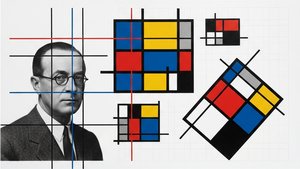
Theo van Doesburg: Pioneering De Stijl & the Evolution of Neo-Plasticism
Explore the revolutionary De Stijl movement & Neo-Plasticism with our expert guide. Discover Piet Mondrian, Theo van Doesburg, and the lasting impact of this influential art style. Learn about collecting & investing in De Stijl masterpieces.
