

 Vezi în context
 Trimite
 Distribuie
 Detalii
 Ghidul

 Descarcă
 Produse similare
 Radiografie
 Diaporama
 Statistici
Self Portrait
 Oil On Canvas
- WallArt
- Contemporary Realism
 1939
1939- Early Modern
 40.0 x 55.0 cm
 Muzeul Fitzwilliam din Cambridge
 Citește mai mult
Lucrarea de artă afișată pe această pagină este protejată de legile privind drepturile de autor, ceea ce înseamnă că nu putem crea sau vinde în mod legal o reproducere identică. Această protecție este garantată prin acorduri internaționale, precum Convenția de la Berna și de legile naționale, inclusiv cele prevăzute de Legea dreptului de autor din S.U.A. – Titlul 17. Toate drepturile rezervate. Orice reproducere neautorizată este interzisă.
Această metodă respectă pe deplin reglementările privind drepturile de autor, deoarece nu implică copierea sau duplicarea operei protejate. În schimb, este o reinterpretare creativă – o pictură nouă, influențată de original, dar care nu este identică cu acesta.
Giclée / Imprimare artistică
Printuri giclée sau pe canvas de calitate muzeală, cu proces de producție rapid și opțiuni flexibile de finisare. ( Comandă pictură realizată manual Treci la imagine digitală)




P118B lei10

P118H lei10

P118W lei10

P438Z lei10

P508JH lei12

P508YH lei12

P805H lei10

P805Z lei10

P919BZ lei10

P919G lei10

P919XJ lei10

P959ZH lei10

P968JZ lei12

W106C lei8

W218G lei10

W218JH lei8

W218Y lei10

W307PJ lei10

W316G lei10

W316PJ lei8

W316Y lei10

W398PJ lei8

W4111J lei10

W500HY lei15

W500JH lei15

W692G lei12

W849H lei8

W940BG lei15

W953PJ lei8




Alegeți dintre dimensiunile noastre prestabilite, care respectă proporțiile originale ale operei de artă.

Introduceți lățimea și înălțimea de care aveți nevoie, pentru a se potrivi ramei sau peretelui dumneavoastră. O printare poate fi doar tăiată, niciodată extinsă dincolo de dimensiunea imaginii originale, astfel încât o dimensiune cu o formă diferită va pierde o parte din imagine. Vă trimitem o simulare digitală pentru aprobare înainte de a imprima orice. Imaginea afișată pe această pagină nu prezintă tăierea reală — doar simularea arată acest lucru.
Livrare în întreaga lume () în 2 săptămâni, în loc de cele 4/5 săptămâni standard. (24 Octombrie)

Livrare expres gratuită la nivel mondial

Pânză de in premium

Asigurare completă pentru transport

Garanție de rambursare a taxelor vamale

Garanția fidelității culorilor

Politica de retur în 100 de zile (doar pentru defecte)

Garanție de rambursare 100%

Reducere pentru comenzi multiple
 Opțiunea cu sticlă este disponibilă doar pentru dimensiuni de sub 110 cm

Self Portrait
Giclée / Imprimare artistică
Dimensiune reproducere
-


Preț total
lei 370
A Portrait of Introspection: Sir Stanley Spencer’s “Self Portrait” (1939)
Sir Stanley Spencer's "Self Portrait," painted in 1939, is more than just a likeness; it’s a profound meditation on identity, faith, and the quiet contemplation of a life lived deeply within the familiar landscape of Cookham. This oil-on-canvas masterpiece, now residing in the Fitzwilliam Museum in Cambridge, offers a rare glimpse into the artist's inner world – a world where the sacred and the mundane intertwine with remarkable intimacy.
The painting immediately draws the eye to Spencer’s own figure, rendered with an almost unsettling directness. He is depicted in a dark suit, his face framed by round spectacles, a thoughtful expression etched upon his brow. The brushstrokes are deliberately loose and expressive, characteristic of the early 20th-century style he embraced – a departure from the rigid formality of academic portraiture. Spencer wasn’t striving for photographic accuracy; instead, he sought to capture the *feeling* of being, the weight of experience, and the subtle nuances of emotion.
Neo-Romanticism and the Cookham Vision
“Self Portrait” firmly places Spencer within the Neo-Romantic movement. This style, prevalent in Britain during the interwar period, rejected the detached objectivity of earlier artistic approaches, prioritizing emotional intensity and subjective experience. Spencer’s connection to Cookham – his childhood home and lifelong muse – is utterly central to understanding this work. He didn't simply paint a village; he imbued it with spiritual significance, transforming it into a microcosm of heaven on earth. This deeply personal vision permeates every aspect of his art.
The muted palette—dominated by browns, blues, and subtle reds—creates an atmosphere of quiet contemplation. The dark background, suggestive of draped fabric or perhaps the interior walls of his studio, serves to isolate Spencer’s figure, intensifying the sense of introspection. Notice how he uses light – a soft, diffused glow from the upper left – to sculpt the planes of his face and clothing, adding depth and volume while simultaneously casting subtle shadows that hint at hidden emotions.
Symbolism in Detail
The inclusion of the paintbrush and palette is particularly significant. It’s not merely an indication of Spencer's profession; it represents his creative process – a constant engagement with the world, seeking to capture its essence on canvas. The artist’s gaze, directed slightly off-center, invites us into this internal dialogue. Some art historians interpret the suit as a symbol of formality and social standing, while others see it as representing Spencer's desire for order and control in a world increasingly marked by uncertainty.
The overall composition is remarkably balanced, despite the subject’s slight off-center placement. This suggests a sense of equilibrium within Spencer himself – a quiet confidence amidst moments of profound reflection. The painting isn’t overtly dramatic; rather, it conveys a subtle but powerful sense of inner strength and resilience.
A Window into a Singular Mind
“Self Portrait” is more than just a beautiful artwork; it's a poignant document of a singular mind grappling with the complexities of faith, identity, and the beauty of everyday life. It’s a testament to Spencer’s ability to find the divine in the ordinary, and to capture that profound connection on canvas. Reproductions of this work offer a remarkable opportunity to bring this intimate portrait into your home, inviting you to contemplate alongside Sir Stanley Spencer as he paused to consider his own place within the world.
Întrebări și răspunsuri
Cum se încadrează „Self Portrait” în temele și stilul lui Stanley Spencer?
În creația lui Stanley Spencer, „Self Portrait” se înscrie în stilul Contemporary Realism, alături de temele biblical undertones, cookham setting, post-impressionist echoes, spencer's style, formal portraiture, social commentary, self-examination, introspective gaze.
Ce vârstă avea Stanley Spencer când a fost creat "Self Portrait"?
Stanley Spencer avea 48 ani când a creat "Self Portrait" în 1939. Vârsta este calculată pe baza anului nașterii artistului, 1891.
Ce artist și ce stil stau la baza operei "Self Portrait"?
În spatele operei „Self Portrait” se află Stanley Spencer și mișcarea Contemporary Realism.
Biografie artist
A Visionary of Cookham: The Life and Art of Sir Stanley Spencer
Sir Stanley Spencer was, without a doubt, one of the most distinctive and profoundly personal artists to emerge from Britain in the 20th century. His entire life and artistic output were inextricably linked to his birthplace – the small village of Cookham, Berkshire – transforming it into a living, breathing canvas upon which he painted biblical narratives, everyday scenes, and intensely felt spiritual experiences. Born on June 30th, 1891, into a large family deeply rooted in music and religion, Spencer’s early education was shaped by his sisters, Annie and Florence, who provided him with an unconventional yet stimulating home environment before he enrolled at the Slade School of Fine Art in London from 1908 to 1912. This formal training offered a foundation, but it was Cookham itself – which he famously described as “a village in heaven” – that truly became the wellspring of his artistic vision and the subject of countless paintings.Early Influences and the Pre-Raphaelite Spirit
Spencer’s unique style wasn't born in a vacuum; it was forged through a careful synthesis of diverse influences. The meticulous detail and reverence for nature characteristic of the Pre-Raphaelites – particularly artists like Millais and Rossetti – resonated deeply within his work, evident in his vibrant colors, intricate compositions, and fascination with medieval and Renaissance art. However, Spencer wasn’t simply replicating past masters. He absorbed elements of French Post-Impressionism, notably the expressive use of color championed by Paul Gauguin, and drew inspiration from early Italian painting, particularly the masterful storytelling and emotional depth found in Giotto's frescoes. Crucially, he developed a distinctly personal voice, blending these influences into a style that was both deeply rooted in tradition and remarkably innovative. His paintings weren’t didactic illustrations of religious stories; they were intensely subjective interpretations, populated by villagers he knew intimately – farmers, shopkeepers, churchgoers – cast as biblical figures or participants in everyday life. This deliberate blurring of the sacred and secular was revolutionary, inviting viewers to contemplate the divine within the familiar and the mundane.The Resurrection: Cookham - A Defining Masterpiece
Perhaps the most iconic example of Spencer’s unique approach is *The Resurrection, Cookham* (1924-1926), a monumental fresco housed at the Tate Gallery in London. Far from depicting a grand, ethereal resurrection scene, this painting presents a vibrant, earthy tableau unfolding in the fields surrounding Cookham churchyard. Local residents – including Spencer’s sister Florence and his father, William – are shown rising from their graves, bathed in golden light. The painting is not merely a religious depiction; it's a deeply personal meditation on life, death, and rebirth, rooted firmly in the landscape of Spencer’s childhood. Critics at the time hailed it as “the most important picture painted by any English artist in the present century,” recognizing its audacious blend of meticulous detail and modern freedom of form. The painting’s success cemented Spencer's reputation as a major artistic force and established his distinctive style – one that prioritized emotional truth over conventional representation.Wartime Reflections and the Sandham Memorial Chapel
Spencer’s artistic output wasn’t limited to idyllic landscapes and biblical scenes. His experiences during World War I profoundly shaped his work, leading him to serve as an Official War Artist. This experience culminated in a commission to create murals for the Sandham Memorial Chapel at Burghclere in Hampshire (1927-1932). These monumental paintings weren’t glorifications of war; they were honest, unflinching depictions of the lives of ordinary soldiers – their routines, anxieties, and quiet moments of contemplation. The arrangement of the murals consciously echoed Giotto's Arena Chapel in Padua, but Spencer infused it with a uniquely British sensibility and a deeply humanistic perspective. He deliberately avoided depicting violence or heroic battles, focusing instead on the collective effort and resilience of those contributing to the war effort. The *Dug-Out* scene, for example, captures the quiet desperation and camaraderie of soldiers awaiting battle, while the *Soldiers’ Rest* depicts a moment of respite amidst the horrors of war.Later Years and Legacy
In his later years, Spencer continued to explore themes of love, faith, and mortality in his paintings, often incorporating elements of eroticism and personal introspection. His portraits, particularly those depicting his second wife, Patricia Preece, are both strikingly beautiful and intensely revealing, offering a glimpse into the complexities of his personal life. Despite facing criticism for some of his more unconventional works, Spencer remained an independent artist until his death on December 14th, 1959. He was knighted in 1959, shortly before his passing, recognizing his significant contribution to British art. Today, Sir Stanley Spencer’s paintings are celebrated for their unique blend of spirituality, humanity, and artistic innovation – a testament to the enduring power of an artist who transformed a small village into a living masterpiece. His legacy continues to inspire artists and viewers alike, reminding us that beauty and meaning can be found in the most unexpected places.
Stanley Spencer
1891 - 1959 , Marea Britanie
Informații rapide
- Artistic Movement Or Style: Pre-Raphaelitan
- Artists Or Movements Influenced By This Artist: ['Lucian Freud']
- Artists Who Influenced This Artist:
- Gauguin
- Giotto
- Date Of Birth: 30 iunie 1891
- Date Of Death: 14 dec. 1959
- Full Name: Sir Stanley Spencer
- Nationality: Britanic
- Notable Artworks: ['Resurrectia, Cookham']
- Place Of Birth: Cookham, UK
Articole conexe

Oil on Canvas: A Historical & Technical Exploration of a Timeless Artistic Medium
Explore the rich history & enduring techniques of oil painting on canvas. Discover the science behind its longevity, conservation practices, and contemporary relevance. Expert insights for art enthusiasts.

The Enduring Power of Painting: A Historical & Contemporary Exploration of Form and Emotion
Explore the rich history & enduring techniques of oil painting with OriginalUniqueArt. Discover masterpieces, learn about art collecting, and find authentic handmade reproductions crafted by skilled artists.

The Enduring Legacy of Oil on Canvas: Technique, History & Aesthetic Impact
Explore the rich history & techniques of oil painting – from Renaissance masters to Impressionism. Discover pigments, layering methods, and why this timeless medium endures. Expert insights for artists & art enthusiasts.
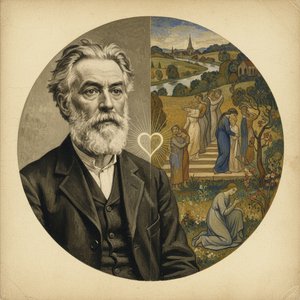
Sir Stanley Spencer: Reassessing Spiritual Vision & Autobiographical Narrative
Explore the captivating world of Sir Stanley Spencer – a British painter renowned for his unique blend of religious narrative & personal experience. Discover his legacy, key works like 'Christ's Entry into Jerusalem', and lasting influence on modern art.
Portrete pe Pânză: Imortalizarea Iubitorilor prin Artă – O Explorare a Legăturii Emoționale și a Moștenirii Familiale
Imortalizați iubirea și legăturile familiale cu portrete personalizate realizate de artiști profesioniști. Descoperiți tehnici artistice rafinate, reproducerea capodoperelor și sfaturi pentru conservarea moștenirii dumneavoastră. Calitate superioară garantată!

