

 Previzualizare
 Trimite prin felicitare
 Distribuie
 Detalii despre lucrare
 Ghid
Ghid

 Descarcă imaginea
 Produse similare
 Radiografie
 Galerie foto
 Statistici
Young Rimbaud
 Spray Paint
- WallArt
- Australian Modernism
 Contemporary
 152.0 x 122.0 cm
 Canberra Museum and Gallery
 Vezi mai mult
Lucrarea de artă afișată pe această pagină este protejată de legile privind drepturile de autor, ceea ce înseamnă că nu putem crea sau vinde în mod legal o reproducere identică. Această protecție este garantată prin acorduri internaționale, precum Convenția de la Berna și de legile naționale, inclusiv cele prevăzute de Legea dreptului de autor din S.U.A. – Titlul 17. Toate drepturile rezervate. Orice reproducere neautorizată este interzisă.
Această metodă respectă pe deplin reglementările privind drepturile de autor, deoarece nu implică copierea sau duplicarea operei protejate. În schimb, este o reinterpretare creativă – o pictură nouă, influențată de original, dar care nu este identică cu acesta.
Giclée / Imprimare artistică
Printuri giclée sau pe canvas de calitate muzeală, cu proces de producție rapid și opțiuni flexibile de finisare. ( Comandă pictură realizată manual Comută pe Imagine Digitală)




P118B lei10

P118H lei10

P118W lei10

P438Z lei10

P508JH lei12

P508YH lei12

P805H lei10

P805Z lei10

P919BZ lei10

P919G lei10

P919XJ lei10

P959ZH lei10

P968JZ lei12

W106C lei8

W218G lei10

W218JH lei8

W218Y lei10

W307PJ lei10

W316G lei10

W316PJ lei8

W316Y lei10

W398PJ lei8

W4111J lei10

W500HY lei15

W500JH lei15

W692G lei12

W849H lei8

W940BG lei15

W953PJ lei8




Alegeți dintre dimensiunile noastre prestabilite, care respectă proporțiile originale ale operei de artă.

Introduceți lățimea și înălțimea necesare pentru a se potrivi ramei sau peretelui dumneavoastră. O printare poate fi doar tăiată, niciodată extinsă dincolo de dimensiunea imaginii originale, astfel încât o dimensiune cu o formă diferită va pierde o parte din imagine. Vă trimitem o simulare digitală pentru aprobare înainte de a imprima orice. Imaginea afișată pe această pagină nu prezintă tăierea reală — doar simularea arată acest lucru.
Livrare în întreaga lume () în 2 săptămâni, în loc de cele 4/5 săptămâni standard. (25 Octombrie)

Livrare expres gratuită la nivel mondial

Pânză de in de înaltă calitate

Asigurare completă pentru transport

Garanție de rambursare a taxelor vamale

Garanția fidelității culorilor

Politica de retur în 100 de zile (doar pentru defecte de fabricație)

Garanție de rambursare 100%

Ofertă pentru comenzi multiple
 Opțiunea cu sticlă este disponibilă doar pentru dimensiuni de sub 110 cm

Young Rimbaud
Giclée / Imprimare artistică
Dimensiune reproducere
-


Preț total calculat
lei 370
A Visionary Encounter: The Spirit of Young Rimbaud
In the vast landscape of twentieth-century Australian modernism, few works possess the haunting, ethereal magnetism of Sir Sidney Robert Nolan’s “Young Rimbaud.” Created in 1982, this monumental canvas serves as a profound dialogue between two restless spirits: the Australian master of myth, Nolan, and the French symbolist poet, Arthur Rimbaud. The painting is far more than a mere portrait; it is an evocative exploration of the subconscious, capturing the very essence of poetic transcendence. As one gazes upon the face of the young poet, there is an immediate sense of stepping into a dreamscape where the boundaries between reality and imagination begin to dissolve.
The subject matter draws its lifeblood from Rimbaud’s seminal work, Illuminations—a collection Nolan himself revered as a "book of miracles." Through this piece, Nolan attempts to translate the linguistic magic of Rimbaud's prose into a visual language. The face, appearing with eyes closed in a state of deep introspection or perhaps spiritual trance, invites the viewer to contemplate the internal world of the visionary. It is an invitation to experience what Rimbaud famously called the "systematic derangement of the senses," making the artwork a centerpiece for those who find beauty in the profound and the mysterious.
Technique and the Geometry of Constraint
What distinguishes “Young Rimbaud” from traditional portraiture is Nolan’s daring embrace of spray paint. By the early 1980s, Nolan had moved toward this medium to achieve a level of immediacy and textural complexity that traditional oils could rarely provide. The spray technique allows for a soft, atmospheric layering of color, creating a nebulous quality that mirrors the ephemeral nature of thought and memory. This method lends the work an almost cinematic depth, where colors bleed into one another with a ghostly, luminous grace.
Interwoven with this fluid application is a striking use of geometric structure. A deliberate, cage-like frame surrounds the central visage, acting as a powerful visual metaphor. This geometric constraint represents the "cage" of rational thought and the physical limitations of the human condition that Rimbaud so often sought to escape through his verse. For the discerning collector or interior designer, this tension between the soft, sprayed textures and the sharp, structural lines provides a sophisticated visual rhythm, making it an intellectually stimulating addition to any curated space.
A Legacy for the Modern Collector
To possess a reproduction of such a significant work is to bring a piece of art history into the contemporary home. Nolan’s ability to weave together the harsh realities of his Australian upbringing with the high-minded symbolism of European literature creates a universal appeal. The painting does not merely decorate a room; it anchors it, providing a focal point that sparks conversation and emotional resonance. Whether placed in a minimalist gallery setting or a richly textured study, “Young Rimbaud” radiates an aura of intellectual depth and artistic courage.
For those seeking to invest in art that transcends trends, this work offers a timeless connection to the era of the Angry Penguins and the evolution of modernism. It is a masterpiece of texture, a triumph of medium, and a soulful tribute to the power of the written word, rendered in the vibrant, experimental spirit of one of Australia's greatest legends.
Întrebări și răspunsuri
La ce artist este atribuită opera „Young Rimbaud”?
„Young Rimbaud” este atribuit lui Sir Sidney Robert Nolan.
Ce stare și ce emoție se regăsesc în "Young Rimbaud"?
În "Young Rimbaud", o atmosferă Calm însoțește o emoție Melancholic.
Din ce curent artistic face parte "Young Rimbaud" de Sir Sidney Robert Nolan?
„Young Rimbaud” este o operă de Australian Modernism. Acest curent indică tradiția artistică din care face parte lucrarea.
Biografie artist
A Life Painted in Myth and Landscape
Sir Sidney Robert Nolan, born in Melbourne in 1917, stands as a monumental figure in 20th-century Australian art. His journey was not one of conventional artistic training but rather an explosive emergence from the working-class streets of St Kilda into a world of vibrant imagination and relentless experimentation. Nolan wasn’t simply a painter; he was a visual storyteller, a mythmaker who wrestled with Australia's history, its landscapes, and its very identity. From his early days as a runner for an illegal betting ring to his eventual acclaim on the international stage, Nolan’s life was marked by a restless energy and a refusal to be confined by artistic norms. He absorbed influences from diverse sources – the poetry of Rimbaud, the spatial innovations of Cézanne, the raw emotion of Danila Vassilieff – yet forged a style uniquely his own, one that resonated with a distinctly Australian sensibility. His early exposure to the harsh realities of Melbourne life and the allure of its underbelly would profoundly shape his artistic vision, imbuing his work with a sense of both defiance and vulnerability.Early Life and Influences
Nolan’s formative years were steeped in intellectual ferment. The Heide Circle, centered around patrons John and Sunday Reed, proved pivotal. This haven for artists and writers fostered a spirit of radical experimentation and provided Nolan with crucial support during his developing phase. It was at Heide that he encountered kindred spirits – Albert Tucker, Joy Hester, Arthur Boyd – all grappling with the challenge of creating a distinctly Australian modernism. The influence of modernist literature, particularly the Symbolist poets, cannot be overstated. Rimbaud’s call for a “systematic derangement of the senses” became a guiding principle for Nolan, liberating him from representational constraints and encouraging him to explore the emotional power of color, form, and symbolism. He wasn't interested in merely depicting reality; he sought to capture its essence, its underlying emotions, and its hidden narratives. His early works demonstrate this influence, often featuring fragmented figures and dreamlike landscapes that hint at deeper psychological truths. He studied at the National Gallery of Victoria’s School of Art in 1934 and 1936 but educated himself primarily through books on Pablo Picasso, Paul Klee, Henri Matisse and the surrealists. From 1938 he was encouraged and supported by art patrons Sunday and John Reed. Their house, ‘Heide’, in the outer Melbourne suburb of Heidelberg (now Heide Museum of Modern Art), was a meeting place for the avant-garde group known as the Angry Penguins, named after the radical cultural journal. The group included the artists Albert Tucker, Joy Hester, John Perceval and Arthur Boyd. The Angry Penguins sought to modernise Australian art and poetry by adopting spontaneous and visionary processes influenced by surrealism.The Heide Circle and Artistic Exploration
Nolan’s engagement with the Heide Circle solidified his commitment to artistic experimentation and fueled his exploration of diverse mediums. He embraced Cézanne's spatial innovations, seeking to convey depth and perspective in his paintings—a deliberate departure from traditional representational techniques. Tucker, Hester and Boyd shared Nolan’s fascination for capturing the emotional resonance of landscapes and figures, mirroring Rimbaud’s belief that art should transcend mere observation. This collaborative spirit fostered a dynamic exchange of ideas and encouraged Nolan to push boundaries, constantly striving for new forms of expression. He was particularly drawn to Danila Vassilieff's raw emotion and unflinching honesty—values he carried throughout his artistic career. His early works reflect this multifaceted influence, demonstrating both intellectual rigor and profound sensitivity.The Iconic Ned Kelly Series
Nolan’s magnum opus is undoubtedly the Ned Kelly series, a monumental undertaking that cemented his place as Australia's foremost modernist artist. Beginning in 1946, he embarked on a systematic exploration of Australian history and mythology—specifically, the legend of Ned Kelly, the charismatic outlaw who defied Victorian law and embodied defiance against authority. He approached Kelly not as a historical figure to be accurately portrayed but as a symbol for Australia itself—a land grappling with its past, confronting its contradictions, and yearning for identity. Nolan’s stylistic innovation was transformative: he employed a technique of layering color over black silhouettes, creating images that were simultaneously starkly graphic and imbued with emotional depth. This method—the use of bold black forms against vibrant hues—became his signature visual device, reflecting Rimbaud's concept of “systematic derangement of the senses.” The Kelly paintings captured the spirit of a generation grappling with disillusionment and searching for meaning in a rapidly changing world. They remain among Australia’s most recognizable artworks, embodying the nation’s fascination with its rebellious heroes and its complex relationship to its history.A Legacy of Visionary Art
Throughout his prolific career, Nolan continued to explore themes drawn from Australian folklore and mythology—the Burke and Wills Expedition, Antarctica—each series characterized by his distinctive blend of poetic intensity and historical awareness. He experimented with ceramics, stage design, and opera sets, demonstrating a remarkable versatility that defied categorization. His landscapes—often desolate yet imbued with an underlying sense of beauty—captured the vastness and grandeur of the Australian Outback. Nolan’s influence extended far beyond his own lifetime, inspiring countless contemporary artists who embraced experimentation and sought to convey emotion through unconventional techniques. He received numerous accolades throughout his career, including appointments as an Officer of the Order of Merit (OM), a Companion of the Order of Australia (AC), and a Commander of the Order of the British Empire (CBE). His paintings are held in major museums and collections around the world, ensuring that his legacy will endure for generations to come. To explore more of his artwork, platforms like OriginalUniqueArt offer a wide range of reproductions, allowing art lovers to experience the power and beauty of his vision firsthand. He left behind not just a collection of paintings but a new way of seeing Australia—a land of myth, mystery, and enduring artistic potential.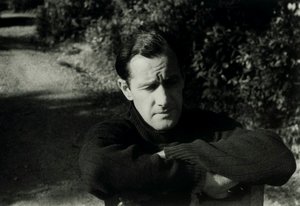
Sir Sidney Robert Nolan
1917 - 1992 , Australia
Detalii rapide
- Artistic Movement Or Style: Modernist
- Artists Or Movements Influenced By This Artist: ['Contemporary Art Society']
- Artists Who Influenced This Artist:
- Rimbaud
- Cézanne
- Kandinsky
- Klee
- Date Of Birth: April 22, 1917
- Date Of Death: November 28, 1992
- Full Name: Sir Sidney Robert Nolan
- Nationality: Australian
- Notable Artworks:
- Ned Kelly series
- Carriers of Horses
- AFL Series
- Place Of Birth: Melbourne, Australia
Articole similare

The Frame as Argument: An Expert Guide to Selecting the Perfect Frame for Your Art
Master the art of presentation with our expert guide on choosing the perfect frame. Learn how to enhance your artwork's value, complement your interior design, and ensure long-term preservation through professional framing techniques for collectors and enthusiasts alike.
The Frame as Argument: How the Right Frame Completes or Ruins a Painting
Discover how the perfect frame acts as a silent partner to Impressionist masterpieces. Explore expert insights on selecting frames that enhance light, texture, and historical value for your collection.

Înrămarea Lucrărilor de Artă: Ghid Expert pentru Selecție și Integrare Estetică
Ghid expert pentru înramarea tablourilor și a operelor de artă. Alegeți ramele perfecte pentru protecție, valoare estetică și integrare armonioasă în decorul dvs. Servicii .
Beyond the Canvas: Framing as a Catalyst for Value & Aesthetic Impact in Luxury Art Reproduction
Discover how expert framing elevates your art investment & interior design. Explore museum-quality options, bespoke sizing, and preservation techniques for discerning collectors. Enhance value & aesthetic impact with OriginalUniqueArt.
Framing Perception: A Comprehensive Guide to Selecting Frames that Enhance Interior Styles and Artwork Value
Elevate your space with expert art framing guidance! Discover how to choose frames that enhance artwork & interior design, protect valuable pieces, and create stunning displays. Trusted advice for designers & collectors.


