- Acasă

- Reproducere Tablou în Ulei
- John Everett Millais
- For The Squire

 Comandă tipăritul Cumpără imaginea
 Trimite
 Distribuie
 Detalii despre lucrare
 Adaugă la favorite

 Descarcă
 Similare
 Radiografie
 Diaporama
For The Squire


 Vezi mai mult
Reproducere manuală în ulei
Pictură în ulei pe pânză, pictată manual, la dimensiunea și ramele dorite de dumneavoastră, realizată la comandă de artiștii noștri.




































Alegeți dintre dimensiunile noastre prestabilite, care respectă proporțiile originale ale operei de artă.

Puteți introduce propriile dimensiuni pentru a se potrivi unui anumit cadru sau spațiu. Dacă dimensiunea selectată nu corespunde proporțiilor imaginii originale, vom decupa opera de artă sau vom extinde pictura cu elemente suplimentare pictate manual. O simulare digitală vă va fi trimisă pentru aprobare înainte de începerea producției.
Vă rugăm să rețineți că previzualizarea de pe ecran nu reflectă decuparea sau extinderea reală. Doar macheta va arăta cu exactitate compoziția finală.
Deși sunt disponibile dimensiuni personalizate, vă recomandăm să selectați o dimensiune din lista predefinită pentru a păstra proporțiile originale.
După plasarea comenzii, echipa OriginalUniqueArt.com va trimite clientului instrucțiuni prin e-mail și îi va furniza o previzualizare a machetei
Livrare în întreaga lume () în 3/4 săptămâni, în loc de cele 5 săptămâni standard. (21 Iulie). Fără compromisuri în ceea ce privește calitatea.

Livrare expres gratuită la nivel mondial

Pânză de in de înaltă calitate

Asigurare completă pentru transport

Garanție de rambursare a taxelor vamale

Garanția fidelității culorilor

Politica de retur de 60 de zile (doar pentru defecte)

Garanție 100% de rambursare

Reducere la comenzi multiple
 Opțiunea cu sticlă este disponibilă doar pentru dimensiuni de sub 110 cm

For The Squire
Tehnică de reproducere
Dimensiune reproducere
-


Preț total calculat
-
Descriere operă de artă
A Glimpse into Victorian Life: "For The Squire" by Sir John Everett Millais
Step back in time to 1882 and immerse yourself in the quiet dignity of “For The Squire,” a captivating portrait by Pre-Raphaelite master, Sir John Everett Millais. This evocative work offers more than just a likeness; it provides a window into Victorian social customs and the role of young women within them. The painting depicts a girl, likely a child squire or messenger, poised before a weathered brick wall softened by encroaching foliage. Her posture is upright, her gaze thoughtful, hinting at the weight of responsibility carried on her young shoulders. This isn't merely a portrait; it’s a narrative frozen in time, inviting viewers to contemplate the story behind the folded paper she holds – a message entrusted to her care.Pre-Raphaelite Realism and Technique
Millais was a founding member of the Pre-Raphaelite Brotherhood, a movement dedicated to rejecting what they perceived as the artificiality of academic art and returning to the detailed observation and vibrant colors of early Italian Renaissance painting. "For The Squire" exemplifies this commitment. The artist’s meticulous technique is immediately apparent in the rendering of textures – the rough grit of the brickwork contrasts beautifully with the soft drape of the girl's dress and bonnet. Millais skillfully employed oil paints, likely utilizing glazing techniques to achieve a luminous depth and subtle gradations of color. Notice how he uses both hard lines within the bricks and flowing lines in the fabric and leaves, creating a dynamic interplay that brings the scene to life. The diffused lighting, suggesting an overcast day, further enhances the naturalistic quality of the piece.Symbolism and Victorian Context
Beyond its aesthetic beauty, "For The Squire" is rich with symbolic meaning rooted in Victorian society. The folded paper is a key element – it represents communication, duty, and perhaps even secrets or important news. Her attire—a simple yet well-made dress and bonnet—suggests a connection to nobility or authority, hinting at the importance of her task. The setting itself, with the aged brick wall partially obscured by nature, speaks to the interplay between human construction and the natural world – a common theme in Victorian art. The girl’s slightly apprehensive expression adds another layer of intrigue; she is not merely posing for a portrait but embodying a role within a larger social framework.Emotional Resonance and Lasting Appeal
"For The Squire" evokes a sense of quiet introspection and understated elegance. It's a painting that invites contemplation, prompting viewers to imagine the girl’s story and the significance of her mission. The subdued color palette—dominated by warm earth tones—creates a calming and harmonious atmosphere. This piece resonates with those who appreciate Victorian aesthetics, detailed realism, and narratives imbued with subtle emotional depth. Owning a hand-painted reproduction allows you to bring this timeless masterpiece into your home, adding a touch of historical charm and artistic sophistication to any space.Biografie artist
A Prodigy of the Pre-Raphaelites: The Life and Art of Sir John Everett Millais
Born in Southampton in 1829, John Everett Millais entered the Royal Academy Schools at the astonishing age of eleven—the youngest student ever admitted. This early demonstration of prodigious talent foreshadowed a career that would not only define an artistic movement but also capture the Victorian imagination with its breathtaking realism and emotional depth. From his earliest days, Millais possessed a remarkable gift for observation, a quality that would become the cornerstone of his artistic style. He wasn’t merely painting what he saw; he was meticulously recreating it, imbuing each brushstroke with an almost photographic fidelity. This dedication to truth in representation set him apart and ultimately led him to challenge the established conventions of British art.The Birth of a Brotherhood and Artistic Rebellion
Millais’s artistic trajectory took a pivotal turn in 1848 when, alongside Dante Gabriel Rossetti and William Holman Hunt, he founded the Pre-Raphaelite Brotherhood. This wasn't simply an aesthetic choice; it was a deliberate rebellion against what they perceived as the artificiality of academic art—art that had strayed too far from the natural world and the sincerity of early Renaissance masters, those working *before* Raphael. The Pre-Raphaelites sought to revive the clarity, detail, and vibrant color palettes of artists like Jan van Eyck and Fra Angelico. Their manifesto was one of truth to nature, a rejection of idealized forms, and an embrace of subjects drawn from literature, mythology, and everyday life. Millais’s early works, such as *Isabella*, immediately showcased this new approach—a meticulous attention to detail combined with a narrative intensity that captivated and often provoked audiences. His most controversial work during this period, Christ in the House of His Parents (1849-50), depicted the Holy Family not as ethereal beings but as ordinary working-class people, engaging in everyday tasks like preparing food, sparking outrage among critics who found its realism unsettling and even blasphemous. The painting’s stark depiction of a humble domestic scene directly challenged the traditional, idealized representations of religious subjects prevalent at the time.Evolving Styles and Victorian Sensibilities
The mid-1850s marked a period of significant change for Millais, both personally and artistically. His marriage to Effie Gray, following the annulment of her marriage to John Ruskin, profoundly influenced his work. He moved away from the intensely detailed, symbolic style of his early Pre-Raphaelite paintings towards a broader, more atmospheric realism. This shift wasn’t simply a matter of stylistic preference; it reflected a growing engagement with contemporary life and a desire to capture the fleeting beauty of the natural world. Paintings like *Autumn Leaves* exemplify this new direction—a serene depiction of a group of young women drifting leaves on a river, imbued with a sense of melancholy and nostalgia. The painting’s luminous colors and delicate rendering of light and shadow demonstrate Millais's growing mastery of technique. He also found considerable success as a portraitist, capturing the likenesses of prominent Victorian figures, including John Gladstone and Benjamin Disraeli. This period saw Millais achieve widespread popularity and financial security, but it also drew criticism from some who felt he had compromised his artistic principles.Iconic Masterpieces and Lasting Influence
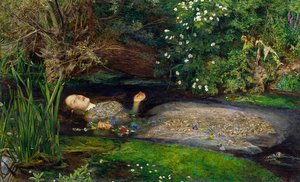
Millais’s career produced a remarkable body of work that continues to fascinate art lovers today. *Ophelia* (1851-1852), perhaps his most famous painting, is renowned for its haunting beauty and symbolic richness. The image of Ophelia drowning in the river, surrounded by water lilies and wildflowers, captures both her tragic fate and the poignant beauty of nature. A Huguenot (1851-1852) depicts a scene of religious conflict and forbidden love, showcasing Millais’s skill in capturing dramatic emotion and narrative intensity. *Mariana* (1850-1851), inspired by Shakespeare and Tennyson, is a testament to his ability to evoke mood and atmosphere through subtle color harmonies and delicate brushwork. Later works, such as *Autumn Leaves*, demonstrate his evolving style and his increasing interest in capturing the beauty of everyday life. Millais’s work profoundly influenced subsequent generations of artists, shaping the course of British art and contributing significantly to the development of Impressionism and other modern movements. His commitment to realism, his exploration of narrative themes, and his innovative use of color continue to inspire artists today.Legacy and Collections
Sir John Everett Millais’s legacy extends far beyond his individual works. He was a key figure in the Pre-Raphaelite movement, which challenged artistic conventions and championed a return to nature and sincerity. His paintings are held in major museums around the world, including Tate Britain in London, Manchester Art Gallery, and the National Gallery of Art in Washington D.C. His influence can be seen in the works of many later artists, and his images continue to resonate with audiences today.
John Everett Millais
1829 - 1896 , Regatul Unit al Marii Britanii și Irlandei
Detalii rapide
- Artistic Movement Or Style: Pre-Raphaelit
- Artists Or Movements Influenced By This Artist: ['Pre-Raphaelit']
- Artists Who Influenced This Artist: ['Pre-Raphaelit']
- Date Of Birth: 8 iunie 1829
- Date Of Death: 13 august 1896
- Full Name: Sir John Everett Millais
- Nationality: Britanic
- Notable Artworks:
- Ophelia
- Christ...
- A Huguenot
- Place Of Birth: Southampton, UK
Articole conexe
Sir John Lavery: A Study in Scottish Impressionism & the Portraiture of a Generation
Explore the life & art of Sir John Lavery, a master of Scottish Impressionism and renowned portraitist. Discover his captivating works, Irish heritage, and lasting legacy with OriginalUniqueArt.
Sir John Watson Gordon: A Study in Scottish Landscape Painting & Tonal Impressionism
Explore the captivating portraits of Sir John Watson Gordon, a leading Scottish master. Discover his evolution from neoclassical style to atmospheric Tonalism and influence on 19th-century British art. Learn about his iconic sitters & legacy.
John Collier: Pre-Raphaelite Realism & Victorian Psychological Portraiture
Explore the captivating world of John Collier, a leading Pre-Raphaelite painter renowned for his psychologically insightful Victorian portraits. Discover his masterpieces and lasting artistic legacy.

Sir Hubert von Herkomer: A Life Painted with Realism, Ambition & Victorian Art
Explore the life & art of Sir Hubert von Herkomer, a pivotal Victorian realist painter. Discover his powerful portraits, social commentary & pioneering film work. Learn about his legacy and find high-quality reproductions at OriginalUniqueArt.
Anthony Frederick Sandys: Pre-Raphaelite Vision & Victorian Aesthetic Exploration
Discover the captivating Pre-Raphaelite world of Anthony Frederick Sandys (1829-1904). Explore his mythological scenes, portraits & Victorian artistry. Learn about his influences and lasting legacy.