- Acasă

- Imprimare pe pânză
- Simone Martini
- The Annunciation and Two Saints

 Comandă reproducere pictată Cumpără imaginea
 Trimite
 Distribuie
 Detalii despre lucrare
 Adaugă la favorite

 Descarcă
 Similare
 Radiografie
 Diaporama
The Annunciation and Two Saints
 Acrilic pe pânză
- Artă murală
- Early Renaissance
 1333
1333- Renașterea
 184.0 x 210.0 cm
 Galleria degli Uffizi
 Vezi mai mult
Giclée / Imprimare artistică
Print giclée sau pe canvas de calitate muzeală, cu producție rapidă și opțiuni flexibile de finisare.




P118B $10

P118H $10

P118W $10

P438Z $10

P508JH $12

P508YH $12

P805H $10

P805Z $10

P919BZ $10

P919G $10

P919XJ $10

P959ZH $10

P968JZ $12

W106C $8

W218G $10

W218JH $8

W218Y $10

W307PJ $10

W316G $10

W316PJ $8

W316Y $10

W398PJ $8

W4111J $10

W500HY $15

W500JH $15

W692G $12

W849H $8

W940BG $15

W953PJ $8




Alegeți dintre dimensiunile noastre prestabilite, care respectă proporțiile originale ale operei de artă.

Puteți introduce propriile dimensiuni pentru a se potrivi unui anumit cadru sau spațiu. Dacă dimensiunea selectată nu corespunde proporțiilor imaginii originale, vom decupa lucrarea de artă sau vom extinde imaginea cu margini oglindite sau cu o culoare uniformă. Un mockup digital va fi trimis pentru aprobarea dumneavoastră înainte de începerea producției.
Vă rugăm să rețineți că previzualizarea de pe ecran nu reflectă decuparea sau extinderea reală. Doar mockup-ul va arăta cu exactitate compoziția finală.
Deși dimensiunile personalizate sunt disponibile, vă recomandăm să selectați o dimensiune din lista predefinită pentru a păstra proporțiile originale.
Livrare în întreaga lume () în 2 săptămâni, în loc de cele 4/5 săptămâni standard. (21 Iulie)

Livrare expres gratuită la nivel mondial

Pânză de in de înaltă calitate

Asigurare completă pentru transport

Garanție de rambursare a taxelor vamale

Garanția fidelității culorilor

Politica de retur de 60 de zile (doar pentru defecte)

Garanție 100% de rambursare

Reducere la comenzi multiple
 Opțiunea cu sticlă este disponibilă doar pentru dimensiuni de sub 110 cm

The Annunciation and Two Saints
Giclée / Imprimare artistică
Dimensiune reproducere
-


Preț total calculat
-
Descriere obiect de colecție
A Symphony of Faith and Refinement: Exploring Simone Martini’s The Annunciation
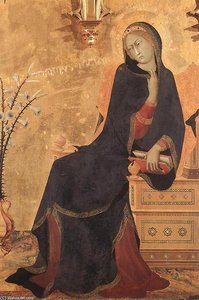
Simone Martini's *The Annunciation and Two Saints*, painted in 1333, transcends mere depiction; it embodies the very essence of early Renaissance artistic ambition. Executed in tempera on panel—a medium prized for its luminosity and durability—this monumental artwork (184 x 210 cm) resides within the Galleria degli Uffizi in Florence, Italy, a testament to its enduring significance within Italian art history. Its fame stems not only from its exquisite craftsmanship but also from its profound theological contemplation and masterful stylistic innovation.The Composition: A Delicate Balance of Divine Presence
At first glance, the painting presents a serene tableau centered around Mary Magdalene, seated gracefully on a bench—a deliberate choice reflecting the prevailing aristocratic ideals of the period. Beside her stand two angels, rendered with astonishing precision and imbued with palpable emotion. Their hands outstretched, they offer flowers – lilies symbolizing purity and resurrection – to Mary, establishing a visual dialogue between earthly humility and celestial grace. The inclusion of kneeling figures underscores the importance of piety and devotion within medieval Christian belief. Furthermore, subtle gestures and facial expressions convey nuanced emotions, demonstrating Martini’s unparalleled ability to capture psychological depth within his artistic endeavors.Technique: Tempera's Brilliance – A Masterful Achievement
Martini’s mastery lies in his meticulous application of tempera paint—a technique demanding painstaking layering and blending. Unlike oil paints which offer flexibility and gradual build-up, tempera dries quickly, resulting in vibrant colors and unparalleled detail. The artist skillfully utilized glazing techniques—applying thin translucent layers over opaque pigments—to achieve a breathtaking luminosity that captures the ethereal quality of divine light. Observe particularly the intricate drapery folds and the subtle gradations of color within the architectural backdrop – likely inspired by Florentine Gothic churches – highlighting Martini’s dedication to recreating realistic textures and spatial depth.Historical Context: Siena's Artistic Renaissance
The painting emerged from Siena, a city experiencing a burgeoning artistic revival fueled by papal patronage and mercantile prosperity. Simone Martini was deeply embedded in this cultural milieu, collaborating closely with Lippo Memmi on monumental frescoes within the Oratorio di San Lorenzo in Ponte—a project that cemented Siena’s reputation as a beacon of artistic innovation. This context illuminates Martini's stylistic choices – his embrace of elegance and refinement – mirroring the broader humanist movement gaining momentum across Europe during this era. The artwork reflects the anxieties and aspirations of its time, grappling with questions of faith, beauty, and human dignity.Symbolism: Flowers of Hope Amidst Sacred Narrative
Beyond its visual splendor, *The Annunciation* is laden with symbolic meaning. Lilies, as mentioned earlier, represent purity and resurrection—themes central to Christian theology. The angels’ flowers serve not merely as decorative elements but as conduits for divine grace, conveying the promise of salvation and eternal life. Martini's careful consideration of symbolism elevates the painting beyond a simple depiction of biblical narrative; it invites contemplation on spiritual truths and reinforces the viewer’s understanding of Christian faith.Emotional Impact: A Moment Frozen in Time
Ultimately, *The Annunciation and Two Saints* succeeds in transporting us back to 14th-century Siena—capturing not just an image but a feeling. The painting's serene beauty evokes a sense of tranquility and reverence, prompting reflection on themes of faith, humility, and divine grace. Its meticulous detail compels admiration for Martini’s artistic skill while simultaneously fostering empathy for the spiritual concerns of his time. Reproductions by OriginalUniqueArt.com allow art lovers to experience this masterpiece anew, preserving its timeless allure for generations to come.Biografie artist
A Sienese Master of Elegance and Grace
Simone Martini, born around 1284 in the heart of Siena, Italy, stands as a pivotal figure in the transition from medieval to Renaissance art. He wasn’t merely a painter; he was an architect of elegance, a master of line and color who infused his works with a courtly refinement that distinguished him from contemporaries like Giotto. While historical accounts vary regarding his early training—some suggest apprenticeship under Duccio di Buoninsegna, the leading Sienese artist of the time, while others point to Florence and the influence of Giotto—Martini undeniably forged a unique artistic path. His brother-in-law, Lippo Memmi, was also an artist with whom he frequently collaborated, further enriching the vibrant artistic landscape of Siena. The city itself played a crucial role in shaping Martini’s aesthetic; Siena, a thriving center of commerce and culture, fostered an environment where art flourished, blending religious devotion with worldly sophistication.
The Flourishing of International Gothic
Martini's style is immediately recognizable for its departure from the more monumental forms favored in Florence. He embraced a delicate sensibility, characterized by flowing lines, soft decorative details, and an overall sense of grace. This aesthetic wasn’t born in isolation; it was profoundly influenced by external forces. The Via Francigena, a major pilgrimage route traversing Europe, brought with it artistic currents from France—particularly the refined elegance of French manuscript illumination and ivory carving. These influences are readily apparent in Martini's work, manifesting as intricate patterns, elongated figures, and a heightened attention to surface ornamentation. He didn’t simply copy these styles; he synthesized them with existing Sienese traditions, creating something entirely new. His paintings weren’t merely representations of religious scenes but rather elegant narratives imbued with emotional depth and visual poetry.
Early Life and Training
Little is known about Simone Martini's early life, a common situation for many artists of the period. While some accounts suggest he began his artistic training under Duccio di Buoninsegna, the most celebrated Sienese painter of his time, definitive proof remains elusive. Others propose that he spent formative years in Florence, absorbing the influences of Giotto, whose naturalistic style represented a significant departure from the more stylized conventions of the Gothic era. Regardless of the precise details of his early education, it’s clear that Martini quickly developed a distinctive artistic voice—one characterized by an unparalleled sensitivity to line, color, and composition. His collaboration with Lippo Memmi, his brother-in-law, further enriched his creative environment, fostering a dynamic exchange of ideas and techniques.
Major Works and Artistic Development
Martini’s most celebrated works exemplify the pinnacle of his artistic development. The *Maestà* fresco, commissioned for the Palazzo Pubblico in Siena around 1315, stands as a testament to his mastery—a monumental depiction of the Virgin Mary enthroned with angels and saints that seamlessly blends Gothic elegance with emerging Renaissance principles. The *Annunciation*, painted circa 1330, showcases Martini’s ability to capture delicate emotion and intricate detail, while the *Saint Louis of Toulouse Crowning His Brother Robert of Anjou* (1317), created during his time in Naples, demonstrates his skill in portraying complex narratives with a refined sense of courtly splendor. His *Saint Catherine of Alexandria Polyptych*, completed around 1320, further highlights his command of color and form, solidifying his reputation as one of the most influential artists of his generation.
Legacy and Historical Significance
Simone Martini’s impact on the development of European art cannot be overstated. He played a crucial role in disseminating the International Gothic style—a movement characterized by its elegance, refinement, and emphasis on decorative detail—across the continent. His influence extended to generations of artists who followed, shaping the course of late medieval and early Renaissance painting. Martini’s work wasn't simply about technical skill; it was about creating a visual language that resonated with the sensibilities of his time—a language of beauty, grace, and spiritual devotion. Even today, his paintings continue to captivate viewers with their exquisite detail, harmonious compositions, and enduring sense of elegance. His frescoes in San Francesco d’Assisi demonstrate his mastery of large-scale decorative painting, while works like the *Saint Catherine of Alexandria Polyptych* showcase his unparalleled command of color and form. Simone Martini died in Avignon in 1344, leaving behind a legacy that continues to inspire awe and admiration centuries later—a testament to the enduring power of art to transcend time and touch the human spirit.

Simone Martini
1284 - 1344 , Italia
Detalii rapide
- Artistic Movement Or Style: Gotic Internațional
- Artists Or Movements Influenced By This Artist: ['Duccio di Buoninsegna']
- Artists Who Influenced This Artist:
- Duccio di Buoninsegna
- Giotto
- Date Of Birth: c. 1284
- Date Of Death: 1344
- Full Name: Simone Martini
- Nationality: Italian
- Notable Artworks:
- Maestà
- Annunțarea
- Saint Louis
- Place Of Birth: Siena, Italia
Articole conexe
Sandro Botticelli: Cele Mai Frumoase 25 De Capodopere – Artă Renașcentistă pentru Decorul Casei Tale
Descoperă cele mai frumoase 25 de capodopere ale lui Sandro Botticelli! Explorează istoria, simbolismul și frumusețea picturilor renascentiste precum 'Nașterea lui Venus' și 'Primăvara'. Găsește reproducerea perfectă pentru decorul casei tale pe OriginalUniqueArt.com.
Top 25 de Capodopere din Alte Pinakothek: Artă Clasică pentru Decorul Tău
Descoperă top 25 de capodopere din Alte Pinakothek, München! Rembrandt, Dürer și Rafael prind viață în articolele noastre. Istoria artei, tehnici unice & inspirație pentru decorul tău. Explorează colecția completă pe OriginalUniqueArt.com!
Metropolitan Museum of Art: Top 25 de capodopere pentru o casă inspirată
Descoperă top 25 de capodopere din Metropolitan Museum of Art, New York! Explorează poveștile lui Monet, Van Gogh și Rembrandt. Găsește inspirație pentru decorul casei tale cu reproduceri artă de calitate muzeală pe OriginalUniqueArt.com.
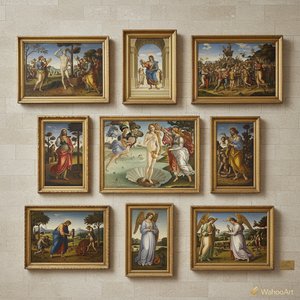
Renașterea Timpurie: 10 Capodopere Esențiale pentru Decorul de Lux
Descoperă 10 capodopere renascentiste esențiale – Botticelli, Leonardo da Vinci și Rafael! Explorează istoria artei, tehnicile artistice și simbolismul picturilor. Reproduceri de lux pentru decor interior pe OriginalUniqueArt.com.
Capodopere la National Gallery of Art: Cele mai Iubite Lucrări pentru Decorul Casei Tale
Descoperă cele mai frumoase 25 de picturi din National Gallery of Art, Washington! Cézanne, Matisse, Picasso și alți maeștri te așteaptă. Reproduceri de artă de calitate muzeală pentru un decor rafinat. Explorează colecția completă pe OriginalUniqueArt.com!