() ·

A painting made for you, by hand

Crucifixion

Reproducere pictată manual în ulei

Pictură în ulei pe pânză, pictată manual de artiștii noștri la dimensiunea și ramele dorite de dumneavoastră, pe comandă. ( Comută pe versiunea Print Comută pe Imagine Digitală)

Descriere obiect de colecție

Experience the profound emotional resonance of Simone Martini's 1333 Crucifixion, a masterpiece of Sienese Gothic elegance featuring luminous tempera and refined detail that invites you to explore this sacred vision.

Biografie artist

Descoperiți Simone Martini, maestrul sijenilor de eleganță și grație! Picturile sale gotice internaționale—cum ar fi 'Maestà'—combină teme religioase cu rafinament curtenesian și detalii exquisite.

from ·

Chapter 1

How large should it be?

Slide to change the size; the picture on the left shows the frame at its real width. The proportions of the original are kept.

Standard
personalizat
CM
INCH

Alegeți dintre dimensiunile noastre prestabilite, care respectă proporțiile originale ale operei de artă.

lățime
înălțime

Introduceți lățimea și înălțimea necesare pentru a se potrivi ramei sau peretelui dumneavoastră. Această lucrare este pictată manual, așa că, pentru o dimensiune cu o formă diferită, artistul poate picta puțin mai mult în jurul imaginii sau poate tăia puțin din margini — dumneavoastră decideți. Vă vom trimite o simulare digitală pentru aprobare înainte de a începe pictarea. Imaginea afișată pe această pagină nu reprezintă rezultatul real — doar simularea este reprezentativă.

Chapter 2

How should it arrive?

Choose the edges of the stretched canvas

Choose your frame

Corner sample of the WhiteWrap canvas edge finish, stretched on lemn masiv bars
White lei1
Corner sample of the BlurSideWrap canvas edge finish, stretched on lemn masiv bars
Blurside lei1
Corner sample of the ExtendedWrap canvas edge finish, stretched on lemn masiv bars
Extended lei1
Corner sample of the P118B picture frame: polistiren turnat, 5 cm wide and 3 cm thick
P118B lei10
Corner sample of the P118H picture frame: polistiren turnat, 5 cm wide and 3 cm thick
P118H lei10
Corner sample of the P118W picture frame: polistiren turnat, 5 cm wide and 3 cm thick
P118W lei10
Corner sample of the P438Z picture frame: polistiren turnat, 5.5 cm wide and 3.5 cm thick
P438Z lei10
Corner sample of the P508JH picture frame: polistiren turnat, 7 cm wide and 3.5 cm thick
P508JH lei12
Corner sample of the P508YH picture frame: polistiren turnat, 7 cm wide and 3.5 cm thick
P508YH lei12
Corner sample of the P805H picture frame: polistiren turnat, 5 cm wide and 3.5 cm thick
P805H lei10
Corner sample of the P805Z picture frame: polistiren turnat, 5 cm wide and 3.5 cm thick
P805Z lei10
Corner sample of the P919BZ picture frame: polistiren turnat, 7 cm wide and 3.5 cm thick
P919BZ lei10
Corner sample of the P919G picture frame: polistiren turnat, 7 cm wide and 3.5 cm thick
P919G lei10
Corner sample of the P919XJ picture frame: polistiren turnat, 7 cm wide and 3.5 cm thick
P919XJ lei10
Corner sample of the P959ZH picture frame: polistiren turnat, 5 cm wide and 3 cm thick
P959ZH lei10
Corner sample of the P968JZ picture frame: polistiren turnat, 6 cm wide and 4 cm thick
P968JZ lei12
Corner sample of the W106C picture frame: lemn masiv, 5 cm wide and 3 cm thick
W106C lei8
Corner sample of the W218G picture frame: lemn masiv, 5 cm wide and 3 cm thick
W218G lei10
Corner sample of the W218JH picture frame: lemn masiv, 5 cm wide and 3 cm thick
W218JH lei8
Corner sample of the W218Y picture frame: lemn masiv, 5 cm wide and 3 cm thick
W218Y lei10
Corner sample of the W307PJ picture frame: lemn masiv, 6 cm wide and 3 cm thick
W307PJ lei10
Corner sample of the W316G picture frame: lemn masiv, 6 cm wide and 3 cm thick
W316G lei10
Corner sample of the W316PJ picture frame: lemn masiv, 6 cm wide and 3 cm thick
W316PJ lei8
Corner sample of the W316Y picture frame: lemn masiv, 6 cm wide and 3 cm thick
W316Y lei10
Corner sample of the W398PJ picture frame: lemn masiv, 5 cm wide and 3 cm thick
W398PJ lei8
Corner sample of the W4111J picture frame: lemn masiv, 6.5 cm wide and 3.5 cm thick
W4111J lei10
Corner sample of the W500HY picture frame: lemn masiv, 7 cm wide and 5 cm thick
W500HY lei15
Corner sample of the W500JH picture frame: lemn masiv, 7 cm wide and 5 cm thick
W500JH lei15
Corner sample of the W692G picture frame: lemn masiv, 8 cm wide and 4 cm thick
W692G lei12
Corner sample of the W849H picture frame: lemn masiv, 5 cm wide and 3 cm thick
W849H lei8
Corner sample of the W940BG picture frame: lemn masiv, 7.5 cm wide and 4.5 cm thick
W940BG lei15
Corner sample of the W953PJ picture frame: lemn masiv, 6 cm wide and 3.5 cm thick
W953PJ lei8
Corner sample of the H24-GOLD picture frame: lemn sculptat cu gesso, 10 cm wide and 6 cm thick
H24-GOLD lei30
Corner sample of the H24-SILVER picture frame: lemn sculptat cu gesso, 10 cm wide and 6 cm thick
H24-SILVER lei30
Corner sample of the H36-GOLD picture frame: lemn sculptat cu gesso, 15 cm wide and 6.5 cm thick
H36-GOLD lei45
Corner sample of the H36-SILVER picture frame: lemn sculptat cu gesso, 15 cm wide and 6.5 cm thick
H36-SILVER lei45

Moulding: . Overall size with the frame: .

Chapter 3

Who paints it, and should anything change?

Examples of what can be changed: Replace face with customer photo; Add pet (e.g., replace cat with dog); Include hidden message in background; Change background landscape or elements.
After order, OriginalUniqueArt.com team will email client for instructions and provide a mockup preview

Livrare în întreaga lume () în 3-4 săptămâni, în loc de cele 5 săptămâni standard. (1 Noiembrie). Fără compromisuri în ceea ce privește calitatea.

Chapter 4

The finishing touches

A nameplate, as in a museum?

Detalii plăcuță din bronz gravat

This elegant plaque features the artist's name and the title of the artwork, finely engraved for a timeless presentation.

It is made from bronze with a refined, elegant finish. The text is precisely laser-engraved for a sharp and permanent result. Measuring 9x2 cm, the plaque is compact yet easy to read. It's built to be durable and scratch-resistant, offering a professional, museum-quality look. Mounting is simple thanks to the included adhesive backing.

Detalii plăcuță din acril transparent

The plaque includes essential engraved details such as the artist's name, the title of the artwork, the date it was created, the type of media used-like oil on canvas or watercolor-a brief description of the piece, and a QR code that links to the complete artwork information.

It is crafted from clear acrylic, offering a sleek, modern appearance. The text is UV-engraved in black to ensure strong visual contrast. With a size of 10x15 cm, it ensures optimal readability. It comes equipped with two metal hooks for secure wall mounting. The plaque is designed to be weather-resistant, making it suitable for various environments, and it includes interactive features that work seamlessly with smartphone scanning.

Detalii placă din acril negru

This elegant plaque includes engraved information such as the artist's name, the title of the artwork, the date it was created, the type of media used (like oil on canvas or watercolor), a short description of the artwork, and a QR code for quick access to more information.

The plaque itself is made from refined black acrylic with a premium finish. The text is laser-engraved in white for high contrast and readability. Its size is 10x15 cm, designed to be easy to read. It comes with two metal hooks for professional mounting. The design is sleek and fits any interior style. It is also weather-resistant and durable, with built-in digital integration for mobile compatibility.

A protective varnish?

When do you need it?

Chapter 5

Your painting, as you ordered it

Crucifixion

Tehnică de reproducere

Dimensiune reproducere

-

Selecție de artiști de elită

Mai multe detalii, rafinament și timp suplimentar de execuție

-

Ramă pentru reproducere artistică

-

-

Pentru opere de artă sau reproduceri care depășesc 105 cm (aproximativ 41 de inch) pe oricare dintre laturi, cadrul va fi livrat demontat, sub formă de kit. Această metodă asigură o livrare sigură și previne deteriorarea în timpul transportului.

Este necesară asamblarea profesională – acest produs nu este de tip DIY (de făcut singur).
Kitul trebuie asamblat, iar pânza întinsă, de către un legător de cadre experimentat, utilizând adeziv pentru lemn (neinclus în colet), o cheie pentru întinderea pânzei și cleme pentru a menține barele la unghi drept în timp ce adezivul se usucă. Asamblarea incorectă sau tensiunea neuniformă a pânzei pot deteriora permanent opera de artă și nu sunt acoperite de garanția noastră.

  • Toate barele din lemn masiv sunt incluse, tăiate cu precizie la dimensiunea necesară.

  • Asamblat cu șuruburile incluse, plus adeziv pentru lemn pentru îmbinările de colț, care nu este furnizat și trebuie achiziționat de către tâmplarul dumneavoastră.

  • Sunt necesare unelte profesionale care nu sunt incluse: o șipte de întindere a pânzei (tensionator) și cleme pentru a menține barele la unghi drept în timp ce adezivul se usucă.

Important:
Îmbinările de colț necesită adeziv pentru lemn, barele trebuie fixate cu clești de strângere până când adezivul este complet uscat, iar întinderea pânzei pe cadrul asamblat necesită un clește pentru întins pânza. Niciunul dintre aceste elemente nu este inclus în kit. Vă rugăm să consultați un încadrator profesionist cu experiență înainte de a comanda această dimensiune.

Etichetă de prezentare

-

-

Lac de protecție

Lac lucios (intensifică nuanțele și oferă protecție împotriva luminii și a umidității)

-

Personalizează opera mea de artă

Exemple de elemente ce pot fi personalizate: Înlocuirea feței cu fotografia clientului; Adăugarea unui animal de companie (de exemplu, înlocuirea unei pisici cu un câine); Includerea unui mesaj ascuns în fundal; Modificarea peisajului sau a elementelor din fundal.

-

Livrare rapidă

Livrare la nivel mondial () în 3-4 săptămâni, în loc de cele 5 săptămâni standard. (1 Noiembrie). Fără compromisuri când vine vorba de calitate.

-

Livrare rapidă

Livrare la nivel mondial () în 5 săptămâni. (8 Noiembrie).

Inclus

Preț total calculat

lei 1423

Preț total lei 1423

Opțiunea cu sticlă este disponibilă doar pentru dimensiuni de sub 110 cm

Included with every order

  • Livrare expres gratuită la nivel mondial
  • Pânză de in de înaltă calitate
  • Asigurare completă pentru transport
  • Garanție de rambursare a taxelor vamale
  • Garanția fidelității culorilor
  • Politica de retur în 100 de zile (doar pentru defecte de fabricație)
  • Garanție de rambursare 100%
  • Ofertă pentru comenzi multiple

A Divine Drama in Miniature: The Elegance of Simone Martini

In the quiet intimacy of a small panel, measuring a mere 24 by 15 centimeters, Simone Martini captures an event of cosmic significance with unparalleled grace. His Crucifixion, painted around 1333, is far more than a historical record of Christian passion; it is a masterclass in the Sienese Gothic aesthetic, where spiritual agony meets courtly refinement. To gaze upon this work is to enter a realm where the heavy weight of suffering is balanced by an ethereal, almost weightless beauty. The scene unfolds with a breathtaking precision that belies its diminutive scale, inviting the viewer into a profound moment of contemplation that feels both deeply personal and universally monumental.

The technical mastery displayed in this piece reflects the pinnacle of 14th-century Italian innovation. Utilizing tempera on panel, Martini employs a technique that allows for a luminous, jewel-like quality, particularly evident in the way light interacts with the delicate surfaces. Unlike the more grounded, earthy realism found in the Florentine works of his contemporary Giotto, Martini’s hand is characterized by an aristocratic elegance. He utilizes subtle hatching and scumbling to create soft gradations of tone, lending a palpable sense of atmosphere to the air surrounding the cross. The figures are rendered with elongated, lyrical lines and drapery that flows with a rhythmic, musical quality, transforming a scene of execution into a dance of divine sorrow.

Siena’s Golden Age and the Language of Faith

To understand the soul of this painting, one must look to the vibrant streets of 14th-century Siena. During this period, Siena was a flourishing center of commerce and culture, a city defined by its intense religious devotion and sophisticated patronage. Martini, a pivotal figure in the transition from the medieval to the Renaissance, worked within an environment shaped by the Dominican Order and a wealthy merchant class that craun for art reflecting both piety and prestige. This Crucifixion serves as a testament to that era's spiritual fervor, embodying the Sienese school's unique ability to blend Byzantine-influenced iconography with a new, more emotive humanism.

The symbolism embedded within the composition invites layers of interpretation for the discerning collector. The positioning of Christ, suspended between heaven and earth, acts as a bridge for the faithful. Surrounding him, the figures of mourners and angels are not merely spectators but participants in a shared emotional experience. The vibrant colors and intricate details—from the subtle glint of gold to the poignant expressions of grief—work in harmony to convey the central tenets of the Christian faith: sacrifice, redemption, and eternal hope. For those looking to integrate such a piece into a curated collection or a sophisticated interior, it offers a profound focal point that commands attention through its quiet, dignified intensity.

Whether viewed as a historical masterpiece or an exquisite decorative element, Martini’s Crucifixion remains an enduring icon of beauty. It possesses the rare ability to anchor a room with its historical gravity while elevating the surrounding space with its delicate, luminous spirit. For the art lover and the interior designer alike, this work represents a timeless intersection of technical brilliance and emotional depth, making it a truly incomparable treasure for any high-quality reproduction collection.

Întrebări și răspunsuri

Care este luminozitatea lucrării "Crucifixion" de Simone Martini?

Culorile din "Crucifixion" prezintă o luminanță Gentle Luminance.

Care este artistul și care este stilul din spatele operei "Crucifixion"?

Opera „Crucifixion” este creată de Simone Martini și aparține mișcării Late Gothic.

În ce etapă a carierei lui Simone Martini se încadrează "Crucifixion", având în vedere data sa de execuție?

Având în vedere data de 1333, „Crucifixion” aparține perioadei Mature a lui Simone Martini.

More about this painting

Previzualizare Previzualizare AR Comută pe versiunea Print Comută pe Imagine Digitală Trimite prin felicitare
Detalii despre lucrare Ghid Adaugă la favorite Descarcă imaginea Produse similare Radiografie Galerie foto Q&A Statistici

In numbers

  • 1333the year it was painted
  • 29frames to choose from
  • standard sizes, in its own proportions
  • 5weeks to paint and deliver it
Simone Martini

Simone Martini

1284 - 1344, Italia

Quick facts about Simone Martini

  • Artistic Movement Or Style: Gotic Internațional
  • Artists Or Movements Influenced By This Artist: ['Duccio di Buoninsegna']
  • Artists Who Influenced This Artist:
    • Duccio di Buoninsegna
    • Giotto
  • Date Of Birth: c. 1284
  • Date Of Death: 1344
  • Full Name: Simone Martini
  • Nationality: Italian
  • Notable Artworks:
    • Maestà
    • Annunțarea
    • Saint Louis
  • Place Of Birth: Siena, Italia

Biografie artist

A Sienese Master of Elegance and Grace

Simone Martini, born around 1284 in the heart of Siena, Italy, stands as a pivotal figure in the transition from medieval to Renaissance art. He wasn’t merely a painter; he was an architect of elegance, a master of line and color who infused his works with a courtly refinement that distinguished him from contemporaries like Giotto. While historical accounts vary regarding his early training—some suggest apprenticeship under Duccio di Buoninsegna, the leading Sienese artist of the time, while others point to Florence and the influence of Giotto—Martini undeniably forged a unique artistic path. His brother-in-law, Lippo Memmi, was also an artist with whom he frequently collaborated, further enriching the vibrant artistic landscape of Siena. The city itself played a crucial role in shaping Martini’s aesthetic; Siena, a thriving center of commerce and culture, fostered an environment where art flourished, blending religious devotion with worldly sophistication.

The Flourishing of International Gothic

Martini's style is immediately recognizable for its departure from the more monumental forms favored in Florence. He embraced a delicate sensibility, characterized by flowing lines, soft decorative details, and an overall sense of grace. This aesthetic wasn’t born in isolation; it was profoundly influenced by external forces. The Via Francigena, a major pilgrimage route traversing Europe, brought with it artistic currents from France—particularly the refined elegance of French manuscript illumination and ivory carving. These influences are readily apparent in Martini's work, manifesting as intricate patterns, elongated figures, and a heightened attention to surface ornamentation. He didn’t simply copy these styles; he synthesized them with existing Sienese traditions, creating something entirely new. His paintings weren’t merely representations of religious scenes but rather elegant narratives imbued with emotional depth and visual poetry.

Early Life and Training

Little is known about Simone Martini's early life, a common situation for many artists of the period. While some accounts suggest he began his artistic training under Duccio di Buoninsegna, the most celebrated Sienese painter of his time, definitive proof remains elusive. Others propose that he spent formative years in Florence, absorbing the influences of Giotto, whose naturalistic style represented a significant departure from the more stylized conventions of the Gothic era. Regardless of the precise details of his early education, it’s clear that Martini quickly developed a distinctive artistic voice—one characterized by an unparalleled sensitivity to line, color, and composition. His collaboration with Lippo Memmi, his brother-in-law, further enriched his creative environment, fostering a dynamic exchange of ideas and techniques.

Major Works and Artistic Development

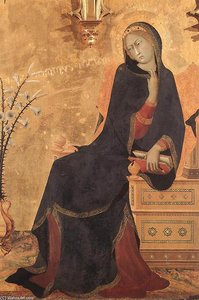
Martini’s most celebrated works exemplify the pinnacle of his artistic development. The *Maestà* fresco, commissioned for the Palazzo Pubblico in Siena around 1315, stands as a testament to his mastery—a monumental depiction of the Virgin Mary enthroned with angels and saints that seamlessly blends Gothic elegance with emerging Renaissance principles. The *Annunciation*, painted circa 1330, showcases Martini’s ability to capture delicate emotion and intricate detail, while the *Saint Louis of Toulouse Crowning His Brother Robert of Anjou* (1317), created during his time in Naples, demonstrates his skill in portraying complex narratives with a refined sense of courtly splendor. His *Saint Catherine of Alexandria Polyptych*, completed around 1320, further highlights his command of color and form, solidifying his reputation as one of the most influential artists of his generation.

Legacy and Historical Significance

Simone Martini’s impact on the development of European art cannot be overstated. He played a crucial role in disseminating the International Gothic style—a movement characterized by its elegance, refinement, and emphasis on decorative detail—across the continent. His influence extended to generations of artists who followed, shaping the course of late medieval and early Renaissance painting. Martini’s work wasn't simply about technical skill; it was about creating a visual language that resonated with the sensibilities of his time—a language of beauty, grace, and spiritual devotion. Even today, his paintings continue to captivate viewers with their exquisite detail, harmonious compositions, and enduring sense of elegance. His frescoes in San Francesco d’Assisi demonstrate his mastery of large-scale decorative painting, while works like the *Saint Catherine of Alexandria Polyptych* showcase his unparalleled command of color and form. Simone Martini died in Avignon in 1344, leaving behind a legacy that continues to inspire awe and admiration centuries later—a testament to the enduring power of art to transcend time and touch the human spirit.

Informații rapide

  • Dimensions: 24 x 15 cm
  • Artist: Simone Martini
  • Movement: Late Gothic
  • Title: Crucifixion
  • Subject or theme: Religious iconography
  • Year: 1333

Test de cunoștințe despre artă

Fiecare întrebare are un singur răspuns corect.

Întrebare 1:
What is the primary subject matter depicted in Simone Martini’s ‘Crucifixion’?
Întrebare 2:
Approximately when was Simone Martini’s ‘Crucifixion’ created?
Întrebare 3:
The painting utilizes a distinctive artistic style characterized by:
Întrebare 4:
Who collaborated with Simone Martini on artistic projects?
Întrebare 5:
What role did Siena play in shaping Simone Martini’s artistic vision?