Comută pe versiunea Print
 Vezi mai mult







































 Pentru opere de artă sau reproduceri care depășesc 105 cm (aproximativ 41 de inch) pe oricare dintre laturi, cadrul va fi livrat demontat, sub formă de kit. Această metodă asigură o livrare sigură și previne deteriorarea în timpul transportului.


The Virgin Adoring the Child – A Renaissance Reverie
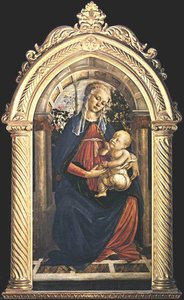
Sandro Botticelli’s *The Virgin Adoring the Child* transcends mere depiction; it embodies the very essence of Early Renaissance idealism, presenting a luminous tableau of maternal devotion and divine grace. Painted around 1485 in Florence, during the zenith of Medici patronage—a period defined by humanist thought and artistic innovation—this artwork continues to captivate audiences centuries later. More than just an image, it’s a window into a worldview steeped in faith and beauty.Subject Matter & Iconography: The Heart of Sacred Reverence
At its core lies the tender portrayal of Mary, rendered not as a distant celestial figure but as a woman consumed by palpable love for her son Jesus. Botticelli deliberately eschewed grandiosity, opting instead for intimacy—a stylistic choice that reflects the burgeoning humanist movement’s fascination with human emotion and experience. The scene unfolds within a simple architectural niche, subtly reinforcing the sanctity of the moment. Mary kneels before Christ, whose infant form rests upon a bed of hay, symbolizing humility and vulnerability – elements deliberately chosen to resonate with viewers. The gaze exchanged between mother and child speaks volumes about the profound connection at the heart of Christian belief. Supporting figures—a cow representing fertility and motherhood—further enrich the symbolic landscape, grounding the spiritual narrative in earthly realities.Style & Technique: Botticelli’s Delicate Touch
Botticelli's mastery lies in his masterful application of tempera paint on canvas – a technique renowned for its luminosity and ability to capture subtle tonal variations. His signature style is instantly recognizable: graceful lines dominate the composition, creating an ethereal quality that distinguishes itself from the heavier styles of Gothic art. Modeling is remarkably refined, conveying a sense of palpable volume without resorting to excessive detail. The elongated figures—a characteristic feature influenced by Byzantine traditions—possess an elegance that speaks to Botticelli’s unwavering commitment to classical ideals. Crucially, Botticelli employs gold leaf judiciously, highlighting the divine nature of Jesus and elevating the artwork's visual splendor. Every brushstroke contributes to a harmonious whole, reflecting Botticelli’s meticulous attention to detail and his profound understanding of artistic principles.Historical Context & Artistic Influences: Bridging Eras
Botticelli flourished under the auspices of Lorenzo de Medici—the Magnificent—who championed humanist scholarship and artistic excellence. His work represents a pivotal juncture between Gothic formalism and Renaissance realism, absorbing elements from both traditions while forging an entirely new aesthetic path. The influence of Byzantine iconography is palpable in Mary’s serene expression and posture – mirroring the spiritual fervor prevalent throughout Europe at the time. However, Botticelli transcends mere imitation; he imbues his subject matter with humanist sensibilities, emphasizing human dignity and emotion—a hallmark of the Renaissance spirit. This deliberate juxtaposition underscores Botticelli's role as a visionary artist who anticipated the transformative changes sweeping across European culture.Emotional Impact & Legacy: An Enduring Expression of Faith
*The Virgin Adoring the Child* continues to inspire awe and contemplation, capturing the timeless beauty of maternal love and spiritual devotion. Its delicate palette—dominated by muted blues and greens—creates a tranquil atmosphere that invites viewers into a realm of serenity and reverence. Botticelli’s artwork stands as a testament to the enduring power of art to communicate profound emotions and ideas across generations. It remains a cornerstone of Renaissance art history, celebrated for its gracefulness, subtlety, and unwavering commitment to conveying the sanctity of faith—a legacy that resonates powerfully even today.Întrebări și răspunsuri
Cum se încadrează stilul operei „Maрия Образуваща Детето” în contextul epocii creatorului său?
"Maрия Образуваща Детето" de Sandro Botticelli face parte din mișcarea Early Renaissance, reprezentativă pentru epoca Renașterea a creatorului său.
Ce subiect și ce atmosferă surprinde "Maрия Образуваща Детето" de Sandro Botticelli?
"Maрия Образуваща Детето" de Sandro Botticelli înfățișează virgin mary, child jesus, renaissance art, religious iconography, botticelli style, florence painting, divine motherhood, într-o atmosferă Serenitate. Subiectul și atmosfera definesc împreună opera.
Ce emoție transmite "Maрия Образуваща Детето" de Sandro Botticelli?
În "Maрия Образуваща Детето", o atmosferă Serenitate însoțește o emoție Sacru.
 Previzualizare
 Trimite prin felicitare
 Distribuie
 Detalii despre lucrare
 Ghid
Ghid

 Descarcă imaginea
 Produse similare
 Radiografie
 Galerie foto
 Q&A
Q&A Statistici