

 Vezi în context
 Trimite
 Distribuie
 Detalii
 Ghidul

 Descarcă
 Produse similare
 Radiografie
 Diaporama
 Statistici
The Rower
 Oil On Panel
- Fauvism
 1914
1914- Modern
 60.0 x 80.0 cm
 Citește mai mult
Giclée / Imprimare artistică
Printuri giclée sau pe canvas de calitate muzeală, cu proces de producție rapid și opțiuni flexibile de finisare. ( Comandă pictură realizată manual Treci la imagine digitală)




P118B $10

P118H $10

P118W $10

P438Z $10

P508JH $12

P508YH $12

P805H $10

P805Z $10

P919BZ $10

P919G $10

P919XJ $10

P959ZH $10

P968JZ $12

W106C $8

W218G $10

W218JH $8

W218Y $10

W307PJ $10

W316G $10

W316PJ $8

W316Y $10

W398PJ $8

W4111J $10

W500HY $15

W500JH $15

W692G $12

W849H $8

W940BG $15

W953PJ $8




Alegeți dintre dimensiunile noastre prestabilite, care respectă proporțiile originale ale operei de artă.

Puteți introduce propriile dimensiuni pentru a se potrivi unui anumit cadru sau spațiu. Dacă dimensiunea selectată nu corespunde proporțiilor imaginii originale, vom decupa lucrarea de artă sau vom extinde imaginea cu margini oglindite sau cu o culoare uniformă. Un mockup digital va fi trimis pentru aprobarea dumneavoastră înainte de începerea producției.
Vă rugăm să rețineți că previzualizarea de pe ecran nu reflectă decuparea sau extinderea reală. Doar mockup-ul va arăta cu exactitate compoziția finală.
Deși dimensiunile personalizate sunt disponibile, vă recomandăm să selectați o dimensiune din lista predefinită pentru a păstra proporțiile originale.
Livrare în întreaga lume () în 2 săptămâni, în loc de cele 4/5 săptămâni standard. (26 Septembrie)

Livrare expres gratuită la nivel mondial

Pânză de in premium

Asigurare completă pentru transport

Garanție de rambursare a taxelor vamale

Garanția fidelității culorilor

Politica de retur în 100 de zile (doar pentru defecte)

Garanție de rambursare 100%

Reducere pentru comenzi multiple
 Opțiunea cu sticlă este disponibilă doar pentru dimensiuni de sub 110 cm

The Rower
Giclée / Imprimare artistică
Dimensiune reproducere
-


Preț total
$ 80
A Moment Frozen in Fauvist Vibrancy
In the annals of early twentieth-century modernism, few works capture the electric tension between classical poise and avant-garde rebellion as intimately as Roger de La Fresnaye’s 1914 masterpiece, The Rower. This captivating oil on panel serves as a profound window into a pivotal moment in art history, where the structured geometry of Cubism began to dance with the raw, unbridating emotion of Fauvism. At first glance, the viewer is met with a striking central figure: a man seated with an air of nonchalant confidence, his legs crossed and eyes shielded by sunglasses, draped in a deep black shirt that anchors the composition. He sits not merely as a subject, but as a totem of modern identity, embodying the burgeoning spirit of a new era.
The painting’s brilliance lies in its masterful use of color and light, characteristic of the Fauvist movement. De La Fresnaye employs a palette that feels both deliberate and spontaneous, using bold, energetic brushstrokes to breathe life into the scene. While the man remains the focal point, the surrounding environment is rich with subtle narrative layers. The presence of additional benches and a solitary chair near the frame's edge suggests a shared space, perhaps a quiet corner of a riverside retreat, while a delicate vase in the background adds a touch of domestic elegance to the otherwise rugged, modern composition. This interplay between the structured elements of the setting and the fluid, vibrant application of paint creates a visual rhythm that is both soothing and stimulating.
The Intersection of Tradition and Radicalism
To understand The Rower, one must look toward the artist’s own storied lineage. Born into an aristocratic French family in Le Mans, Roger de La Fresnaye was steeped in the traditions of classical education and high culture. However, his soul belonged to the radical shifts occurring in the Parisian salons. This painting represents the exquisite synthesis of that tension; it possesses the formal stability one might expect from a classically trained hand, yet it is infused with the "wild beast" energy of the Fauves. The way the light interacts with the dark tones of the subject's attire and the rhythmic placement of the background elements demonstrate a sophisticated command over spatial depth, achieved through color rather than traditional perspective.
For the discerning collector or interior designer, this artwork offers more than mere aesthetic pleasure; it provides a sophisticated focal point that bridges the gap between historical significance and contemporary chic. The piece possesses a timeless quality—the subject's modern attire and sunglasses make him feel remarkably contemporary, yet the 1914 provenance anchors the work in a legendary era of artistic discovery. Whether placed in a minimalist gallery setting or as a bold statement piece in a richly textured room, The Rower invites conversation, evoking a sense of mystery, leisure, and the enduring allure of the modern human condition.
Biografie artist
A Life Painted in Prismatic Hues: The World of Roger de la Fresnaye
Roger de La Fresnaye, born July 11, 1885, in Le Mans, France, was a painter whose brief but incandescent career illuminated the burgeoning landscape of early 20th-century art. His story is one of inherited privilege tempered by artistic ambition, classical training disrupted by avant-garde fervor, and ultimately, a life tragically cut short by illness. The Château de la Fresnaye in Falaise, ancestral home to his family with its long history of military service, provided an early backdrop for a life that would eventually blend tradition with radical innovation. Though steeped in the values of his upbringing, young Roger found himself drawn not to the battlefield but to the canvas, embarking on a journey that would see him navigate the complex currents of Symbolism, Cubism, and beyond. His initial education was classically grounded, yet it quickly evolved as he sought artistic instruction at the Académie Julian and later the École des Beaux-Arts in Paris – institutions where the seeds of his future stylistic explorations were sown.From Nabis Dreams to Cubist Geometry
The formative years of de La Fresnaye’s artistic development were profoundly shaped by the *Nabis*, a group of Post-Impressionist painters who prioritized subjective experience and symbolic meaning over strict representation. Studying under Maurice Denis and Paul Sérusier at the Académie Ranson, he absorbed their emphasis on flattened forms, decorative patterns, and evocative color palettes – qualities evident in works like Woman with Chrysanthemums. This period reveals a dreamlike quality, a stylistic echo of the Nabis’ pursuit of spiritual resonance through art. Denis's influence was particularly significant; his insistence on unity of form and colour instilled in de La Fresnaye a fundamental aesthetic principle that would permeate his entire oeuvre. Sérusier’s exploration of Breton landscape—particularly his painting *La Grande Jetée*—provided inspiration for De La Fresnaye’s own depictions of rural scenes, imbued with an understated lyricism. The resulting canvases are characterized by muted hues and subtly textured surfaces, reflecting the Nabis' desire to capture not merely what was seen but what was felt. However, this initial path was not destined to be his final destination. Recognizing the limitations of Symbolist conventions, de La Fresnaye sought a more dynamic and intellectually stimulating approach—one that would embrace the revolutionary ideas emerging from Europe’s avant-garde circles. Around 1912, he joined the *Section d'Or*, a collective of artists passionately committed to Cubism pioneered by Pablo Picasso and Georges Braque. This marked a pivotal shift in his artistic trajectory. He wasn’t merely imitating; he was responding, interpreting, and ultimately forging his own unique voice within the movement. De La Fresnaye’s engagement with Cubism wasn't characterized by slavish adherence to its geometric principles but rather by a nuanced synthesis—a blending of analytical Cubist fragmentation with Delaunay’s Orphism’s radiant color harmonies. This fusion resulted in canvases that defied conventional perspective and spatial illusion, prioritizing instead the expressive potential of colour and form. The Conquest of the Air exemplifies this period perfectly – a monumental composition dominated by bold blues and yellows, depicting an airplane soaring above a Breton landscape. The painting captures not only the technological marvel of its time but also De La Fresnaye’s masterful command of color and texture, demonstrating his ability to convey emotion through visual abstraction.War, Illness, and a Shifting Aesthetic
The outbreak of World War I profoundly impacted de La Fresnaye's life and artistic output. He enlisted in the French army, serving with distinction during the Battle of Verdun—a harrowing experience that instilled in him a deep appreciation for the fragility of human existence. However, his military service was tragically curtailed by tuberculosis, forcing his discharge in 1918. The debilitating illness left him weakened physically and emotionally, profoundly altering the course of his artistic production. Prior to the war, De La Fresnaye’s style leaned heavily toward Cubist exploration—characterized by geometric abstraction and fragmented perspectives. Yet, after contracting tuberculosis, he abandoned these bold stylistic choices in favor of a more restrained aesthetic—one marked by linear precision and delicate tonal gradations. This stylistic transformation reflected not only his physical condition but also a deeper preoccupation with themes of mortality and vulnerability. He sought solace in landscapes imbued with quiet beauty—particularly Breton vistas—capturing them with meticulous detail and subtle color palettes. The resulting paintings convey an atmosphere of melancholy contemplation, mirroring the artist’s own inner turmoil.Notable Works & Legacy
De La Fresnaye produced a remarkable body of work during his relatively short artistic career, including: The Rower (1910), depicting a rowing boat on calm waters; *Still Life with Lemons* (1912), showcasing the luminous qualities of citrus fruit; *Undergrowth* (1913), capturing the textures and colors of Breton vegetation; *La Madelon* (1914), portraying a woman in repose; and *Le Cuirassier* (1916), depicting a soldier in uniform—a poignant meditation on heroism and sacrifice. His most celebrated masterpiece, The Conquest of the Air (1917), remains an icon of Cubist innovation—a testament to De La Fresnaye’s ability to synthesize diverse influences into a cohesive visual language. The painting's monumental scale and vibrant chromatic palette underscore its ambition to convey both technological progress and spiritual contemplation. Roger de La Fresnaye died November 27, 1925, leaving behind an enduring legacy as one of the foremost figures in early 20th-century French art. His paintings are housed in prominent museums across Europe—including Musée d'Art Moderne de Troyes and Centre Pompidou (Paris)—testaments to his artistic merit and continuing influence on subsequent generations of artists. He is remembered not merely for his stylistic innovations but also for his unwavering commitment to exploring the complexities of human experience through art, securing his place as a pivotal voice in the history of modernism.
Roger de La Fresnaye
1885 - 1925 , Franța
Informații rapide
- Artistic Movement Or Style: Cubism și Simbolism
- Artists Or Movements Influenced By This Artist: ['Early 20th-century art']
- Artists Who Influenced This Artist:
- Maurice Denis
- Paul Sérusier
- Georges Braque
- Pablo Picasso
- Date Of Birth: 1885
- Date Of Death: 1925
- Full Name: Roger de La Fresnaye
- Nationality: Franțuzesc
- Notable Artworks:
- Conquista Aerului
- Madelon
- Cuirassier
- Place Of Birth: Le Mans, Franța
Articole conexe
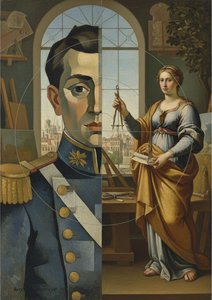
Roger de la Fresnaye: Cubism, Tradition & the Search for Order in Early 20th-Century French Painting
Explore the captivating world of Roger de la Fresnaye, a pivotal French Cubist painter. Discover his unique blend of tradition & modernity, influences, and lasting legacy with OriginalUniqueArt.

Maurice Quentin de La Tour: Light, Shadow & the Rococo Portrait
Explore the captivating world of Maurice Quentin de La Tour, a master of Rococo portraiture. Discover his innovative pastel techniques, intimate depictions of French aristocracy, and lasting artistic legacy. Learn more at OriginalUniqueArt.

Goya: Cele Mai Iconice Capodopere – Artă Spaniolă pentru Decor Rafinat | OriginalUniqueArt.ro
Descoperă cele mai frumoase 25 de picturi ale lui Francisco Goya! Explorează capodoperele romantice, portretele impresionante și gravurile puternice. Reproduceri artă spaniolă de calitate muzeală pentru un decor rafinat. Explorează colecția completă online pe OriginalUniqueArt.com

Cu privire la noi
Descoperă povestea noastră! Aduceți arta de talie mondială în viața dumneavoastră prin selecție expertă, creații personalizate și previzualizări gratuite. Aprobate de persoane fizice și companii din 2000.
Águeda Ruiz de la Prada: A Study of Eclecticism & Emotional Resonance in Contemporary Spanish Painting
Discover the vibrant world of Ágatha Ruiz de la Prada, a leading figure in contemporary Spanish art. Explore her eclectic style, emotional depth & legacy – a must-read for discerning collectors.

