Previzualizare
 Trimite prin felicitare
 Distribuie
 Detalii despre lucrare
 Ghid
Ghid

 Descarcă imaginea
 Produse similare
 Radiografie
 Galerie foto
 Q&A
Q&A Statistici
Rouen
 Watercolor
- WallArt
- Romanticism
 1825
1825- 19th Century
 180.0 x 235.0 cm
 Muzeul Wallace
 Vezi mai mult
Reproducere pictată manual în ulei
Pictură în ulei pe pânză, pictată manual de artiștii noștri la dimensiunea și ramele dorite de dumneavoastră, pe comandă. ( Comută pe versiunea Print Comută pe Imagine Digitală)




P118B lei10

P118H lei10

P118W lei10

P438Z lei10

P508JH lei12

P508YH lei12

P805H lei10

P805Z lei10

P919BZ lei10

P919G lei10

P919XJ lei10

P959ZH lei10

P968JZ lei12

W106C lei8

W218G lei10

W218JH lei8

W218Y lei10

W307PJ lei10

W316G lei10

W316PJ lei8

W316Y lei10

W398PJ lei8

W4111J lei10

W500HY lei15

W500JH lei15

W692G lei12

W849H lei8

W940BG lei15

W953PJ lei8




Alegeți dintre dimensiunile noastre prestabilite, care respectă proporțiile originale ale operei de artă.

Introduceți lățimea și înălțimea necesare pentru a se potrivi ramei sau peretelui dumneavoastră. Această lucrare este pictată manual, așa că, pentru o dimensiune cu o formă diferită, artistul poate picta puțin mai mult în jurul imaginii sau poate tăia puțin din margini — dumneavoastră decideți. Vă vom trimite o simulare digitală pentru aprobare înainte de a începe pictarea. Imaginea afișată pe această pagină nu reprezintă rezultatul real — doar simularea este reprezentativă.
După plasarea comenzii, echipa OriginalUniqueArt.com va contacta clientul prin e-mail pentru instrucțiuni și îi va furniza o previzualizare a machetei
Livrare în întreaga lume () în 3-4 săptămâni, în loc de cele 5 săptămâni standard. (28 Octombrie). Fără compromisuri în ceea ce privește calitatea.

Livrare expres gratuită la nivel mondial

Pânză de in de înaltă calitate

Asigurare completă pentru transport

Garanție de rambursare a taxelor vamale

Garanția fidelității culorilor

Politica de retur în 100 de zile (doar pentru defecte de fabricație)

Garanție de rambursare 100%

Ofertă pentru comenzi multiple
 Opțiunea cu sticlă este disponibilă doar pentru dimensiuni de sub 110 cm

Rouen
Tehnică de reproducere
Dimensiune reproducere
-


Preț total calculat
lei 1395
A Window into the Romantic Soul of France
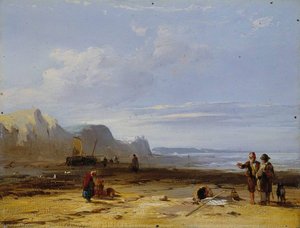
In the delicate, luminous strokes of Richard Parkes Bonington’s 1825 watercolor, Rouen, we are invited to step across the banks of the Seine and into a moment of profound serenity. This exquisite piece captures the historic cityscape of Rouen, France, not merely as a collection of stone and spire, but as a living, breathing entity bathed in the soft, melancholic light of the early nineteenth century. The composition draws the eye through a masterful layering of depth, beginning with the intimate details of the riverbank where moored fishing boats rest heavily upon the water. Here, the artist captures the tactile reality of maritime life—the weight of nets draped over wooden hulls and the solitary presence of a figure that provides a poignant sense of scale against the sprawling urban backdrop. It is a scene that feels both monumental and deeply personal, offering a quiet meditation on the passage of time and the enduring grace of the French landscape.
The technique employed by Bonington is nothing short of virtuosic, showcasing the brilliance that made him a leading figure of the Romantic movement. Using a palette dominated by warm earth tones, he achieves a remarkable sense of atmosphere, where the air itself feels thick with history and moisture. The water serves as a mirror to the soul of the city; its surface is rendered with such precision that the reflections of buildings and masts appear to ripple with life, creating a mesmerizing interplay of light and shadow. His use of watercolor allows for a transparency and fluidity that perfectly mimics the shifting clouds and the soft, pastel hues of a twilight sky. This mastery of medium ensures that every brushstroke contributes to a sense of movement—from the rhythmic flight of birds overhead to the gentle sway of the masts—preventing the static architecture from ever feeling lifeless.
For the discerning collector or interior designer, Rouen offers more than just aesthetic beauty; it provides an emotional anchor for a space. The painting carries a certain nostalgic weight, evoking the grandeur of an era defined by architectural splendor and a romanticized view of nature. The presence of the prominent church spire, rising above the rooftops, introduces a layer of spiritual symbolism, suggesting a world where the divine and the terrestrial are inextricably linked through the beauty of the natural landscape. As a high-quality reproduction, this work serves as a sophisticated centerpiece, capable of imparting a sense of timelessness and cultured elegance to any room. Whether placed in a sunlit gallery or a moody, library-style study, Bonington’s vision of Rouen continues to inspire awe, inviting viewers to lose themselves in the hazy, beautiful memories of a bygone age.
Întrebări și răspunsuri
Ce format și orientare de imprimare se recomandă pentru "Rouen" de Richard Parkes Bonington?
Pentru o printare a lucrării "Rouen" de Richard Parkes Bonington, recomandăm dimensiunea de Large în orientare Landscape.
Unde pot găsi opere de artă similare cu "Rouen" de Richard Parkes Bonington?
Descoperă lucrări similare cu „Rouen” în pagina Lucrări similare a operei de artă.
Ce subiect și ce atmosferă surprinde "Rouen" de Richard Parkes Bonington?
„Rouen” surprinde landscape, rouen cathedral, watercolor, reflection, architecture, tranquility, bonington, france, având o atmosferă Romantic.
Biografie artist
A Fleeting Brilliance: The Life and Art of Richard Parkes Bonington
Richard Parkes Bonington, a name that resonates with a poignant sense of unrealized potential within the annals of Romantic painting, remains an artist whose brief career cast a long shadow across both British and French artistic landscapes. Born on October 25th, 1802, in Arnold, Nottinghamshire, England, his path to recognition was uniquely shaped by a blend of familial encouragement and geographical circumstance. His father, Richard Bonington senior, possessed a diverse skillset – gaoler, drawing master, and lace-maker – providing an unconventional yet stimulating upbringing for his son. It was from him that young Richard received his earliest instruction in watercolor painting, a talent quickly recognized and nurtured. Even as a boy of eleven, he exhibited work at the Liverpool Academy, signaling the emergence of a remarkable artistic sensibility.
This early promise propelled him towards a destiny increasingly intertwined with the vibrant art world of France. In 1817, the Bonington family relocated to Calais seeking opportunity in the lace trade, but for Richard, this move proved transformative on an entirely different level. He came under the tutelage of François Louis Thomas Francia, a watercolorist deeply influenced by English masters like Thomas Girtin. Francia instilled in Bonington a profound appreciation for light and atmosphere – qualities that would become hallmarks of his distinctive style. The family subsequently moved to Paris in 1818, immersing Richard in the heart of French artistic life. Here, he forged a crucial friendship with Eugène Delacroix, a relationship that proved profoundly influential. He enrolled at the École des Beaux-Arts under Baron Antoine-Jean Gros, further honing his skills and absorbing the prevailing artistic currents.
The Synthesis of Styles: English Sensibility & French Technique
Bonington’s early work beautifully reflects this synthesis of English watercolor traditions and French academic training. He didn't simply adopt techniques; he *absorbed* them, creating a style characterized by luminous landscapes and a delicate touch. His mastery of light was particularly striking, reminiscent of Girtin but infused with a distinctly Romantic sensibility. He excelled at capturing the fleeting effects of weather and the subtle nuances of nature, imbuing his scenes with an emotional resonance that went beyond mere representation. This ability to evoke feeling, rather than simply record observation, set him apart from many of his contemporaries.
His landscapes often depicted coastal views or the serene beauty of Normandy, imbued with a sense of atmospheric perspective and masterful handling of light. Works like “Scene in Normandy” (1823) showcase this ability to capture the ephemeral qualities of nature. He didn’t merely depict what he saw; he evoked a feeling, an emotional response to the landscape. Simultaneously, Bonington ventured into historical painting, creating dramatic compositions such as "Charles V. visits François Ier after the Battle of Pavia" (c. 1827). These works reveal his fascination with narrative and his ability to translate historical events onto canvas with vibrant color and dynamic energy.
A Rising Star: Recognition & Innovation
Bonington’s success was swift and undeniable. In 1824, he shared a gold medal at the Paris Salon alongside John Constable and Anthony Vandyke Copley Fielding – a testament to his burgeoning reputation. This recognition wasn't merely for technical skill; it acknowledged an innovative approach to color and composition that resonated with audiences and critics alike. He was lauded for his ability to blend English Romantic sensibilities with French academic rigor, creating something entirely new.
His work also extended into lithography, illustrating Baron Taylor’s *Voyages pittoresques dans l'ancienne France* and his own architectural series *Restes et Fragmens*. This demonstrated a versatility that further solidified his position as a rising star in the art world. He was not confined to one medium or subject matter; he embraced experimentation and pushed the boundaries of artistic expression.
A Legacy Cut Short: Influence & Enduring Appeal
Tragically, Richard Parkes Bonington succumbed to tuberculosis on September 23rd, 1828, bringing an abrupt end to a career brimming with potential. Despite his short life, his influence on the development of both British and French Romanticism was considerable. Delacroix himself paid tribute to Bonington’s “lightness of touch” and recognizing his innovative approach to color and composition. His work inspired a generation of artists, bridging the gap between English landscape traditions and the burgeoning Romantic movement in France.
Today, his paintings are held in prestigious collections worldwide, including the Louvre and the Wallace Collection, which houses an impressive group of thirty-five works. In his hometown of Arnold, a theatre and primary school bear his name, while a statue at Nottingham School of Art serves as a lasting memorial to this exceptional artist. Bonington’s legacy endures not only through his captivating paintings but also as a symbol of artistic brilliance extinguished too soon, leaving an indelible mark on the history of art.
Key Works & Lasting Recognition
- Rouen, Normandy (c. 1823): A quintessential example of Bonington’s atmospheric landscapes, capturing the essence of the Norman countryside.
- View of the Lagoon near Venice (1827): Demonstrates his ability to depict light and water with remarkable sensitivity, showcasing a Venetian scene filled with romantic allure.
- Charles V. visits François Ier after the Battle of Pavia (c. 1827): A dynamic historical painting that exemplifies his skill in narrative composition and vibrant color palette.
- Gold Medal at the Paris Salon (1824): Shared with esteemed artists like John Constable, marking a significant milestone in his career.
- Delacroix’s Tribute: Eugène Delacroix's posthumous praise of Bonington’s “lightness of touch” solidified his reputation as an innovative and influential artist.

Richard Parkes Bonington
1802 - 1828 , Regatul Unit al Marii Britanii și Irlandei
Detalii rapide
- Artistic Movement Or Style: Romanticism
- Artists Or Movements Influenced By This Artist:
- Delacroix
- Romanticism
- Artists Who Influenced This Artist:
- Thomas Girtin
- Eugène Delacroix
- Date Of Birth: 25 Oct 1802
- Date Of Death: 23 Sept 1828
- Full Name: Richard Parkes Bonington
- Nationality: British
- Notable Artworks:
- Scene în Normandia
- Laguna Veneția
- Charles V. Pavia
- Place Of Birth: Arnold, UK
Articole similare

Top 10 Capodopere Acvarelă Legendară care au Schimbat Arta pentru Totdeauna | OriginalUniqueArt.ro
Descoperă Top 10 capodopere acuarelă legendară de la Sargent, Turner și alți maeștri! Explorează istoria artei, tehnicile unice și paletele vibrante. Reproduceri de artă de calitate muzeală pentru decorul perfect pe OriginalUniqueArt.com.

Ephemeral Visions: Exploring the Artistic Legacy & Nuances of Watercolor Painting
Explore the captivating world of watercolor painting! Discover its rich history, essential techniques, influential artists & collecting tips from art experts. A comprehensive guide for enthusiasts.

Peisaje Romantice Iconice: 10 Capodopere Artistice pentru Decorul de Lux
Descoperă 10 capodopere romantice iconice de Caspar David Friedrich, Turner și alți maeștri. Explorează istoria artei, emoțiile din peisaje și găsește tablouri canvas perfecte pentru decorul tău pe OriginalUniqueArt.com!

Ephemeral Visions: Exploring the History & Emotional Resonance of Watercolor Painting
Explore the captivating history of watercolor painting, from ancient techniques to modern masters like Kandinsky & Blake. Discover essential artists, collecting tips & the emotional power of this luminous medium. Expert insights for art enthusiasts.

Ephemeral Visions: Exploring the Artistic Legacy & Contemporary Practice of Watercolor Painting
Explore the captivating world of watercolor painting! Discover its rich history, essential techniques, influential artists & collecting tips. A comprehensive guide for art enthusiasts from OriginalUniqueArt.