

 Previzualizare
 Trimite prin felicitare
 Distribuie
 Detalii despre lucrare
 Ghid
Ghid

 Descarcă imaginea
 Produse similare
 Radiografie
 Galerie foto
 Q&A
Q&A Statistici
The Coquette


 Vezi mai mult
Giclée / Imprimare artistică
Printuri giclée sau pe canvas de calitate muzeală, cu proces de producție rapid și opțiuni flexibile de finisare. ( Comandă pictură realizată manual Comută pe Imagine Digitală)




P118B lei10

P118H lei10

P118W lei10

P438Z lei10

P508JH lei12

P508YH lei12

P805H lei10

P805Z lei10

P919BZ lei10

P919G lei10

P919XJ lei10

P959ZH lei10

P968JZ lei12

W106C lei8

W218G lei10

W218JH lei8

W218Y lei10

W307PJ lei10

W316G lei10

W316PJ lei8

W316Y lei10

W398PJ lei8

W4111J lei10

W500HY lei15

W500JH lei15

W692G lei12

W849H lei8

W940BG lei15

W953PJ lei8




Alegeți dintre dimensiunile noastre prestabilite, care respectă proporțiile originale ale operei de artă.

Introduceți lățimea și înălțimea necesare pentru a se potrivi ramei sau peretelui dumneavoastră. O printare poate fi doar tăiată, niciodată extinsă dincolo de dimensiunea imaginii originale, astfel încât o dimensiune cu o formă diferită va pierde o parte din imagine. Vă trimitem o simulare digitală pentru aprobare înainte de a imprima orice. Imaginea afișată pe această pagină nu prezintă tăierea reală — doar simularea arată acest lucru.
Livrare în întreaga lume () în 2 săptămâni, în loc de cele 4/5 săptămâni standard. (29 Octombrie)

Livrare expres gratuită la nivel mondial

Pânză de in de înaltă calitate

Asigurare completă pentru transport

Garanție de rambursare a taxelor vamale

Garanția fidelității culorilor

Politica de retur în 100 de zile (doar pentru defecte de fabricație)

Garanție de rambursare 100%

Ofertă pentru comenzi multiple
 Opțiunea cu sticlă este disponibilă doar pentru dimensiuni de sub 110 cm

The Coquette
Giclée / Imprimare artistică
Dimensiune reproducere
-


Preț total calculat
lei 372
A Vision of Grace: The Allure of Raja Ravi Varma’s The Coquette
In the golden era of Indian academic realism, few names command as much reverence as Raja Ravi Varma. His masterpiece, The Coquette, painted in 1893, serves as a breathtaking window into a world where Eastern soul meets Western technique. The painting presents us with an intimate encounter with a woman of profound elegance; her long, flowing tresses and the delicate shimmer of her jewelry suggest a life of refined splendor. As she gazes toward the viewer, there is a captivating play of modesty and confidence in her eyes, a subtle invitation into her private moment. In her hand, she cradels an apple—a symbol that transcends borders, evoking themes of temptation, fertility, and the fleeting nature of beauty. This single piece of fruit acts as a focal point, anchoring the composition and adding a layer of classical allegory to the portrait.
The technical mastery displayed in this work is nothing short of extraordinary, making it a premier choice for collectors who value precision and depth. Varma’s ability to manipulate light and shadow—a hallmark of his training in European academic styles—gives the subject a three-dimensional presence that feels almost tactile. The rich, vibrant palette breathes life into the scene, with deep tones that contrast beautifully against the decorative, intricate background. This careful balance of color and texture creates an atmospheric depth that draws the eye inward, ensuring that the painting remains a captivating centerpiece in any setting.
The Intersection of Tradition and Modernity
Born from the royal lineage of Kilimanoor, Varma was uniquely positioned to bridge the gap between the aristocratic traditions of India and the burgeoning modernism of his time. He was not merely a painter but a cultural pioneer who skillfully blended European academic techniques with the rich tapestry of Indian mythology and aesthetics. This duality is palpable in The Coquette, where the subject's poise reflects the courtly grace of the Travancore era, while the oil-on-canvas execution speaks to the global artistic movements of the late 19th century. For the discerning interior designer, the work offers a sophisticated interplay of light that can transform a room from a mere space into a curated gallery.
Beyond its aesthetic brilliance, the painting carries a heavy emotional resonance and historical significance. It represents a moment in history when Indian art began to find a new, accessible voice through the fusion of realism and local iconography. For those seeking to adorn their homes with a piece that tells a story of heritage and innovation, this reproduction offers more than just visual beauty; it provides a connection to the dawn of modern Indian painting. Whether placed in a sunlit study or a grand dining hall, The Coquette serves as an enduring testament to the power of a single, masterful gaze.
Întrebări și răspunsuri
Este "The Coquette" o idee bună de cadou?
Ca cadou, "The Coquette" de Raja Ravi Varma este recomandată pentru Anniversary. Poate fi potrivită și pentru alte ocazii.
În ce etapă a carierei lui Raja Ravi Varma se încadrează "The Coquette", având în vedere data sa de execuție?
Având în vedere data de 1893, „The Coquette” aparține perioadei Mature Period a lui Raja Ravi Varma.
Cine a creat "The Coquette" și în ce an?
Raja Ravi Varma a creat "The Coquette" în 1893.
Biografie artist
The Princely Brush: Raja Ravi Varma and the Dawn of Modern Indian Painting
Raja Ravi Varma, a name that echoes through the halls of Indian art history, wasn’t merely a painter; he was a cultural architect, a bridge between tradition and innovation. Born in 1848 within the opulent confines of Kilimanoor Palace, nestled amidst the verdant hills of Kerala, his life unfolded as a remarkable synthesis of aristocratic privilege and an incandescent creative spirit. He didn't simply capture images on canvas; he breathed life into ancient myths, imbued them with human emotion, and ultimately, reshaped how India perceived its own artistic heritage. Ravi Varma’s lineage was deeply intertwined with the Travancore royal family – two of his daughters were later adopted into the court, a testament to his noble standing and the profound respect he commanded. From a young age, a keen eye for detail and an innate talent for drawing manifested itself within the palace walls, nurtured initially by his uncle, Raja Raja Varma, who recognized and cultivated this burgeoning artistic ability. This early training, rooted in the established Tanjore School tradition, provided a solid foundation, but Ravi Varma’s ambition extended far beyond mere imitation; he yearned to master techniques that would allow him to translate not just likeness, but also feeling and narrative depth onto canvas.A Fusion of Worlds: Technique and Inspiration
Ravi Varma's artistic journey took an extraordinary turn during his travels – both within India and through interactions with British officials stationed in the region. He became utterly captivated by the meticulous realism and technical precision of European academic painting, diligently studying its principles: perspective, anatomy, light, and shadow. This wasn’t a simple appropriation; rather, it was a masterful adaptation. Unlike many of his contemporaries who merely replicated Western styles, Varma ingeniously integrated these techniques into his own distinctly Indian subject matter. His canvases transformed into vibrant stages for scenes drawn from the Ramayana, the Mahabharata, and the Puranas – epic tales brought to life with an unprecedented level of naturalism. He didn’t simply illustrate religious stories; he imbued them with palpable human emotion, psychological complexity, and a profound sense of drama. Consider his portrayal of *Shakuntala*, for instance—a scene brimming with longing, vulnerability, and quiet strength. The heroine's gaze, rendered with exquisite detail, conveys a depth of feeling previously unseen in Indian art. Similarly, *The Maharani of Travancore* is not merely a portrait; it’s a study of regal composure, capturing both the outward appearance of power and the subtle nuances of inner character. This fusion of European academic rigor and deeply rooted Indian aesthetics was revolutionary—a testament to Ravi Varma's artistic vision. His embrace of oil painting – a relatively new medium in India at the time – further amplified his ability to achieve an astonishing level of detail, luminosity, and emotional resonance.Democratizing Art: Lithographs and Public Appeal
Raja Ravi Varma’s influence extended far beyond the confines of royal courts and art circles. Recognizing that original paintings were largely inaccessible to the vast majority of Indians, he took a bold step—establishing the Raja Ravi Varma Fine Arts Lithographic Press in 1894. This groundbreaking venture marked a pivotal moment in Indian art history: it allowed for the mass production of affordable lithographs based on his iconic works. Suddenly, images of Hindu deities and mythological scenes were no longer confined to temples or palaces; they adorned homes across India, becoming objects of worship, cultural pride, and accessible beauty for all. These weren’t mere reproductions; they were carefully crafted interpretations—each lithograph a testament to Ravi Varma's artistic vision. The act of “democratizing art” had a profound and lasting impact on Indian society, fostering a wider appreciation for visual culture and fundamentally shaping how Indians perceived their own religious iconography. The *Hansa Damayanthi* lithograph, perhaps one of his most beloved creations, became a ubiquitous symbol of Indian identity, its image reproduced countless times and cherished by generations.Royal Portraits and Artistic Patronage
Ravi Varma’s career was further enriched through royal patronage. He served as court painter to several prominent princely states – Mewar, Baroda, and Mysore – each offering unique artistic challenges and opportunities. These experiences broadened his artistic horizons, exposing him to diverse cultural traditions and refining his skills. His portraits of Indian and British dignitaries were particularly noteworthy, capturing the essence of both cultures with remarkable sensitivity and detail. The meticulousness evident in these works reflects Ravi Varma’s dedication to portraying subjects with accuracy and grace. His ability to capture not only physical likeness but also personality and character was a hallmark of his artistic style.Legacy and Enduring Influence
Raja Ravi Varma passed away in 1906, leaving behind an indelible mark on the landscape of Indian art. He wasn’t just a painter; he was a pioneer who challenged conventional norms, embraced innovation, and skillfully blended tradition with modernity. His influence can be seen in the works of subsequent generations of Indian artists who sought to forge a distinctly national artistic identity. Museums like The Raja Ravi Varma Heritage Foundation and The Ganesh Shivaswamy Foundation continue to preserve and celebrate his legacy, ensuring that his vision endures for future generations. His paintings remain powerful testaments to his genius—masterpieces that capture the beauty, spirituality, and cultural richness of India. He truly transformed the way Indians perceived art and their own cultural heritage, solidifying his place as one of the most important figures in Indian artistic history.Exploring Varma’s World Today
For those seeking to delve deeper into the world of Raja Ravi Varma, numerous resources are available:- Explore artworks: Discover masterpieces like "Portrait of a Gentleman," "Hansa Damayanthi," and "The Maharani of Travancore" through online databases.
- Visit museums: Immerse yourself in Varma’s legacy at The Raja Ravi Varma Heritage Foundation, The Ganesh Shivaswamy Foundation, and the Kiran Nadar Museum of Art.
- Further research: Consult Wikipedia and Google Arts & Culture for detailed biographical information and scholarly insights.
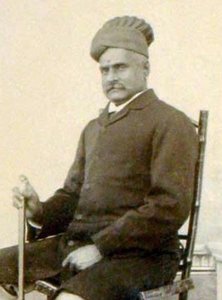
Raja Ravi Varma
1848 - 1906 , India
Detalii rapide
- Artistic Movement Or Style: Fusion tradițional
- Artists Or Movements Influenced By This Artist: ['Arta indiană modernă']
- Artists Who Influenced This Artist: ['Maestri europeni']
- Date Of Birth: 29 Apr 1848
- Date Of Death: 2 Oct 1906
- Full Name: Raja Ravi Varma
- Nationality: Indian
- Notable Artworks:
- Shakuntala
- Hansa Damayanthi
- Place Of Birth: Kilimanoor, India
Articole similare
Shadow Catcher: Edward S. Curtis & the Ethnographic Portraiture of a Vanishing West
Explore the life & work of Edward S. Curtis, the 'Shadow Catcher,' and his groundbreaking photographic documentation of Native American cultures. Discover iconic images from *The North American Indian* and a critical look at his lasting legacy.
Edward Hopper: Cele Mai Iconice Lucrări – Artă, Decorațiuni și Povești Captivante
Descoperă cele mai iconice 25 de picturi Edward Hopper! Explorează realismul american, atmosfera unică și poveștile din spatele capodoperelor sale. Reproduceri tablouri de calitate muzeală & inspirație pentru decor interior pe OriginalUniqueArt.com.
Realism în Artă: Top 10 Capodopere Care Reflectă Viața Așa Cum Este
Descoperă top 10 capodopere realism! Explorează picturi iconice de Courbet, Manet și alți artiști celebri. Află poveștile din spatele fiecărei opere și găsește inspirație pentru decorațiuni interioare elegante pe OriginalUniqueArt.com.

Paul Cézanne: Cele Mai Reprezentative 25 De Capodopere – Artă, Istorie și Decorațiuni Interioare
Descoperă cele mai frumoase 25 de capodopere Paul Cézanne! Explorează istoria, tehnicile și semnificația picturilor impresioniste iconice. Reproduceri artă de calitate muzeală & inspirație decor interioară pe OriginalUniqueArt.com.

Raja Ravi Varma: Bridging Tradition & Modernity in 19th-Century Indian Art
Explore the life & art of Raja Ravi Varma, a pioneer who fused European techniques with Indian iconography. Discover his iconic paintings, lasting legacy, and influence on modern Indian art at OriginalUniqueArt.

