

 Vezi în context
 Trimite
 Distribuie
 Detalii

 Descarcă
 Produse similare
 Radiografie
 Diaporama
 Statistici
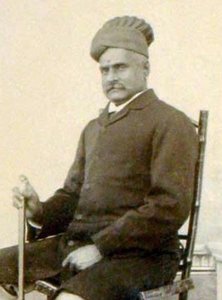
Bandi Balaiah Naidu


 Citește mai mult
Giclée / Imprimare artistică
Printuri giclée sau pe canvas de calitate muzeală, cu proces de producție rapid și opțiuni flexibile de finisare. ( Comandă pictură realizată manual Treci la imagine digitală)




P118B $10

P118H $10

P118W $10

P438Z $10

P508JH $12

P508YH $12

P805H $10

P805Z $10

P919BZ $10

P919G $10

P919XJ $10

P959ZH $10

P968JZ $12

W106C $8

W218G $10

W218JH $8

W218Y $10

W307PJ $10

W316G $10

W316PJ $8

W316Y $10

W398PJ $8

W4111J $10

W500HY $15

W500JH $15

W692G $12

W849H $8

W940BG $15

W953PJ $8




Alegeți dintre dimensiunile noastre prestabilite, care respectă proporțiile originale ale operei de artă.

Puteți introduce propriile dimensiuni pentru a se potrivi unui anumit cadru sau spațiu. Dacă dimensiunea selectată nu corespunde proporțiilor imaginii originale, vom decupa lucrarea de artă sau vom extinde imaginea cu margini oglindite sau cu o culoare uniformă. Un mockup digital va fi trimis pentru aprobarea dumneavoastră înainte de începerea producției.
Vă rugăm să rețineți că previzualizarea de pe ecran nu reflectă decuparea sau extinderea reală. Doar mockup-ul va arăta cu exactitate compoziția finală.
Deși dimensiunile personalizate sunt disponibile, vă recomandăm să selectați o dimensiune din lista predefinită pentru a păstra proporțiile originale.
Livrare în întreaga lume () în 2 săptămâni, în loc de cele 4/5 săptămâni standard. (18 Septembrie)

Livrare expres gratuită la nivel mondial

Pânză de in premium

Asigurare completă pentru transport

Garanție de rambursare a taxelor vamale

Garanția fidelității culorilor

Politica de retur în 100 de zile (doar pentru defecte)

Garanție de rambursare 100%

Reducere pentru comenzi multiple
 Opțiunea cu sticlă este disponibilă doar pentru dimensiuni de sub 110 cm

Bandi Balaiah Naidu
Giclée / Imprimare artistică
Dimensiune reproducere
-


Preț total
$ 80
The Dignity of Portraiture in Raja Ravi Varma's Hand
To gaze upon this portrait of Bandi Balaiah Naidu is to encounter a moment suspended in time—a confluence of regal bearing and quiet contemplation. Painted in 1904, the work captures not merely a likeness, but an entire persona steeped in cultural richness. The subject, adorned with traditional Indian accoutrements, sits with an undeniable air of authority. His meticulously rendered beard and mustache frame a countenance that speaks volumes without uttering a single word. Raja Ravi Varma, the master whose brushstrokes defined modern Indian painting, possessed a unique gift for elevating his sitters to figures of enduring dignity. The composition itself is carefully balanced; the subject occupies the foreground, commanding attention, while the subtle inclusion of elements like the book and the secondary chairs in the background anchors the scene within a believable, scholarly domestic setting.
A Synthesis of East and West in Technique
What makes this piece so captivating to the modern eye is Varma’s masterful synthesis of artistic traditions. He was celebrated for his ability to absorb the polished techniques of European academic art—the realistic rendering of drapery, the nuanced study of shadow and light—and infuse them with the vibrant soul and narrative depth inherent in Indian aesthetics. Observe the texture of the white clothing; it is painted with a luminosity that suggests fine, starched material, handled with an almost photographic precision. Yet, this realism never feels cold or purely academic. Instead, it breathes with the warmth of Indian life, suggesting a deep cultural resonance beneath the surface polish. The technique employed allows for both intimate detail in the facial features and grand scope in the overall presentation.
Symbolism and Setting: More Than Just a Portrait
The elements surrounding Bandi Balaiah Naidu are not arbitrary; they contribute to the narrative weight of the piece. The book resting near the bottom right corner subtly suggests erudition, perhaps hinting at the subject's scholarly pursuits or deep knowledge. The presence of multiple chairs implies a life lived in conversation and contemplation—a space designed for thought. Raja Ravi Varma often imbued his portraits with symbolic depth, transforming simple sittings into meditations on status, intellect, and cultural continuity. He painted figures who seemed to embody ideals: the cultured gentleman, the respected patriarch, whose very presence elevates the room it hangs within.
Emotional Resonance for the Contemporary Collector
For the collector or designer seeking an artwork that transcends mere decoration, this portrait offers profound emotional resonance. It speaks of heritage, permanence, and sophisticated taste. Reproducing such a work allows one to bring a piece of this historical grandeur into a contemporary space. Imagine it gracing a library, a formal drawing-room, or a study—it acts as an immediate focal point, whispering tales of the early 20th century while speaking fluently to modern sensibilities. It is an heirloom quality piece, offering not just beauty, but a tangible connection to a pivotal era in Indian art history.
Biografie artist
The Princely Brush: Raja Ravi Varma and the Dawn of Modern Indian Painting
Raja Ravi Varma, a name that echoes through the halls of Indian art history, wasn’t merely a painter; he was a cultural architect, a bridge between tradition and innovation. Born in 1848 within the opulent confines of Kilimanoor Palace, nestled amidst the verdant hills of Kerala, his life unfolded as a remarkable synthesis of aristocratic privilege and an incandescent creative spirit. He didn't simply capture images on canvas; he breathed life into ancient myths, imbued them with human emotion, and ultimately, reshaped how India perceived its own artistic heritage. Ravi Varma’s lineage was deeply intertwined with the Travancore royal family – two of his daughters were later adopted into the court, a testament to his noble standing and the profound respect he commanded. From a young age, a keen eye for detail and an innate talent for drawing manifested itself within the palace walls, nurtured initially by his uncle, Raja Raja Varma, who recognized and cultivated this burgeoning artistic ability. This early training, rooted in the established Tanjore School tradition, provided a solid foundation, but Ravi Varma’s ambition extended far beyond mere imitation; he yearned to master techniques that would allow him to translate not just likeness, but also feeling and narrative depth onto canvas.A Fusion of Worlds: Technique and Inspiration
Ravi Varma's artistic journey took an extraordinary turn during his travels – both within India and through interactions with British officials stationed in the region. He became utterly captivated by the meticulous realism and technical precision of European academic painting, diligently studying its principles: perspective, anatomy, light, and shadow. This wasn’t a simple appropriation; rather, it was a masterful adaptation. Unlike many of his contemporaries who merely replicated Western styles, Varma ingeniously integrated these techniques into his own distinctly Indian subject matter. His canvases transformed into vibrant stages for scenes drawn from the Ramayana, the Mahabharata, and the Puranas – epic tales brought to life with an unprecedented level of naturalism. He didn’t simply illustrate religious stories; he imbued them with palpable human emotion, psychological complexity, and a profound sense of drama. Consider his portrayal of *Shakuntala*, for instance—a scene brimming with longing, vulnerability, and quiet strength. The heroine's gaze, rendered with exquisite detail, conveys a depth of feeling previously unseen in Indian art. Similarly, *The Maharani of Travancore* is not merely a portrait; it’s a study of regal composure, capturing both the outward appearance of power and the subtle nuances of inner character. This fusion of European academic rigor and deeply rooted Indian aesthetics was revolutionary—a testament to Ravi Varma's artistic vision. His embrace of oil painting – a relatively new medium in India at the time – further amplified his ability to achieve an astonishing level of detail, luminosity, and emotional resonance.Democratizing Art: Lithographs and Public Appeal
Raja Ravi Varma’s influence extended far beyond the confines of royal courts and art circles. Recognizing that original paintings were largely inaccessible to the vast majority of Indians, he took a bold step—establishing the Raja Ravi Varma Fine Arts Lithographic Press in 1894. This groundbreaking venture marked a pivotal moment in Indian art history: it allowed for the mass production of affordable lithographs based on his iconic works. Suddenly, images of Hindu deities and mythological scenes were no longer confined to temples or palaces; they adorned homes across India, becoming objects of worship, cultural pride, and accessible beauty for all. These weren’t mere reproductions; they were carefully crafted interpretations—each lithograph a testament to Ravi Varma's artistic vision. The act of “democratizing art” had a profound and lasting impact on Indian society, fostering a wider appreciation for visual culture and fundamentally shaping how Indians perceived their own religious iconography. The *Hansa Damayanthi* lithograph, perhaps one of his most beloved creations, became a ubiquitous symbol of Indian identity, its image reproduced countless times and cherished by generations.Royal Portraits and Artistic Patronage
Ravi Varma’s career was further enriched through royal patronage. He served as court painter to several prominent princely states – Mewar, Baroda, and Mysore – each offering unique artistic challenges and opportunities. These experiences broadened his artistic horizons, exposing him to diverse cultural traditions and refining his skills. His portraits of Indian and British dignitaries were particularly noteworthy, capturing the essence of both cultures with remarkable sensitivity and detail. The meticulousness evident in these works reflects Ravi Varma’s dedication to portraying subjects with accuracy and grace. His ability to capture not only physical likeness but also personality and character was a hallmark of his artistic style.Legacy and Enduring Influence
Raja Ravi Varma passed away in 1906, leaving behind an indelible mark on the landscape of Indian art. He wasn’t just a painter; he was a pioneer who challenged conventional norms, embraced innovation, and skillfully blended tradition with modernity. His influence can be seen in the works of subsequent generations of Indian artists who sought to forge a distinctly national artistic identity. Museums like The Raja Ravi Varma Heritage Foundation and The Ganesh Shivaswamy Foundation continue to preserve and celebrate his legacy, ensuring that his vision endures for future generations. His paintings remain powerful testaments to his genius—masterpieces that capture the beauty, spirituality, and cultural richness of India. He truly transformed the way Indians perceived art and their own cultural heritage, solidifying his place as one of the most important figures in Indian artistic history.Exploring Varma’s World Today
For those seeking to delve deeper into the world of Raja Ravi Varma, numerous resources are available:- Explore artworks: Discover masterpieces like "Portrait of a Gentleman," "Hansa Damayanthi," and "The Maharani of Travancore" through online databases.
- Visit museums: Immerse yourself in Varma’s legacy at The Raja Ravi Varma Heritage Foundation, The Ganesh Shivaswamy Foundation, and the Kiran Nadar Museum of Art.
- Further research: Consult Wikipedia and Google Arts & Culture for detailed biographical information and scholarly insights.
Raja Ravi Varma
1848 - 1906 , India
Informații rapide
- Artistic Movement Or Style: Fusion tradițional
- Artists Or Movements Influenced By This Artist: ['Arta indiană modernă']
- Artists Who Influenced This Artist: ['Maestri europeni']
- Date Of Birth: 29 Apr 1848
- Date Of Death: 2 Oct 1906
- Full Name: Raja Ravi Varma
- Nationality: Indian
- Notable Artworks:
- Shakuntala
- Hansa Damayanthi
- Place Of Birth: Kilimanoor, India
Articole conexe
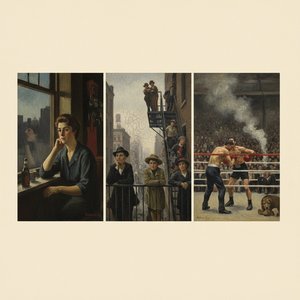
American Realism: Social Commentary & Artistic Representation in Early 20th-Century Painting
Explore the powerful social commentary & artistic representation of American Realism. Discover key artists like Bellows & Sloan, and understand the movement's lasting impact on 20th-century art history.
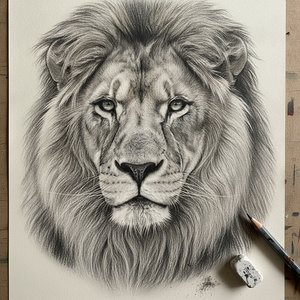
Mastering Graphite Pencil: The Ultimate Expert Guide to Achieving Depth, Texture, and Hyper-Realistic Detail
Elevate your artistry with our expert guide to mastering graphite pencil. Learn professional techniques for achieving profound depth, intricate textures, and hyper-realistic details through advanced shading, layering, and precision tool mastery designed for serious art students.

Raja Ravi Varma: Bridging Tradition & Modernity in 19th-Century Indian Art
Explore the life & art of Raja Ravi Varma, a pioneer who fused European techniques with Indian iconography. Discover his iconic paintings, lasting legacy, and influence on modern Indian art at OriginalUniqueArt.
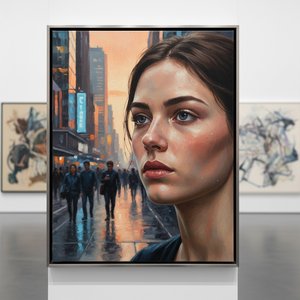
Contemporary Realism: Capturing the Soul of Modern Life Through Hyper-Realistic Art
Explore the profound depth of Contemporary Realism. Discover how hyper-realistic art captures modern emotion through technical mastery, offering collectors a sophisticated way to preserve the soul of human experience through exquisite, museum-quality oil paintings and fine art.
Realismul în Artă: 10 Capodopere Esențiale pentru Decorul Tău
Descoperă 10 capodopere ale realismului! Explorează poveștile din spatele picturilor Courbet, Manet și Millet. Reproduceri de artă de calitate muzeală pentru un decor interior inspirat. Vezi colecția completă pe OriginalUniqueArt.com

