Comută pe versiunea Print
 Vezi mai mult







































 Pentru opere de artă sau reproduceri care depășesc 105 cm (aproximativ 41 de inch) pe oricare dintre laturi, cadrul va fi livrat demontat, sub formă de kit. Această metodă asigură o livrare sigură și previne deteriorarea în timpul transportului.


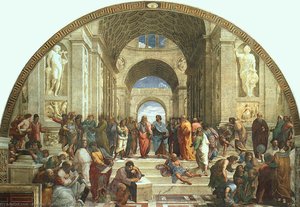
Stanza Della Segnatura d00: A Symphony of Renaissance Ideals
The Stanza Della Segnatura stands as an enduring testament to Raphael’s unparalleled artistic vision—a cornerstone of the High Renaissance that continues to captivate audiences centuries later. Painted in Rome between 1508 and 1511 during the reign of Pope Julius II, this monumental fresco cycle transcends mere decoration; it embodies the intellectual fervor and humanist ideals that defined the era. Commissioned as part of a grand redesign of the papal apartments, it represents more than just aesthetic beauty—it’s an elaborate philosophical dialogue reflecting on the core tenets of Western thought. The Setting: Located in the Vatican Museums, specifically the Stanza Della Segnatura (Room of the Signatura), the frescoed space itself is conceived to evoke a profound sense of solemn grandeur and contemplative reflection. Architects meticulously crafted the room’s interior—a deliberate choice intended to foster an atmosphere conducive to intellectual discourse and artistic contemplation. Geometric patterns adorn the walls, mirroring the mathematical precision favored by Renaissance thinkers and serving as a visual anchor for the complex iconography that unfolds within. Central Figures: At the heart of this breathtaking composition stand Plato and Aristotle, sculpted by Michelangelo—a masterful pairing symbolizing the opposing philosophical schools of idealism and empiricism respectively. Their postures convey an unmistakable reverence for knowledge and wisdom, embodying the humanist preoccupation with rational inquiry and mirroring Raphael’s own intellectual curiosity. The sculptures serve as focal points, guiding the viewer's gaze across the expansive fresco cycle. The Compositional Harmony: Raphael’s genius lies in his ability to orchestrate seemingly disparate visual elements into a harmonious whole—a feat achieved through masterful perspective and color palettes that create an illusion of depth and realism. Divided into three distinct sections—heaven, earth, and purgatory—each wall is treated with meticulous detail, reflecting the Renaissance fascination with scientific observation and artistic representation. The overarching design prioritizes balance and clarity, ensuring that every element contributes to the overall narrative and emotional impact. Symbolism and Intellectual Discourse The frescoes are laden with symbolic references that illuminate the philosophical debates of the time—a testament to Raphael’s erudition and his understanding of humanist thought. Above all, Raphael's depiction of the heavens celebrates divine order and underscores the concept of God’s omnipresence—a cornerstone of Christian theology. The earth section portrays scholars engaged in animated discussions about human affairs, mirroring the humanist aspiration for civic engagement and intellectual advancement. Finally, the purgatory scene embodies the medieval preoccupation with moral redemption and spiritual purification. Each element within the frescoes speaks to broader themes of virtue, intellect, and faith, inviting viewers to engage in a contemplative dialogue with the artwork itself. Technique: Raphael’s masterful application of fresco technique—a method involving applying pigment onto wet plaster—demonstrates his technical prowess and contributes significantly to the enduring beauty of the Stanza Della Segnatura. The layering of translucent glazes creates luminous colors and subtle gradations, enhancing the illusion of depth and capturing the ethereal quality of celestial realms. This painstaking process required considerable skill and patience, reflecting the Renaissance commitment to craftsmanship and artistic excellence. Historical Context: Painted during a period marked by papal patronage and intellectual renewal—the High Renaissance—the Stanza Della Segnatura reflects the cultural landscape of Rome under Julius II and Leo X. It stands alongside Michelangelo’s Sistine Chapel ceiling as one of the most iconic artworks of the era, embodying the humanist ideals championed by thinkers such as Pico della Mirandola and Erasmus. The frescoes serve as a visual record of intellectual currents—challenging conventional dogma and affirming the importance of reason and observation—a legacy that continues to inspire artists and scholars today.Întrebări și răspunsuri
Cum poate fi integrată "Stanza Della Segnatura" de Rafael în decorul casei?
Cele două recomandări pentru "Stanza Della Segnatura" de Rafael sunt utilizarea în (Accent de culoare) și spațiul (Living Room).
"Stanza Della Segnatura" de Rafael se numără printre operele de artă High Renaissance căutate?
"Stanza Della Segnatura" de Rafael este clasificată ca fiind Iconice și face parte din mișcarea High Renaissance.
Pot comanda o reproducere în ulei a operei "Stanza Della Segnatura"?
„Stanza Della Segnatura” este disponibil ca o reproducere pictată manual în ulei pe pânză de in. Comanda poate fi plasată pe pagina de Reproducere pictată în ulei, cu posibilitatea de a alege dimensiunea dorită.
Mai multe detalii despre această pictură
 Previzualizare
 Trimite prin felicitare
 Distribuie
 Detalii despre lucrare
 Ghid
Ghid

 Descarcă imaginea
 Produse similare
 Radiografie
 Galerie foto
 Întrebări și răspunsuri
 Statistici