

 Previzualizare
 Trimite
 Distribuie
 Detalii despre lucrare

 Descarcă
 Produse similare
 Radiografie
 Diapozitive automate
The Concert
 Acrylic On Canvas
- WallArt
- Rococo Painting
 1741
1741 60.0 x 48.0 cm
 Gallerie dell’Accademia
 Vezi mai mult
Reproducere pictată manual în ulei
Pictură în ulei pe pânză, realizată manual de artiștii noștri la dimensiunea și ramele dorite de dumneavoastră, pe comandă. ( Comandă printul Cumpără imaginea)




P118B $10

P118H $10

P118W $10

P438Z $10

P508JH $12

P508YH $12

P805H $10

P805Z $10

P919BZ $10

P919G $10

P919XJ $10

P959ZH $10

P968JZ $12

W106C $8

W218G $10

W218JH $8

W218Y $10

W307PJ $10

W316G $10

W316PJ $8

W316Y $10

W398PJ $8

W4111J $10

W500HY $15

W500JH $15

W692G $12

W849H $8

W940BG $15

W953PJ $8




Alegeți dintre dimensiunile noastre prestabilite, care respectă proporțiile originale ale operei de artă.

Puteți introduce propriile dimensiuni pentru a se potrivi unui anumit cadru sau spațiu. Dacă dimensiunea selectată nu corespunde proporțiilor imaginii originale, vom decupa opera de artă sau vom extinde pictura cu elemente suplimentare pictate manual. O simulare digitală vă va fi trimisă pentru aprobare înainte de începerea producției.
Vă rugăm să rețineți că previzualizarea de pe ecran nu reflectă decuparea sau extinderea reală. Doar macheta va arăta cu exactitate compoziția finală.
Deși sunt disponibile dimensiuni personalizate, vă recomandăm să selectați o dimensiune din lista predefinită pentru a păstra proporțiile originale.
După plasarea comenzii, echipa OriginalUniqueArt.com va contacta clientul prin e-mail pentru instrucțiuni și îi va furniza o previzualizare a machetei
Livrare în întreaga lume () în 3-4 săptămâni, în loc de cele 5 săptămâni standard. (14 August). Fără compromisuri în ceea ce privește calitatea.

Livrare expres gratuită la nivel mondial

Pânză de in de înaltă calitate

Asigurare completă pentru transport

Garanție de rambursare a taxelor vamale

Garanția fidelității culorilor

Politica de retur în 60 de zile (doar pentru defecte)

Garanție de rambursare 100%

Ofertă pentru comenzi multiple
 Opțiunea cu sticlă este disponibilă doar pentru dimensiuni de sub 110 cm

The Concert
Tehnică de reproducere
Dimensiune reproducere
-


Preț total calculat
$ 300
Descriere operă de artă
The Concert: A Venetian Intimacy
Pietro Longhi’s “The Concert,” painted in 1741, isn't merely a depiction of an evening gathering; it’s a meticulously crafted window into the heart of 18th-century Venice – a society both refined and subtly observant. Far removed from the grand historical narratives favored by many of his contemporaries, Longhi chose to capture the quiet dramas unfolding within the walls of bourgeois homes, offering a remarkably intimate glimpse into the lives of Venetian citizens. The painting immediately draws the eye with its warm, inviting palette—a blend of ochres, reds, and golds that evokes the flickering light of candlelight dancing across richly upholstered furniture. It’s a scene brimming with understated elegance, yet subtly hinting at the complexities beneath the surface of polite society.
The composition itself is deceptively simple, yet remarkably dynamic. A woman, presumably the hostess, sits poised on a bed, her hands gracefully supporting a violin – an instrument central to Venetian musical life. She appears to be singing, her posture suggesting both confidence and a touch of vulnerability. Around her, a group of figures are engaged in various activities: some listening intently, others conversing animatedly, while a young man playfully leans towards the woman, perhaps offering a flirtatious glance. The inclusion of a bird perched on a chair adds an unexpected element of charm and whimsy, subtly disrupting the formality of the scene and hinting at a more carefree spirit.
A Rococo Masterpiece: Style and Technique
“The Concert” firmly establishes Longhi as a key figure in the Venetian Rococo style. This movement, flourishing during the 18th century, prioritized elegance, grace, and a celebration of everyday life. Unlike the rigid formality of Baroque art, Rococo embraced asymmetry, delicate ornamentation, and a sense of playful informality. Longhi’s brushwork is remarkably fluid and loose, contributing to the painting's overall feeling of warmth and spontaneity. Notice how he uses broken color—small, distinct strokes of paint—to create texture and depth, particularly in the fabrics and furnishings. The figures are rendered with a remarkable degree of realism, yet imbued with a sense of charm and personality. The use of chiaroscuro – the dramatic contrast between light and shadow – further enhances the painting’s visual impact, drawing attention to key elements and creating a sense of depth.
Longhi's technical skill is evident in his masterful depiction of domestic interiors. He meticulously captures the details of the room—the ornate furniture, the delicate porcelain vase, the grandfather clock – each element contributing to the painting’s overall atmosphere. The perspective is carefully considered, creating a sense of space and inviting the viewer into the scene. The artist's attention to detail extends beyond mere representation; he seems to be conveying a feeling, an essence, of the moment captured on canvas.
Venetian Society: Context and Symbolism
To fully appreciate “The Concert,” it’s crucial to understand the social context in which it was created. Venice in the 18th century was a vibrant hub of commerce, art, and culture—a city where wealth and privilege coexisted with poverty and intrigue. Longhi's paintings offer a rare glimpse into the lives of the Venetian bourgeoisie – the merchants, bankers, and artisans who formed the backbone of the city’s economy. The scene depicted in “The Concert” reflects the values and customs of this social class—a love of music, refined conversation, and elegant entertainment.
Symbolism plays a subtle but significant role throughout the painting. The violin itself is a potent symbol of musicality and refinement, while the gathering represents the importance of social connection and leisure. The presence of the bird could be interpreted as a symbol of joy or good fortune. Even the seemingly mundane details—the clock, the vase—carry symbolic weight, reflecting the values and aspirations of Venetian society. The painting is not simply a snapshot of a particular moment; it’s a carefully constructed representation of an entire worldview.
Emotional Resonance: A Moment of Quiet Delight
Despite its historical context, “The Concert” possesses a remarkable emotional resonance that continues to captivate viewers today. It's a painting about connection, intimacy, and the simple pleasures of life—a reminder that even in the midst of bustling city life, moments of quiet delight can be found within the walls of one’s own home. The scene exudes a sense of warmth, conviviality, and understated charm. The figures seem genuinely engaged with each other, lost in the enjoyment of music and conversation.
Reproductions of “The Concert” offer an exceptional opportunity to bring this captivating Venetian scene into your own space. Whether you’re seeking to add a touch of elegance to a formal living room or create a cozy atmosphere in a study, this painting's timeless appeal will undoubtedly enhance any setting. It is more than just a beautiful image; it’s a portal to another time and place—a testament to the enduring power of art to transport us beyond our own lives.
Biografie artist
A Venetian Chronicler of Daily Life
Pietro Longhi, born Pietro Falca in Venice on November 5th, 1701, wasn’t painting grand historical narratives or mythological scenes; he was capturing the quiet dramas unfolding within the city's elegant homes and bustling streets. He became renowned for his witty genre paintings – intimate glimpses into the lives of 18th-century Venetians, a departure from the prevailing artistic trends of his time. The son of Alessandro Falca, a silversmith, Longhi’s early training began under the Veronese painter Antonio Balestra, who recognized and nurtured the young artist's talent. This foundation in traditional technique would later serve as a subtle counterpoint to the innovative spirit he brought to his chosen subject matter. He adopted the surname “Longhi” upon beginning his artistic career, a symbolic shedding of his father’s trade for the pursuit of painting.Early Influences and Artistic Training
Pietro Falca's formative years were marked by exposure to Venetian artistic traditions. His initial mentor was Antonio Balestra, a respected Veronese painter who instilled in him a deep understanding of Venetian painting style—characterized by broken brushwork and luminous color glazes reminiscent of Andrea del Verrocchio’s approach. Recognizing Longhi’s considerable potential, Balestra recommended him to Giuseppe Maria Crespi, another influential Bolognese artist known for his innovative use of light and color. This dual influence shaped Longhi's artistic sensibilities from the outset, grounding him in established conventions while simultaneously encouraging experimentation. He diligently studied Crespi’s techniques, absorbing lessons on composition and perspective—skills that would prove invaluable as he developed his own distinctive style.Religious Beginnings and Artistic Evolution
Longhi’s early career focused primarily on religious commissions, producing altarpieces and devotional paintings that adhered to the stylistic norms of the era. His 1732 depiction of Saint Pellegrino for the church of San Pellegrino exemplifies this period, showcasing a masterful command of Venetian painting technique—a testament to Balestra's guidance. However, Longhi’s artistic trajectory took an unexpected turn in the late 1730s when he decisively shifted towards genre scenes—a pivotal decision that would solidify his reputation as one of Venice’s most astute observers of human behavior. This transition wasn’t merely a stylistic preference; it represented a profound engagement with the intellectual currents shaping Europe at the time—particularly the burgeoning fascination with bourgeois society and domestic life.The Venetian Hogarth: Capturing Everyday Life
Longhi quickly earned the moniker “the Venetian Hogarth,” a comparison that speaks volumes about his artistic vision. Like William Hogarth, Longhi eschewed grand historical narratives in favor of portraying scenes from daily life—often infused with subtle satire and psychological insight. Unlike Hogarth’s overtly moralizing tone, Longhi's commentary was more nuanced, employing irony and observation to expose social contradictions without resorting to didactic pronouncements. His paintings are populated by figures engaged in seemingly trivial activities—gambling parlors buzzing with conversation, masked balls glittering with extravagance—yet these scenes reveal deeper truths about human nature and societal dynamics. He possessed an uncanny ability to capture the nuances of emotion and gesture, conveying a sense of immediacy and realism that distinguished him from many of his contemporaries.Style, Technique, and Legacy
Longhi’s artistic style was characterized by meticulous attention to detail—particularly in depicting textures—and a masterful use of light and color. He favored small canvases, meticulously rendered with delicate brushwork and infused with atmospheric luminescence. His interiors are bathed in soft light, creating an illusionistic depth that draws the viewer into the depicted space. Longhi’s technique was informed by both Balestra's grounding in Venetian tradition and Crespi’s pioneering explorations of chiaroscuro—the dramatic interplay between light and shadow—resulting in a style that blended realism with expressive artistry. His work resonated deeply with audiences of his time, who appreciated its charm and intellectual sophistication. He served as Director of the Academy of Drawing and Carving from 1763, furthering his influence within Venetian artistic circles. Pietro Longhi died peacefully in Venice on May 8th, 1785, leaving behind a legacy that continues to inspire artists and scholars today—a testament to his enduring contribution to Venetian art history.
Pietro Longhi
1701 - 1785 , Italia
Detalii rapide
- Artistic Movement Or Style: Venetian painting, Rococo
- Artists Or Movements Influenced By This Artist: ['William Hogarth']
- Artists Who Influenced This Artist:
- Antonio Balestra
- Giuseppe Maria Crespi
- Date Of Birth: November 5, 1701
- Date Of Death: May 8, 1785
- Full Name: Pietro Longhi
- Nationality: Italian
- Notable Artworks:
- The Tailor
- The Baptism
- Painter in his studio
- Place Of Birth: Venice, Italy
Articole similare

Pietro Longhi's Venetian Scenes: A Study of Rococo Society & Domestic Life
Explore the captivating world of Pietro Longhi's Venetian scenes! Discover insightful analysis of his Rococo masterpieces & social commentary on 18th-century life. Learn about this 'Venetian Hogarth' and his lasting artistic legacy.

The Rococo Aesthetic: Opulence, Rebellion & the Pursuit of Pleasure in 18th-Century Art
Explore the opulent world of Rococo art! Discover its origins, key artists like Watteau & Boucher, and lasting influence on design. Expert insights for collectors & enthusiasts.

Top 10 Capodopere Rococo: Arta, Istorie și Decor Excepțional | OriginalUniqueArt.ro
Descoperă top 10 capodopere Rococo de la Fragonard, Boucher și Watteau! Explorează istoria artei, tehnicile și culorile vibrante ale stilului Rococo. Reproduceri de artă excepționale pentru decorul perfect pe OriginalUniqueArt.ro.

Francesco Guardi: Venetian Light, Atmospheric Perspective & the Rococo to Neoclassical Transition
Explore the captivating world of Francesco Guardi, master of Venetian light and atmosphere. Discover his transition from Rococo to Neoclassicism, influence on Impressionism & investment potential with OriginalUniqueArt.
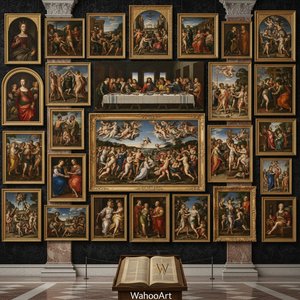
Jacopo Tintoretto: Cele Mai Remarcabile 25 de Capodopere – Artă Clasică pentru Decorul Tău
Descoperă cele mai frumoase 25 de picturi ale lui Jacopo Tintoretto! Explorează capodopere renascentiste venețiene, scene biblice dramatice și stilul unic al artistului. Reproduceri artă de calitate muzeală pentru decorul tău pe OriginalUniqueArt.com.

