
 Previzualizare
 Trimite prin felicitare
 Distribuie
 Detalii despre lucrare
 Ghid
Ghid

 Descarcă imaginea
 Produse similare
 Radiografie
 Galerie foto
 Q&A
Q&A Statistici
Jean-Louis André Théodore Géricault


 Vezi mai mult
Giclée / Imprimare artistică
Printuri giclée sau pe canvas de calitate muzeală, cu proces de producție rapid și opțiuni flexibile de finisare. ( Comandă pictură realizată manual Comută pe Imagine Digitală)




P118B lei10

P118H lei10

P118W lei10

P438Z lei10

P508JH lei12

P508YH lei12

P805H lei10

P805Z lei10

P919BZ lei10

P919G lei10

P919XJ lei10

P959ZH lei10

P968JZ lei12

W106C lei8

W218G lei10

W218JH lei8

W218Y lei10

W307PJ lei10

W316G lei10

W316PJ lei8

W316Y lei10

W398PJ lei8

W4111J lei10

W500HY lei15

W500JH lei15

W692G lei12

W849H lei8

W940BG lei15

W953PJ lei8




Alegeți dintre dimensiunile noastre prestabilite, care respectă proporțiile originale ale operei de artă.

Introduceți lățimea și înălțimea necesare pentru a se potrivi ramei sau peretelui dumneavoastră. O printare poate fi doar tăiată, niciodată extinsă dincolo de dimensiunea imaginii originale, astfel încât o dimensiune cu o formă diferită va pierde o parte din imagine. Vă trimitem o simulare digitală pentru aprobare înainte de a imprima orice. Imaginea afișată pe această pagină nu prezintă tăierea reală — doar simularea arată acest lucru.
Livrare în întreaga lume () în 2 săptămâni, în loc de cele 4/5 săptămâni standard. (2 Noiembrie)

Livrare expres gratuită la nivel mondial

Pânză de in de înaltă calitate

Asigurare completă pentru transport

Garanție de rambursare a taxelor vamale

Garanția fidelității culorilor

Politica de retur în 100 de zile (doar pentru defecte de fabricație)

Garanție de rambursare 100%

Ofertă pentru comenzi multiple
 Opțiunea cu sticlă este disponibilă doar pentru dimensiuni de sub 110 cm

Jean-Louis André Théodore Géricault
Giclée / Imprimare artistică
Dimensiune reproducere
-


Preț total calculat
lei 379
Jean-Louis André Théodore Géricault: A Titan of Romantic Realism
Jean-Louis André Théodore Géricault (1791-1824) stands as one of the most influential figures in French Romantic art, a painter who irrevocably altered the course of artistic expression and cemented his place among the giants of European painting. He wasn’t merely a follower of trends; he was a catalyst for change, championing a style that prioritized emotional intensity alongside meticulous observation—a daring juxtaposition that would define his legacy. His formative years were spent absorbing the classical influences of Vernet and Guérin while simultaneously encountering the burgeoning spirit of revolution in Paris, shaping him into an artist profoundly attuned to both tradition and upheaval.- Early Influences: Géricault’s artistic education began with Vernet's instruction in English sporting art, grounding him in a visual language focused on dynamism and narrative storytelling. Subsequently, he honed his skills under Guérin’s rigorous guidance at the École des Beaux-Arts, mastering classical figure composition and developing an unwavering commitment to anatomical accuracy.
- The Florentine Awakening: A transformative journey to Florence, Rome, and Naples ignited Géricault's fascination with Michelangelo and profoundly impacted his artistic sensibilities. He immersed himself in studying Michelangelo’s sculptures, absorbing the monumental scale and expressive power of Buonarroti’s masterpieces—a formative experience that would inform his own ambitious undertakings.
The Raft of the Medusa: A Monument to Suffering and Resilience
Géricault's magnum opus, *La Naufraga de Médusa* (1818-19), transcends mere depiction; it’s a visceral confrontation with human vulnerability and an unflinching portrayal of despair. Commissioned by the Société Philanthropique pour la décoration des salles du Louvre, the painting captured the harrowing aftermath of a French naval disaster—the wreck of Médusa in 1816—during which the ship's captain abandoned over 500 passengers and crew adrift at sea. Géricault painstakingly researched the event, interviewing survivors and constructing detailed anatomical studies to ensure an unprecedented level of realism. The painting’s dramatic composition—a chaotic tangle of bodies clinging desperately to a makeshift raft—effectively conveys the psychological torment experienced by those facing imminent death.- Symbolism: Beyond its immediate depiction of suffering, *La Naufraga* operates on multiple symbolic levels. The raft itself represents humanity adrift in chaos, mirroring the turbulent political landscape of post-Napoleonic France. The figures embody various states of emotion—desperation, grief, hope—creating a complex tapestry of human experience.
- Technique: Géricault employed a revolutionary technique characterized by loose brushwork and tonal modulation—a departure from the polished surfaces favored by neoclassical painters—to achieve an unparalleled level of expressive force. He utilized chiaroscuro—the dramatic interplay of light and shadow—to sculpt form and heighten emotional impact, capturing the palpable tension of the scene with breathtaking precision.
A Legacy Enduring Through Reproduction: Bringing Géricault’s Vision to Life
Today, *La Naufraga de Médusa* continues to captivate audiences worldwide, serving as an enduring testament to Géricault's artistic genius and his unwavering commitment to portraying the human condition with unflinching honesty. High-quality reproductions offer a remarkable opportunity to experience the painting’s emotional depth and technical brilliance—allowing collectors and interior designers alike to infuse their spaces with the spirit of Romantic realism. The artist’s masterful manipulation of color, composition, and tonal modulation ensures that Géricault's vision remains powerfully relevant, inspiring contemplation and fostering appreciation for the transformative power of art.Întrebări și răspunsuri
Ce intensitate de culoare are "Jean-Louis André Théodore Géricault" de Pierre-Jean David d’Angers?
Culorile din "Jean-Louis André Théodore Géricault" de Pierre-Jean David d’Angers au o intensitate Monocromatic.
Ce tehnică și stil caracterizează "Jean-Louis André Théodore Géricault" de Pierre-Jean David d’Angers?
"Jean-Louis André Théodore Géricault" este realizată în Acrilic pe pânză întinsă, în stilul Romantic Realism.
Cum echilibrează "Jean-Louis André Théodore Géricault" lumina și întunericul?
"Jean-Louis André Théodore Géricault" de Pierre-Jean David d’Angers este înregistrat cu o strălucitor, având o luminanță de Luminos.
Biografie artist
A Legacy Forged in Stone: The Life and Art of Pierre-Jean David d’Angers
Born in Angers, France, in 1789, Pierre-Jean David embarked on his artistic journey imbued in the republican fervor that would characterize much of his life and work. Initially apprenticed to a local wood carver – his father – young David swiftly demonstrated an aptitude for sculpting that propelled him toward greater ambitions. He arrived in Paris in 1808, a city pulsating with both classical tradition and revolutionary spirit, seeking tutelage under Philippe-Laurent Roland at the École des Beaux-Arts. This formative period instilled within him neoclassical principles while simultaneously exposing him to the burgeoning Romantic movement. A pivotal moment transpired in 1809 when he enrolled under Jacques-Louis David’s guidance, adopting “David d’Angers” as his artistic moniker – a deliberate distinction from his revered mentor, signifying an aspiration for independent creativity rooted in lineage and ambition. This decision underscored a desire to forge his own path while acknowledging the profound influence of the era's foremost painter. Early years in Paris were marked by financial struggles; nevertheless, David persevered, garnering acclaim with works like “Othryades” in 1810 and ultimately securing the prestigious Prix de Rome in 1811 for his sculpture "Epaminondas."From Roman Reverie to Neoclassical Mastery
David’s five-year sojourn in Rome (1811–1816) proved transformative. Immersed in the world of classical antiquity and mentored by masters such as Antonio Canova, his artistic vision matured considerably. He absorbed the core tenets of Greek sculpture – its unwavering focus on idealized form, heroic narrative, and restrained emotional expression – yet skillfully infused these principles with a distinctly personal aesthetic. This period transcended mere academic study; it encompassed an awakening to political realities. The restoration of the Bourbon monarchy in France cast a shadow over his return, prompting a brief relocation to England where he encountered both admiration and scrutiny due to his association with Jacques-Louis David, who had been linked to the revolutionary regime. Back in Paris, however, David’s talent swiftly gained recognition. He became renowned for his portrait medallions – remarkably detailed representations capturing not just physical likeness but also psychological nuance—as well as monumental sculptures celebrating civic virtue and national heroes. His pioneering work on the Arc de Triomphe and the Louvre demonstrated an early mastery of large-scale projects, establishing him as a sculptor capable of tackling ambitious commissions.The Influence of David and Roland
Philippe-Laurent Roland’s instruction at the École des Beaux-Arts profoundly shaped David's artistic sensibilities, grounding him in neoclassical ideals while simultaneously introducing him to the Romantic movement’s burgeoning dynamism. Roland championed restraint and clarity of form—values that would permeate David’s oeuvre throughout his career. Jacques-Louis David’s mentorship represented a crucial step toward forging David’s own distinctive style; David consciously distanced himself from his master's revolutionary fervor, prioritizing intellectual rigor alongside artistic expression. This deliberate separation fostered an independent vision rooted in classical tradition yet imbued with a sensitivity to the emotional complexities of human experience—a hallmark of David’s oeuvre.Notable Achievements and Artistic Style
David’s sculptural output encompassed a breathtaking array of projects – from monumental sculptures honoring national heroes to intimate portrait medallions capturing the essence of his subjects. His magnum opus, the pediment sculpture for the Panthéon in Paris—featuring prominent figures representing French intellectual heritage—stands as testament to his unparalleled skill in conveying grandeur and solemnity through sculpted form. Other significant commissions included the Gutenberg monument at Strasbourg and the equestrian statue of General Gobert in Père Lachaise Cemetery, showcasing David’s mastery of dynamic composition and expressive realism. His portrait medallions – meticulously crafted with exceptional attention to detail—became celebrated for their psychological insight and artistic beauty. Among his most iconic works are “Wounded Philopoemen,” housed in the Louvre, a poignant depiction reflecting the tragic fate of the Greek general; and "La Douleur," demonstrating David’s ability to convey profound emotion through sculptural form.A Lasting Legacy: Recognition and Historical Significance
Pierre-Jean David d’Angers achieved considerable acclaim during his lifetime—receiving numerous awards and honors, including the Prix de Rome—and cemented his place as one of France's most influential sculptors. His art reflects the intellectual and political landscape of 19th-century France, embodying republican ideals alongside neoclassical elegance. He championed figures who exemplified courage, integrity, and devotion to public service—values that resonated deeply with audiences throughout his era. David’s enduring legacy resides not only in his magnificent sculptures but also in his contribution to shaping the visual culture of France, inspiring generations of artists and securing his place as a cornerstone of artistic history. His work continues to captivate viewers today, demonstrating the timeless power of classical form combined with Romantic emotion—a testament to David d’Angers' unparalleled artistry and enduring influence.
Pierre-Jean David d’Angers
1788 - 1856 , Franța
Detalii rapide
- Artistic Movement Or Style: Neoclasicism
- Artists Who Influenced This Artist:
- Jacques-Louis David
- Philippe-Laurent Roland
- Date Of Birth: 1789
- Full Name: Pierre-Jean David d’Angers
- Nationality: Franțuzesc
- Notable Artworks:
- Wounded Philopoemen
- La Douleur
- Place Of Birth: Angers, Franța
Articole similare

Ferdinand Delacroix: Romanticism's Revolutionary Brush – A Study of Passion, Politics, and Painterly Innovation
Explore the revolutionary art of Eugène Delacroix, leader of French Romanticism. Discover his masterful use of color, political engagement, and lasting influence on modern painting. Learn about key works & history.

Anne-Louis Girodet: Bridging Neoclassicism & Romanticism with Emotional Truth
Explore the captivating world of Anne-Louis Girodet, a pivotal figure bridging Neoclassicism & Romanticism. Discover his masterpieces and unique artistic vision with OriginalUniqueArt.

Paul Huet: Capturing the Essence of French Romanticism Through Light and Landscape
Explore the captivating world of Paul Huet (1803-1869), a master of French Romantic landscape painting. Discover his influence on Barbizon & Impressionism, and browse high-quality reproductions at OriginalUniqueArt.
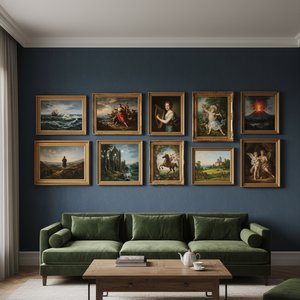
Top 10 Capodopere Romantice: Pasiune, Artă și Decorațiuni de Lux | OriginalUniqueArt.ro
Descoperă Top 10 capodopere romantice de la Delacroix, Goya și alții! Explorează pasiunea, emoția și frumusețea artei romantice. Reproduceri de tablouri de lux pentru decorul perfect pe OriginalUniqueArt.ro
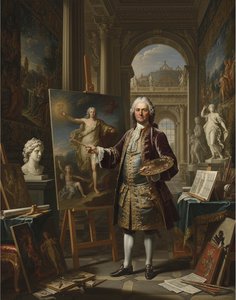
Charles Le Brun: Master of French Baroque Classicism & His Enduring Legacy
Explore the life & art of Charles Le Brun, master of French Baroque Classicism. Discover his royal commissions, influence on Versailles, and enduring legacy through detailed analysis & stunning artworks.
