Comută pe versiunea Print
 Vezi mai mult







































 Pentru opere de artă sau reproduceri care depășesc 105 cm (aproximativ 41 de inch) pe oricare dintre laturi, cadrul va fi livrat demontat, sub formă de kit. Această metodă asigură o livrare sigură și previne deteriorarea în timpul transportului.


Flowers in a Blue Vase: A Pioneer of Modern Art
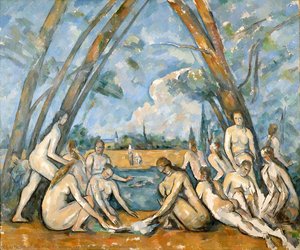
Paul Cézanne’s “Flowers in a Blue Vase,” completed around 1873-1875, stands as an emblem of the burgeoning Post-Impressionist movement and represents a pivotal moment in artistic history. Painted during Cézanne's formative years, it embodies his relentless pursuit of capturing essence rather than mere visual representation—a characteristic that would propel him to become one of the fathers of Cubism and profoundly influence subsequent generations of artists. This artwork isn’t simply a depiction of flowers; it’s an exploration of form, color, and texture designed to convey emotion and provoke contemplation.The Artistic Vision: Post-Impressionism's Bold Departure
Unlike Impressionists who meticulously documented fleeting moments of light and atmosphere—primarily concerned with capturing the sensory experience of a scene—Cézanne rejected this approach. He sought instead to distill the underlying structure of objects, believing that true beauty resided in their geometric forms rather than superficial appearances. This conviction is vividly realized in “Flowers in a Blue Vase,” where Cézanne employs flattened planes of color and short, broken brushstrokes to create an illusion of depth and volume—a technique radically different from Impressionistic conventions. The blue vase itself serves as a focal point, anchoring the composition while simultaneously introducing a dominant hue that contrasts with the vibrant reds and yellows of the blossoms.A Window into Cézanne's Time: Contextualizing Artistic Innovation
The painting emerged during a period of significant artistic ferment in France. Cézanne was grappling with the legacy of Impressionism, recognizing its limitations while simultaneously absorbing influences from Romanticism and Realism. Fellow artists like Camille Pissarro and Ambroise Vollard championed his experimental style, perceiving it as a courageous step away from established norms. Vollard’s astute understanding of Cézanne's artistic sensibilities secured him a crucial role in showcasing Cézanne’s groundbreaking work to the public—a moment that solidified Cézanne’s position as a visionary artist ahead of his time.Recognition and Legacy: Shaping Artistic Discourse
Initially, Cézanne faced considerable criticism from critics who deemed his art incomprehensible and lacking in aesthetic merit. However, Henri Matisse and Pablo Picasso acknowledged Cézanne's monumental influence on their own artistic endeavors—a testament to the enduring power of his vision. Picasso famously declared Cézanne “the father of us all,” encapsulating the profound impact of Cézanne’s pioneering approach to painting. Today, "Flowers in a Blue Vase" resides at The State Hermitage Museum in Russia, continuing to inspire artists and captivate audiences worldwide—a timeless masterpiece that exemplifies the transformative spirit of Post-Impressionism.- Post-Impressionism Art Movement: A predominantly French movement that developed roughly between 1886 and 1905, characterized by a reaction against Impressionists’ concern for the naturalistic depiction of light and color.
- Paul Cézanne's Biography: A French painter who introduced new modes of representation and influenced avant-garde artistic movements.
- History of Art: The history of art focuses on objects made by humans for various purposes, with a primary emphasis on their aesthetic visual form.
Explore more Cézanne reproductions at OriginalUniqueArt: Paul Cézanne: Flowers in a Blue Vase and Paul Cézanne: Still Life with Curtain and Flowered Pitcher. Own a piece of art history!
Întrebări și răspunsuri
Cum se îmbină suportul și mișcarea în "Floare în pahar albastru"?
În "Floare în pahar albastru", tehnica Ulei pe pânză întâlnește mișcarea Post-Impressionism.
În ce tehnică este realizată lucrarea "Floare în pahar albastru" de Paul Cézanne?
Tehnica utilizată pentru "Floare în pahar albastru" de Paul Cézanne este Ulei pe pânză, iar reproducerile urmăresc să reducă aspectul acestei tehnici.
Culorile din "Floare în pahar albastru" par intense sau delicate?
Culorile din "Floare în pahar albastru" de Paul Cézanne au o intensitate Vibrant.
 Previzualizare
 Trimite prin felicitare
 Distribuie
 Detalii despre lucrare
 Ghid
Ghid

 Descarcă imaginea
 Produse similare
 Radiografie
 Galerie foto
 Q&A
Q&A Statistici