

 Previzualizare
 Trimite prin felicitare
 Distribuie
 Detalii despre lucrare
 Ghid
Ghid

 Descarcă imaginea
 Produse similare
 Radiografie
 Galerie foto
 Statistici
Daniele Barbaro
 Oil On Canvas
- WallArt
- Baroque
 1561
1561- Renaissance
 121.0 x 106.0 cm
 Rijksmuseum
 Vezi mai mult
Giclée / Imprimare artistică
Printuri giclée sau pe canvas de calitate muzeală, cu proces de producție rapid și opțiuni flexibile de finisare. ( Comandă pictură realizată manual Comută pe Imagine Digitală)




P118B lei10

P118H lei10

P118W lei10

P438Z lei10

P508JH lei12

P508YH lei12

P805H lei10

P805Z lei10

P919BZ lei10

P919G lei10

P919XJ lei10

P959ZH lei10

P968JZ lei12

W106C lei8

W218G lei10

W218JH lei8

W218Y lei10

W307PJ lei10

W316G lei10

W316PJ lei8

W316Y lei10

W398PJ lei8

W4111J lei10

W500HY lei15

W500JH lei15

W692G lei12

W849H lei8

W940BG lei15

W953PJ lei8




Alegeți dintre dimensiunile noastre prestabilite, care respectă proporțiile originale ale operei de artă.

Introduceți lățimea și înălțimea necesare pentru a se potrivi ramei sau peretelui dumneavoastră. O printare poate fi doar tăiată, niciodată extinsă dincolo de dimensiunea imaginii originale, astfel încât o dimensiune cu o formă diferită va pierde o parte din imagine. Vă trimitem o simulare digitală pentru aprobare înainte de a imprima orice. Imaginea afișată pe această pagină nu prezintă tăierea reală — doar simularea arată acest lucru.
Livrare în întreaga lume () în 2 săptămâni, în loc de cele 4/5 săptămâni standard. (26 Octombrie)

Livrare expres gratuită la nivel mondial

Pânză de in de înaltă calitate

Asigurare completă pentru transport

Garanție de rambursare a taxelor vamale

Garanția fidelității culorilor

Politica de retur în 100 de zile (doar pentru defecte de fabricație)

Garanție de rambursare 100%

Ofertă pentru comenzi multiple
 Opțiunea cu sticlă este disponibilă doar pentru dimensiuni de sub 110 cm

Daniele Barbaro
Giclée / Imprimare artistică
Dimensiune reproducere
-


Preț total calculat
lei 370
The Quiet Majesty of Intellectual Pursuit
In the heart of the Venetian Renaissance, amidst a world of burgeoning humanism and classical revival, Paolo Veronese captured more than just a face; he captured a state of being. His portrait of Daniele Barbaro is an evocative window into the sixteenth-century mind, presenting a man whose very posture suggests a profound communion with thought. As we gaze upon the scholar seated at his desk, we are drawn into a space of quiet contemplation. His eyes, directed slightly away from the viewer, do not seek our recognition but rather wander through the landscapes of philosophy and diplomacy. This subtle detachment creates an intimate yet respectful distance, inviting collectors and admirers alike to participate in his silent meditation.A Symphony of Venetian Color and Light
Veronese’s technical mastery is nowhere more evident than in his command over the luminous palette characteristic of the Venetian school. The painting is anchored by a breathtaking use of ultramarine blue, a pigment that lends a regal depth to Barbaro's robes and breathes life into the shadows. Through the delicate application of chiaroscuro, the artist sculpts the subject’s features with remarkable precision, allowing light to dance across the folds of his white shirt and the weathered contours of his face. This interplay of light and shadow does more than create three-dimensional form; it establishes a dramatic tension that grounds the figure within a richly textured architectural setting. The presence of columns and soft window light suggests an interior of grandeur, making this piece a magnificent focal point for any sophisticated interior design, offering a sense of historical weight and classical elegance.The Poignant Echoes of Time and Balance
Beyond the physical likeness, Veronese weaves a complex tapestry of symbolism that elevates the portrait to an allegorical masterpiece. Every element within the frame serves a higher purpose in the narrative of a life well-lived. The two chairs flanking the scholar act as visual metaphors for equilibrium, representing the harmonious balance required between worldly duties and spiritual contemplation. Above, the presence of a clock serves as a memento mori, a poignant reminder of the relentless march of time that necessitates purposeful action in every moment. Even the open book beneath Barbaro's hand speaks to the enduring legacy of knowledge. For those seeking to adorn their homes with art that inspires deep thought, this reproduction offers a timeless connection to the values of wisdom, stability, and the pursuit of truth.Întrebări și răspunsuri
"Daniele Barbaro" de Paolo Veronese este o compoziție de tip portret, peisaj sau pătrată?
"Daniele Barbaro" de Paolo Veronese este o compoziție de tip Portrait. Proporțiile merită verificate înainte de a alege dimensiunea printului.
Ce dimensiune se recomandă pentru "Daniele Barbaro" într-un Living Room?
Combinația recomandată pentru "Daniele Barbaro" de Paolo Veronese: o printare de dimensiunea Large, ideală pentru o Living Room.
Ce nivel de luminozitate are "Daniele Barbaro" de Paolo Veronese?
"Daniele Barbaro" de Paolo Veronese are o luminanță de Dark. Luminația descrie câtă lumină par să reflecte culorile.
Biografie artist
A Venetian Visionary: The Life and Art of Paolo Veronese
Paolo Caliari, known to the world as Paolo Veronese, emerged from the vibrant artistic landscape of 16th-century Venice as a master of color, composition, and opulent spectacle. Born in Verona in 1528, the son of a stonecutter, his early life was steeped in the visual richness of his surroundings – the classical architecture, sculpted forms, and burgeoning humanist ideals that characterized the region. His initial training under Antonio Badile and Giovanni Francesco Caroto laid a foundation in traditional techniques, but it was his move to Venice in the 1550s that truly ignited his artistic genius. The city itself became his muse, its bustling marketplaces, grand palazzi, and shimmering waterways informing the scale and drama of his work. He quickly absorbed the influences of established Venetian masters like Titian, whose mastery of color profoundly impacted Veronese’s palette, yet he forged a distinct style characterized by an unparalleled sense of theatricality and grandeur.The Painter of Feasts and Grand Narratives
Veronese's reputation rests upon his monumental paintings, particularly those depicting lavish feasts and biblical scenes transformed into dazzling displays of Venetian life. The Wedding at Cana, completed in 1563 for the Benedictine monastery of San Giorgio Maggiore, stands as a testament to his skill. This colossal canvas isn’t merely an illustration of the miracle; it's a vibrant panorama of 16th-century society, teeming with elegantly dressed figures, musicians, and architectural details rendered with breathtaking precision. The painting is not just about what happened at Cana but *how* it would have looked if it had occurred in Venice during Veronese’s time – a deliberate choice that challenged conventional religious depictions. Similarly, The Feast in the House of Levi, originally titled The Last Supper, caused controversy with the Inquisition due to its inclusion of contemporary figures and a seemingly irreverent atmosphere. Veronese defended his artistic license, asserting that painters were entitled to the same creative freedom as poets and jesters – a bold statement reflecting his belief in art’s power to interpret and reimagine sacred narratives. These works weren't simply religious depictions; they were celebrations of life, wealth, and the splendor of Venice itself. He wasn’t interested in austere spirituality but rather in capturing the joy and abundance of existence. His ability to seamlessly blend historical accuracy with imaginative storytelling cemented his place as one of Venice’s most celebrated artists.Influences and Artistic Development
While Titian’s influence on Veronese’s colorism is undeniable, his artistic development was a complex interplay of various influences. The architectural precision he brought to his compositions owes much to the classical tradition prevalent in Verona during his formative years, particularly the work of architects like Michele Sanmicheli. He also absorbed elements from Central Italian masters such as Raphael and Parmigianino, evident in the graceful lines and harmonious arrangements within his paintings. However, Veronese didn’t simply imitate these influences; he synthesized them into a uniquely Venetian style characterized by its dramatic use of light, vibrant color palettes, and meticulous attention to detail. He excelled at creating illusions of space and depth, employing perspective techniques to draw viewers into the heart of his elaborate scenes. His mastery of oil painting allowed him to achieve an unparalleled luminosity and richness of texture. He also ran a large workshop, with contributions from his brother Benedetto and his sons Gabriele and Carlo (or 'Carletto'), ensuring that his style continued to flourish even after his death in 1588.Major Achievements and Notable Works
Veronese’s career was marked by a remarkable output of significant works, each showcasing his distinctive style and technical prowess. Beyond the aforementioned *Wedding at Cana* and *Feast in the House of Levi*, he produced numerous altarpieces for churches throughout Venice and the surrounding region, including masterpieces such as The Reconciliation of St. Peter and Paul (1575-76) and a series of paintings for the Villa Barbaro at Maser, depicting mythological scenes with an astonishing level of detail and theatricality. His decoration of the library of S. Marco in Venice – featuring intricate ceiling frescoes – remains one of his most ambitious projects. His work during this period demonstrated not only technical skill but also a profound understanding of Venetian society and its values. The *Sacred Life of St. Francis* (1573-76) is another prime example, showcasing his ability to depict both the saint’s spiritual journey and the vibrant life of his followers.Legacy and Historical Significance
Paolo Veronese's impact extends far beyond the realm of Renaissance art. His work has resonated through centuries, inspiring artists across various disciplines. His dramatic compositions and vibrant color schemes have been cited as influences on everything from Baroque painting to modern cinema – even finding echoes in the visual aesthetics of Spaghetti Westerns. He was part of the “great trio” of Venetian painters—alongside Titian and Tintoretto—each contributing uniquely to the city’s artistic legacy, yet Veronese often stands apart for his sheer exuberance and celebration of earthly pleasures. His paintings continue to captivate audiences with their grandeur and spectacle, offering a glimpse into the opulent world of 16th-century Venice. Veronese's legacy is a testament to his artistic genius, his ability to capture the essence of an era, and his enduring contribution to the history of art.
Paolo Veronese
1528 - 1588 , Italia
Detalii rapide
- Artistic Movement Or Style: Renaștere, Maneirism
- Artists Or Movements Influenced By This Artist: ['Raphael']
- Artists Who Influenced This Artist: ['Titian']
- Date Of Birth: 1528
- Date Of Death: 1588
- Full Name: Paolo Caliari Veronese
- Nationality: Italian
- Notable Artworks:
- Cana
- Levi
- Place Of Birth: Verona, Italia
Articole similare

Shades of Serenity: Unveiling the Timeless Allure and Historical Majesty of Blue in Fine Art
Journey through the historical majesty of blue in fine art. From rare lapis lazuli to celestial symbolism, explore how this serene hue defines masterpieces. Expert insights for discerning collectors and designers seeking timeless elegance and prestige.

The Allure of Azure: Exploring the Symbolic & Aesthetic Depths of Blue in Art History
Explore the rich history of blue in art! Discover its symbolism, from ancient pigments to modern masterpieces by Kandinsky & Seurat. Uncover the psychological impact and cultural meanings behind this captivating hue.

Top 10 Capodopere Albastre: Picturi Celebre și Inspirație pentru Decor
Descoperă top 10 picturi celebre dominate de nuanțe subtile de albastru! Explorează poveștile din spatele capodoperelor Monet, Renoir și Van Gogh. Inspirație decor interior & reproducere tablouri pe OriginalUniqueArt.com

Serene Blue Backgrounds: Discover Soulful Art to Transform Your Space with Timeless Elegance
Transform your home with soulful blue art. From serene Monet impressions to modern textured sculptures, discover curated masterpieces designed to inspire calm. Explore expert art consultations and bespoke hand-painted reproductions to create your personal sanctuary.
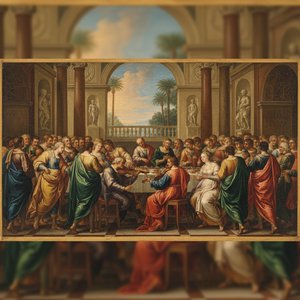
Paolo Veronese: A Renaissance Master of Color, Composition, and Venetian Splendor
Explore the vibrant world of Paolo Veronese, a Renaissance master renowned for his opulent compositions, masterful use of color, and dramatic Venetian scenes. Discover key artworks & legacy.


