

 Vezi în context
 Trimite
 Distribuie
 Detalii
 Ghidul

 Descarcă
 Produse similare
 Radiografie
 Diaporama
 Statistici
Hope


 Citește mai mult
Giclée / Imprimare artistică
Printuri giclée sau pe canvas de calitate muzeală, cu proces de producție rapid și opțiuni flexibile de finisare. ( Comandă pictură realizată manual Treci la imagine digitală)




P118B lei10

P118H lei10

P118W lei10

P438Z lei10

P508JH lei12

P508YH lei12

P805H lei10

P805Z lei10

P919BZ lei10

P919G lei10

P919XJ lei10

P959ZH lei10

P968JZ lei12

W106C lei8

W218G lei10

W218JH lei8

W218Y lei10

W307PJ lei10

W316G lei10

W316PJ lei8

W316Y lei10

W398PJ lei8

W4111J lei10

W500HY lei15

W500JH lei15

W692G lei12

W849H lei8

W940BG lei15

W953PJ lei8




Alegeți dintre dimensiunile noastre prestabilite, care respectă proporțiile originale ale operei de artă.

Introduceți lățimea și înălțimea de care aveți nevoie, pentru a se potrivi ramei sau peretelui dumneavoastră. O printare poate fi doar tăiată, niciodată extinsă dincolo de dimensiunea imaginii originale, astfel încât o dimensiune cu o formă diferită va pierde o parte din imagine. Vă trimitem o simulare digitală pentru aprobare înainte de a imprima orice. Imaginea afișată pe această pagină nu prezintă tăierea reală — doar simularea arată acest lucru.
Livrare în întreaga lume () în 2 săptămâni, în loc de cele 4/5 săptămâni standard. (21 Octombrie)

Livrare expres gratuită la nivel mondial

Pânză de in premium

Asigurare completă pentru transport

Garanție de rambursare a taxelor vamale

Garanția fidelității culorilor

Politica de retur în 100 de zile (doar pentru defecte)

Garanție de rambursare 100%

Reducere pentru comenzi multiple
 Opțiunea cu sticlă este disponibilă doar pentru dimensiuni de sub 110 cm

Hope
Giclée / Imprimare artistică
Dimensiune reproducere
-


Preț total
lei 368
Paolo Uccello’s ‘Hope’: A Renaissance Vision of Faith and Ascent
Paolo Uccello's “Hope,” painted around 1435, is not merely a depiction of a woman reaching towards the heavens; it’s a profound exploration of faith, perspective, and the burgeoning humanist ideals of the Early Renaissance. This captivating work, housed within the Duomo di Firenze (Florence Cathedral), offers a glimpse into Uccello's unique artistic vision – one characterized by an obsessive pursuit of mathematical precision blended with a vibrant, almost theatrical use of color and movement.
Uccello’s background as a barber-surgeon, coupled with his family’s noble lineage, instilled in him both a practical eye for detail and an appreciation for refined aesthetics. He wasn't simply a painter; he was a meticulous investigator, fascinated by the mechanics of sight and how to translate three-dimensional space onto a two-dimensional surface. This intellectual curiosity is strikingly evident in “Hope,” where he masterfully employs linear perspective – a technique still relatively new at this time – to create an illusion of depth that draws the viewer into the scene.
The Figure and Her Gesture
At the heart of the painting stands a woman, her posture radiating both serenity and fervent aspiration. She’s draped in a simple yet elegant green gown, its color echoing the lush foliage surrounding her – a subtle nod to nature's enduring symbolism of hope and renewal. Her hands are raised towards the sky, not in supplication, but with an expression of confident expectation. The gesture is crucial; it isn’t passive waiting, but active reaching, suggesting a belief in a future filled with promise.
The figure's face remains partially obscured, adding to her enigmatic quality and allowing viewers to project their own hopes and desires onto the image. She appears to be gazing at an unseen celestial event – perhaps a radiant angel or a divine manifestation – further emphasizing the painting’s spiritual core. The composition is carefully balanced; the woman occupies the central space, while the surrounding figures—a man on the left and two others on the right—create a dynamic backdrop that reinforces her upward trajectory.
Technique and Color
Uccello's mastery of color is immediately apparent. He utilizes a rich palette – yellows, blues, reds, and whites – to create a luminous effect, particularly in the depiction of the sky. The use of layered glazing techniques gives the colors depth and vibrancy, while strategically placed highlights draw attention to key elements within the composition. Notice how he employs atmospheric perspective, with distant objects appearing paler and less distinct, further enhancing the illusion of space.
The painting’s surface is characterized by a smooth, polished finish, indicative of Uccello's meticulous preparation and application of paint. His attention to detail extends beyond color; he carefully renders the folds of the woman’s gown, the textures of the surrounding foliage, and even the subtle expressions on the faces of the supporting figures. This dedication to realism, combined with his innovative use of perspective, distinguishes “Hope” as a landmark achievement in Renaissance art.
Symbolism and Context
"Hope" was likely commissioned for the Chapel of Our Lady of the Assumption within Florence’s Duomo. The chapel's design reflects the broader artistic trends of the period, incorporating elements of Gothic and Early Renaissance styles. The painting’s theme—hope—resonates deeply with the religious context of the commission, aligning with the church’s desire to inspire faith and devotion among its congregation.
Beyond its immediate religious significance, “Hope” embodies the humanist ideals that were gaining momentum during the Early Renaissance. The focus on human experience, particularly the aspiration for a better future, reflects a shift away from purely theological concerns towards a more worldly perspective. Uccello’s innovative use of perspective and his masterful rendering of space demonstrate a desire to understand and represent the world in a more accurate and compelling way – a hallmark of Renaissance art.
Bringing ‘Hope’ Home: A High-Quality Reproduction
OriginalUniqueArt offers meticulously crafted, hand-painted reproductions of Paolo Uccello's “Hope,” allowing you to bring this iconic masterpiece into your home or office. Our skilled artists replicate Uccello’s distinctive style and techniques with the utmost care, ensuring that each reproduction captures the painting’s original beauty and emotional impact. Choose from a range of sizes and canvas materials to perfectly complement your décor. Experience the timeless allure of “Hope” – a testament to Renaissance artistry and enduring human aspiration.
Întrebări și răspunsuri
Ce ton emoțional însoțește stilul Early Renaissance din "Hope"?
Emoția Hopeful din "Hope" însoțește stilul său Early Renaissance.
Cât de armonioase sunt culorile din "Hope" de Paolo Uccello?
"Hope" de Paolo Uccello prezintă o armonie cromatică Strong Color Unity.
Câți oameni vizualizează "Hope"?
Pagina Statistici pentru "Hope" de Paolo Uccello prezintă statistici privind vizitele publice: numărul de vizite lunare ale acestei opere, o comparație cu cele mai vizionate lucrări ale artistului și proveniența vizitatorilor.
Biografie artist
A Florentine Visionary: The Life and Art of Paolo Uccello
Paolo Uccello, născut Paolo di Dono în 1397, într-un colț liniștit din apropierea Florenței, rămâne una dintre cele mai fascinante și enigmatice figuri ale Renașterii timpurii. Numele său, “Uccello” – „păsărea” – sugerează o natură capricioasă și o predilecție artistică pentru pictarea păsărilor, dar ascunde o minte profund implicată în curentele intelectuale aflate la naștere în acea vreme. El nu era doar un pictor; era un pionier, un matematician al pânzei, încercând să descifreze secretele spațiului vizual și să le traducă în opere de artă uimitoare. Tatăl său, Dono di Paolo, practica o dublă profesie – medic chirurg și barber, iar mama sa, Antonia di Giovanni di Castello del Beccutto, provenea dintr-o familie nobilă florentină – o genealogie care l-a învățat pe tânărul Paolo atât sensibilitatea practică, cât și aprecierea pentru estetica rafinată. Între 1412 și 1416, anii de formare ai lui Uccello au fost petrecuți sub îndrumarea lui Lorenzo Ghiberti, atelierul căruia era un cuptor de inovație artistică, concentrat pe crearea porților de bronz magnifice pentru Baptisteriul din Florența. Această expunere timpurie l-a impregnat cu stilul gotic dominant, cu accentul său pe eleganță decorativă și claritate narativă, dar a aprins în el și dorința de a depăși limitele stabilite.The Pursuit of Perspective: A Mathematical Mind at Play
Dezvoltarea artistică a lui Uccello nu a fost doar despre stăpânirea tehnicii; a fost motivată de o curiozitate insațiabilă cu privire la principiile care guvernează percepția. El s-a lăsat absorbit de matematică, în special geometrie și perspectivă, nu ca discipline abstracte, ci ca instrumente pentru a elibera potențialul unei reprezentări mai autentice a realității. Deși Filippo Brunelleschi este adesea creditat cu descoperirea perspectivei liniare, Uccello a fost printre primii care au aplicat sistematic această perspectivă în pictură, calculând meticulos puncte de vanishing și linii ortogonale pentru a crea o iluzie de profunzime pe care anterior nu o mai experimentase. Nu era vorba doar despre acuratețe tehnică; pentru Uccello, perspectiva devenea un mijloc de structurare a narativului, de amplificare a dramatismului și de imbuiere a compozițiilor cu un sentiment de ordine și rigurozitate intelectuală. Fascinația sa era aproape obsesivă, așa cum povestea Giorgio Vasari, care descria lui Uccello petrecând nopți întregi contemplând punctele de vanishing și relațiile spațiale. Această dedicare, deși uneori percepută ca excentrică, a revoluționat pictura și a deschis calea pentru generațiile viitoare de artiști.Masterpieces of Illusion: Key Works and Stylistic Traits
Operele lui Uccello, deși relativ mici, sunt marcate de un stil distinct care îmbină eleganța gotică cu inovația renascentistă. Battle of San Romano, o serie de trei panouri comandate pentru a comemora o victorie florentină, este probabil cea mai celebră realizare a sa. Aceste picturi nu sunt doar reprezentări ale războiului; sunt compoziții dinamice pline de figuri în mișcare, armură fragmentată și arcuri dramatic foreshortened – toate pictate în culori vii și aranjate conform unor calcule precise de perspectivă. Birth of the Virgin prezintă măiestria lui Uccello în perspectiva linieră, creând o iluzie convingătoare de profunzime într-un spațiu restrâns, în timp ce panoul său St George and the Dragon prezintă o reprezentare impresionantă a sfântului, caracterizată prin culori îndrăznețe și forme stilizate. Chiar și în lucrări precum The Flood and the Ark, parte din frescele de la San Miniato al Monte, fascinația lui Uccello pentru detaliile arhitecturale și compozițiile complexe este evidentă. Stilul său reflectă constant:- O paletă vibrantă și o utilizare îndrăzneață a culorilor.
- Un accent pe perspectiva linieră, adesea dusă până la limitele dramatice.
- Figuri stilizate și modele decorative în stil gotic.
- O fascinație profundă pentru formele geometrice și relațiile spațiale.
Legacy and Influence: A Lasting Impact on Art History
Moștenirea lui Paolo Uccello se extinde mult dincolo de picturile sale individuale. Explorarea sa pionieristică a perspectivei a revoluționat cursul istoriei artei, influențând numeroși artiști care au urmat-o. Albrecht Dürer, pictorul și printmaker german celebru, s-a inspirat profund din munca lui Uccello, dedicându-se studiului perspectivei și incorporând principiile sale în propria sa practică artistică. Deși stilul lui Uccello a rămas relativ idiosincratic pe tot parcursul carierei sale – un amestec unic de rafinament gotic și inovație renascentistă – descoperirea sa privind spațiul și forma i-a asigurat locul printre figurile cheie în dezvoltarea artei occidentale. A murit în Florența în 1475, lăsând în urmă nu doar picturi frumoase, ci și o curiozitate intelectuală și îndrăzneală artistică. Lucrarea sa continuă să inspire uimire și admirație, ne amintind că arta adevărată nu constă doar în ceea ce este văzut, ci și în înțelegerea modului în care îl vedem.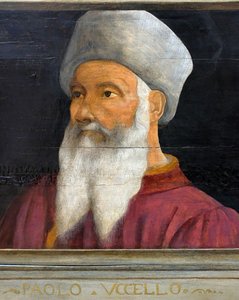
Paolo Uccello
1397 - 1475 , Italia
Informații rapide
- Artistic Movement Or Style: Renaștere florentină
- Artists Or Movements Influenced By This Artist: ['Albrecht Dürer']
- Artists Who Influenced This Artist:
- Lorenzo Ghiberti
- Donatello
- Date Of Birth: 1397
- Date Of Death: 1475
- Full Name: Paolo Uccello
- Nationality: Italian
- Notable Artworks:
- Bătălia San Romano
- Nașterea Fecioarei
- Sf. George și Dragonul
- Place Of Birth: Pratovecchio, Italia
Articole conexe

OriginalUniqueArt.com F.A.Q.: Elevating Interiors with Bespoke Wall Murals & Masterpiece Frescoes
Discover the pinnacle of bespoke interior transformation with OriginalUniqueArt.com. Our master fresco artists create exquisite, hand-painted wall murals and ceiling masterpieces tailored to your estate. Elevate your architectural space with timeless, museum-quality artistry.


