

 Previzualizare
 Trimite
 Distribuie
 Detalii despre lucrare

 Descarcă
 Produse similare
 Radiografie
 Diapozitive automate
 Statistici
Viață statică
 Ulei pe pânză
- Artă pentru perete
- Surrealism
 1947
1947- Modernism
 81.0 x 100.0 cm
 Vezi mai mult
Giclée / Imprimare artistică
Printuri giclée sau pe canvas de calitate muzeală, cu proces de producție rapid și opțiuni flexibile de finisare. ( Comandă pictură lucrată manual Comută pe Imagine Digitală)




P118B $10

P118H $10

P118W $10

P438Z $10

P508JH $12

P508YH $12

P805H $10

P805Z $10

P919BZ $10

P919G $10

P919XJ $10

P959ZH $10

P968JZ $12

W106C $8

W218G $10

W218JH $8

W218Y $10

W307PJ $10

W316G $10

W316PJ $8

W316Y $10

W398PJ $8

W4111J $10

W500HY $15

W500JH $15

W692G $12

W849H $8

W940BG $15

W953PJ $8




Alegeți dintre dimensiunile noastre prestabilite, care respectă proporțiile originale ale operei de artă.

Puteți introduce propriile dimensiuni pentru a se potrivi unui anumit cadru sau spațiu. Dacă dimensiunea selectată nu corespunde proporțiilor imaginii originale, vom decupa lucrarea de artă sau vom extinde imaginea cu margini oglindite sau cu o culoare uniformă. Un mockup digital va fi trimis pentru aprobarea dumneavoastră înainte de începerea producției.
Vă rugăm să rețineți că previzualizarea de pe ecran nu reflectă decuparea sau extinderea reală. Doar mockup-ul va arăta cu exactitate compoziția finală.
Deși dimensiunile personalizate sunt disponibile, vă recomandăm să selectați o dimensiune din lista predefinită pentru a păstra proporțiile originale.
Livrare în întreaga lume () în 2 săptămâni, în loc de cele 4/5 săptămâni standard. (12 Septembrie)

Livrare expres gratuită la nivel mondial

Pânză de in de înaltă calitate

Asigurare completă pentru transport

Garanție de rambursare a taxelor vamale

Garanția fidelității culorilor

Politica de retur de 100 de zile (doar pentru defecte)

Garanție de rambursare 100%

Ofertă pentru comenzi multiple
 Opțiunea cu sticlă este disponibilă doar pentru dimensiuni de sub 110 cm

Viață statică
Giclée / Imprimare artistică
Dimensiune reproducere
-


Preț total calculat
$ 80
O viață dedicată formei și culorii: Pablo Picasso, revoluționarul artei moderne
Pablo Ruiz Picasso, un nume care rezonează cu însăși esența inovației artistice, s-a născut pe 25 octombrie 1881 în Málaga, Spania. Destinul său părea de la bun început pecetluit de o vocație creativă extraordinară – legenda spune că primele sale cuvinte au fost “piz, piz”, o timidă încercare de a rosti “creion”. Această predispoziție timpurie a fost cultivată de tatăl său, José Ruiz y Blasco, pictor și profesor deA Surrealist Still Life: Picasso’s Echoes of Everyday Life
Pablo Picasso's "Still Life," painted in 1947, isn’t merely a depiction of objects arranged on a table; it’s an invitation into the artist’s uniquely fractured and intensely personal vision. This work, rendered in oil on canvas measuring 81 x 100 cm, stands as a potent example of Picasso's exploration of Surrealism during a period when he was pushing the boundaries of artistic representation with remarkable boldness. The painting immediately captivates with its unsettling juxtaposition – a commonplace scene elevated to an almost dreamlike state through deliberate distortion and enigmatic additions. A worn chair, a simple dining table, a vase holding what appear to be two eggs, and a subtly integrated human head in the background create a foundation of familiar imagery. Yet, it’s the introduction of three orbs, scattered throughout the composition, that truly anchors the piece within Picasso's distinctive surrealist universe. These aren’t simply decorative elements; they seem to possess an internal luminescence, hinting at hidden meanings and inviting speculation about their symbolic significance – perhaps representing the subconscious, the fleeting nature of memory, or even a commentary on the fragility of existence itself.Cubism and the Deconstruction of Reality
Picasso’s “Still Life” is firmly rooted in his pioneering work within Cubism, a movement he co-founded with Georges Braque. However, this piece transcends a straightforward application of Cubist principles; it's a synthesis of the style with the evocative qualities of Surrealism. Cubism, at its core, sought to dismantle traditional perspective and represent objects from multiple viewpoints simultaneously, fracturing them into geometric forms and reassembling them on the canvas. Picasso achieves this brilliantly here, flattening space and presenting familiar objects in an abstracted manner. The chair’s legs are elongated and skewed, the table appears slightly tilted, and the vase is rendered with fragmented planes. This deliberate distortion isn't simply a stylistic choice; it reflects Picasso’s belief that reality itself is subjective and can be perceived differently by each individual. The painting becomes a visual meditation on how we construct our understanding of the world around us – a process inherently shaped by our own perspectives and experiences.Symbolism and the Human Element
Beyond the purely formal aspects of Cubism and Surrealism, “Still Life” is rich in symbolic potential. The inclusion of the human head, partially obscured in the background, immediately draws attention to the presence of humanity within this seemingly inanimate scene. It’s a subtle yet powerful reminder that even objects – particularly those associated with domestic life – are imbued with meaning through their connection to people and their stories. The eggs themselves could represent fertility, new beginnings, or perhaps simply the ephemeral nature of life itself. The orbs, as previously mentioned, remain open to interpretation but contribute significantly to the painting’s overall sense of mystery and intrigue. Picasso masterfully uses these elements to create a work that is both intellectually stimulating and emotionally resonant, inviting viewers to engage with its layers of meaning on a deeply personal level.A Legacy of Innovation: Reproduction and Appreciation
“Still Life” by Pablo Picasso stands as a testament to the artist’s revolutionary approach to visual representation and his profound impact on 20th-century art. His ability to transform ordinary subjects into extraordinary compositions, coupled with his fearless experimentation with style and technique, cemented his place as one of the most influential artists of all time. For those seeking to experience this masterpiece firsthand, OriginalUniqueArt.com offers meticulously crafted, hand-painted oil painting reproductions that faithfully capture the essence of Picasso’s vision. These high-quality reproductions allow art enthusiasts to own a tangible piece of history and appreciate the enduring beauty and intellectual depth of “Still Life.” You can explore this exceptional artwork further at Pablo Picasso: Still life (81 x 100 cm) on OriginalUniqueArt.com, where you’ll find detailed information and a stunning visual representation of this iconic work. Furthermore, the North Carolina Museum of Art (NCMA) also houses a significant collection of Picasso's works, offering further opportunities for in-person appreciation.Biografie artist
O viață dedicată formei și culorii: Pablo Picasso, revoluționarul artei moderne
Pablo Ruiz Picasso, un nume care rezonează cu însăși esența inovației artistice, s-a născut pe 25 octombrie 1881 în Málaga, Spania. Destinul său părea de la bun început pecetluit de o vocație creativă extraordinară – legenda spune că primele sale cuvinte au fost “piz, piz”, o timidă încercare de a rosti “creion”. Această predispoziție timpurie a fost cultivată de tatăl său, José Ruiz y Blasco, pictor și profesor de artă, care i-a oferit tânărului Pablo primele lecții fundamentale. Însă elevul l-a depășit rapid pe mentor, demonstrând o aptitudine remarcabilă pentru reprezentarea naturalistă, un indiciu al talentului prodigios ce se ascundea în interiorul său. Mutările ulterioare ale familiei – mai întâi la A Coruña, apoi la Barcelona – au fost marcate de tragedii personale, în special pierderea surorii sale, evenimente care vor imprima subtil lucrărilor sale viitoare teme de melancolie și mortalitate. Chiar și studiile formale la Școala de Arte Frumoase din Barcelona și scurta ședere la Academia Regală de San Fernando din Madrid nu au putut stăvili dorința lui Picasso de a se elibera de constrângerile academice rigide, preferând să se adâncească în operele maeștrilor precum Velázquez și Goya, conturându-și propria cale spre inovație artistică.
De la nuanțe albastre la tonuri roz: O călătorie emoțională prin primele perioade
Începutul secolului al XX-lea a fost martorul apariției a două perioade distincte în opera lui Picasso: Perioada Albastră (aproximativ 1901-1904) și Perioada Roz (1904-1906). Perioada Albastră, născută din greutăți personale și o sensibilitate acută față de suferința socială, se caracterizează prin picturi învăluite în nuanțe sumbre de albastru și verde-albăstrui. Aceste lucrări sunt populate de figuri marginalizate – cerșetori, orbi, prostituate – redate cu o empatie tulburătoare, evocând teme de izolare și disperare. La Vie (1903) și The Old Guitarist (1903-1904) sunt exemple elocvente ale acestei faze încărcate emoțional. O schimbare în viața personală a lui Picasso, combinată cu mutarea la Paris, a anunțat sosirea Perioadei Roz. Paleta s-a încălzit considerabil, îmbrățișând tonuri de roz, portocaliu și roșu, reflectând o perspectivă mai optimistă. Această perioadă a fost marcată de fascinația pentru artiștii de circ – harlechini, acrobați, trupe familiale – figuri care întruchipau fragilitatea și reziliența. Family of Saltimbanques (1905) surprinde perfect această tranziție, prefigurând explorările stilistice ce urmau să vină.
Spargerea perspectivei: Cubismul și depășirea limitelor
Anul 1907 a reprezentat un moment crucial în istoria artei odată cu crearea operei Les Demoiselles d'Avignon. Influențată de sculptura iberică și măștile africane, această pictură revoluționară a sfărâmat noțiunile tradiționale despre perspectivă și reprezentare. A fost o ruptură radicală, un refuz deliberat al convențiilor seculare care a deschis calea către Cubism. Lucrând în strânsă colaborare cu Georges Braque, Picasso a fondat acest mișcare revoluționară, modificând fundamental modul în care artiștii percepeau și reprezentau realitatea. Cubismul analitic (1909-1912) implica fragmentarea obiectelor în forme geometrice, redate în culori estompate, ca o disecție a formei însăși. Aceasta a evoluat către Cubismul sintetic (1912-1919), care incorpora elemente de colaj – decupaje din ziare, bucăți de țesături – adăugând textură și noi straturi de complexitate vizuală. Picasso nu se mulțumea să reprezinte lumea; el căuta să o deconstruiască și să o reconstruiască după propriile reguli.
Un experimentator neobosit: Neoclasicismul, Surrealismul și impactul războiului
Anii 1920 au fost martorii explorării scurte a stilurilor neoclasice de către Picasso, creând figuri monumentale care ecouau formele clasice, păstrând totuși o sensibilitate modernă distinctivă. În același timp, s-a implicat în mișcarea suprarealistă emergentă, fără însă a se alinia pe deplin principiilor sale. Opera sa din această perioadă combina influențe stilistice anterioare cu imagini suprareale și perspective distorsionate, demonstrând experimentarea sa neîncetată. Ororile Războiului Civil Spaniol l-au afectat profund pe Picasso, culminând cu crearea operei Guernica (1937), un răspuns visceral și emoțional devastator la bombardarea orașului Guernica. Această lucrare monumentală a devenit un simbol durabil al atrocităților războiului, consolidând rolul lui Picasso nu doar ca artist, ci și ca o voce puternică pentru pace și justiție socială. De-a lungul anilor 1950 și 60, el a continuat să depășească limitele, explorând ceramica, sculptura și gravura cu o curiozitate neclintită și o abilitate remarcabilă. Căsătoria sa cu Jacqueline Roque în 1961 a adus o nouă dimensiune vieții sale personale și expresiei artistice.
Un impact imens
Pablo Picasso a murit pe 8 aprilie 1973, la Mougins, Franța, lăsând în urmă o operă uluitoare – estimată la peste 50.000 de piese – care continuă să captiveze și să inspire. Dezvoltarea sa artistică a fost modelată de o gamă diversă de influențe, de la maeștri spanioli precum Velázquez și Goya până la sculptura iberică, arta africană și paletele vibrante ale lui Henri Matisse. Impactul său asupra artei din secolul al XX-lea este imensurabil. A cofondat Cubismul, a fost pionier în colaj și sculptură construită și a contestat constant convențiile artistice. Experimentarea neîncetată a lui Picasso a redefinit arta modernă, lăsând o amprentă de neșters asupra generațiilor de artiști și consolidându-și poziția ca una dintre cele mai importante și influente figuri din istorie. Moștenirea sa se extinde dincolo de pânză, resonând în nenumărate aspecte ale culturii contemporane și amintindu-ne de puterea transformatoare a viziunii artistice.

Pablo Picasso
1881 - 1973 , Spania
Detalii rapide
- Artistic Movement Or Style:
- Cubism
- Surrealism
- Artists Or Movements Influenced By This Artist:
- Cubism
- Arta modernă
- Artists Who Influenced This Artist:
- Velázquez
- Goya
- Matisse
- Date Of Birth: 25 octombrie 1881
- Date Of Death: 8 aprilie 1973
- Full Name: Pablo Diego José Ruiz Picasso
- Nationality: Spaniol
- Notable Artworks:
- Les Demoiselles d'Avignon
- Guernica
- The Old Guitarist
- La Vie
- Family of Saltimbanques
- Place Of Birth (City And Country): Málaga, Spania
Articole similare
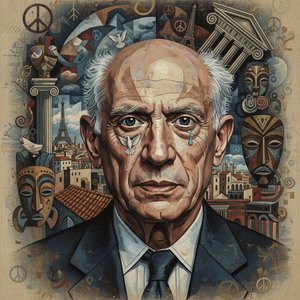
Pablo Picasso: A Revolutionary Vision – Cubism, Symbolism & Enduring Legacy
Explore the revolutionary art of Pablo Picasso with OriginalUniqueArt.com. Discover Cubism's origins, symbolism in his masterpieces & investment insights for collectors. Expert appraisal & custom reproductions available.

Georges Braque: Cele Mai Iconice 25 De Opere – Artă Modernă pentru Decorul Tău
Descoperă cele mai importante 25 de opere ale lui Georges Braque, pionier al cubismului! Explorează istoria, tehnicile și semnificația fiecărei picturi. Reproduceri artă de calitate muzeală pentru decorul tău pe OriginalUniqueArt.com.
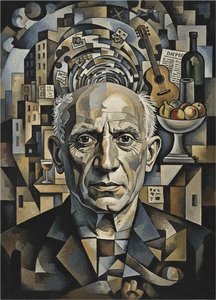
Mastering Cubism: An Essential Guide to the Revolutionary Artworks of Pablo Picasso
Explore the profound evolution of Cubism through an expert analysis of Pablo Picasso's revolutionary works. From Analytical to Synthetic Cubism, discover the techniques that redefined modern art and learn how to curate these iconic masterpieces for your private collection.
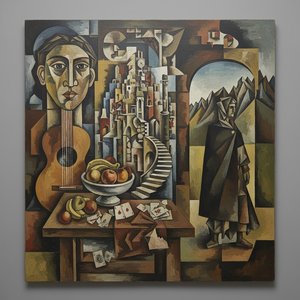
Cubismul Expresionist: 10 Capodopere Definitorii pentru Decoruri de Artă Rafinate
Descoperă cele mai importante 10 capodopere ale cubismului expresionist! Explorează istoria artei moderne, stilul unic al lui Picasso, Braque și Legér. Reproduceri de tablouri de calitate muzeală pentru un decor interior sofisticat. Descoperă toate operele pe OriginalUniqueArt.com
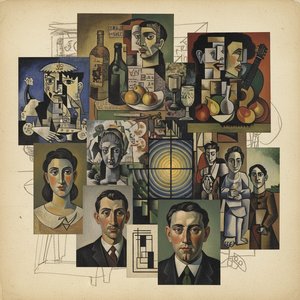
Cubismul Revoluționar: Top 10 Capodopere Esențiale pentru Decorul Tău
Descoperă top 10 capodopere cubiste de la Picasso, Braque și alții! Explorează istoria artei moderne, tehnicile inovatoare și culorile vibrante ale stilului cubist. Reproduceri tablouri de calitate muzeală pe OriginalUniqueArt.com.


