Meniu

() ·

A painting made for you, by hand

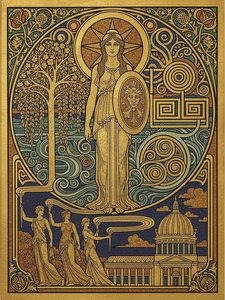
Casa Medalion

Reproducere pictată manual în ulei

Pictură în ulei pe pânză, pictată manual de artiștii noștri la dimensiunea și ramele dorite de dumneavoastră, pe comandă. ( Comută pe versiunea Print Comută pe Imagine Digitală)

Descriere obiect de colecție

Admira Casa Medalion de Otto Koloman Wagner – o capodopera Art Nouveau impresionantă! Bucură-te de fațadă Secessionistă aurită și de simbolismul său unic. O investiție extraordinară pentru iubitorii de artă!

Biografie artist

Otto Wagner (1841-1918) a fost un arhitect revoluționar din Viena, esențial pentru mișcarea Secesiunii și Art Nouveau. Cunoscut pentru stilul său unic, integrând funcționalitatea cu decorațiuni elegante, a influențat profund arhitectura modernă europeană.

from ·

Chapter 1

How large should it be?

Slide to change the size; the picture on the left shows the frame at its real width. The proportions of the original are kept.

Standard
personalizat
CM
INCH

Alegeți dintre dimensiunile noastre prestabilite, care respectă proporțiile originale ale operei de artă.

lățime
înălțime

Introduceți lățimea și înălțimea necesare pentru a se potrivi ramei sau peretelui dumneavoastră. Această lucrare este pictată manual, așa că, pentru o dimensiune cu o formă diferită, artistul poate picta puțin mai mult în jurul imaginii sau poate tăia puțin din margini — dumneavoastră decideți. Vă vom trimite o simulare digitală pentru aprobare înainte de a începe pictarea. Imaginea afișată pe această pagină nu reprezintă rezultatul real — doar simularea este reprezentativă.

Chapter 2

How should it arrive?

Choose the edges of the stretched canvas

Choose your frame

Corner sample of the WhiteWrap canvas edge finish, stretched on lemn masiv bars
White lei1
Corner sample of the BlurSideWrap canvas edge finish, stretched on lemn masiv bars
Blurside lei1
Corner sample of the ExtendedWrap canvas edge finish, stretched on lemn masiv bars
Extended lei1
Corner sample of the P118B picture frame: polistiren turnat, 5 cm wide and 3 cm thick
P118B lei10
Corner sample of the P118H picture frame: polistiren turnat, 5 cm wide and 3 cm thick
P118H lei10
Corner sample of the P118W picture frame: polistiren turnat, 5 cm wide and 3 cm thick
P118W lei10
Corner sample of the P438Z picture frame: polistiren turnat, 5.5 cm wide and 3.5 cm thick
P438Z lei10
Corner sample of the P508JH picture frame: polistiren turnat, 7 cm wide and 3.5 cm thick
P508JH lei12
Corner sample of the P508YH picture frame: polistiren turnat, 7 cm wide and 3.5 cm thick
P508YH lei12
Corner sample of the P805H picture frame: polistiren turnat, 5 cm wide and 3.5 cm thick
P805H lei10
Corner sample of the P805Z picture frame: polistiren turnat, 5 cm wide and 3.5 cm thick
P805Z lei10
Corner sample of the P919BZ picture frame: polistiren turnat, 7 cm wide and 3.5 cm thick
P919BZ lei10
Corner sample of the P919G picture frame: polistiren turnat, 7 cm wide and 3.5 cm thick
P919G lei10
Corner sample of the P919XJ picture frame: polistiren turnat, 7 cm wide and 3.5 cm thick
P919XJ lei10
Corner sample of the P959ZH picture frame: polistiren turnat, 5 cm wide and 3 cm thick
P959ZH lei10
Corner sample of the P968JZ picture frame: polistiren turnat, 6 cm wide and 4 cm thick
P968JZ lei12
Corner sample of the W106C picture frame: lemn masiv, 5 cm wide and 3 cm thick
W106C lei8
Corner sample of the W218G picture frame: lemn masiv, 5 cm wide and 3 cm thick
W218G lei10
Corner sample of the W218JH picture frame: lemn masiv, 5 cm wide and 3 cm thick
W218JH lei8
Corner sample of the W218Y picture frame: lemn masiv, 5 cm wide and 3 cm thick
W218Y lei10
Corner sample of the W307PJ picture frame: lemn masiv, 6 cm wide and 3 cm thick
W307PJ lei10
Corner sample of the W316G picture frame: lemn masiv, 6 cm wide and 3 cm thick
W316G lei10
Corner sample of the W316PJ picture frame: lemn masiv, 6 cm wide and 3 cm thick
W316PJ lei8
Corner sample of the W316Y picture frame: lemn masiv, 6 cm wide and 3 cm thick
W316Y lei10
Corner sample of the W398PJ picture frame: lemn masiv, 5 cm wide and 3 cm thick
W398PJ lei8
Corner sample of the W4111J picture frame: lemn masiv, 6.5 cm wide and 3.5 cm thick
W4111J lei10
Corner sample of the W500HY picture frame: lemn masiv, 7 cm wide and 5 cm thick
W500HY lei15
Corner sample of the W500JH picture frame: lemn masiv, 7 cm wide and 5 cm thick
W500JH lei15
Corner sample of the W692G picture frame: lemn masiv, 8 cm wide and 4 cm thick
W692G lei12
Corner sample of the W849H picture frame: lemn masiv, 5 cm wide and 3 cm thick
W849H lei8
Corner sample of the W940BG picture frame: lemn masiv, 7.5 cm wide and 4.5 cm thick
W940BG lei15
Corner sample of the W953PJ picture frame: lemn masiv, 6 cm wide and 3.5 cm thick
W953PJ lei8
Corner sample of the H24-GOLD picture frame: lemn sculptat cu gesso, 10 cm wide and 6 cm thick
H24-GOLD lei30
Corner sample of the H24-SILVER picture frame: lemn sculptat cu gesso, 10 cm wide and 6 cm thick
H24-SILVER lei30
Corner sample of the H36-GOLD picture frame: lemn sculptat cu gesso, 15 cm wide and 6.5 cm thick
H36-GOLD lei45
Corner sample of the H36-SILVER picture frame: lemn sculptat cu gesso, 15 cm wide and 6.5 cm thick
H36-SILVER lei45

Moulding: . Overall size with the frame: .

Chapter 3

Who paints it, and should anything change?

Examples of what can be changed: Replace face with customer photo; Add pet (e.g., replace cat with dog); Include hidden message in background; Change background landscape or elements.
After order, OriginalUniqueArt.com team will email client for instructions and provide a mockup preview

Livrare în întreaga lume () în 3-4 săptămâni, în loc de cele 5 săptămâni standard. (30 Octombrie). Fără compromisuri în ceea ce privește calitatea.

Chapter 4

The finishing touches

A nameplate, as in a museum?

Detalii plăcuță din bronz gravat

This elegant plaque features the artist's name and the title of the artwork, finely engraved for a timeless presentation.

It is made from bronze with a refined, elegant finish. The text is precisely laser-engraved for a sharp and permanent result. Measuring 9x2 cm, the plaque is compact yet easy to read. It's built to be durable and scratch-resistant, offering a professional, museum-quality look. Mounting is simple thanks to the included adhesive backing.

Detalii plăcuță din acril transparent

The plaque includes essential engraved details such as the artist's name, the title of the artwork, the date it was created, the type of media used-like oil on canvas or watercolor-a brief description of the piece, and a QR code that links to the complete artwork information.

It is crafted from clear acrylic, offering a sleek, modern appearance. The text is UV-engraved in black to ensure strong visual contrast. With a size of 10x15 cm, it ensures optimal readability. It comes equipped with two metal hooks for secure wall mounting. The plaque is designed to be weather-resistant, making it suitable for various environments, and it includes interactive features that work seamlessly with smartphone scanning.

Detalii placă din acril negru

This elegant plaque includes engraved information such as the artist's name, the title of the artwork, the date it was created, the type of media used (like oil on canvas or watercolor), a short description of the artwork, and a QR code for quick access to more information.

The plaque itself is made from refined black acrylic with a premium finish. The text is laser-engraved in white for high contrast and readability. Its size is 10x15 cm, designed to be easy to read. It comes with two metal hooks for professional mounting. The design is sleek and fits any interior style. It is also weather-resistant and durable, with built-in digital integration for mobile compatibility.

A protective varnish?

When do you need it?

Chapter 5

Your painting, as you ordered it

Casa Medalion

Tehnică de reproducere

Dimensiune reproducere

-

Selecție de artiști de elită

Mai multe detalii, rafinament și timp suplimentar de execuție

-

Ramă pentru reproducere artistică

-

-

Pentru opere de artă sau reproduceri care depășesc 105 cm (aproximativ 41 de inch) pe oricare dintre laturi, cadrul va fi livrat demontat, sub formă de kit. Această metodă asigură o livrare sigură și previne deteriorarea în timpul transportului.

Este necesară asamblarea profesională – acest produs nu este de tip DIY (de făcut singur).
Kitul trebuie asamblat, iar pânza întinsă, de către un legător de cadre experimentat, utilizând adeziv pentru lemn (neinclus în colet), o cheie pentru întinderea pânzei și cleme pentru a menține barele la unghi drept în timp ce adezivul se usucă. Asamblarea incorectă sau tensiunea neuniformă a pânzei pot deteriora permanent opera de artă și nu sunt acoperite de garanția noastră.

  • Toate barele din lemn masiv sunt incluse, tăiate cu precizie la dimensiunea necesară.

  • Asamblat cu șuruburile incluse, plus adeziv pentru lemn pentru îmbinările de colț, care nu este furnizat și trebuie achiziționat de către tâmplarul dumneavoastră.

  • Sunt necesare unelte profesionale care nu sunt incluse: o șipte de întindere a pânzei (tensionator) și cleme pentru a menține barele la unghi drept în timp ce adezivul se usucă.

Important:
Îmbinările de colț necesită adeziv pentru lemn, barele trebuie fixate cu clești de strângere până când adezivul este complet uscat, iar întinderea pânzei pe cadrul asamblat necesită un clește pentru întins pânza. Niciunul dintre aceste elemente nu este inclus în kit. Vă rugăm să consultați un încadrator profesionist cu experiență înainte de a comanda această dimensiune.

Etichetă de prezentare

-

-

Lac de protecție

Lac lucios (intensifică nuanțele și oferă protecție împotriva luminii și a umidității)

-

Personalizează opera mea de artă

Exemple de elemente ce pot fi personalizate: Înlocuirea feței cu fotografia clientului; Adăugarea unui animal de companie (de exemplu, înlocuirea unei pisici cu un câine); Includerea unui mesaj ascuns în fundal; Modificarea peisajului sau a elementelor din fundal.

-

Livrare rapidă

Livrare la nivel mondial () în 3-4 săptămâni, în loc de cele 5 săptămâni standard. (30 Octombrie). Fără compromisuri când vine vorba de calitate.

-

Livrare rapidă

Livrare la nivel mondial () în 5 săptămâni. (6 Noiembrie).

Inclus

Preț total calculat

lei 1395

Preț total lei 1395

Opțiunea cu sticlă este disponibilă doar pentru dimensiuni de sub 110 cm

Included with every order

  • Livrare expres gratuită la nivel mondial
  • Pânză de in de înaltă calitate
  • Asigurare completă pentru transport
  • Garanție de rambursare a taxelor vamale
  • Garanția fidelității culorilor
  • Politica de retur în 100 de zile (doar pentru defecte de fabricație)
  • Garanție de rambursare 100%
  • Ofertă pentru comenzi multiple

Medallion House in Vienna, Austria – A Symphony of Gold and Sorrow

Vienna’s Naschmarkt side is graced by an architectural marvel—the Medallion House, designed by Otto Koloman Wagner and completed in 1899. More than just bricks and mortar, it embodies the spirit of the Vienna Secession, a movement that dared to reject academic tradition and embrace bold experimentation. This building isn’t merely beautiful; it whispers tales of artistic ambition and societal change—a captivating subject for any discerning collector or interior designer seeking inspiration.
  • Architectural Style: The Medallion House is undeniably rooted in the Vienna Secession style, a reaction against the ornate grandeur of the Ringstrasse era. Wagner sought to liberate architecture from constraints, prioritizing functionality alongside expressive ornamentation.
  • Material Palette: Dominating the façade is majolica tile—glazed earthenware adorned with vibrant floral motifs—a technique championed by Alois Ludwig and executed by Wienerberger. This choice reflects a fascination with natural beauty and a desire for tactile richness.
  • Decorative Elements: Beyond the tiles, Wagner incorporated intricate wrought iron detailing on balconies and elevator cages, furthering the Secession’s commitment to innovative materials and craftsmanship.

The Medallion House – Symbolism of Floral Flourish and Mournful Angels

The name itself—Medallion House—hints at its most striking feature: gilded stucco medallions crafted by Koloman Moser, Wagner’s protégé. These serene female figures, flanked by palm leaves and floral swirls, represent a deliberate invocation of classical ideals blended with the exuberance of Art Nouveau. They embody a yearning for harmony amidst the dynamism of modern life – a theme prevalent in Secessionist art.
  • Floral Motif: Moser’s medallions symbolize rebirth and renewal—a visual counterpoint to the anxieties surrounding industrialization and societal upheaval.
  • The Criers (Angels): Above the roof, Othmar Schimkowitz sculpted “The Criers,” figures conveying profound sorrow and contemplation. These angels serve as a poignant reminder of mortality and the fragility of human existence—a powerful emotional statement within the context of Vienna’s late 19th century.

A Legacy of Innovation – From Kohn Family Residence to €100 Gold Coin

Originally conceived as a residence for the Kohn family, the Medallion House experienced turbulent times during World War II when it was seized and subsequently reclaimed after the war’s conclusion. Today, it stands as an emblem of Viennese resilience—a testament to Wagner's vision of architecture as both aesthetically stimulating and socially relevant.
  • Historical Context: Constructed amidst rapid urbanization and artistic ferment, the Medallion House exemplifies Vienna’s embrace of modernity while retaining a connection to its cultural heritage.
  • Contemporary Significance: The building's enduring appeal is underscored by its transformation into a bank—a symbol of stability and prosperity juxtaposed against the melancholic beauty of Wagner’s sculptural masterpiece.
  • Collector’s Appeal: Its fame extends beyond architectural circles, culminating in the issuance of a €100 gold coin commemorating its artistic merit – an investment that honors both history and aesthetic excellence.

Exploring Vienna's Artistic Soul

A visit to Linke Wienzeile 40 offers more than just architectural appreciation; it’s an immersion into the heart of Vienna’s Secessionist spirit—a celebration of bold creativity and a contemplation of profound human emotion. Don’t miss the opportunity to discover this extraordinary landmark alongside its sister building, Majolica House, and explore the vibrant Naschmarkt district – where history meets contemporary culture in unforgettable ways.

Întrebări și răspunsuri

Din ce țară provine lucrarea de Vienna Secession „Casa Medalion”?

"Casa Medalion" face legătura între mișcarea Vienna Secession și Austria, prin locul de naștere al creatorului său.

Unde pot fi achiziționate copii pictate manual ale operei "Casa Medalion" de Otto Koloman Wagner?

„Casa Medalion” este disponibil ca o reproducere pictată manual în ulei pe pânză de in. Comanda poate fi plasată pe pagina de Reproducere pictată în ulei, cu posibilitatea de a alege dimensiunea dorită.

Pot vedea o previzualizare a "Casa Medalion" de Otto Koloman Wagner înainte de a comanda?

Pentru o previzualizare a unei reproduceri a operei "Casa Medalion" de Otto Koloman Wagner, accesați pagina de Previzualizare în spațiu a lucrării.

More about this painting

Previzualizare Previzualizare AR Comută pe versiunea Print Comută pe Imagine Digitală Trimite prin felicitare
Detalii despre lucrare Ghid Adaugă la favorite Descarcă imaginea Produse similare Radiografie Galerie foto Q&A Statistici

In numbers

  • 29frames to choose from
  • standard sizes, in its own proportions
  • 5weeks to paint and deliver it
Otto Koloman Wagner

Otto Koloman Wagner

1841 - 1918, Austria

Quick facts about Otto Koloman Wagner

  • Artistic Movement Or Style: Art Nouveau, Vienna Secession
  • Artists Who Influenced This Artist:
    • August Sicardsburg
    • Eduard von der Nüll
  • Date Of Birth: 1841
  • Date Of Death: 1918
  • Full Name: Otto Koloman Wagner
  • Nationality: Austrian
  • Notable Artworks:
    • Austrian Postal Savings Bank
    • Karlsplatz Pavillion
    • Majolikahaus
  • Place Of Birth: Vienna, Austria

Biografie artist

A Pioneer of Modernity: The Life and Vision of Otto Koloman Wagner

Otto Koloman Wagner, born in Vienna in 1841, stands as a pivotal figure bridging the gap between 19th-century historicism and the dawn of modern architecture. His journey wasn’t one of immediate revolution, but rather a gradual evolution—a thoughtful dismantling of established norms coupled with an unwavering commitment to functionality and honest expression. Initially steeped in classical training at the Vienna Polytechnic Institute and later refined at the Royal Academy of Architecture in Berlin, Wagner's early work reflected the prevailing academic styles. However, even within these traditional frameworks, seeds of innovation were sown. His studies under August Sicardsburg and Eduard von der Nüll instilled a crucial principle: architecture must possess a “rational expression” suited to its modern purpose—a concept that would become central to his life’s work. These formative years weren't merely about mastering technique; they were about questioning the very foundations of architectural thought, setting the stage for Wagner’s eventual break from convention. He began building a reputation through speculative ventures, designing apartment houses that subtly blended classical elements with emerging modernist ideas, financing these projects himself and demonstrating an entrepreneurial spirit alongside his artistic vision. Wagner's early career was marked by a fascination with classical forms—particularly those of Palladio and Michelangelo—which profoundly influenced his aesthetic sensibilities. He honed his skills at the Royal Academy in Berlin, absorbing the lessons of August Sicardsburg and Eduard von der Nüll, who championed the idea that architecture should serve as a vehicle for conveying “rational expression.” This conviction would become the bedrock of Wagner’s artistic philosophy and guide his subsequent endeavors. His initial architectural projects—primarily apartment buildings—were executed in a distinctive “free Renaissance” style, demonstrating his ability to reinterpret classical motifs within a contemporary context. Notably, he financed these ambitious undertakings himself, showcasing an uncommon blend of artistic ambition and financial acumen. Early on, Wagner’s reputation grew as a builder of tenement houses in Vienna, establishing him as a leader in the field—a testament to his talent and dedication. Among his notable achievements were the Orthodox Synagogue in Budapest (1871–76), where he skillfully blended Moorish influences with Byzantine ornamentation, and the Österreichische Länderbank in Vienna (1882–84), which embodied Wagner’s refined Renaissance style.

The Vienna Secession and a Blossoming Style

A transformative moment arrived in 1893 when Wagner entered the Vienna city-planning competition—a contest that would propel him to prominence within Viennese artistic circles. Though his proposals weren't ultimately victorious in securing the overall plan, they garnered considerable acclaim for their innovative vision of urban space and transportation, particularly his advocacy for an extensive urban rail network. This recognition led to his appointment as chief architect of the municipal railway system in 1894—a position that afforded him unparalleled access to resources and allowed him to realize his architectural ambitions on a grand scale. Simultaneously, Wagner became deeply involved with the burgeoning Vienna Secession movement—a collective of artists, architects, and designers who sought liberation from the constraints of academic tradition. Founded in 1897, the Secession championed new artistic approaches and challenged the conservative dominance of Viennese cultural life. Wagner’s stylistic evolution during this period mirrored the broader trends shaping European art at the time: a rejection of historical imitation in favor of expressive abstraction and a preoccupation with geometric forms—a decisive break from his earlier classical leanings. The Secession's influence on Wagner was palpable, fostering an environment of experimentation and innovation that culminated in the creation of masterpieces like Majolikahaus (1898–99)—a stunning residential building adorned with vibrant majolica tiles—and Karlsplatz Pavillion (1897–1904), which stands as a symbol of Viennese modernist ambition. Wagner’s collaborators included Josef Maria Olbrich and Josef Hoffmann, two Secessionist luminaries who shared his conviction that architecture should embrace new materials and techniques—a radical departure from the stylistic conventions of previous eras. His architectural style during this period became characterized by floral motifs and Art Nouveau ornamentation—a deliberate homage to the aesthetic sensibilities of Belle Époque Vienna. Wagner’s unwavering dedication to functionality underpinned every project he undertook, reflecting his belief that architecture should serve as a tool for enhancing human experience—a principle that would define his artistic legacy.

Landmark Creations and Architectural Innovations

Wagner's architectural output spanned from 1894 to 1918, producing buildings that exemplify the zenith of Viennese modernist design. The Casa Poștală din Viena (Vienna Postal Savings Bank), completed in 1902, showcased his mastery of structural engineering and employed innovative materials—steel and glass—to create a monumental edifice that defied conventional architectural norms. His Kirche am Steinhof (St. Leopold’s Church), erected between 1897 and 1905, represents Wagner's most ambitious undertaking—a sprawling complex designed to serve as both a place of worship and a symbol of Viennese civic pride. The church’s soaring interior space and intricate sculptural ornamentation exemplify Wagner’s ability to synthesize artistic vision with structural ingenuity. Furthermore, Wagner’s commitment to exploring new architectural concepts extended beyond monumental buildings; he tackled smaller projects with equal fervor—demonstrating his versatility as an architect and his unwavering pursuit of innovation. His exploration of steel and glass construction was particularly noteworthy, foreshadowing the developments that would characterize twentieth-century architecture. Wagner's final years were marked by critical acclaim but limited commissions—a poignant reminder of the challenges faced by artists striving to realize their creative ambitions amidst shifting social and economic conditions. Nevertheless, his enduring legacy rests upon his pioneering role in shaping Viennese architectural history—a visionary who irrevocably altered the course of artistic expression. Otto Koloman Wagner’s influence continues to resonate within the annals of art history—a testament to his unwavering conviction that architecture should serve as a conduit for conveying “rational expression” and embracing new aesthetic horizons. He remains an icon of Viennese Modernism, whose buildings stand as enduring symbols of innovation and beauty.

Informații rapide

  • Title: Medallion House în Viena
  • Influences: Ecleziazm
  • Artist: Otto Koloman Wagner
  • Notable elements or techniques: Medallioane aurii, sculptură în fier forjat
  • Subject or theme: Arhitectură rezidențială

Test de cunoștințe despre artă

Fiecare întrebare are un singur răspuns corect.

Întrebare 1:
¿Quién diseñó la Casa Medallión?
Întrebare 2:
¿Qué estilo arquitectónico caracteriza a la Casa Medallión?
Întrebare 3:
¿Cuál es el elemento decorativo más destacado de la fachada de la Casa Majolica?
Întrebare 4:
¿Quién creó las esculturas llamadas "Los Gemelos" que adornan el techo de la Casa Medallión?
Întrebare 5:
¿Por qué se llama "Casa Medallión"?
Explorați opere de artă organizate pe teme, stiluri și caracteristici.