
 Previzualizare
 Trimite prin felicitare
 Distribuie
 Detalii despre lucrare
 Ghid
Ghid

 Descarcă imaginea
 Produse similare
 Radiografie
 Galerie foto
 Întrebări și răspunsuri
 Statistici
Bear hunting

- 107.0 x 57.0 cm


 Vezi mai mult
Giclée / Imprimare artistică
Printuri giclée sau pe canvas de calitate muzeală, cu proces de producție rapid și opțiuni flexibile de finisare. ( Comandă pictură realizată manual Comută pe Imagine Digitală)




P118B lei10

P118H lei10

P118W lei10

P438Z lei10

P508JH lei12

P508YH lei12

P805H lei10

P805Z lei10

P919BZ lei10

P919G lei10

P919XJ lei10

P959ZH lei10

P968JZ lei12

W106C lei8

W218G lei10

W218JH lei8

W218Y lei10

W307PJ lei10

W316G lei10

W316PJ lei8

W316Y lei10

W398PJ lei8

W4111J lei10

W500HY lei15

W500JH lei15

W692G lei12

W849H lei8

W940BG lei15

W953PJ lei8




Alegeți dintre dimensiunile noastre prestabilite, care respectă proporțiile originale ale operei de artă.

Introduceți lățimea și înălțimea necesare pentru a se potrivi ramei sau peretelui dumneavoastră. O printare poate fi doar tăiată, niciodată extinsă dincolo de dimensiunea imaginii originale, astfel încât o dimensiune cu o formă diferită va pierde o parte din imagine. Vă trimitem o simulare digitală pentru aprobare înainte de a imprima orice. Imaginea afișată pe această pagină nu prezintă tăierea reală — doar simularea arată acest lucru.
Livrare în întreaga lume () în 2 săptămâni, în loc de cele 4/5 săptămâni standard. (4 Noiembrie)

Livrare expres gratuită la nivel mondial

Pânză de in de înaltă calitate

Asigurare completă pentru transport

Garanție de rambursare a taxelor vamale

Garanția fidelității culorilor

Politica de retur în 100 de zile (doar pentru defecte de fabricație)

Garanție de rambursare 100%

Ofertă pentru comenzi multiple
 Opțiunea cu sticlă este disponibilă doar pentru dimensiuni de sub 110 cm

Bear hunting
Giclée / Imprimare artistică
Dimensiune reproducere
-


Preț total calculat
lei 385
A Savage Symphony in Oilcloth: Niko Pirosmani’s “Bear Hunting”
Niko Pirosmani, a largely forgotten titan of Georgian art, possessed an extraordinary ability to distill the essence of rural life and primal emotion onto humble oilcloth canvases. His work, often dismissed as naive or primitive during his lifetime, now stands as a testament to raw honesty and a uniquely captivating vision. “Bear Hunting,” painted in the 1890s, is arguably Pirosmani’s most dramatic and compelling piece – a visceral depiction of a hunting expedition that transcends mere representation, plunging the viewer directly into the heart of Georgian wilderness and the brutal beauty of its traditions.
The scene unfolds within a dense, almost claustrophobic forest. A group of French chasseurs, clad in meticulously rendered uniforms of dark blue and brown, pursue a colossal bison – an animal rendered with astonishing power and scale. The composition is deliberately chaotic; figures are crammed together, limbs tangle, and the bison dominates the frame, its immense form dwarfing the hunters below. Pirosmani eschews traditional perspective, favoring instead a flattened, frontal approach that intensifies the drama and immediacy of the action. Lines are bold and directional, guiding the eye relentlessly across the canvas, mirroring the hunters’ desperate pursuit.
The Primitivist Palette: Color and Texture
Pirosmani's distinctive style is immediately recognizable through his masterful use of color and texture. He employs a restricted palette dominated by deep greens, earthy browns, and muted blues – colors that evoke the dampness and shadow of the forest floor. These somber tones are punctuated by flashes of brighter hues—the crimson of blood (implied), the ochre of the bison’s hide, and the occasional splash of yellow or white to highlight key figures. Crucially, Pirosmani worked on oilcloth, a readily available and inexpensive material in Georgia, which lends his paintings a unique tactile quality. The thick, impasto brushstrokes are visible throughout the composition, creating a palpable sense of physicality – you can almost feel the roughness of the bark beneath your fingers and the weight of the hunters’ clothing.
The technique itself is deliberately rough-hewn, reflecting Pirosmani's lack of formal training. He eschewed meticulous detail in favor of capturing the *feeling* of the scene – the tension, the urgency, the raw energy of the hunt. This approach aligns perfectly with the principles of Primitivism, a movement that sought to strip away academic conventions and return to a more direct, emotionally charged form of expression.
Symbolism of the Hunt: Power, Tradition, and Mortality
“Bear Hunting” is far more than just a depiction of a hunting scene; it’s laden with symbolic meaning. The hunt itself represents power, control, and the enduring traditions of Georgian rural life. For centuries, hunting had been a vital part of the region's economy and culture, providing sustenance and reinforcing social hierarchies. However, Pirosmani doesn’t glorify this activity. Instead, he presents it with a stark realism that acknowledges its inherent violence and potential for destruction.
The massive bison, a symbol of strength and wildness, embodies the forces of nature that the hunters seek to subdue. The implied bloodshed – hinted at through subtle color choices—underscores the cost of this conquest. Furthermore, Pirosmani’s unflinching portrayal of human figures engaged in such a brutal act raises questions about humanity's relationship with the natural world and the consequences of unchecked ambition. The painting subtly evokes themes of mortality and the fleeting nature of life, mirroring the precariousness of both hunter and hunted.
A Window into Georgian Soul: Pirosmani’s Legacy
Niko Pirosmani's work offers a rare glimpse into the soul of Georgia in the late 19th century. His paintings are not merely aesthetically pleasing; they are windows into a world of hardship, resilience, and profound connection to the land. Rediscovered in the mid-20th century, Pirosmani’s art has since gained international recognition as a cornerstone of Georgian primitivism and a powerful example of outsider art. Reproductions of “Bear Hunting” – available through OriginalUniqueArt – allow us to experience this extraordinary vision firsthand, inviting us to contemplate the enduring power of raw emotion and the timeless beauty of the Georgian landscape.
Întrebări și răspunsuri
Care sunt tehnica și dimensiunile lucrării "Bear hunting" de Нико Пиросмани?
"Bear hunting" a fost realizat în Oil On Canvas și măsoară 107 x 57 cm în forma sa originală.
Ce dimensiune ar trebui să aleg pentru "Bear hunting", astfel încât să se potrivească în camera mea?
Pentru o Living Room, dimensiunea recomandată de imprimare pentru "Bear hunting" de Нико Пиросмани este Large.
Ce punct comun are "Bear hunting" cu restul creației lui Нико Пиросмани?
„Bear hunting” împarte cu celelalte opere ale lui Нико Пиросмани stilul Primitivism și temele recurente: european realism influence, georgian rural life depiction, power & nature conflict, hunter's instincts shown, pirosmani's primitive style, iconic georgian portraiture, early 20th century vision, unique artistic voice.
Biografie artist
Early Life and Career
Niko Pirosmani (Georgian: ნიკოლოზ ფიროსმანაშვილი), born Nikoloz Aslanis Dze Pirosmanashvili (May 5, 1862) in Mirzaani, Kakheti Province, Georgia, was a Georgian primitivist painter who posthumously rose to prominence. Relatively poor for most of his life, he worked a variety of ordinary jobs. His rustic, everyday scenes are celebrated today for their depiction of the Georgia of Pirosmani’s lifetime, and he has become one of the country's most beloved artistic figures. He was orphaned at a young age, left in the care of his two elder sisters. Artistic style and themes Pirosmani's artistic style is characterized by its naive and primitivist nature, often depicting everyday scenes of Georgian life. His paintings, mostly done on oilcloth, showcase his unique compositional consideration and frontal placements of figures. Pirosmani was fond of nature and rural life, rarely employing city landscapes in his work.Artistic Style and Themes
Pirosmani’s distinctive approach to painting involved applying pigment directly onto black oilcloth—a technique that prioritized expressive gesture over meticulous detail. This method allowed him to capture the essence of Georgian culture and traditions with remarkable immediacy. His compositions often featured figures positioned prominently at the center, emphasizing their importance within the narrative.Notable Works and Exhibitions
Some of Pirosmani’s most celebrated paintings include “Musha with a Wineskin,” which embodies the spirit of rural Georgia and captures a moment of simple human connection. “Georgian Wedding” portrays a traditional Georgian ceremony with vibrant colors and dynamic movement, reflecting the cultural heritage of his time. “Portrait of Zhdanevich” is considered one of Pirosmani’s finest achievements—a portrait of Mikhail Le-Dantyu, which garnered considerable admiration from Kirill Zdanevich and his brother Ilya Zdanevich. These works were exhibited in museums across Russia and Ukraine, furthering their recognition as pivotal pieces within the primitivism art movement.Legacy and Posthumous Recognition
Despite facing hardship throughout his life, Pirosmani’s legacy endured beyond his death in April 1918 due to malnutrition during the influenza pandemic. His paintings gained prominence after the First Georgian Painter's Exhibition in 1918, cementing his place as a national icon. Today, his artworks are showcased prominently at the Art Museum of Georgia and the Historical-Ethnographic Museum of Sighnaghi, attracting over 350,000 visitors annually—a testament to the enduring fascination with this extraordinary artist.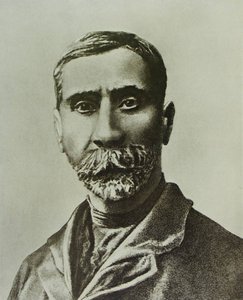
Нико Пиросмани
1862 - 1918 , Georgia
Detalii rapide
- Artistic Movement Or Style: Primitivism Art
- Artists Who Influenced This Artist: ['Vladimir Lado Gudiashvili']
- Date Of Birth: 5 mai 1862
- Date Of Death: 9 aprilie 1918
- Full Name: Nikoloz Aslanis Dze Pirosmanashvili
- Nationality: Georgian
- Notable Artworks:
- Musha cu vin
- Ceremonii religioase georgiene
- Portretul lui Zhdanevich
- Place Of Birth: Mirzaani, Georgia
Articole similare

The Enduring Legacy of Oil on Canvas: Technique, History & Aesthetic Impact
Explore the rich history & techniques of oil painting – from Renaissance masters to Impressionism. Discover pigments, layering methods, and why this timeless medium endures. Expert insights for artists & art enthusiasts.

The Enduring Power of Painting: A Historical & Contemporary Exploration of Form and Emotion
Explore the rich history & enduring techniques of oil painting with OriginalUniqueArt. Discover masterpieces, learn about art collecting, and find authentic handmade reproductions crafted by skilled artists.

Oil on Canvas: A Historical & Technical Exploration of a Timeless Artistic Medium
Explore the rich history & enduring techniques of oil painting on canvas. Discover the science behind its longevity, conservation practices, and contemporary relevance. Expert insights for art enthusiasts.
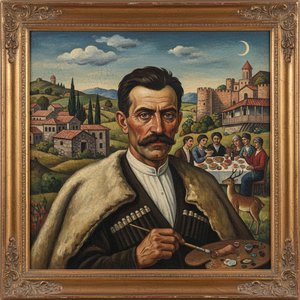
Niko Pirosmani: A Georgian Visionary – Life, Legacy, and the Poetics of Outsider Art
Discover the captivating life & art of Niko Pirosmani, Georgia’s celebrated primitivist painter. Explore his unique oilcloth paintings, lasting influence, and enduring legacy with OriginalUniqueArt.

Moștenirea Durabilă a Picturii în Ulei: Tehnică, Istorie și Practică Contemporană
Descoperă istoria fascinantă și tehnicile esențiale ale picturii în ulei. Ghid complet pentru artiști, de la materiale până la creații contemporane. Îmbunătățește-ți abilitățile artistice!
