
 Previzualizare
 Trimite prin felicitare
 Distribuie
 Detalii despre lucrare
 Ghid
Ghid

 Descarcă imaginea
 Produse similare
 Radiografie
 Galerie foto
 Întrebări și răspunsuri
 Statistici
The Geography Lesson or


 Vezi mai mult
Giclée / Imprimare artistică
Printuri giclée sau pe canvas de calitate muzeală, cu proces de producție rapid și opțiuni flexibile de finisare. ( Comandă pictură realizată manual Comută pe Imagine Digitală)




P118B lei10

P118H lei10

P118W lei10

P438Z lei10

P508JH lei12

P508YH lei12

P805H lei10

P805Z lei10

P919BZ lei10

P919G lei10

P919XJ lei10

P959ZH lei10

P968JZ lei12

W106C lei8

W218G lei10

W218JH lei8

W218Y lei10

W307PJ lei10

W316G lei10

W316PJ lei8

W316Y lei10

W398PJ lei8

W4111J lei10

W500HY lei15

W500JH lei15

W692G lei12

W849H lei8

W940BG lei15

W953PJ lei8




Alegeți dintre dimensiunile noastre prestabilite, care respectă proporțiile originale ale operei de artă.

Introduceți lățimea și înălțimea necesare pentru a se potrivi ramei sau peretelui dumneavoastră. O printare poate fi doar tăiată, niciodată extinsă dincolo de dimensiunea imaginii originale, astfel încât o dimensiune cu o formă diferită va pierde o parte din imagine. Vă trimitem o simulare digitală pentru aprobare înainte de a imprima orice. Imaginea afișată pe această pagină nu prezintă tăierea reală — doar simularea arată acest lucru.
Livrare în întreaga lume () în 2 săptămâni, în loc de cele 4/5 săptămâni standard. (6 Noiembrie)

Livrare expres gratuită la nivel mondial

Pânză de in de înaltă calitate

Asigurare completă pentru transport

Garanție de rambursare a taxelor vamale

Garanția fidelității culorilor

Politica de retur în 100 de zile (doar pentru defecte de fabricație)

Garanție de rambursare 100%

Ofertă pentru comenzi multiple
 Opțiunea cu sticlă este disponibilă doar pentru dimensiuni de sub 110 cm

The Geography Lesson or
Giclée / Imprimare artistică
Dimensiune reproducere
-


Preț total calculat
lei 387
A Window into a Classroom: Bettannier's "The Geography Lesson"
Nicolas Albert Bettannier’s “The Geography Lesson,” painted in 1887, is more than just a depiction of a classroom scene; it’s a poignant reflection of a nation grappling with loss and identity. Born in Metz during the aftermath of the Franco-Prussian War, Bettannier's life was inextricably bound to the unresolved trauma of Alsace-Lorraine’s annexation. This historical context permeates every brushstroke, lending the painting an undeniable emotional weight.
- Subject Matter: The scene unfolds within a typical French classroom – a teacher instructing his students on geography.
- Composition: Bettannier masterfully employs a frontal perspective, placing the teacher at the center of attention, holding aloft a map that serves as both the focal point and the conduit for knowledge.
- Setting: The room itself is rendered with meticulous detail, capturing the everyday atmosphere of a late 19th-century educational space.
Style and Technique – A Post-Impressionist Vision
Bettannier’s style firmly resides within the Post-Impressionist movement, inheriting its emphasis on subjective perception and expressive color while forging his own distinct path. Unlike the purely optical concerns of Impressionism, Bettannier utilizes color not merely to capture light but to convey emotion and reinforce his thematic concerns. The palette is rich and earthy – browns, ochres, and muted greens – reflecting a sense of groundedness and perhaps even melancholy. His brushwork is characterized by visible strokes, adding texture and dynamism to the scene, particularly in the rendering of the students’ clothing and the map itself.
- Brushwork: Noticeable impasto creates a tactile quality, emphasizing the physicality of the painting.
- Color Palette: Earth tones dominate, contributing to the painting's somber mood.
- Perspective: A realistic yet subtly stylized perspective draws the viewer into the classroom space.
Historical Context and Symbolism – Echoes of Alsace-Lorraine
“The Geography Lesson” is deeply rooted in the historical context of its creation. The loss of Alsace-Lorraine fueled a persistent sense of national grievance within France, and Bettannier’s work reflects this sentiment. The map itself becomes a potent symbol—a representation of territory lost, a reminder of national humiliation, and perhaps even an unspoken plea for reunification. The attentive students represent the future generation, burdened with the legacy of their nation's past. The teacher embodies authority and the transmission of knowledge – a crucial role in shaping national identity.
It’s important to note that Bettannier’s artistic output was significantly shaped by his personal experiences and the prevailing political climate of the time, making this painting a powerful historical document as well as a work of art.Emotional Impact and Artistic Value
“The Geography Lesson” transcends a simple classroom scene; it evokes a profound sense of nostalgia, loss, and national pride. Bettannier’s ability to capture the quiet dignity of the educational setting combined with his deeply felt historical context creates a work that resonates with viewers on an emotional level. This hand-painted reproduction offers a unique opportunity to own a piece of art history—a testament to a nation's struggle and a poignant reminder of the enduring power of memory.
Întrebări și răspunsuri
Ce ton emoțional transmite stilul Post-Impressionist Landscape din "The Geography Lesson or"?
În cadrul mișcării Post-Impressionist Landscape, „The Geography Lesson or” este marcată de un ton Nostalgic.
Ce culoare domină compoziția lucrării "The Geography Lesson or" de Nicolas Albert Bettannier?
Culoarea care iese cel mai mult în evidență în "The Geography Lesson or" este Phthalo Green (#2e2b26). Culoarea dominantă este utilă atunci când asortați o operă de artă cu un interior.
Ce reprezintă "The Geography Lesson or"?
Temele prezente în "The Geography Lesson or" de Nicolas Albert Bettannier includ classroom scene, geography lesson, teacher student, map illustration, french education, alsace lorraine, 19th century art. Împreună, acestea definesc subiectul întregii opere de artă.
Biografie artist
A Painter Haunted by Alsace-Lorraine
Nicolas Albert Bettannier, born on August 12, 1851, in the historic city of Metz, lived a life profoundly shaped by the shifting borders and political tremors of his era. His early years were spent in the Moselle department, a region that would soon become the epicenter of a great national tragedy for France. Following the devastating Franco-Prussian War of 1870-1871, the annexation of Alsace-Lorraine by Germany forced Bettannier into a pivotal moment of identity. Choosing firmly to uphold his French heritage, he relocated to Paris in 1872, carrying with him a deep-seated sense of loss and a fervent, revanchist spirit that would become the heartbeat of his artistic career.
In the vibrant, intellectual atmosphere of Paris, Bettannier sought formal mastery at the prestigious Académie des Beaux-Arts. Under the tutelage of influential masters such as Henri Lehmann and Isidore Pils, he refined a technique that balanced classical rigor with an emerging Post-Impressionist sensitivity to color and form. His training provided him with the tools to translate complex political emotions into visual narratives, allowing him to move beyond mere portraiture into the realm of profound social and national commentary.
The Canvas as a Manifesto
Bettannier’s work is most celebrated for its role as a visual manifesto of French nationalism. He did not merely paint scenes; he captured the psychological landscape of a nation mourning its lost territories. His canvases often served as poignant reminders of the tache noire—the black stain—left upon the French map by German expansion. This preoccupation with the loss of Alsace-Lorraine transformed his art into a form of cultural resistance, where every brushstroke echoed the desire for reclamation and the sorrow of displacement.
His most iconic achievement, "La Tache noire" (The Black Spot), completed in 1887, remains a haunting masterpiece housed in the Deutsches Historisches Museum in Berlin. In this evocative work, Bettannier utilizes classroom symbolism to communicate a powerful message of continuity and defiance. Through the depiction of a geography teacher pointing to the lost region, he illustrates how the memory of the territory was passed to the next generation, ensuring that the flame of French identity would never be extinguished. The painting is rich with symbolic details, from the sinister presence of a blackboard representing the German threat to the subtle nods toward the Prussian siege of Paris.
Legacy and Historical Significance
Throughout his career, Bettannier was a regular and respected presence at the Salon des artistes français. Starting in 1881, his exhibitions became significant events for those seeking art that resonated with the contemporary political zeitgeist. His ability to blend the aesthetics of the late 19th century with the raw, emotional urgency of the Third Republic ensured his place in the annals of French art history.
The significance of Bettannier’s oeuvre lies in its dual nature: it is both a technical exploration of Post-Impressionist light and shadow and a historical document of a period defined by territorial struggle. He remains a vital figure for understanding how art can function as a vessel for collective memory, capturing the heartache of a people caught in the tides of war and the enduring hope of a nation seeking to heal its fractured borders.

Nicolas Albert Bettannier
1851 - 1932 , France
Detalii rapide
- Full Name: Nicolas Albert Bettannier
- Nationality: French
- Date Of Birth: 1851
- Date Of Death: 1932
- Place Of Birth: Metz, France
- Notable Artworks:
- La Tache noire
- Le Désespoir
- Artistic Movement Or Style: Post-Impressionism
- Artists Who Influenced This Artist:
- Henri Lehmann
- Isidore Pils
Articole similare

Beyond the Light: Discovering the Soul and Emotional Depth of Post-Impressionism
Embark on a cultural journey through Post-Impressionism. Discover the profound emotional depth of masters like Van Gogh and Cézanne, exploring how they moved beyond light to capture the very soul of human experience through vibrant color and symbolic form.

Top 10 Capodopere Post-Impresioniste care au Definit Arta Modernă | OriginalUniqueArt.ro
Descoperă Top 10 capodopere post-impresioniste de la Van Gogh, Monet, Cézanne și alții! Explorează istoria artei moderne, tehnicile unice și culorile vibrante. Reproduceri tablouri de calitate muzeală pe OriginalUniqueArt.com

Beyond Impressionism: Exploring the Emotional Depth and Vibrant Textures of Post-Impressionist Landscapes
Discover the profound emotional depth of Post-Impressionist landscapes. Explore how masters like Van Gogh revolutionized art through vibrant color, textured impasto, and symbolic expression in this expert guide to the movement that redefined modern art history.
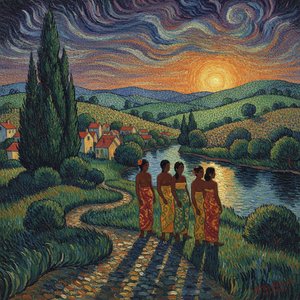
Beyond Impressionism: Exploring the Emotional Depth and Vibrant Mastery of Post-Impressionist Art
Discover the profound evolution of art beyond Impressionism. Explore the emotional depth, vibrant colors, and revolutionary techniques of Post-Impressionist masters like Van Gogh and Cézanne in this expert guide to art history's most expressive movement.

Beyond Impressionism: The Vibrant Revolution of Post-Impressionist Art
Explore the transformative era of Post-Impressionism. Discover how masters like Cézanne and Matisse revolutionized color and form, moving beyond Impressionism to shape modern art history through structural innovation and expressive emotion.