

 Vezi în context
 Trimite
 Distribuie
 Detalii
 Ghidul

 Descarcă
 Produse similare
 Radiografie
 Diaporama
 Statistici
Gethsemane
 Oil On Board
- Neo-Romanticism
 1926
1926- Modern
 42.0 x 32.0 cm
 Bergen Kunstmuseum
 Citește mai mult
Giclée / Imprimare artistică
Printuri giclée sau pe canvas de calitate muzeală, cu proces de producție rapid și opțiuni flexibile de finisare. ( Comandă pictură realizată manual Treci la imagine digitală)




P118B lei10

P118H lei10

P118W lei10

P438Z lei10

P508JH lei12

P508YH lei12

P805H lei10

P805Z lei10

P919BZ lei10

P919G lei10

P919XJ lei10

P959ZH lei10

P968JZ lei12

W106C lei8

W218G lei10

W218JH lei8

W218Y lei10

W307PJ lei10

W316G lei10

W316PJ lei8

W316Y lei10

W398PJ lei8

W4111J lei10

W500HY lei15

W500JH lei15

W692G lei12

W849H lei8

W940BG lei15

W953PJ lei8




Alegeți dintre dimensiunile noastre prestabilite, care respectă proporțiile originale ale operei de artă.

Introduceți lățimea și înălțimea de care aveți nevoie, pentru a se potrivi ramei sau peretelui dumneavoastră. O printare poate fi doar tăiată, niciodată extinsă dincolo de dimensiunea imaginii originale, astfel încât o dimensiune cu o formă diferită va pierde o parte din imagine. Vă trimitem o simulare digitală pentru aprobare înainte de a imprima orice. Imaginea afișată pe această pagină nu prezintă tăierea reală — doar simularea arată acest lucru.
Livrare în întreaga lume () în 2 săptămâni, în loc de cele 4/5 săptămâni standard. (21 Octombrie)

Livrare expres gratuită la nivel mondial

Pânză de in premium

Asigurare completă pentru transport

Garanție de rambursare a taxelor vamale

Garanția fidelității culorilor

Politica de retur în 100 de zile (doar pentru defecte)

Garanție de rambursare 100%

Reducere pentru comenzi multiple
 Opțiunea cu sticlă este disponibilă doar pentru dimensiuni de sub 110 cm

Gethsemane
Giclée / Imprimare artistică
Dimensiune reproducere
-


Preț total
lei 368
A Visionary Encounter in the Norwegian Garden
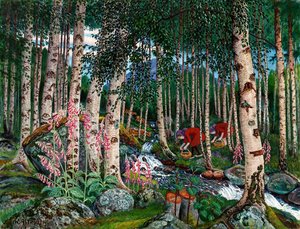
In the quiet, evocative depths of Nikolai Astrup’s 1926 masterpiece, Gethsemane, the boundaries between biblical history and the intimate landscapes of Norway begin to dissolve. While the title refers to the sacred garden in Jerusalem where Christ faced his darkest hour, Astrup performs a profound act of artistic localization. He transports this monumental moment of spiritual agony into the familiar, lush surroundings of the parsonage garden in Ålhus. This is not merely a religious illustration; it is a dreamlike fusion of the divine and the terrestrial. The viewer is invited into a space where the heavy atmosphere of the crucifixion narrative meets the verdant, mystical textures of the West Norwegian landscape, creating a scene that feels both ancient and deeply personal.
The composition breathes with a sense of quiet drama, capturing a moment of profound transition. As the eye wanders through the painting, one encounters a scene that oscillates between a somber historical event and a visionary hallucination. The presence of figures—some appearing caught in the weight of the narrative, others seemingly lost in a trance-like state—suggests a world where the veil between reality and the supernatural is perilously thin. This sense of mystery is heightened by the scattered birds that drift through the sky and perch upon the landscape, acting as silent witnesses to the unfolding drama. For the collector or designer, this piece offers more than just a subject; it offers an atmosphere of contemplative depth that can anchor a room with its soulful, introspective energy.
Technique and the Language of Light
Astrup’s technical mastery is evident in his use of oil on cardboard, a medium that allows for a rich, concentrated application of pigment. His style, rooted in Neo-Romanticism, eschews clinical realism in favor of an intense, emotive color palette. The textures are tactile and layered, reflecting the artist's lifelong obsession with the "visual language" of his homeland. He employs light not just to illuminate form, but to evoke mood; the shadows are deep and heavy, yet they are pierced by a spectral luminosity that suggests the presence of a divine vision. This interplay of light and shadow creates a rhythmic movement across the canvas, guiding the viewer through the dense foliage and toward the heart of the spiritual struggle.
The brushwork possesses a certain raw, organic vitality that mirrors the ruggedness of the Norwegian fjords. There is no sterile perfection here; instead, there is a deliberate, expressive quality that celebrates the natural world's untamed spirit. For those seeking to incorporate fine art into a sophisticated interior, a high-quality reproduction of Gethsemane provides a centerpiece of immense character. The painting’s ability to command attention through its complex textures and brooding tones makes it an ideal choice for spaces designed for reflection, such as libraries, study alcoves, or quiet sitting rooms where the interplay of history and nature can be fully appreciated.
A Legacy of Spiritual and National Identity
To understand Gethsemane is to understand Nikolai Astrup’s broader mission: to capture the very soul of Norway. By situating a universal Christian narrative within his own local topography, he elevates the Norwegian landscape to a stage for the eternal. This technique of "sacralizing" the everyday—turning a simple garden patch into a site of cosmic significance—is what makes his work so enduringly powerful. The painting serves as a bridge between the theological and the topographical, making the profound accessible through the familiar.
For the discerning art lover, owning a reproduction of this work is an opportunity to possess a fragment of this visionary legacy. It is a piece that invites continuous re-examination, revealing new layers of symbolism and emotion with every viewing. Whether one is drawn to its historical weight, its masterful use of color, or its ability to evoke the misty, magical atmosphere of a Norwegian night, Gethsemane remains a breathtaking testament to the power of art to transform the world we see into a world we feel.
Întrebări și răspunsuri
Este "Gethsemane" de Nikolai Astrup în domeniul public și care este motivul?
Statutul drepturilor de autor pentru "Gethsemane" - în domeniul public - drepturile de autor au expirat - derivă din decesul artistului în anul 1928.
Ce subiecte apar în "Gethsemane" de Nikolai Astrup?
"Gethsemane" de Nikolai Astrup reprezintă: biblical scene, religious, jesus christ, gethsemane, norway landscape, night scene, visionary.
Cum se situează "Gethsemane" din punct de vedere istoric?
Din punct de vedere istoric, „Gethsemane” este o operă Neo-Romanticism din cadrul erei mai largi Modern.
Biografie artist
Nikolai Astrup: Un vizionar al Vestlandet
Nikolai Astrup (1880 – 1928) se impune ca o figur singulară în istoria artei norvegiene—un pictor al cărui legătură profund simțită cu peisajele și tradițiile regiunii Vestlandet i-a consolidat locul printre cei mai distinctivi artiști neo-romantici ai timpului său. Născut în Bremanger, Sogn og Fjordane, copilăria lui Astrup, petrecută printre fiorduri aspre și văi senine, i-a modelat profund sensibilitatea artistică, propulsându-l către un stil caracterizat prin palete cromatice intense și o dedicare neclintită de a portretiza viața cotidiană a Norvegiei rurale. Moștenirea sa rezidă nu doar în pânze de o estetică plăcută, ci și în efortul său pionier de a surprinde „un limbaj vizual național care să evoce tradițiile și folclorul patriei sale”.- Primii ani și educația: Anii formativi ai lui Astrup au fost marcați de o pietate familială transmisă de tatăl său, Christian Astrup, un preot parohian care l-a încurajat spre studiile teologice. În ciuda inclinațiilor inițiale către minister, pasiunea lui Astrup pentru desen și pictură l-a condus în cele din urmă să abandoneze Școala Catedrală din Trondheim, alegând în schimb să își urmeze vocația artistică la Kristiania (Oslo), unde și-a perfecționat abilitățile sub îndrumarea lui Harriet Backer.
- Influențele pariziene: O scurtă perioadă petrecută la Paris l-a expus pe Astrup la mișcarea avant-garde în plină expansiune, facilitând conexiuni cu alți artiști precum Christian Krohg și îmbogățindu-i înțelegerea tehnicilor impresioniste. Această perioadă i-a consolidat angajamentul față de experimentare și i-a lărgit orizonturile artistice.
- Întoarcerea în Jølster și dezvoltarea artistică: Revenind în casa strămoșilor săi din Jølster în 1902, Astrup a întemeiat un cămin al cărui centru era soția sa, Engel Sunde, cu care a avut opt copii. Dificultățile economice ale vieții lor i-au alimentat dorința artistică și l-au impulsionat să se imerseze complet în reprezentarea împrejurimilor sale—un peisaj care i-a servit drept o sursă de inspirație nemuritoare.
- Expoziții remarcabile: Renumele artistic al lui Astrup a crescut constant prin trei expoziții semnificative desfășurate în Kristiania (1905), Bergen (1908) și Oslo (1911). Aceste prezentări au atras laude criticii și l-au consacrat ca o voce de prim plan în scena artistică norvegiană.
- Realizări majore și moștenire: Contribuția durabilă a lui Astrup la arta norvegiană constă în căutarea sa neîncetată a autenticității artistice—un angajament de a portretiza frumusețea și spiritul Vestlandet cu o onestitate neînduplecată. Picturile sale continuă să rezoneze și astăzi, servind ca embleme puternice ale patrimoniului național și întruchipând idealurile neo-romantismului.
Nikolai Astrup
1880 - 1928 , Norvegia
Informații rapide
- Artistic Movement Or Style: Neo-Romantism
- Artists Or Movements Influenced By This Artist: ['Art scandinavă']
- Artists Who Influenced This Artist: ['Christian Krohg']
- Date Of Birth: 1880
- Date Of Death: 1928
- Full Name: Nikolai Johannes Astrup
- Nationality: Norvegian
- Notable Artworks:
- Pretendentul nerăbdător
- Copaci goi
- Fata care învârte la fus
- Place Of Birth: Bremanger, Norvegia
Articole conexe

Johan Christian Dahl: Pioneering Norwegian Romantic Landscape Painting
Explore the life & art of Johan Christian Dahl, Norway's first great Romantic painter. Discover his iconic landscapes, cultural impact, and lasting legacy with OriginalUniqueArt.

Peisaje Romantice Iconice: 10 Capodopere Artistice pentru Decorul de Lux
Descoperă 10 capodopere romantice iconice de Caspar David Friedrich, Turner și alți maeștri. Explorează istoria artei, emoțiile din peisaje și găsește tablouri canvas perfecte pentru decorul tău pe OriginalUniqueArt.com!

John Constable: Cele Mai Frumoase 25 de Capodopere – Artă Clasică pentru Decorul Casei Tale
Descoperă cele mai frumoase 25 de picturi ale lui John Constable, maestru al peisajului englezesc! Explorează stilul romantic, Dedham Vale și capodopere precum The Hay Wain. Reproduceri artă clasică pentru decorul casei tale – OriginalUniqueArt.com.

Evocations of Place: A Historical Journey Through Landscape Art
Explore the rich history of landscape art with OriginalUniqueArt. Discover renowned artists, movements like Impressionism & Romanticism, and expert guidance for collecting timeless pieces. Find your perfect serene escape today!

The Sublime and the Picturesque: Exploring Emotion & Nature in Romantic Landscape Painting
Explore the emotional power of Romantic landscape painting! Discover the sublime & picturesque traditions, key artists like Friedrich & Cole, and find your perfect artwork at OriginalUniqueArt.