

 Previzualizare
 Trimite prin felicitare
 Distribuie
 Detalii despre lucrare
 Ghid
Ghid

 Descarcă imaginea
 Produse similare
 Radiografie
 Galerie foto
 Q&A
Q&A Statistici
The Examination (Das Verhören)
 Oil On Canvas
- WallArt
- 19th Century Realism
 1868
1868 66.0 x 54.0 cm
 Muzeul Evreiesc din New York
 Vezi mai mult
Giclée / Imprimare artistică
Printuri giclée sau pe canvas de calitate muzeală, cu proces de producție rapid și opțiuni flexibile de finisare. ( Comandă pictură realizată manual Comută pe Imagine Digitală)




P118B lei10

P118H lei10

P118W lei10

P438Z lei10

P508JH lei12

P508YH lei12

P805H lei10

P805Z lei10

P919BZ lei10

P919G lei10

P919XJ lei10

P959ZH lei10

P968JZ lei12

W106C lei8

W218G lei10

W218JH lei8

W218Y lei10

W307PJ lei10

W316G lei10

W316PJ lei8

W316Y lei10

W398PJ lei8

W4111J lei10

W500HY lei15

W500JH lei15

W692G lei12

W849H lei8

W940BG lei15

W953PJ lei8




Alegeți dintre dimensiunile noastre prestabilite, care respectă proporțiile originale ale operei de artă.

Introduceți lățimea și înălțimea necesare pentru a se potrivi ramei sau peretelui dumneavoastră. O printare poate fi doar tăiată, niciodată extinsă dincolo de dimensiunea imaginii originale, astfel încât o dimensiune cu o formă diferită va pierde o parte din imagine. Vă trimitem o simulare digitală pentru aprobare înainte de a imprima orice. Imaginea afișată pe această pagină nu prezintă tăierea reală — doar simularea arată acest lucru.
Livrare în întreaga lume () în 2 săptămâni, în loc de cele 4/5 săptămâni standard. (30 Octombrie)

Livrare expres gratuită la nivel mondial

Pânză de in de înaltă calitate

Asigurare completă pentru transport

Garanție de rambursare a taxelor vamale

Garanția fidelității culorilor

Politica de retur în 100 de zile (doar pentru defecte de fabricație)

Garanție de rambursare 100%

Ofertă pentru comenzi multiple
 Opțiunea cu sticlă este disponibilă doar pentru dimensiuni de sub 110 cm

The Examination (Das Verhören)
Giclée / Imprimare artistică
Dimensiune reproducere
-


Preț total calculat
lei 372
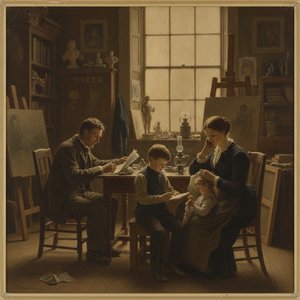
The Intimate Portrait of Family Life: Moritz Daniel Oppenheim’s “The Examination”
Moritz Daniel Oppenheim's "The Examination," painted in 1868, is more than just a domestic scene; it’s a poignant window into the heart of 19th-century Jewish family life. This intimate portrait, rendered with remarkable sensitivity and detail, captures a moment of quiet contemplation within a warmly lit living space – a space that speaks volumes about tradition, education, and familial bonds. The painting immediately draws the viewer in, not with grand gestures or dramatic action, but through the subtle interplay of glances, postures, and the palpable sense of connection between father and daughters.
Oppenheim’s style leans heavily towards Realism, yet it transcends mere representation. He masterfully employs a muted color palette – predominantly browns, creams, and ochres – to create an atmosphere of understated elegance and domestic tranquility. The lighting is particularly noteworthy; it's diffused and natural, casting gentle shadows that enhance the three-dimensionality of the figures and their surroundings. The artist’s brushwork is deliberate and controlled, meticulously building up layers of paint to achieve a rich texture and a sense of depth. Notice how he subtly captures the textures of the fabrics – the worn velvet chair, the simple wooden table, the folds in the women's dresses – adding an incredible level of realism and grounding the scene.
A Glimpse into Jewish Life and Education
The painting’s subject matter is deeply rooted in the social and cultural context of its time. “The Examination” depicts a father, presumably a scholar or religious leader, seated with his two daughters. He's absorbed in reading a book, while they attentively observe him, suggesting a scene of learning and guidance. This wasn’t simply a casual family gathering; it represented a crucial element of Jewish upbringing – the transmission of knowledge and tradition from one generation to the next. The presence of the books scattered around the room reinforces this theme, hinting at a home filled with intellectual pursuits and a commitment to education.
Oppenheim’s decision to portray a family scene within a Jewish context was groundbreaking for its time. While many artists were depicting Jewish subjects, Oppenheim's work focused on portraying everyday life, familial relationships, and religious practices – offering a more nuanced and intimate representation of the Jewish community than previously seen in Western art. This focus aligns with the burgeoning “Wissenschaft des Judentums” (Jewish knowledge) movement, which sought to study Judaism as an academic discipline, documenting its history, culture, and traditions.
Symbolism and Emotional Resonance
Beyond its straightforward depiction of a family moment, "The Examination" is rich in symbolic detail. The vase positioned centrally on the table – holding fresh fruit – can be interpreted as representing knowledge, wisdom, or even reward. The gesture of the father pointing to the book, combined with the daughters’ attentive expressions, suggests a process of learning and understanding. The overall mood is one of quiet dignity and affection, conveying a sense of warmth and familial harmony.
Furthermore, the painting subtly alludes to the importance of Jewish tradition and heritage. The setting itself – a comfortable home filled with books – speaks to a commitment to intellectual pursuits and the preservation of cultural values. The scene evokes a feeling of stability, continuity, and the enduring strength of family bonds. It’s a testament to Oppenheim's ability to capture not just a visual likeness but also the emotional essence of his subjects.
A Timeless Masterpiece – Reproduction Considerations
Reproductions of “The Examination” offer a remarkable opportunity to bring this evocative artwork into your home or office. When selecting a reproduction, consider the quality of the print and the canvas or paper used. A high-resolution digital print on archival-quality canvas will ensure that the colors and details are faithfully reproduced, capturing the painting’s subtle nuances and rich textures. The original's muted palette translates beautifully to a wide range of interior design styles – from traditional to contemporary – adding a touch of understated elegance and intellectual warmth.
As an investment piece, a high-quality reproduction of “The Examination” is more than just a decorative item; it’s a window into the past, a celebration of family life, and a testament to the artistic vision of Moritz Daniel Oppenheim. It's a reminder that even in quiet moments, profound beauty and enduring values can be found.
Întrebări și răspunsuri
Ce emoție transmite "The Examination (Das Verhören)" atunci când este oferită ca cadou?
Cu tonul său emoționant Reflective, "The Examination (Das Verhören)" de Moritz Daniel Oppenheim este recomandată ca cadou pentru Wedding.
Care este luminozitatea percepută a lucrării "The Examination (Das Verhören)" de Moritz Daniel Oppenheim?
În ceea ce privește luminozitatea percepută, "The Examination (Das Verhören)" de Moritz Daniel Oppenheim este deep_shadow.
Unde pot fi achiziționate copii pictate manual ale operei "The Examination (Das Verhören)" de Moritz Daniel Oppenheim?
„The Examination (Das Verhören)” este disponibil ca o reproducere pictată manual în ulei pe pânză de in. Comanda poate fi plasată pe pagina de Reproducere pictată în ulei, cu posibilitatea de a alege dimensiunea dorită.
Biografie artist
Un vizionar al identității evreiești
Moritz Daniel Oppenheim (1800-1882) se impune ca o figură singulară în analele istoriei arte germane, fiind un pionier profund al reprezentării artistice evreiești. Născut în Hanau, Germania, viața și opera sa au fost profund ancorate întrblânc întro dedicare de a documenta și de a celebra nuanțele vieții și culturii evreiești în timpul secolului al XIX-lea, o epocă a transformărilor radicale. El a fost adesea onorat ca prim pictor evreiu care a obținut o recunoație larg răspândită în peisajul artistic de mainstream, depășind simplul detaliu biografic pentru a crea o operă ce întruchipează o înregistrare vizuală vitală a unei comunități care navighează prin complexitățile modernizării, încercând totodată să își păstreze tradițiile sacre.
Călătoria artistică a lui Oppenheim a început cu o pregătire fundamentală sub îndrumarea lui Conrad Westermayr în orașul natal, unde a absorbit pentru prima dată principiile picturii romantice germane. Totuși, adevărata sa ascensiune profesională a fost catalizată de înscrierea la Academia de Arte din München la vârsta de șaptesprezece ani. În aceste săli prestigioase, el și-a perfecționat măiestria tehnică alături de contemporani precum Wilhelm Leibl și Johann Baptist Eberhard Krauss. Căutând să își extindă orizonturile, Oppenheim a pornit într-o perioadă transformatoare de studii în străinătate, călătorind la Paris pentru a studia sub îndată Jean-Baptiste Regnault și, ulterior, la Roma. În Italia, mentorat de lumini precum Bertel Thorwaldsen și de pictorul nazaren, Johann Friedrich Overbeck, stilul său a evoluat într-o fuziune sofisticată între observația meticuloasă și influența clasică. Această perioadă romană a fost deosebit de crucială, deoarece i-a infuzat opera cu un sentiment de gravitate istorică ce va marca ulterior reprezentările sale ale ritualurilor și vieții de zi cu zi evreiești.
Arta intimității și a tradiției
Inima contribuției lui Oppenheim la artă rezidă în capacitatea sa de a transforma sfera domestică într-o scenă pentru o narațiune culturală profundă. Picturile sale se concentrează adesea pe scene intime ale vieții de familie evreiască, surprindând demnitatea liniștită a ritualului și căldura legăturilor comunitare. Prin pensula sa, banalul devine monumental. În lucrări precum Încheierea Sabatului (Sabbath-Ausgang), el folosește un realism maestru și un simbolism subtil pentru a descrie tranziția emoționantă de la odihna sacră a Sabatului înapoi în lumea temporală, invitând privitorul să fie martor la sfințenia ritualului familial.
Abilitatea sa de a împleti contextul istoric cu emoția personală este poate cea mai evidentă în picturile sale de gen care documentează etape culturale specifice. De exemplu:
- Nunta (Die Trauung): O reprezentare uluitoare de detaliată a unei nunți evreiești din anul 1866, în cadrul ghetoului din Frankfurt, unde Oppenheim surprinde strălucirea costumelor tradiționale și solemnitatea baldachinului nuptial, oferind o privire rară și păstrată asupra unui mod de viață care dispare.
- Întoarcerea voluntarului: În această uimitoare pictură în ulei din 1834, el explorează intersecția dintre moștenirea evreiască și istoria europeană mai largă, portretizând un soldat care se întoarce din Războaiele de Eliberare într-o familie care încă trăiește conform vechilor obiceiuri, ilustrând eficient tensiunea dintre schimbările politice din era napoleoniană și o identitate religioasă durabilă.
Moștenire și semnificație istorică
Dincolo de îndemânarea sa tehnică, opera lui Oppenheim este indisolubil legată de mișcarea Wissenschaft des Judentums — un efort academic de a stabili istoria și cultura evreiască ca un domeniu de studiu respectat. Picturile sale au funcționat ca o formă de cercetare vizuală, oferind o reprezentare demnă și autentică a unei comunități care era adesea marginalizată în canonul artistic european mai larg. Portretând subiecte evreiești cu același nivel de detaliu, demnitate și măreție romantică rezervate de obicei temelor aristocratice sau mitologice, el a provocat prejudecățile existente și a afirmat importanța identității evreiești în țesătura culturală germană.
În cele din urmă, moștenirea lui Moritz Daniel Oppenheim este una de reziliență și vizibilitate. El nu s-a limitat doar la a picta scene; el a construit un limbaj vizual pentru o epocă de tranziție. Capacitatea sa de a surprinde echilibrul delicat dintre lumea veche și cea nouă asigură faptul că opera sa rămâne un punct de referință vital pentru înțelegerea experienței evreiești din secolul al XIX-lea, făându-l o figură indispensabilă în istoria atât romantismului german, cât și a narațiunii globale a artei evreiești.

Moritz Daniel Oppenheim
1800 - 1882 , Germania
Detalii rapide
- Artistic Movement Or Style: Romantism
- Artists Who Influenced This Artist:
- Jean-Baptiste Regnault
- Bertel Thorwaldsen
- Barthold Georg Niebuhr
- Johann Friedrich Overbeck
- Date Of Birth: 7 ianuarie 1800
- Date Of Death: 1882
- Full Name: Moritz Daniel Oppenheim
- Nationality: German
- Notable Artworks:
- Întoarcerea voluntarului
- Mignon și harpistul
- Scenă de gen italiană
- Confirmare
- Binecuvântarea Sabatului
- Place Of Birth: Hanau, Germania
Articole similare

Evoluția Portretelor Familiale: Arta Personalizată ca Cronica Vieții de Familie de-a Lungul Generațiilor
Descoperă evoluția portretelor familiale și rolul lor în conservarea moștenirii! Comandă un portret personalizat realizat de artiști talentați. Expertiză, calitate și o legătură emoțională durabilă cu trecutul tău.
Victorian Realism: Capturing the Soul and Intricate Detail of a Golden Era
Explore the exquisite world of Victorian Realism. Discover how 19th-century masters captured unparalleled detail and emotion through oil painting, and learn to curate these timeless masterpieces for your luxury interior collection.

Romantic Realism's Finest: 10 Masterpieces for Your Home | OriginalUniqueArt
Explore 10 defining masterpieces of Romantic Realism! Discover Courbet, Millet & Daumier's powerful paintings—capturing emotion and social realities. Find museum-quality reproductions for your home at OriginalUniqueArt.com.

Victorian Naturalism: The Raw, Hyper-Real Aesthetic That Defined an Era
Explore the raw power of Victorian Naturalism. Discover how 19th-century artists rejected romantic idealism to capture the gritty, hyper-real truth of the industrial era through masterful observation and unmatched technical precision.

The Gaze of a Changing World: Victorian Realism & Modern Life
Explore the captivating world of Victorian Realism! Discover genre painting's rise, social commentary in art, & masters like Fedotov and Wilkie. Expert analysis & high-quality reproductions at OriginalUniqueArt.