
() ·
A painting made for you, by hand
Reproducere pictată manual în ulei
Pictură în ulei pe pânză, pictată manual de artiștii noștri la dimensiunea și ramele dorite de dumneavoastră, pe comandă. ( Comută pe versiunea Print Comută pe Imagine Digitală)
Descriere obiect de colecție
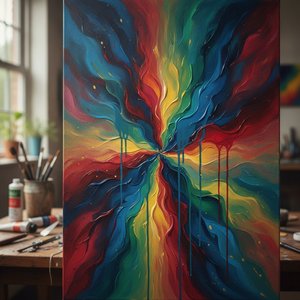
Explore Mordecai Ardon’s "Untitled (254)", a surreal oil painting blending expressionism & Kabbalah-inspired imagery. Witness turbulent waters, a blinding orb, and dynamic lines in this evocative work.
Biografie artist
Mordecai Ardon (1896-1992) was a pivotal Israeli painter known for his symbolic abstract expressionism, Kabbalah-inspired imagery & landscapes of Jerusalem. A key figure in regional Israeli art and creator of the iconic 'Ardon Windows'.
 Vezi mai mult
from ·
Chapter 1
How large should it be?
Slide to change the size; the picture on the left shows the frame at its real width. The proportions of the original are kept.
Alegeți dintre dimensiunile noastre prestabilite, care respectă proporțiile originale ale operei de artă.

Introduceți lățimea și înălțimea necesare pentru a se potrivi ramei sau peretelui dumneavoastră. Această lucrare este pictată manual, așa că, pentru o dimensiune cu o formă diferită, artistul poate picta puțin mai mult în jurul imaginii sau poate tăia puțin din margini — dumneavoastră decideți. Vă vom trimite o simulare digitală pentru aprobare înainte de a începe pictarea. Imaginea afișată pe această pagină nu reprezintă rezultatul real — doar simularea este reprezentativă.
Chapter 2
How should it arrive?
Choose the edges of the stretched canvas
Choose your frame

White lei1

Blurside lei1

Extended lei1

P118B lei10

P118H lei10

P118W lei10

P438Z lei10

P508JH lei12

P508YH lei12

P805H lei10

P805Z lei10

P919BZ lei10

P919G lei10

P919XJ lei10

P959ZH lei10

P968JZ lei12

W106C lei8

W218G lei10

W218JH lei8

W218Y lei10

W307PJ lei10

W316G lei10

W316PJ lei8

W316Y lei10

W398PJ lei8

W4111J lei10

W500HY lei15

W500JH lei15

W692G lei12

W849H lei8

W940BG lei15

W953PJ lei8

H24-GOLD lei30

H24-SILVER lei30

H36-GOLD lei45

H36-SILVER lei45
Înramat
Moulding: . Overall size with the frame: .
Chapter 3
Who paints it, and should anything change?
After order, OriginalUniqueArt.com team will email client for instructions and provide a mockup preview
Livrare în întreaga lume () în 3-4 săptămâni, în loc de cele 5 săptămâni standard. (2 Noiembrie). Fără compromisuri în ceea ce privește calitatea.
Chapter 4
The finishing touches
A nameplate, as in a museum?
Detalii plăcuță din bronz gravat
This elegant plaque features the artist's name and the title of the artwork, finely engraved for a timeless presentation.
It is made from bronze with a refined, elegant finish. The text is precisely laser-engraved for a sharp and permanent result. Measuring 9x2 cm, the plaque is compact yet easy to read. It's built to be durable and scratch-resistant, offering a professional, museum-quality look. Mounting is simple thanks to the included adhesive backing.
Detalii plăcuță din acril transparent
The plaque includes essential engraved details such as the artist's name, the title of the artwork, the date it was created, the type of media used-like oil on canvas or watercolor-a brief description of the piece, and a QR code that links to the complete artwork information.
It is crafted from clear acrylic, offering a sleek, modern appearance. The text is UV-engraved in black to ensure strong visual contrast. With a size of 10x15 cm, it ensures optimal readability. It comes equipped with two metal hooks for secure wall mounting. The plaque is designed to be weather-resistant, making it suitable for various environments, and it includes interactive features that work seamlessly with smartphone scanning.
Detalii placă din acril negru
This elegant plaque includes engraved information such as the artist's name, the title of the artwork, the date it was created, the type of media used (like oil on canvas or watercolor), a short description of the artwork, and a QR code for quick access to more information.
The plaque itself is made from refined black acrylic with a premium finish. The text is laser-engraved in white for high contrast and readability. Its size is 10x15 cm, designed to be easy to read. It comes with two metal hooks for professional mounting. The design is sleek and fits any interior style. It is also weather-resistant and durable, with built-in digital integration for mobile compatibility.
A protective varnish?
When do you need it?
Chapter 5
Your painting, as you ordered it

Untitled (254)
Tehnică de reproducere
Dimensiune reproducere
-

Selecție de artiști de elită
Mai multe detalii, rafinament și timp suplimentar de execuție
-

Ramă pentru reproducere artistică
-
-
Pentru opere de artă sau reproduceri care depășesc 105 cm (aproximativ 41 de inch) pe oricare dintre laturi, cadrul va fi livrat demontat, sub formă de kit. Această metodă asigură o livrare sigură și previne deteriorarea în timpul transportului.
Este necesară asamblarea profesională – acest produs nu este de tip DIY (de făcut singur).
Kitul trebuie asamblat, iar pânza întinsă, de către un legător de cadre experimentat, utilizând adeziv pentru lemn (neinclus în colet), o cheie pentru întinderea pânzei și cleme pentru a menține barele la unghi drept în timp ce adezivul se usucă. Asamblarea incorectă sau tensiunea neuniformă a pânzei pot deteriora permanent opera de artă și nu sunt acoperite de garanția noastră.
 Pentru opere de artă sau reproduceri care depășesc 105 cm (aproximativ 41 de inch) pe oricare dintre laturi, cadrul va fi livrat demontat, sub formă de kit. Această metodă asigură o livrare sigură și previne deteriorarea în timpul transportului.
Toate barele din lemn masiv sunt incluse, tăiate cu precizie la dimensiunea necesară.
Asamblat cu șuruburile incluse, plus adeziv pentru lemn pentru îmbinările de colț, care nu este furnizat și trebuie achiziționat de către tâmplarul dumneavoastră.
Sunt necesare unelte profesionale care nu sunt incluse: o șipte de întindere a pânzei (tensionator) și cleme pentru a menține barele la unghi drept în timp ce adezivul se usucă.
Important:
Îmbinările de colț necesită adeziv pentru lemn, barele trebuie fixate cu clești de strângere până când adezivul este complet uscat, iar întinderea pânzei pe cadrul asamblat necesită un clește pentru întins pânza. Niciunul dintre aceste elemente nu este inclus în kit. Vă rugăm să consultați un încadrator profesionist cu experiență înainte de a comanda această dimensiune.

Etichetă de prezentare
-
-

Lac de protecție
Lac lucios (intensifică nuanțele și oferă protecție împotriva luminii și a umidității)
-

Personalizează opera mea de artă
Exemple de elemente ce pot fi personalizate: Înlocuirea feței cu fotografia clientului; Adăugarea unui animal de companie (de exemplu, înlocuirea unei pisici cu un câine); Includerea unui mesaj ascuns în fundal; Modificarea peisajului sau a elementelor din fundal.
-

Livrare rapidă
Livrare la nivel mondial () în 3-4 săptămâni, în loc de cele 5 săptămâni standard. (2 Noiembrie). Fără compromisuri când vine vorba de calitate.
-
Livrare rapidă
Livrare la nivel mondial () în 5 săptămâni. (9 Noiembrie).
Inclus
Preț total calculat
lei 1423
Opțiunea cu sticlă este disponibilă doar pentru dimensiuni de sub 110 cm
Included with every order
- Livrare expres gratuită la nivel mondial
- Pânză de in de înaltă calitate
- Asigurare completă pentru transport
- Garanție de rambursare a taxelor vamale
- Garanția fidelității culorilor
- Politica de retur în 100 de zile (doar pentru defecte de fabricație)
- Garanție de rambursare 100%
- Ofertă pentru comenzi multiple


 Previzualizare
 Trimite prin felicitare
 Distribuie
 Detalii despre lucrare
 Ghid
Ghid

 Descarcă imaginea
 Produse similare
 Radiografie
 Galerie foto
 Q&A
Q&A Statistici
In numbers
- 29frames to choose from
- standard sizes, in its own proportions
- 5weeks to paint and deliver it
About the original

Această lucrare este protejată de drepturile de autor
Lucrarea de artă afișată pe această pagină este protejată de legile privind drepturile de autor, ceea ce înseamnă că nu putem crea sau vinde în mod legal o reproducere identică. Această protecție este garantată prin acorduri internaționale, precum Convenția de la Berna și de legile naționale, inclusiv cele prevăzute de Legea dreptului de autor din S.U.A. – Titlul 17. Toate drepturile rezervate. Orice reproducere neautorizată este interzisă.
Ca alternativă respectuoasă și legală, oferim tablouri pictate manual, personalizate, inspirate de original. Artistii noștri experimentați și profesioniști studiază cu atenție stilul, starea de spirit și esența artistică a originalului pentru a crea o piesă nouă și unică, care evocă aceeași emoție – rămânând, în același timp, o creație originală în sine.
Această metodă respectă pe deplin reglementările privind drepturile de autor, deoarece nu implică copierea sau duplicarea operei protejate. În schimb, este o reinterpretare creativă – o pictură nouă, influențată de original, dar care nu este identică cu acesta.

Mordecai Ardon
1896 - 1992, Austria
Quick facts about Mordecai Ardon
- Full Name: Mordecai Ardon
- Nationality: Israeli
- Date Of Birth: 1896
- Date Of Death: 1992
- Place Of Birth: Tuchów, Austria
- Notable Artworks:
- Untitled (216)
- Untitled (790)
- Untitled (254)
- Artistic Movement Or Style: Abstract Expressionism
- Artists Who Influenced This Artist: Johannes Itten, Wassily Kandinsky, Paul Klee
- Artists Or Movements Influenced By This Artist: Bauhaus
Biografie artist
Mordecai Ardon: Pioneer of Symbolic Landscape Painting
Mordecai Ardon (Hebrew: מרדכי ארדון; 13 July 1896 – 18 June 1992) was an Israeli painter, considered a pivotal figure in regional Israeli art and recognized for his distinctive approach to landscape painting infused with Kabbalah symbolism. Born Max Bronstein in Tuchów, Galicia (then Austria-Hungary, now Poland), Ardon’s artistic journey began amidst the burgeoning Bauhaus movement, where he honed his architectural skills alongside luminaries like Johannes Itten, Wassily Kandinsky, and Paul Klee. This formative period instilled a profound appreciation for geometric abstraction and influenced his later stylistic explorations.- Early Life & Education: Ardon’s upbringing in Tuchów exposed him to the Austro-Hungarian cultural landscape, shaping his worldview before he emigrated to Jerusalem in 1933 during the British Mandate of Palestine. He pursued architectural studies at Bauhaus University Weimar and Munich, absorbing the revolutionary ideas circulating within the artistic community.
- Bauhaus Influence & Artistic Development: Studying under influential masters like Kandinsky and Klee solidified Ardon’s commitment to abstraction while simultaneously fostering an interest in exploring spiritual themes. His Bauhaus training provided him with a foundational understanding of form and color theory that would permeate his subsequent works.
Kabbalah & Symbolic Imagery: The Roots of His Vision
Ardon’s artistic style evolved dramatically in the 1950s, adopting a complex system of symbolic images drawn from Jewish mysticism (Kabbalah) and biblical narratives. He rejected representational art altogether, prioritizing instead to convey cosmic dimensions within his landscapes—particularly those depicting Jerusalem—by layering textures and colors with meticulous precision. His paintings weren’t merely depictions of places; they were attempts to capture the essence of their spiritual significance. As he famously stated, “I seek to impart a cosmic dimension to the present, linking it to antiquity and mystery.” Recurring motifs like circles, squares, and stylized birds reflected Kabbalistic concepts of divine unity and creation.- Kabbalah’s Impact: Ardon's fascination with Kabbalah profoundly shaped his artistic vocabulary. He utilized geometric forms and color palettes reminiscent of Kabbalistic diagrams to express profound spiritual ideas.
Notable Works & Recognition
Ardon achieved considerable acclaim during his lifetime, notably participating in the Venice Biennale of 1968 where he showcased “Gates of Light,” a painting that powerfully captured "the inner mystery and timelessness of the landscape." His monumental stained-glass windows, known as ‘Ardon Windows,’ installed prominently in the National Library of Israel, exemplify his masterful technique and represent a lasting contribution to Israeli art. The sale of “The Awakening” for $821,000 at Sotheby’s in 2014 underscored the enduring value of his oeuvre. Furthermore, Ardon mentored numerous artists who went on to develop their own distinctive styles, cementing his legacy as a teacher and influential figure within the Israeli art scene.Legacy & Influence
Mordecai Ardon’s artistic vision—characterized by its symbolic depth, geometric precision, and unwavering commitment to conveying spiritual contemplation—continues to inspire artists today. He is regarded as the father of the regional approach in Israeli art, prioritizing local mythology and cultural heritage alongside universal themes of transcendence. His work stands apart for its ability to transform ordinary landscapes into canvases brimming with cosmic resonance, securing his place as one of Israel’s most significant artistic voices.Articole similare

Top 10 Capodopere ale Expresionismului Abstract: Artă, Artiști și Decorațiuni de Lux | OriginalUniqueArt.ro
Descoperă Top 10 capodopere ale Expresionismului Abstract! Explorează poveștile lui Pollock, Rothko și De Kooning. Reproduceri de artă de lux & inspirație decor pe OriginalUniqueArt.ro. Găsește pictura perfectă pentru spațiul tău!

Cele mai importante 10 capodopere ale abstracției geometrice | Artă & Decor de lux pe OriginalUniqueArt.com
Descoperă cele mai importante 10 capodopere ale abstracției geometrice! Explorează istoria, artiștii (Mondrian, Kandinsky) și culorile vibrante care au definit arta modernă. Reproduceri de tablouri de lux pe OriginalUniqueArt.com pentru un decor interior rafinat. Explorează colecția online!

Wassily Kandinsky: Cele Mai Iconice 25 De Opere – Artă Abstractă pentru Decor Rafinat
Descoperă cele mai emblematice 25 de opere ale lui Wassily Kandinsky, pionierul artei abstracte! Explorează culorile vibrante, compozițiile unice și istoria fascinantă din spatele fiecărei picturi. Reproduceri de calitate muzeală pe OriginalUniqueArt.com – inspiră-ți decorul cu artă modernă!
Lyrical Abstraction: The Emotional Power of Color and Form in Modern Art History
Explore the profound emotional depth of Lyrical Abstraction. Discover how masters like Raymond Parker used color and form to bridge Impressionism and Abstract Expressionism. Learn about this pivotal movement through our expert-led art history guide.
