Previzualizare
 Trimite
 Distribuie
 Detalii despre lucrare

 Descarcă
 Produse similare
 Radiografie
 Diapozitive automate
Sir Thomas Cookes (1648–1701), 2nd Bt
 Acrylic On Canvas
- WallArt
- Baroque Portraiture
 1740
1740- Early Modern
 125.0 x 101.0 cm
 Bibliotecă Universitară Bodleian
 Vezi mai mult
Giclée / Imprimare artistică
Printuri giclée sau pe canvas de calitate muzeală, cu proces de producție rapid și opțiuni flexibile de finisare. ( Comandă pictură lucrată manual Cumpără imaginea)




P118B $10

P118H $10

P118W $10

P438Z $10

P508JH $12

P508YH $12

P805H $10

P805Z $10

P919BZ $10

P919G $10

P919XJ $10

P959ZH $10

P968JZ $12

W106C $8

W218G $10

W218JH $8

W218Y $10

W307PJ $10

W316G $10

W316PJ $8

W316Y $10

W398PJ $8

W4111J $10

W500HY $15

W500JH $15

W692G $12

W849H $8

W940BG $15

W953PJ $8




Alegeți dintre dimensiunile noastre prestabilite, care respectă proporțiile originale ale operei de artă.

Puteți introduce propriile dimensiuni pentru a se potrivi unui anumit cadru sau spațiu. Dacă dimensiunea selectată nu corespunde proporțiilor imaginii originale, vom decupa lucrarea de artă sau vom extinde imaginea cu margini oglindite sau cu o culoare uniformă. Un mockup digital va fi trimis pentru aprobarea dumneavoastră înainte de începerea producției.
Vă rugăm să rețineți că previzualizarea de pe ecran nu reflectă decuparea sau extinderea reală. Doar mockup-ul va arăta cu exactitate compoziția finală.
Deși dimensiunile personalizate sunt disponibile, vă recomandăm să selectați o dimensiune din lista predefinită pentru a păstra proporțiile originale.
Livrare în întreaga lume () în 2 săptămâni, în loc de cele 4/5 săptămâni standard. (22 August)

Livrare expres gratuită la nivel mondial

Pânză de in de înaltă calitate

Asigurare completă pentru transport

Garanție de rambursare a taxelor vamale

Garanția fidelității culorilor

Politica de retur în 60 de zile (doar pentru defecte)

Garanție de rambursare 100%

Ofertă pentru comenzi multiple
 Opțiunea cu sticlă este disponibilă doar pentru dimensiuni de sub 110 cm

Sir Thomas Cookes (1648–1701), 2nd Bt
Giclée / Imprimare artistică
Dimensiune reproducere
-


Preț total calculat
$ 80
Descriere obiect de colecție
Sir Thomas Cookes (1648–1701), 2nd Bt: A Portrait of Aristocratic Grace in the Shadow of Baroque
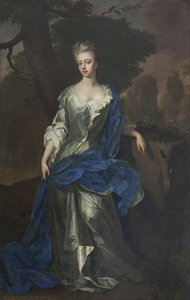
Michael Dahl’s “Sir Thomas Cookes (1648–1701), 2nd Bt,” painted in 1740, is more than a simple likeness; it's a meticulously crafted tableau of 18th-century English aristocracy. This captivating portrait, measuring 125 x 101 cm, offers a glimpse into the world of a prominent landowner and philanthropist, rendered with Dahl’s signature blend of Baroque elegance and subtle psychological insight. The painting depicts Cookes standing before a doorway – a deliberate compositional choice that subtly anchors him within his social sphere while simultaneously inviting the viewer into his presence.
The subject himself is presented in a manner typical of Dahl's aristocratic clientele: impeccably dressed in a rich red coat adorned with elegant white lace, indicative of wealth and status. His long hair, swept back from his face, contributes to an air of dignified composure. The careful attention to detail – the texture of the fabric, the sheen of the lace, the subtle modeling of the face – speaks volumes about Dahl’s technical mastery. Note also the two figures flanking Cookes; their presence adds a layer of narrative complexity, hinting at familial connections or perhaps the social dynamics within his household. While their identities remain somewhat enigmatic, they serve to enrich the overall composition and provide context for Cookes' position.
The Artist: Michael Dahl – A Swedish Transplant to English Elegance
To fully appreciate “Sir Thomas Cookes,” one must understand the remarkable journey of its creator, Michael Dahl. Born in Stockholm around 1659, Dahl’s artistic trajectory was anything but conventional. Initially trained by Martin Hannibal and later David Klöcker Ehrenstrahl in Sweden, he soon recognized the limitations of the Swedish art scene and embarked on a deliberate quest for further refinement in Italy. This period profoundly influenced his style, introducing him to the principles of Baroque portraiture – particularly its emphasis on dramatic lighting, dynamic compositions, and the portrayal of psychological depth.
However, Dahl’s ambition extended beyond mere stylistic imitation. He skillfully navigated the complex political landscape of Europe, eventually establishing himself as a leading portraitist in England. This transition wasn't merely geographical; it represented a profound cultural shift. Dahl adapted his style to suit English tastes while retaining his distinctive artistic voice. His move was facilitated by connections within London’s art circles, notably through Robert White and Godfrey Kneller, both influential figures who provided him with invaluable experience and access to the burgeoning market for portraiture. The painting's date of 1740 reflects this successful integration into the English art world.
Baroque Techniques & Psychological Nuance
Dahl’s technique in “Sir Thomas Cookes” is a testament to his Baroque training. He employs *chiaroscuro* – the dramatic contrast between light and shadow – with masterful precision, sculpting Cookes' form and creating a sense of three-dimensionality. The light source, seemingly originating from an unseen window above, illuminates Cookes’ face, highlighting his features and conveying a subtle expression of quiet confidence. This isn’t a straightforward depiction of a man; Dahl subtly captures a mood, a personality – a hint of thoughtfulness behind the aristocratic facade.
Furthermore, observe how Dahl utilizes color to enhance the painting's impact. The rich reds and whites of Cookes’ attire stand out against the darker background, drawing the viewer’s eye to the subject. The subtle variations in tone and hue create a sense of depth and realism, while also contributing to the overall atmosphere of elegance and sophistication. Dahl’s ability to capture not just physical likeness but also psychological nuance is what elevates this portrait beyond mere representation.
Symbolism & Context: A Portrait of Power and Propriety
The setting itself – a doorway – carries symbolic weight. It suggests Cookes' position as a gatekeeper, both literally and figuratively, within his social world. The inclusion of the other figures further reinforces this idea, hinting at the complex web of relationships that defined aristocratic life. Sir Thomas Cookes was a man of considerable influence, known for his philanthropic endeavors and his role in shaping local governance. His portrait, therefore, serves as both a celebration of his status and a reflection of the values – power, propriety, and social responsibility – that were highly prized within 18th-century English society.
OriginalUniqueArt’s hand-painted reproductions strive to capture not only the visual details of this remarkable portrait but also the spirit and atmosphere of its time. Each reproduction is created with meticulous attention to detail, ensuring an authentic representation of Dahl's artistry for discerning collectors and art enthusiasts alike.
Biografie artist
A Life Bridging Worlds: The Artistic Journey of Michael Dahl
Michael Dahl, a name synonymous with the elegance and sophistication of 18th-century portraiture, was a Swedish artist whose career unfolded across Europe, culminating in his esteemed position as a leading portraitist in England. Born in Stockholm around 1659 – precise dates remain subject to slight variations in historical records – Dahl’s trajectory wasn't confined by national borders but rather defined by an unwavering ambition and a relentless pursuit of artistic mastery. His story is one woven with threads of familial sacrifice, rigorous training under diverse masters, a strategic religious conversion fueled by opportunity, and the astute navigation of complex cultural landscapes. The dedication of his mother, Catarina Dahl, to nurturing his talent formed the bedrock upon which his remarkable career was built, producing paintings celebrated for their aristocratic grace and capturing the essence of those who commissioned them.From Swedish Foundations to Italian Influences
Dahl’s artistic education commenced in Sweden under Martin Hannibal in 1674. Hannibal, a Hungarian-born artist brought to Sweden by David Klöcker Ehrenstrahl, established a portrait academy with the aim of cultivating a new generation of painters. This initial training provided Dahl with fundamental skills – perspective, composition, and an understanding of classical techniques – before he transitioned to study directly under Ehrenstrahl himself. However, Dahl’s aspirations extended far beyond the confines of Stockholm. In 1682, he embarked on an extensive European journey, equipped with a passport that facilitated travel and driven by an insatiable thirst for artistic knowledge. His arrival in London proved pivotal; he entered into the tutelage of Robert White, a skilled engraver and painter who served as a royal portraitist, assisting him with engraving projects – including a captivating portrait of King Charles XI of Sweden. This experience was invaluable, offering practical skills and an introduction to the intricacies of the English art world. Yet, it was his encounter with Godfrey Kneller that truly shaped his understanding of the market dynamics—Kneller imparted not only technical expertise but also the crucial pragmatism required to cater to public demand, a stark contrast to Ehrenstrahl’s more court-focused approach. Dahl's travels continued to Paris and then Rome, where he absorbed the Baroque aesthetic that would become central to his mature style.Rome, Conversion, and Patronage
The exiled Queen Christina of Sweden played a transformative role in Dahl’s career during his time in Rome. Recognizing the potential for influence and access to papal patronage, Dahl strategically converted to Roman Catholicism at her urging. This decision opened doors that would have otherwise remained firmly closed, allowing him to paint portraits of the Queen herself – a portrait now considered one of the most iconic representations of Christina – and present his work before Pope Innocent XI, who bestowed upon him a gold medal as recognition of his burgeoning talent. The conversion, while perhaps strategically motivated, underscores Dahl’s adaptability and willingness to navigate complex social and religious landscapes in pursuit of artistic advancement. It was during this period that he honed his skills further, absorbing the Baroque aesthetic prevalent throughout Italy and developing a distinctive style characterized by dramatic lighting, rich colors, and an emphasis on capturing the psychological depth of his subjects.A Master of English Portraiture
Upon returning to England, Michael Dahl swiftly established himself as a highly sought-after portraitist. He became renowned for his elegant and refined style, capable of capturing not merely the likeness but also the status and personality of his aristocratic sitters. His portraits are distinguished by rich colors, meticulous attention to detail in textures – from velvet robes to delicate lace – and an overall sense of grandeur that reflected the wealth and power of his subjects. He painted numerous prominent figures, including Queen Anne, Prince George of Denmark, and a constellation of members from the English nobility. Notable works include striking portraits of Sir William Carew, John Churchill (1st Duke of Marlborough), and Sir Robert Walpole – each capturing the subject’s character with remarkable insight. Perhaps one of his most impressive achievements is the triple portrait of the 2nd Earl of Burlington, the 1st Duke of Kingston upon Hull, and the 3rd Baron Berkeley of Stratton – a masterful display of his skill in group portraiture, showcasing his ability to balance individual characterization with compositional harmony.Legacy and Historical Significance
Dahl’s artistic style was a compelling synthesis of Swedish, Italian, and English influences. He absorbed the technical foundations from Hannibal and Ehrenstrahl, learned market savvy from Kneller, and benefited immensely from the patronage system he encountered in Rome. His work embodies the Baroque aesthetic prevalent during his time but infused with a uniquely refined sensibility. He influenced subsequent generations of portrait painters with his elegant style and technical proficiency, leaving an enduring mark on English portraiture. Beyond his artistic contributions, Michael Dahl’s success as a Swedish artist flourishing primarily in England highlights the international nature of artistic exchange during the Baroque period. He skillfully navigated different cultural contexts, establishing himself as a leading portraitist whose legacy continues to be admired today. His portraits offer invaluable insights into the lives and appearances of the English aristocracy during the early 18th century, serving as both historical documents and enduring works of art.
Michael Dahl
1658 - 1743 , Suedia
Detalii rapide
- Artistic Movement Or Style: Baroc
- Artists Or Movements Influenced By This Artist: ['Pictura de portret din secolul XVIII']
- Artists Who Influenced This Artist:
- Martin Hannibal
- David Ehrenstrahl
- Date Of Birth: 1659
- Date Of Death: 1743
- Full Name: Michael Dahl
- Nationality: Svedez
- Notable Artworks:
- Portret reginei Anne
- Sir William Carew
- Place Of Birth: Stockholm, Suedia
Articole similare
Sir Joshua Reynolds: Cele Mai Remarcabile 25 de Capodopere – Artă Clasică pentru Decorul Tău
Descoperă cele mai frumoase 25 de picturi ale lui Sir Joshua Reynolds! Portrete clasice, stil neoclasic și capodopere romantice. Găsește inspirație pentru decorul tău și achiziționează reproduceri de artă de calitate muzeală pe OriginalUniqueArt.com.

Sir Alfred James Munnings: Cele Mai Iubite 25 de Capodopere – Artă Excepțională pentru Decorul Casei Tale
Descoperă cele mai frumoase 25 de picturi ale lui Alfred James Munnings! Explorează capodoperele impresionismului britanic, scene rurale vibrante și arta ecvestră. Reproduceri de artă de calitate muzeală pentru decorul casei tale pe OriginalUniqueArt.com

Drama Barocă: Cum să Aduceți Splendoare și Emoție în Interioarele Contemporane
Descoperiți cum să integrați splendoarea stilului baroc în locuința dumneavoastră! Ghid complet cu elemente de design, culori și inspirație pentru interioare luxoase și pline de emoție.

Barocul în Splendoare: Cele Mai Reprezentative 10 Capodopere Artistice | OriginalUniqueArt.ro
Descoperă splendoarea Barocului! Explorează cele mai importante 10 capodopere ale lui Caravaggio, Rembrandt și Rubens. Află poveștile din spatele picturilor iconice și adu eleganța clasică în casa ta cu reproduceri de artă premium pe OriginalUniqueArt.ro

The Dramatic Flourish: Exploring the Baroque Movement's Enduring Legacy in Art History
Explore the dramatic world of Baroque art! Discover iconic artists like Caravaggio & Rubens, defining techniques, and its lasting impact on art history. Expert insights for collectors & enthusiasts at OriginalUniqueArt.