

 Previzualizare
 Trimite
 Distribuie
 Detalii despre lucrare

 Descarcă
 Produse similare
 Radiografie
 Diapozitive automate
 Statistici
St. Andrew


 Vezi mai mult
Reproducere pictată manual în ulei
Pictură în ulei pe pânză, realizată manual de artiștii noștri la dimensiunea și ramele dorite de dumneavoastră, pe comandă. ( Comută pe Print Comută pe Imagine Digitală)




P118B $10

P118H $10

P118W $10

P438Z $10

P508JH $12

P508YH $12

P805H $10

P805Z $10

P919BZ $10

P919G $10

P919XJ $10

P959ZH $10

P968JZ $12

W106C $8

W218G $10

W218JH $8

W218Y $10

W307PJ $10

W316G $10

W316PJ $8

W316Y $10

W398PJ $8

W4111J $10

W500HY $15

W500JH $15

W692G $12

W849H $8

W940BG $15

W953PJ $8




Alegeți dintre dimensiunile noastre prestabilite, care respectă proporțiile originale ale operei de artă.

Puteți introduce propriile dimensiuni pentru a se potrivi unui anumit cadru sau spațiu. Dacă dimensiunea selectată nu corespunde proporțiilor imaginii originale, vom decupa opera de artă sau vom extinde pictura cu elemente suplimentare pictate manual. O simulare digitală vă va fi trimisă pentru aprobare înainte de începerea producției.
Vă rugăm să rețineți că previzualizarea de pe ecran nu reflectă decuparea sau extinderea reală. Doar macheta va arăta cu exactitate compoziția finală.
Deși sunt disponibile dimensiuni personalizate, vă recomandăm să selectați o dimensiune din lista predefinită pentru a păstra proporțiile originale.
După plasarea comenzii, echipa OriginalUniqueArt.com va contacta clientul prin e-mail pentru instrucțiuni și îi va furniza o previzualizare a machetei
Livrare în întreaga lume () în 3-4 săptămâni, în loc de cele 5 săptămâni standard. (12 Septembrie). Fără compromisuri în ceea ce privește calitatea.

Livrare expres gratuită la nivel mondial

Pânză de in de înaltă calitate

Asigurare completă pentru transport

Garanție de rambursare a taxelor vamale

Garanția fidelității culorilor

Politica de retur de 100 de zile (doar pentru defecte)

Garanție de rambursare 100%

Ofertă pentru comenzi multiple
 Opțiunea cu sticlă este disponibilă doar pentru dimensiuni de sub 110 cm

St. Andrew
Tehnică de reproducere
Dimensiune reproducere
-


Preț total calculat
$ 300
A Revolutionary Vision of Faith: Masaccio’s St. Andrew
Masaccio's *St. Andrew*, painted in 1426, is a landmark work of the Early Renaissance, embodying the seismic shift towards naturalism and humanistic expression that defined the Quattrocento. This isn’t merely a religious depiction; it’s a profound psychological portrait rendered with groundbreaking artistic skill. The painting presents St. Andrew, one of Jesus Christ's first apostles, in a strikingly intimate manner. He is depicted as a man – not an ethereal saint – with a neatly trimmed beard and wearing a simple green robe. His downward gaze suggests contemplation or prayer, inviting the viewer into his inner world.Technical Mastery & Artistic Innovation
Masaccio’s genius lies in his ability to create a sense of *realism* previously unseen in painting. He achieves this through several key techniques. While the size of the original work is unknown, its impact is immense. The use of chiaroscuro – the dramatic contrast between light and shadow – sculpts Andrew’s face and robe, giving them a tangible three-dimensionality. This technique, combined with his emerging understanding of linear perspective (though not fully developed as in *The Trinity*), creates a sense of depth and presence. The subtle modeling of features and drapery demonstrates Masaccio's meticulous observation of the natural world – a hallmark of Renaissance art. He moves away from the stylized conventions of the International Gothic period, favoring anatomical accuracy and believable form.Symbolism & Religious Context
The composition is rich in symbolic meaning. The two crosses visible in the background immediately signify St. Andrew’s martyrdom – he was crucified on an X-shaped cross. Their placement subtly frames the figure, reminding us of his ultimate sacrifice. The book held in Andrew's hands likely represents knowledge, scripture, or perhaps even the Gospels themselves, emphasizing his role as a foundational figure in Christianity and a disseminator of faith. The green robe, while seemingly simple, can be interpreted as symbolizing hope and renewal – themes central to Christian belief. Masaccio’s choice to depict Andrew with such human vulnerability underscores the accessibility of faith and the relatable nature of even the most revered figures.A Lasting Legacy
Despite his tragically short life (he died at just 27), Masaccio fundamentally altered the course of Western art. His innovations in perspective, realism, and emotional depth profoundly influenced generations of artists, including Michelangelo and Leonardo da Vinci. *St. Andrew* stands as a testament to his revolutionary vision – a powerful blend of religious devotion and humanist inquiry. For collectors and interior designers, a reproduction of this work offers not only aesthetic beauty but also a connection to the very origins of Renaissance art, bringing a sense of historical weight and intellectual sophistication to any space. It’s a piece that invites contemplation and embodies the spirit of artistic innovation.Biografie artist
Masaccio (1401-1428): The Dawn of Renaissance Realism
Tommaso di Ser Giovanni di Simone Cassai, better known as Masaccio (meaning "clumsy Tom"), was a pivotal figure in the Early Italian Renaissance. Born on December 21, 1401, in San Giovanni Valdarno, Italy, and dying tragically young in 1428, his brief career revolutionized painting with groundbreaking realism, perspective, and chiaroscuro (the use of strong contrasts between light and dark). Despite his short life, Masaccio’s impact on subsequent generations of artists was profound, establishing a new standard for naturalism and influencing the course of Western art.Early Life and Training
Masaccio's origins were humble; he descended from Ser Giovanni di Mone Cassai, a notary, and Jacopa di Martinozzo di Dino. His family name, Cassai, derived from his paternal grandfather’s trade as a cabinet maker—a craft that instilled in him an appreciation for meticulous detail and craftsmanship. Orphaned at age five when his father perished unexpectedly, Masaccio was cared for by his brother Giovanni (Lo Scheggia), who also pursued artistic endeavors. The precise details of Masaccio's formative years remain shrouded in obscurity – a rarity amongst Renaissance artists—underscoring the mystery surrounding his rapid ascent to mastery and the innovative techniques he pioneered. Scholarly speculation suggests that he likely apprenticed around the age of 12, though definitive documentation confirming his teacher is absent. This lack of verifiable biographical information adds to the fascination surrounding Masaccio’s artistic journey. He joined the painters’ guild (Arte de’ Medici e Speziali) in Florence on January 7, 1422, marking his emergence as an independent artist and signaling a decisive step toward realizing his creative ambitions.Artistic Development and Major Works
Masaccio's artistic vision was profoundly shaped by Giotto di Bondone—a predecessor who championed naturalism and imbued his frescoes with emotive depth. However, Masaccio swiftly surpassed Giotto’s achievements in mastering perspective and anatomical accuracy. He also absorbed inspiration from Filippo Brunelleschi’s revolutionary rediscovery of linear perspective—a breakthrough that fundamentally altered artistic representation. This intellectual engagement fueled Masaccio's groundbreaking innovations:- Linear Perspective: Masaccio meticulously applied vanishing points and mathematical precision to create a convincing illusion of depth on canvas, mirroring Brunelleschi’s architectural experiments.
- Chiaroscuro: He wielded light and shadow with unparalleled skill—a technique perfected by Leonardo da Vinci—to sculpt forms and imbue his paintings with palpable emotion and realism.
Historical Significance and Legacy
Giorgio Vasari, the celebrated Renaissance biographer, eloquently captured Masaccio’s genius—declaring him “the best painter of his generation” due to his unwavering commitment to imitating nature and conveying human emotion with breathtaking fidelity. Masaccio's influence extended far beyond Florence, inspiring artists across Italy and shaping the trajectory of Western art for centuries to come. He fundamentally challenged prevailing artistic conventions, ushering in an era of unprecedented realism and psychological depth—a transformation that continues to resonate today. His untimely demise at the age of 26—likely due to malaria—was mourned by contemporaries like Filippo Brunelleschi, who lamented the loss of such a prodigious talent. Masaccio’s legacy endures as one of the most important and influential artists in history—a beacon illuminating the path toward artistic innovation and demonstrating the transformative power of creative vision.
Masaccio
1401 - 1429 , Italia
Detalii rapide
- Artistic Movement Or Style: Early Renaissance
- Artists Or Movements Influenced By This Artist: ['Later Renaissance painters']
- Artists Who Influenced This Artist:
- Giotto
- Filippo Brunelleschi
- Date Of Birth: December 21, 1401
- Date Of Death: Summer 1428
- Full Name: Tommaso di Ser Giovanni di Simone Cassai
- Nationality: Italian
- Notable Artworks:
- The Trinity
- Brancacci Chapel frescoes
- Place Of Birth: San Giovanni Valdarno, Italy
Articole similare

The Soul of Impressionism: Why Oil on Canvas Captures Eternal Light and Timeless Emotion
Discover the enchanting alchemy of Impressionism. Explore how the mastery of oil on canvas, through glazing and impasto, captures eternal light and emotion. Perfect for lovers of Monet and Van Gogh seeking the profound depth of hand-painted fine art.

The Enduring Legacy of Oil on Canvas: Technique, History & Aesthetic Impact
Explore the rich history & techniques of oil painting – from Renaissance masters to Impressionism. Discover pigments, layering methods, and why this timeless medium endures. Expert insights for artists & art enthusiasts.

Oil on Canvas: A Historical & Technical Exploration of a Timeless Artistic Medium
Explore the rich history & enduring techniques of oil painting on canvas. Discover the science behind its longevity, conservation practices, and contemporary relevance. Expert insights for art enthusiasts.

Moștenirea Durabilă a Picturii în Ulei: Tehnică, Istorie și Practică Contemporană
Descoperă istoria fascinantă și tehnicile esențiale ale picturii în ulei. Ghid complet pentru artiști, de la materiale până la creații contemporane. Îmbunătățește-ți abilitățile artistice!
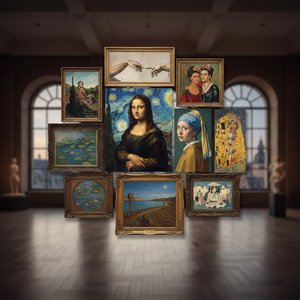
Capodopere în ulei pe pânză: 10 opere care au revoluționat arta | OriginalUniqueArt.ro
Descoperă cele mai importante 10 capodopere în ulei pe pânză care au schimbat istoria artei! Explorează poveștile lui Van Gogh, Da Vinci și alți pictori renumiți. Reproduceri de artă de calitate muzeală pentru decorul perfect. Explorează colecția completă online pe OriginalUniqueArt.com!


