

 Vezi în context
 Trimite
 Distribuie
 Detalii
 Ghidul

 Descarcă
 Produse similare
 Radiografie
 Diaporama
 Statistici
Predella panel from the Pisa Altar


 Citește mai mult
Reproducere pictată manual în ulei
Pictură în ulei pe pânză, realizată manual de artiștii noștri la dimensiunea și ramele dorite de dumneavoastră, pe comandă. ( Comută pe versiunea Print Treci la imagine digitală)




P118B lei10

P118H lei10

P118W lei10

P438Z lei10

P508JH lei12

P508YH lei12

P805H lei10

P805Z lei10

P919BZ lei10

P919G lei10

P919XJ lei10

P959ZH lei10

P968JZ lei12

W106C lei8

W218G lei10

W218JH lei8

W218Y lei10

W307PJ lei10

W316G lei10

W316PJ lei8

W316Y lei10

W398PJ lei8

W4111J lei10

W500HY lei15

W500JH lei15

W692G lei12

W849H lei8

W940BG lei15

W953PJ lei8




Alegeți dintre dimensiunile noastre prestabilite, care respectă proporțiile originale ale operei de artă.

Puteți introduce propriile dimensiuni pentru a se potrivi unui anumit cadru sau spațiu. Dacă dimensiunea selectată nu corespunde proporțiilor imaginii originale, vom decupa opera de artă sau vom extinde pictura cu elemente suplimentare pictate manual. O simulare digitală vă va fi trimisă pentru aprobare înainte de începerea producției.
Vă rugăm să rețineți că previzualizarea de pe ecran nu reflectă decuparea sau extinderea reală. Doar macheta va arăta cu exactitate compoziția finală.
Deși sunt disponibile dimensiuni personalizate, vă recomandăm să selectați o dimensiune din lista predefinită pentru a păstra proporțiile originale.
După plasarea comenzii, echipa OriginalUniqueArt.com va contacta clientul prin e-mail pentru instrucțiuni și îi va furniza o previzualizare a machetei
Livrare în întreaga lume () în 3-4 săptămâni, în loc de cele 5 săptămâni standard. (28 Septembrie). Fără compromisuri în ceea ce privește calitatea.

Livrare expres gratuită la nivel mondial

Pânză de in premium

Asigurare completă pentru transport

Garanție de rambursare a taxelor vamale

Garanția fidelității culorilor

Politica de retur în 100 de zile (doar pentru defecte)

Garanție de rambursare 100%

Reducere pentru comenzi multiple
 Opțiunea cu sticlă este disponibilă doar pentru dimensiuni de sub 110 cm

Predella panel from the Pisa Altar
Tip de reproducere
Dimensiune reproducere
-


Preț total
lei 1355
A Dawn of Realism: The Predella Panel from Masaccio’s Pisa Altar
The world of 15th-century Florentine painting was undergoing a seismic shift, and at the heart of this transformation stood Masaccio – a name that resonates with an almost mythical quality within art history. His “Predella panel from the Pisa Altar,” a remarkably intimate depiction of scenes from Christ’s life, isn't merely a religious image; it’s a foundational document in the birth of Western Renaissance painting. Measuring just 21 x 61 cm, this unassuming panel belies its monumental significance – it represents a radical departure from the stylized conventions of the preceding Gothic era and lays the groundwork for the naturalism that would define the movement.
Masaccio’s genius lay in his ability to capture not just the outward appearance of figures but also their underlying physicality, their emotional depth. The panel, painted in 1426, immediately draws the eye with its masterful use of *chiaroscuro* – the dramatic interplay of light and shadow that sculpts forms and imbues them with a startling sense of volume. Notice how the figures aren’t flat or idealized; they possess weight, texture, and a palpable sense of three-dimensionality. This is achieved through meticulous observation of anatomy, a technique pioneered by Masaccio and directly influenced by his study of classical sculpture.
- The Scene: The panel depicts two pivotal moments from the life of Christ – the Crucifixion of St. Peter and the Beheading of St. John the Baptist. These aren’t grand, theatrical events; rather, they are rendered with a quiet intensity, focusing on the human cost of sacrifice and martyrdom.
- Perspective: Masaccio was a pioneer in the application of linear perspective to painting. The architectural elements within the scenes – the arches, columns, and walls – converge towards a vanishing point, creating an illusion of depth that pulls the viewer into the narrative. This technique, revolutionary at the time, establishes a new standard for realism in art.
- Emotional Resonance: The figures aren’t simply depicted; they *feel*. The sorrowful gaze of Mary Magdalene, the stoic acceptance of St. Peter, and the horrified expression of onlookers convey a profound sense of empathy and human vulnerability.
Masaccio: A Brief but Brilliant Life
Born Tommaso di Ser Giovanni di Simone in San Giovanni Valdarno around 1401, Masaccio’s life was tragically short – he died in Florence in the summer of 1428, likely from a fever. Despite his brief career, he left an indelible mark on the art world. His apprenticeship remains shrouded in some mystery, though it's believed he learned primarily through observation and direct contact with other artists like Andrea del Verrocchio. His early works, including the “Pisa Altarpiece,” demonstrate a remarkable ability to synthesize influences from Giotto – particularly his use of naturalistic figures – with the emerging principles of linear perspective and classical ideals.
Masaccio’s influence extended far beyond his own lifetime. Artists like Leonardo da Vinci and Michelangelo would later acknowledge his profound impact on their work, recognizing him as a key figure in the development of Western art. His legacy lies not just in specific paintings but in the revolutionary approach to representation that he pioneered – an approach that continues to inspire artists today.
The Context: The Pisa Altar and Early Renaissance Florence
The “Predella panel” was originally part of a larger altarpiece commissioned for Santa Maria del Carmine in Pisa by Giuliano di Colino. This commission represents a crucial moment in the early Renaissance – a time of renewed interest in classical art, humanism, and scientific observation. The altarpiece itself reflects this intellectual ferment, incorporating elements of both religious iconography and architectural design.
Florence, at this time, was experiencing an explosion of artistic creativity fueled by patronage from wealthy families like the Medici. Masaccio’s work exemplifies this spirit of innovation, pushing the boundaries of what was possible in painting and setting a new standard for realism and emotional expression. The panel stands as a testament to the transformative power of art during this pivotal period.
A Timeless Masterpiece: Reproductions and Beyond
Today, reproductions of Masaccio’s “Predella panel” are widely available, offering an accessible way to experience the beauty and innovation of this remarkable work. When selecting a reproduction, consider the quality of materials and printing techniques – a faithful rendering will capture the subtle nuances of light, shadow, and color that define Masaccio's genius. This small panel offers a profound glimpse into the dawn of Renaissance art—a reminder of the enduring power of observation, emotion, and artistic vision.
Biografie artist
Masaccio (1401-1428): The Dawn of Renaissance Realism
Tommaso di Ser Giovanni di Simone Cassai, better known as Masaccio (meaning "clumsy Tom"), was a pivotal figure in the Early Italian Renaissance. Born on December 21, 1401, in San Giovanni Valdarno, Italy, and dying tragically young in 1428, his brief career revolutionized painting with groundbreaking realism, perspective, and chiaroscuro (the use of strong contrasts between light and dark). Despite his short life, Masaccio’s impact on subsequent generations of artists was profound, establishing a new standard for naturalism and influencing the course of Western art.Early Life and Training
Masaccio's origins were humble; he descended from Ser Giovanni di Mone Cassai, a notary, and Jacopa di Martinozzo di Dino. His family name, Cassai, derived from his paternal grandfather’s trade as a cabinet maker—a craft that instilled in him an appreciation for meticulous detail and craftsmanship. Orphaned at age five when his father perished unexpectedly, Masaccio was cared for by his brother Giovanni (Lo Scheggia), who also pursued artistic endeavors. The precise details of Masaccio's formative years remain shrouded in obscurity – a rarity amongst Renaissance artists—underscoring the mystery surrounding his rapid ascent to mastery and the innovative techniques he pioneered. Scholarly speculation suggests that he likely apprenticed around the age of 12, though definitive documentation confirming his teacher is absent. This lack of verifiable biographical information adds to the fascination surrounding Masaccio’s artistic journey. He joined the painters’ guild (Arte de’ Medici e Speziali) in Florence on January 7, 1422, marking his emergence as an independent artist and signaling a decisive step toward realizing his creative ambitions.Artistic Development and Major Works
Masaccio's artistic vision was profoundly shaped by Giotto di Bondone—a predecessor who championed naturalism and imbued his frescoes with emotive depth. However, Masaccio swiftly surpassed Giotto’s achievements in mastering perspective and anatomical accuracy. He also absorbed inspiration from Filippo Brunelleschi’s revolutionary rediscovery of linear perspective—a breakthrough that fundamentally altered artistic representation. This intellectual engagement fueled Masaccio's groundbreaking innovations:- Linear Perspective: Masaccio meticulously applied vanishing points and mathematical precision to create a convincing illusion of depth on canvas, mirroring Brunelleschi’s architectural experiments.
- Chiaroscuro: He wielded light and shadow with unparalleled skill—a technique perfected by Leonardo da Vinci—to sculpt forms and imbue his paintings with palpable emotion and realism.
Historical Significance and Legacy
Giorgio Vasari, the celebrated Renaissance biographer, eloquently captured Masaccio’s genius—declaring him “the best painter of his generation” due to his unwavering commitment to imitating nature and conveying human emotion with breathtaking fidelity. Masaccio's influence extended far beyond Florence, inspiring artists across Italy and shaping the trajectory of Western art for centuries to come. He fundamentally challenged prevailing artistic conventions, ushering in an era of unprecedented realism and psychological depth—a transformation that continues to resonate today. His untimely demise at the age of 26—likely due to malaria—was mourned by contemporaries like Filippo Brunelleschi, who lamented the loss of such a prodigious talent. Masaccio’s legacy endures as one of the most important and influential artists in history—a beacon illuminating the path toward artistic innovation and demonstrating the transformative power of creative vision.
Masaccio
1401 - 1429 , Italia
Informații rapide
- Artistic Movement Or Style: Early Renaissance
- Artists Or Movements Influenced By This Artist: ['Later Renaissance painters']
- Artists Who Influenced This Artist:
- Giotto
- Filippo Brunelleschi
- Date Of Birth: December 21, 1401
- Date Of Death: Summer 1428
- Full Name: Tommaso di Ser Giovanni di Simone Cassai
- Nationality: Italian
- Notable Artworks:
- The Trinity
- Brancacci Chapel frescoes
- Place Of Birth: San Giovanni Valdarno, Italy
Articole conexe

The Enduring Legacy of Fresco: Technique, History & Artistic Expression Across Cultures
Explore the rich history & enduring legacy of fresco painting! Discover ancient techniques, Giotto's masterpieces, and modern applications. Expert insights for art lovers & professionals.

Moștenirea Frescei: Pictând Istoria Familiei pe Pereți
Transformă istoria familiei tale într-o frescă unică! Artiști profesioniști, tehnici moderne și consultanță gratuită. Creează o moștenire vizuală de neuitat cu .
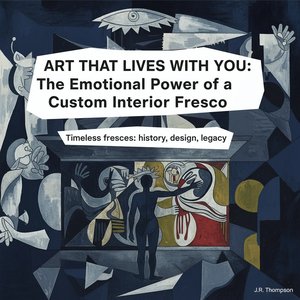
Arta care prinde viață: Puterea emoțională a unei fresce interioare personalizate
Descoperă puterea emoțională a unei fresce interioare personalizate! Experți în arta frescei oferim design unic, execuție impecabilă și consultanță gratuită. Transformă-ți spațiul!

The Enduring Legacy of Fresco: Technique, History & Artistic Expression
Explore the rich history & enduring artistry of fresco painting. Discover techniques from Giotto to Michelangelo, conservation efforts, & modern applications. Learn how OriginalUniqueArt brings this timeless art form to your home.
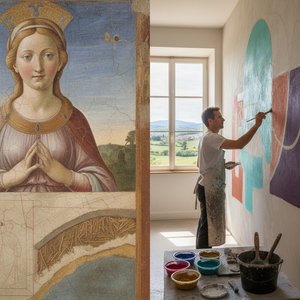
The Enduring Legacy of Fresco Painting: Techniques, History & Contemporary Relevance
Explore the rich history & enduring artistry of fresco painting – from Giotto to Michelangelo! Discover techniques, conservation efforts, & modern applications. Learn how OriginalUniqueArt brings this timeless art form to your home.


