
 Previzualizare
 Trimite prin felicitare
 Distribuie
 Detalii despre lucrare
 Ghid
Ghid

 Descarcă imaginea
 Produse similare
 Radiografie
 Galerie foto
 Întrebări și răspunsuri
 Statistici
Prickly Currant (Ribes lacustre)

- 25.0 x 18.0 cm


 Vezi mai mult
Giclée / Imprimare artistică
Printuri giclée sau pe canvas de calitate muzeală, cu proces de producție rapid și opțiuni flexibile de finisare. ( Comandă pictură realizată manual Comută pe Imagine Digitală)




































Alegeți dintre dimensiunile noastre prestabilite, care respectă proporțiile originale ale operei de artă.

Introduceți lățimea și înălțimea necesare pentru a se potrivi ramei sau peretelui dumneavoastră. O printare poate fi doar tăiată, niciodată extinsă dincolo de dimensiunea imaginii originale, astfel încât o dimensiune cu o formă diferită va pierde o parte din imagine. Vă trimitem o simulare digitală pentru aprobare înainte de a imprima orice. Imaginea afișată pe această pagină nu prezintă tăierea reală — doar simularea arată acest lucru.
Livrare în întreaga lume () în 2 săptămâni, în loc de cele 4/5 săptămâni standard. (8 Noiembrie)

Livrare expres gratuită la nivel mondial

Pânză de in de înaltă calitate

Asigurare completă pentru transport

Garanție de rambursare a taxelor vamale

Garanția fidelității culorilor

Politica de retur în 100 de zile (doar pentru defecte de fabricație)

Garanție de rambursare 100%

Ofertă pentru comenzi multiple
 Opțiunea cu sticlă este disponibilă doar pentru dimensiuni de sub 110 cm

Prickly Currant (Ribes lacustre)
Giclée / Imprimare artistică
Dimensiune reproducere
-


Preț total calculat
lei 386
Prickly Currant (Ribes lacustre): A Botanical Masterpiece
Mary Vaux Walcott's "Prickly Currant (Ribes lacustre)," painted in 1919, is a captivating watercolor study that exemplifies the artist’s meticulous observation of the natural world. Housed within the Smithsonian American Art Museum, this piece measures 25 x 18 cm and offers a close-up view of the plant's intricate details, showcasing the vibrant colors and delicate textures characteristic of wild flora.
The Artist's Style and Technique
Walcott’s artistic style is defined by her remarkable attention to detail and her ability to capture the essence of botanical subjects. She was renowned as "the Audubon of Botany," a testament to her skill in documenting North American wildflowers with scientific accuracy and aesthetic beauty. Her preferred medium, watercolor, allowed for a delicate and subtle rendering of forms, perfectly suited for depicting the intricate details of plants and flowers. The “Prickly Currant” demonstrates this mastery; the painting’s soft edges and blended colors are achieved through layering washes of color and precise brushstrokes, creating a sense of depth and volume.
Botanical Accuracy and Historical Context
This artwork is more than just a beautiful image; it's a valuable contribution to botanical science. During the late 19th and early 20th centuries, detailed botanical illustrations were crucial for scientific documentation and identification. Walcott’s work aligns with this tradition, providing an accurate representation of *Ribes lacustre*, also known as prickly currant or bristly black currant. Her dedication to accuracy stemmed from her extensive fieldwork in the Canadian Rockies, where she meticulously observed and documented plant life alongside her husband, paleontologist Charles Doolittle Walcott. The Smithsonian’s publication of her illustrations across five volumes, "North American Wild Flowers," further cemented her legacy as a significant contributor to botanical knowledge.
Symbolism and Emotional Impact
While primarily a scientific study, “Prickly Currant” evokes a sense of quiet beauty and appreciation for the natural world. The vibrant red berries against the lush green leaves create a visually striking contrast, symbolizing resilience and vitality. Walcott’s skill in capturing the plant's delicate structure invites viewers to pause and appreciate the intricate details often overlooked in everyday life. The painting resonates with a feeling of tranquility and reverence for nature, reflecting the artist’s deep connection to the wilderness.
Other Notable Works by Mary Vaux Walcott
Explore more of Mary Vaux Walcott's botanical artistry through these additional works:
- Northern Bedstraw (Galium boreale)
- Jacob's Ladder (Polemonium viscosum)
- Siberian Onion (Allium sibericum)
These pieces, along with "Prickly Currant," can be found on OriginalUniqueArt.com, offering handmade oil painting reproductions of these remarkable artworks.
Întrebări și răspunsuri
Ce dimensiuni are originalul "Prickly Currant (Ribes lacustre)"?
„Prickly Currant (Ribes lacustre)” măsoară 25 x 18 cm în formatul său original. Dimensiunile originale reprezintă o referință utilă atunci când alegeți dimensiunea unei reproduceri.
Ce dimensiune se recomandă pentru "Prickly Currant (Ribes lacustre)" într-un Living Room?
Pentru o Living Room, recomandăm pentru "Prickly Currant (Ribes lacustre)" o dimensiune de tipar de Medium.
Ce emoție transmit culorile din "Prickly Currant (Ribes lacustre)" de Mary Vaux Walcott?
Paleta Pastels a operei "Prickly Currant (Ribes lacustre)" de Mary Vaux Walcott se armonizează cu tonul său Tranquil. Culoarea este una dintre modalitățile prin care o lucrare transmite emoție.
Biografie artist
A Life Blossoming in Watercolor: The World of Mary Vaux Walcott
Mary Vaux Walcott, born in Philadelphia in 1860, seemed destined for a life steeped in quiet domesticity – a path dictated by the expectations of her Quaker upbringing. Yet, from an early age, a vibrant artistic spirit ignited within her, fueled by a simple gift: a set of watercolor paints at the tender age of eight. These weren’t mere tools; they were keys unlocking a lifelong passion for capturing the delicate beauty of the natural world, particularly the ephemeral splendor of wildflowers. Little did anyone suspect that this nascent inclination would blossom into a remarkable career, earning her the affectionate and enduring title “the Audubon of Botany.” Her story is far more than just artistic talent; it’s a testament to resilience, an insatiable curiosity about the natural world, and a pioneering spirit that bravely defied the societal constraints placed upon women in the late 19th century. The responsibility for caring for her father and two younger brothers fell heavily upon young Mary after the untimely death of her mother in 1880 – a profound loss that shaped her life’s trajectory and instilled within her an unwavering sense of duty. This devotion, however, didn't extinguish her creative flame; rather, it deepened her connection to the landscapes they explored together during their annual summer expeditions to the majestic Canadian Rockies.The Allure of the Rockies: Nature as Muse and Subject
These journeys to the Canadian Rockies became the very crucible in which Mary’s artistic talent truly flourished. The rugged grandeur of these mountains – the towering peaks, the glacial valleys, and the vibrant alpine flora – transformed into her personal laboratory. Unlike many artists who merely sought to depict a landscape for its aesthetic beauty, Mary engaged with it on a far deeper level. Alongside her brothers, she meticulously documented the Rockies, not just through sketches and photographs, but also by studying mineralogy, charting the slow, inexorable retreat of glaciers through detailed drawings and measurements, and immersing herself in the intricate details of alpine wildflowers. This wasn’t passive observation; it was an active, almost scientific pursuit – a desire to understand the underlying processes that shaped this extraordinary environment. It was during these expeditions that Mary began to hone her remarkable skills as a botanical illustrator, initially at the request of botanists eager for accurate and detailed depictions of rare and elusive plant species. Her approach was revolutionary for its time; she didn’t simply paint flowers; she rendered them to scale, meticulously capturing their delicate structures, vibrant colors, and subtle textures with an unprecedented level of precision. Her illustrations were not romanticized or idealized; they prioritized scientific accuracy alongside artistic expression, presenting a remarkably honest portrayal of the natural world. The vastness of the landscape also fostered a spirit of adventure – in 1900, Mary became the first woman recorded to successfully summit Mount Stephen, a feat that underscored her physical courage and unwavering determination.A Partnership Forged in Science and Art
Mary’s life took another significant turn in 1914 when she married Charles Doolittle Walcott, then Secretary of the Smithsonian Institution and a renowned paleontologist. This union wasn't merely a personal connection; it was a meeting of minds deeply committed to scientific exploration. Their marriage fostered a unique partnership where art and science intertwined seamlessly. They continued their annual expeditions to the Rockies, with Charles pursuing his geological research while Mary dedicated herself to her botanical paintings – often working side-by-side, documenting both the rocks and the flowers that adorned the landscape. This collaboration enriched both of their pursuits, providing Mary with a broader context for understanding the natural world and offering Charles a fresh perspective on the beauty and complexity of the Rockies. The Smithsonian Institution became a crucial platform for showcasing Mary’s work, culminating in the publication of *North American Wild Flowers* in 1925 – a monumental five-volume collection featuring over 400 of her meticulously crafted illustrations accompanied by detailed descriptions and scientific observations. This publication cemented her reputation as a leading botanical artist and earned her the enduring moniker “the Audubon of Botany,” acknowledging the parallel between her detailed floral studies and John James Audubon’s iconic depictions of birds.The Art of Observation: Technique and Style
Mary Vaux Walcott's artistic style was characterized by an extraordinary level of detail and scientific accuracy, a departure from the more romanticized approaches prevalent in botanical illustration at the time. She meticulously studied each flower, rendering its delicate petals, intricate veins, and subtle variations in color with remarkable precision. Her illustrations were not merely decorative; they served as valuable scientific records, providing botanists with accurate depictions of rare and elusive species. Walcott’s technique involved working directly from nature, often painting outdoors on location to capture the fleeting effects of light and shadow. She employed a layered approach, building up color gradually through multiple washes, creating a sense of depth and luminosity. Her use of watercolor was masterful – she skillfully manipulated the medium's transparency and fluidity to achieve subtle gradations of tone and texture. Furthermore, her illustrations were notable for their scale; she rendered plants to life-size or even larger, showcasing their full beauty and complexity. This commitment to realism, combined with her artistic skill, resulted in images that are both scientifically informative and aesthetically captivating.Legacy and Recognition
Mary Vaux Walcott’s influence extends far beyond the beauty of her paintings. Her work represents a unique synthesis of artistic skill, scientific observation, and adventurous spirit – a testament to her pioneering nature. She wasn't simply documenting flowers; she was capturing their essence, revealing their intricate structures, and celebrating their vital role in the natural world. Her illustrations continue to be valued by both art enthusiasts and botanists alike, serving as invaluable resources for identifying and studying North American flora. Beyond her artistic achievements, Walcott also demonstrated a commitment to public service, serving on the federal Board of Indian Commissioners from 1927 to 1932 and actively advocating for improved conditions on Native American reservations. Upon her death in 1940, she bequeathed a substantial sum to the Smithsonian Institution, ensuring that future generations would benefit from scientific research and publication. A mountain peak in Jasper National Park, Mount Mary Vaux, stands as a lasting tribute to her adventurous spirit and enduring legacy – a reminder of a woman who dared to combine passion, dedication, and a deep connection with nature into a life of remarkable achievement.
Mary Vaux Walcott
1860 - 1940 , Statele Unite ale Americii
Detalii rapide
- Artistic Movement Or Style: Ilustrații botanice
- Artists Or Movements Influenced By This Artist: ['Maria Sibylla Merian']
- Artists Who Influenced This Artist: ['John James Audubon']
- Date Of Birth: 31 iulie 1860
- Date Of Death: 22 august 1940
- Full Name: Mary Vaux Walcott
- Nationality: Americană
- Notable Artworks:
- Flori americane
- Arnica
- Dendromecon
- Place Of Birth: Philadelphia, SUA
Articole similare

Ephemeral Visions: Exploring the Artistic Legacy & Nuances of Watercolor Painting
Explore the captivating world of watercolor painting! Discover its rich history, essential techniques, influential artists & collecting tips from art experts. A comprehensive guide for enthusiasts.
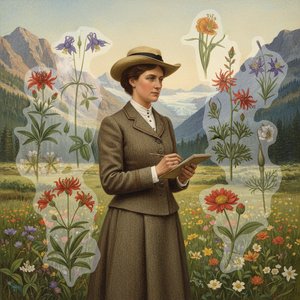
Mary Vaux Walcott: Botanical Precision & Artistic Vision in American Conservation
Discover the exquisite botanical watercolors of Mary Vaux Walcott, celebrated as the 'Audubon of Botany.' Explore her life, art, and lasting impact on American conservation through detailed illustrations & Smithsonian contributions.

Ephemeral Visions: Exploring the Artistic Legacy & Contemporary Practice of Watercolor Painting
Explore the captivating world of watercolor painting! Discover its rich history, essential techniques, influential artists & collecting tips. A comprehensive guide for art enthusiasts from OriginalUniqueArt.

Top 10 Capodopere Acvarelă Legendară care au Schimbat Arta pentru Totdeauna | OriginalUniqueArt.ro
Descoperă Top 10 capodopere acuarelă legendară de la Sargent, Turner și alți maeștri! Explorează istoria artei, tehnicile unice și paletele vibrante. Reproduceri de artă de calitate muzeală pentru decorul perfect pe OriginalUniqueArt.com.

Ephemeral Visions: Exploring the History & Emotional Resonance of Watercolor Painting
Explore the captivating history of watercolor painting, from ancient techniques to modern masters like Kandinsky & Blake. Discover essential artists, collecting tips & the emotional power of this luminous medium. Expert insights for art enthusiasts.


