Color Field Expressionism
New Forms (Mark Rothko)
Mark Rothko (1903–1970) a realizat New Forms. Face parte din mișcarea Color Field Expressionism. Este realizată în Oil On Canvas.
- Oil On Canvas

 Previzualizare

 Tablou în ulei pictat manual
 Trimite prin felicitare
 Distribuie
 Ghid


 Descarcă imaginea
 Produse similare
 Radiografie
 Galerie foto
 Întrebări și răspunsuri

 Statistici
New Forms: esențialul
- Titlu
- New Forms
- Artist
- Mark Rothko (1903–1970)
- Artist născut în
- Daugavpils, Letonia
- Medium
- Oil On Canvas
- Mișcare
- Color Field Expressionism
- Perioadă
- Modern
- Subiect
- color field, abstraction, emotional depth, geometric form, desert landscape, minimalism
Ce reprezintă New Forms?
The Resonance of Color: Unveiling Rothko’s Vision
To stand before Mark Rothko’s “New Forms” is to enter a realm where the boundaries between the physical canvas and the human psyche begin to dissolve. As a cornerstone of the Abstract Expressionism movement, this work transcends mere pigment on fabric; it serves as a profound exploration of emotional depth through the revolutionary language of Color Field painting. Rothko, born in Latvia in 1903, carried a lifelong sensitivity to the complexities of human suffering and displacement—themes that found their most eloquent expression not in figures or landscapes, but in the weight and warmth of color itself. In this piece, we witness the artist’s mastery over the subconscious, inviting viewers to bypass visual perception and instead encounter a direct, visceral emotional resonance.
The composition is a masterclass in atmospheric depth and luminous intensity. Eschewing traditional representational subjects, Rothko utilizes expansive, rectangular blocks of color that appear to float within the frame. The palette—often characterized by rich crimsons, vibrant yellows, and glowing oranges—is applied through meticulous layers of thin, translucent washes. This glazing technique allows light to penetrate the surface, creating an internal glow that makes the forms seem to pulse with a life of their and breathe within the space. For the discerning collector or interior designer, this creates a sense of movement and "living" art; the colors do not simply sit upon the surface but seem to emerge from a deep, infinite void, providing a focal point that is both commanding and contemplative.
A Symphony of Emotion and Interior Harmony
Beyond its technical brilliance, “New Forms” functions as a portal to inner landscapes. The way the edges of the color blocks softly bleed into one another creates an illusionistic quality, suggesting a state of constant flux and transition. This lack of rigid borders mirrors the fluidity of human feeling—the way grief can merge with hope, or how tranquility can be interrupted by sudden intensity. The warmth of the yellowish tints against the dramatic red background evokes a sense of a desert-like heat or a sunset that lingers on the edge of memory, making the piece an evocative centerpiece for any sophisticated environment.
For those seeking to integrate fine art into a curated space, a high-quality reproduction of this masterpiece offers more than mere decoration; it offers an atmosphere. Whether placed in a quiet study to foster introspection or in a grand living area to provide a bold, emotive anchor, the painting’s ability to command attention through subtle nuance is unparalleled. It remains a testament to Rothko's enduring legacy—a work that does not just ask to be seen, but demands to be felt, transforming any room into a sanctuary of profound aesthetic and emotional significance.
New Forms în înaltă rezoluție

Protejat de drepturile de autor: imaginea este prezentată în scop de referință.
Mai multe dimensiuni, cadruri și citări →Mark Rothko, New Forms.
Întrebări despre New Forms
Ce tehnică a fost utilizată pentru "New Forms" de Mark Rothko?
"New Forms" este realizat în Oil On Canvas."
Ce subiecte sunt reprezentate în "New Forms" de Mark Rothko?
Subiectele din "New Forms" sunt color field, abstraction, emotional depth, geometric form, desert landscape, minimalism, rothko style.
Imaginea pentru "New Forms" de Mark Rothko poate fi reprodusă liber?
"New Forms" de Mark Rothko este în domeniul public (încă protejată de drepturile de autor). Acest statut reglementează modul în care imaginea lucrării poate fi reprodusă.
Cine este artistul din spatele "New Forms"?
„New Forms” a fost creat de Mark Rothko. Informațiile de pe această pagină descriu opera originală a lui Mark Rothko.
Din ce curent artistic face parte "New Forms" de Mark Rothko?
„New Forms” este o operă de Color Field Expressionism. Acest curent indică tradiția artistică din care face parte lucrarea.
Din ce perioadă a carierei lui Mark Rothko face parte „New Forms”?
„New Forms” aparține perioadei Mature Period din cariera lui Mark Rothko. Această clasificare corelează opera cu evoluția artistului.
Este "New Forms" de Mark Rothko în domeniul public și care este motivul?
Statutul drepturilor de autor pentru "New Forms" - încă protejată de drepturile de autor - este determinat de data decesului artistului, în anul 1970.
Unde se încadrează "New Forms" în întreaga creație a lui Mark Rothko?
„New Forms” împarte cu celelalte opere ale lui Mark Rothko stilul Color Field Expressionism și temele recurente: color field expressionism influence, existential themes exploration, emotional resonance significance, minimalist aesthetic approach, rothko legacy continuation.
În ce măsură subiectul operei „New Forms” se regăsește în temele obișnuite ale lui Mark Rothko?
Printre temele consacrate ale lui Mark Rothko, color field expressionism influence, existential themes exploration, emotional resonance significance, minimalist aesthetic approach, rothko legacy continuation – „New Forms” oferă o perspectivă proprie asupra color field, abstraction, emotional depth, geometric form, desert landscape, minimalism, rothko style.
Despre artistul Mark Rothko

1903–1970, Letonia
Mark Rothko
Primii ani ai lui Mark Rothko Mark Rothko s-a născut sub numele de Markus Yakovlevich Rothkowitz în anul 1903, în Dvinsk, Rusia, într-un loc cunoscut astăzi sub numele de Daugavpils, Letonia. Familia sa a trăit în cadrul Zonei de Rezidență, o regiune marcată de agitația politică și de umbra constantă a pogromurilor. Această atmosferă de instabilitate a urmărit familia în timpul emigrării către Statele Unite în 1913. După trecerea prin Ellis Island, aceștia s-au stabilit în Portland, Oregon.
Alte lucrări ale lui Mark Rothko
 Centru Alb1950
 Nu.1
 Nr. 61 (Rugină și Albastru)1953
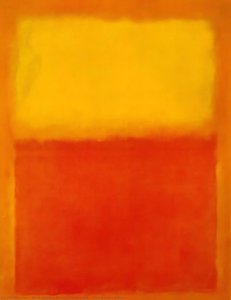 Portocaliu și galben1956
Eseuri despre New Forms
 Chromatic Atmospheres: Exploring the Philosophical Foundations of Color Field PaintingExplore the philosophical and aesthetic foundations of Color Field painting with OriginalUniqueArt. Discover key artists like Rothko & Newm…
 The Architecture of Emotion: A Connoisseur’s Guide to the Chromatic Sublimity of Mark RothkoExplore the profound emotional landscapes of Mark Rothko. An expert editorial on Color Field painting, decoding the spiritual depth, techni…
 Mark Rothko: Cele Mai Iconice 25 De Capodopere – Artă Abstractă pentru Decor RafinatDescoperă cele mai iconice 25 de picturi abstracte ale lui Mark Rothko! Explorează istoria, culorile și emoțiile din spatele fiecărei capod…