Comută pe versiunea Print
 Vezi mai mult







































 Pentru opere de artă sau reproduceri care depășesc 105 cm (aproximativ 41 de inch) pe oricare dintre laturi, cadrul va fi livrat demontat, sub formă de kit. Această metodă asigură o livrare sigură și previne deteriorarea în timpul transportului.


A Symphony of Sorrow and Light
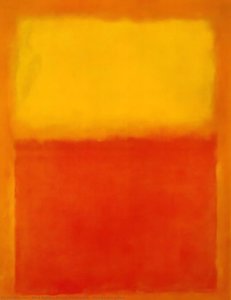
In the vast, silent landscape of Abstract Expressionism, few works possess the haunting intimacy of Mark Rothko’s “Lavender and Mulberry.” Created in 1962, this masterpiece serves as a profound meditation on the duality of human existence—the delicate balance between memory and mourning. At first glance, the composition appears deceptively simple, consisting of two monumental rectangular blocks of color that seem to float within a deep, atmospheric void. Yet, to look upon this canvas is to enter a sacred space where color transcends its physical properties to become a vessel for pure emotion. The soft, muted lavender interacts with the somber, weighted mulberry in a way that suggests a quiet conversation between the light of life and the encroaching shadows of loss.
The technical brilliance of this piece lies in Rothko’s signature wet-on-wet technique, a method that demands both immense control and a surrender to chance. By applying thin, translucent layers of pigment onto linen, Rothko achieved an ethereal luminosity that makes the canvas appear to breathe. There are no harsh borders here; instead, the edges of the color fields bleed softly into one another, creating a blurred boundary that mimics the way memories fade or how grief can cloud one's perception of reality. This layering process creates a velvety depth, inviting the viewer to peer into the very heart of the pigment, where light seems to be trapped beneath the surface, vibrating with an unspoken, rhythmic energy.
The Weight of History and Symbolism
To understand “Lavender and Mulberry,” one must look toward the turbulent biography of its creator. Rothko’s life was defined by a sense of displacement and profound personal tragedy, moving from the anxieties of the Pale of Settlement in Latvia to the cultural upheaval of America. The painting is often interpreted through the lens of his internal struggles; critics have long noted that the lavender hues evoke a sense of tender remembrance, while the deeper, more bruised mulberry tones symbolize the heavy mantle of mourning. This interplay reflects the complex, non-linear process of confronting mortality—a theme that resonated deeply within Rothko as he navigated the profound sorrows of his later years.
For the discerning collector or interior designer, this work offers much more than mere aesthetic beauty. It is a piece of intellectual and emotional gravity. In a contemporary setting, a high-quality reproduction of “Lavender and Mulberry” acts as a focal point of contemplative calm. Its minimalist structure allows it to integrate seamlessly into sophisticated, modern environments, providing a sense of depth and soul to a room. Whether placed in a quiet study or a grand gallery space, the painting does not merely decorate a wall; it transforms the atmosphere, inviting anyone who encounters it to pause, reflect, and engage with the universal language of color and spirit.
Întrebări și răspunsuri
Ce stare și ce emoție transmite "Lavender and Mulberry" de Mark Rothko?
Starea de spirit surprinsă în "Lavender and Mulberry" de Mark Rothko este Serene, iar tonul său emoțional este Calm.
„Lavender and Mulberry” este disponibil(ă) sub formă de print de fine art?
O ediție print a lucrării "Lavender and Mulberry" de Mark Rothko poate fi comandată direct pe pagina sa de Print Fine Art: o printă fine art pe canvas din bumbac sau pe hârtie canvas arhivistică.
Cum se încadrează stilul operei „Lavender and Mulberry” în contextul epocii creatorului său?
„Lavender and Mulberry” aparține mișcării Abstract Expressionism, iar creatorul său a activat în epoca Era modernă.
Mai multe detalii despre această pictură
 Previzualizare
 Trimite prin felicitare
 Distribuie
 Detalii despre lucrare
 Ghid
Ghid

 Descarcă imaginea
 Produse similare
 Radiografie
 Galerie foto
 Întrebări și răspunsuri
 Statistici