
 Previzualizare
 Trimite prin felicitare
 Distribuie
 Detalii despre lucrare
 Ghid
Ghid

 Descarcă imaginea
 Produse similare
 Radiografie
 Galerie foto
 Întrebări și răspunsuri
 Statistici
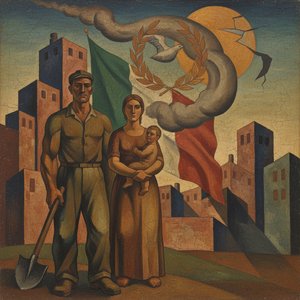
Il lavoratore

- 202.0 x 325.0 cm


 Vezi mai mult
Lucrarea de artă afișată pe această pagină este protejată de legile privind drepturile de autor, ceea ce înseamnă că nu putem crea sau vinde în mod legal o reproducere identică. Această protecție este garantată prin acorduri internaționale, precum Convenția de la Berna și de legile naționale, inclusiv cele prevăzute de Legea dreptului de autor din S.U.A. – Titlul 17. Toate drepturile rezervate. Orice reproducere neautorizată este interzisă.
Această metodă respectă pe deplin reglementările privind drepturile de autor, deoarece nu implică copierea sau duplicarea operei protejate. În schimb, este o reinterpretare creativă – o pictură nouă, influențată de original, dar care nu este identică cu acesta.
Giclée / Imprimare artistică
Printuri giclée sau pe canvas de calitate muzeală, cu proces de producție rapid și opțiuni flexibile de finisare. ( Comandă pictură realizată manual Comută pe Imagine Digitală)




P118B lei10

P118H lei10

P118W lei10

P438Z lei10

P508JH lei12

P508YH lei12

P805H lei10

P805Z lei10

P919BZ lei10

P919G lei10

P919XJ lei10

P959ZH lei10

P968JZ lei12

W106C lei8

W218G lei10

W218JH lei8

W218Y lei10

W307PJ lei10

W316G lei10

W316PJ lei8

W316Y lei10

W398PJ lei8

W4111J lei10

W500HY lei15

W500JH lei15

W692G lei12

W849H lei8

W940BG lei15

W953PJ lei8




Alegeți dintre dimensiunile noastre prestabilite, care respectă proporțiile originale ale operei de artă.

Introduceți lățimea și înălțimea necesare pentru a se potrivi ramei sau peretelui dumneavoastră. O printare poate fi doar tăiată, niciodată extinsă dincolo de dimensiunea imaginii originale, astfel încât o dimensiune cu o formă diferită va pierde o parte din imagine. Vă trimitem o simulare digitală pentru aprobare înainte de a imprima orice. Imaginea afișată pe această pagină nu prezintă tăierea reală — doar simularea arată acest lucru.
Livrare în întreaga lume () în 2 săptămâni, în loc de cele 4/5 săptămâni standard. (4 Noiembrie)

Livrare expres gratuită la nivel mondial

Pânză de in de înaltă calitate

Asigurare completă pentru transport

Garanție de rambursare a taxelor vamale

Garanția fidelității culorilor

Politica de retur în 100 de zile (doar pentru defecte de fabricație)

Garanție de rambursare 100%

Ofertă pentru comenzi multiple
 Opțiunea cu sticlă este disponibilă doar pentru dimensiuni de sub 110 cm

Il lavoratore
Giclée / Imprimare artistică
Dimensiune reproducere
-


Preț total calculat
lei 385
A Monumental Vision of Labor and Solitude
In the profound depths of Mario Sironi’s Il Lavoratore, we encounter more than a mere preparatory study; we witness a monumental dialogue between the individual and the weight of history. Created as a preparatory cartoon for the massive mosaic commissioned for the 1936 Milan Triennial, this work serves as a powerful window into the socio-political soul of Fascist Italy. Yet, beneath the surface-level nod to Mussolini’s vision of a disciplined, industrious citizenry, lies a much more intimate and haunting exploration of the human condition. The painting captures a solitary figure, rendered with a gravity that transcends its original political intent, embodying a sense of profound isolation and the quiet, enduring struggle for meaning amidst the relentless march of industrial progress.
The composition is masterfully structured to command the viewer's attention, utilizing a verticality that emphasizes the weight of the subject. A single figure dominates the space, positioned in a posture that oscillates between humble submission and defiant endurance. Through Sironi’s lens, the act of labor is stripped of its romanticized glory and instead presented as an existential state—a moment of stillness within a world of shifting shadows. For the discerning collector or interior designer, this piece offers a commanding presence, bringing a sense of historical weight and intellectual depth to any curated space.
The Alchemy of Shadow and Form
Technically, Il Lavoratore is a triumph of early Modernist expression, showcasing Sironi’s departure from the luminous, fragmented light of his Divisionist roots toward something far more substantial and somber. The artist employs a palette dominated by earthy ochres, deep blacks, and rich golds, creating a chiaroscuro effect that breathes life into the geometric forms. There is a palpable sense of impasto here; the visible, thick brushstrokes suggest a tactile reality, as if the paint itself were labored over with the same intensity as the subject it depicts.
The style leans heavily into the metaphysical and the expressionistic, where shapes are simplified into powerful, architectural blocks. The lines defining the figure and the surrounding environment are not sharp or clinical but possess a smoky, blurred quality that contributes to a claustrophobic, almost dreamlike atmosphere. This lack of traditional linear perspective flattens the space, forcing the viewer to confront the emotional volume of the figure rather than getting lost in a receding landscape. The interplay of light, appearing to descend from above, casts dramatic shadows that carve out the musculature and the heavy folds of the composition, lending the work an almost sculptural permanence.
Symbolism and the Emotional Resonance
To gaze upon Il Lavoratore is to engage with a complex tapestry of symbolism. The outstretched arms of the figure can be interpreted as a gesture of both vulnerability and strength—a reaching out toward a connection that remains perpetually out of grasp. Sironi, influenced by the psychological depth of Giorgio de Chirico, uses these massive, immobile forms to evoke a sense of timelessness and melancholy. The geometric rigidity of the background elements contrasts sharply with the organic, albeit stylized, form of the human body, mirroring the tension between the individual spirit and the cold, industrial structures of modern society.
For those seeking to incorporate art into a sophisticated interior, this reproduction offers an unparalleled emotional impact. It is a piece that invites contemplation, acting as a focal point that stimulates conversation about identity, resilience, and the passage of time. Whether placed in a quiet study or a grand gallery, Il Lavoratore radiates a somber elegance, making it an exquisite choice for those who appreciate art that speaks to the complexities of the human experience through a lens of monumental beauty.
Întrebări și răspunsuri
În ce încăpere este recomandată expunerea operei „Il lavoratore”, având în vedere paleta sa cromatică?
Datorită paletei de culori Earthy, recomandăm "Il lavoratore" de Mario Sironi pentru o Living Room. Culorile sunt unul dintre motivele acestei sugestii.
Unde pot cumpăra o reproducere pictată manual a operei "Il lavoratore" de Mario Sironi?
„Il lavoratore” este disponibil ca o reproducere pictată manual în ulei pe pânză de in. Comanda poate fi plasată pe pagina de Reproducere pictată în ulei, cu posibilitatea de a alege dimensiunea dorită.
Este "Il lavoratore" în domeniul public?
În ceea ce privește drepturile de autor, "Il lavoratore" este încă protejată de drepturile de autor.
Biografie artist
Mario Sironi: Un Maestrosolitario del Novecento Italiano
Nacido en Sassari, en la isla de Cerdeña, el 12 de mayo de 1885, Mario Sironi no fue un artista que se definiera por su origen. Su padre, ingeniero, y su abuelo materno, Ignazio Villa – arquitecto y escultor respetado – le brindaron una exposición temprana al mundo del arte y la creación, sembrando en él las semillas de una futura trayectoria artística. Sin embargo, el destino quiso que su camino inicial se desviara hacia la ingeniería, un campo que estudió en la Universidad de Roma. Pero, a los 19 años, una crisis nerviosa lo obligó a abandonar sus estudios, marcando un punto de inflexión crucial: la decisión de dedicarse por completo al arte. Esta ruptura temprana con las expectativas familiares y académicas se reflejaría en su obra posterior, caracterizada por una profunda introspección y una búsqueda constante de nuevas formas de expresión. Sironi comenzó su formación artística en la Escuela Libre del Nudo de la Academia de Bellas Artes de Roma, donde encontró un mentor clave: Giacomo Balla. Balla, un pionero del Futurismo, introdujo a Sironi en el mundo de las vanguardias y le enseñó técnicas innovadoras como el Divisionismo – una técnica que buscaba capturar la luz y el movimiento mediante la separación de los colores en pinceladas finas y vibrantes. Esta influencia inicial se manifiesta claramente en sus primeras obras, como “El Estudiante” (1903), donde la luz fragmentada y las formas geométricas sugieren un dinamismo sutil pero innegable. Sin embargo, Sironi no se limitó a imitar el estilo de Balla; pronto comenzó a experimentar con otras corrientes artísticas, incluyendo el Futurismo, aunque su participación en este movimiento fue breve y pragmática. El año 1914 marcó un punto de inflexión en la carrera de Sironi. Inspirado por la energía y la vitalidad del Futurismo, expuso sus obras en la Galleria Sprovieri de Roma, pero rápidamente reconoció que el enfoque excesivo en la velocidad y la modernidad no se ajustaba a su visión artística. Tras esta breve incursión futurista, Sironi experimentó una transformación radical. Después de la Primera Guerra Mundial, su obra se caracterizó por un cambio drástico: la adopción de formas masivas e inamovibles, con geometrías simplificadas y una estética deliberadamente antinatural. Esta nueva dirección artística fue influenciada por sus experiencias traumáticas durante el conflicto bélico, así como por un creciente sentimiento de aislamiento y alienación. En este período, Sironi se alejó del brillo y la vitalidad del Futurismo, buscando en lugar de eso una forma de expresar la soledad y la desolación del mundo moderno. La década de 1920 fue testigo de la consolidación del estilo único de Sironi. En 1922, se unió al movimiento Novecento Italiano, un retorno a la claridad y la tradición en el arte europeo post-bélico. Sin embargo, Sironi no se limitó a seguir las convenciones de este movimiento; desarrolló su propio lenguaje visual caracterizado por una paleta de colores apagados, formas geométricas simplificadas y temas recurrentes como la soledad, la alienación y la vida industrial. Obras emblemáticas de esta época incluyen “Venere” (1921-1923) y “Solitudine” (“Soledad”, 1925), que reflejan su preocupación por la condición humana en un mundo cada vez más mecanizado y deshumanizado. En "Solitudine", por ejemplo, una figura solitaria emerge de un paisaje urbano árido, simbolizando el aislamiento del individuo en la sociedad moderna. La relación de Sironi con el fascismo italiano es un tema complejo y controvertido. A pesar de su postura política, que lo llevó a contribuir extensamente a las publicaciones fascistas, su obra artística no estuvo directamente ligada a la ideología oficial del régimen. Sin embargo, después de la Segunda Guerra Mundial, su asociación con el fascismo le valió una pérdida de prestigio y reconocimiento crítico. Sironi se retiró a un estilo de vida más reservado, continuando pintando en relativo aislamiento hasta su muerte en Milán en 1961. A pesar de las controversias que rodean su vida personal y política, la obra de Mario Sironi sigue siendo apreciada por su originalidad, su profundidad emocional y su capacidad para capturar la esencia del mundo moderno. Su legado reside en su búsqueda constante de nuevas formas de expresión y en su exploración de los temas universales de la soledad, la alienación y la condición humana.Influencias Artísticas y Estilo Evolutivo
La trayectoria artística de Mario Sironi estuvo marcada por una serie de influencias que se entrelazaron para dar forma a su estilo único. Inicialmente, el Divisionismo, con su énfasis en la luz y el color fragmentado, le proporcionó las herramientas técnicas para explorar la representación visual. Sin embargo, pronto se sintió atraído por el dinamismo del Futurismo, un movimiento que celebraba la velocidad, la tecnología y la modernidad. Aunque su participación en el Futurismo fue breve, esta experiencia le permitió experimentar con nuevas formas de expresión y desarrollar una sensibilidad hacia las posibilidades de la abstracción. Tras la Primera Guerra Mundial, Sironi experimentó una transformación radical en su estilo. Influenciado por sus experiencias traumáticas durante el conflicto bélico, comenzó a desarrollar un estilo caracterizado por formas masivas e inamovibles, con geometrías simplificadas y una estética deliberadamente antinatural. Esta nueva dirección artística fue influenciada también por la obra de Giorgio de Chirico y Carlo Carrà, artistas que habían explorado temas como el surrealismo y la metafísica en sus pinturas. Además, Sironi se inspiró en elementos de Neoclasicismo y Primitivismo Clásico, buscando en estas corrientes artísticas una forma de expresar la fuerza y la belleza de la naturaleza humana.El Novecento Italiano y la Madurez Artística
En 1922, Mario Sironi se unió al movimiento Novecento Italiano, un retorno a la claridad y la tradición en el arte europeo post-bélico. Este movimiento buscaba recuperar los valores clásicos de la belleza, la armonía y la proporción, rechazando las vanguardias experimentales que habían dominado el siglo XX. Sin embargo, Sironi no se limitó a seguir las convenciones del Novecento Italiano; desarrolló su propio estilo distintivo, caracterizado por una paleta de colores apagados, formas geométricas simplificadas y temas recurrentes como la soledad, la alienación y la vida industrial. Obras emblemáticas de esta época incluyen “Venere” (1921-1923) y “Solitudine” (“Soledad”, 1925). “Venere” representa una figura femenina en un entorno urbano desolado, simbolizando la pérdida de valores y la decadencia moral. “Solitudine” muestra una figura solitaria emergiendo de un paisaje industrial árido, representando el aislamiento del individuo en la sociedad moderna. Estas obras reflejan la preocupación de Sironi por la condición humana en un mundo cada vez más mecanizado y deshumanizado.Legado e Importancia Histórica
La obra de Mario Sironi representa una contribución significativa al arte italiano moderno. Su estilo único, que combina elementos del Divisionismo, el Futurismo y el Novecento Italiano, le permitió desarrollar una voz artística original y distintiva. Sironi exploró temas universales como la soledad, la alienación y la condición humana, resonando con las inquietudes de su tiempo. A pesar de las controversias que rodean su vida personal y política, su arte ha sido reconocido internacionalmente, incluyendo exposiciones en el Centre Georges Pompidou (1981) y la Royal Academy, London (1989). Su legado reside en su búsqueda constante de nuevas formas de expresión y en su capacidad para capturar la esencia del mundo moderno.
Mario Sironi
1885 - 1961 , Italia
Detalii rapide
- Artistic Movement Or Style: Novecento Italiano, Modernism
- Artists Or Movements Influenced By This Artist: ['Futurism']
- Artists Who Influenced This Artist: ['Giacomo Balla']
- Date Of Birth: 12 mai 1885
- Date Of Death: 13 aug 1961
- Full Name: Mario Sironi
- Nationality: Italian
- Notable Artworks:
- Venere
- Solitudine
- Place Of Birth: Sassari, Italia
Articole similare

Dincolo de Branding: Valorificarea Artei pentru Relații Corporative Strategice și Implicarea Părților Interesate
Descoperiți cum arta transformă spațiile corporative și consolidează relațiile! Ghid expert pentru investiții inteligente în artă, branding autentic și crearea unei culturi organizaționale puternice. Consultanță gratuită!
Mario Sironi: A Poetic of Modern Italian Identity Through Symbolism & Social Commentary
Explore the profound works of Mario Sironi, a key figure in Italian Modernism. Discover his evolution from Futurism to Metaphysical painting and his powerful social commentary. Learn about his legacy at OriginalUniqueArt.

Elevarea Evenimentelor Corporative Prin Cadouri Artistice Personalizate: Un Serviciu Concierge pentru Selecția și Livrarea Operativă a Operei de Artă
Descoperiți puterea cadourilor artistice personalizate pentru afaceri! Servicii concierge de selecție și livrare operativă a operei de artă. Consolidați relații, impresionați partenerii și creați o imagine de brand rafinată. Consultanță expertă gratuită!

Beyond Swag: Why Personalized Art is the Ultimate High-Impact Corporate Gift
Discover why personalized fine art is the ultimate high-impact corporate gift. Move beyond commodity swag to cultivate lasting prestige and brand loyalty through bespoke, hand-painted masterpieces designed for executives and discerning clients.

Dincolo de cadourile obișnuite: Arta personalizată pentru o apreciere corporativă durabilă
Descoperă arta personalizată de calitate superioară pentru cadouri corporative memorabile! Oferim soluții creative, adaptate bugetului tău, și consultanță expertă. Impresionează-ți partenerii cu un gest unic!
