

 Trimite
 Distribuie
 Detalii
 Ghidul

 Descarcă
 Produse similare
 Diaporama
 Statistici
Dress


 Citește mai mult
Giclée / Imprimare artistică
Printuri giclée sau pe canvas de calitate muzeală, cu proces de producție rapid și opțiuni flexibile de finisare. ( Comandă pictură realizată manual Treci la imagine digitală)




































Alegeți dintre dimensiunile noastre prestabilite, care respectă proporțiile originale ale operei de artă.

Introduceți lățimea și înălțimea de care aveți nevoie, pentru a se potrivi ramei sau peretelui dumneavoastră. O printare poate fi doar tăiată, niciodată extinsă dincolo de dimensiunea imaginii originale, astfel încât o dimensiune cu o formă diferită va pierde o parte din imagine. Vă trimitem o simulare digitală pentru aprobare înainte de a imprima orice. Imaginea afișată pe această pagină nu prezintă tăierea reală — doar simularea arată acest lucru.
Livrare în întreaga lume () în 2 săptămâni, în loc de cele 4/5 săptămâni standard. (25 Octombrie)

Livrare expres gratuită la nivel mondial

Pânză de in premium

Asigurare completă pentru transport

Garanție de rambursare a taxelor vamale

Garanția fidelității culorilor

Politica de retur în 100 de zile (doar pentru defecte)

Garanție de rambursare 100%

Reducere pentru comenzi multiple
 Opțiunea cu sticlă este disponibilă doar pentru dimensiuni de sub 110 cm

Dress
Giclée / Imprimare artistică
Dimensiune reproducere
-


Preț total
lei 370
A Glimpse of Parisian Elegance: Mariano Fortuny’s “Dress”
Mariano Fortuny y Marsal's "Dress," a captivating black and white photograph capturing a mannequin adorned in an opulent gown, offers more than just a visual representation; it’s a portal into the innovative world of a Spanish designer who revolutionized theatrical lighting and textile artistry at the turn of the 20th century. The image, dated 1925, presents a study in controlled elegance – a testament to Fortuny's meticulous approach and his ability to evoke a sense of timeless sophistication through carefully orchestrated detail. The mannequin, posed against a simple wall, becomes a stage for the dress itself, highlighting its intricate design and commanding presence.
Fortuny’s genius lay not just in creating beautiful garments but in fundamentally altering how they were presented. Born in 1871 in Granada, Spain, his early life was shaped by the untimely death of his father, a genre painter, which led to a move to Paris and an immersion into the world of textiles – a passion that would define his entire career. He wasn’t merely a fashion designer; he was a visionary inventor, driven by a desire to mimic the soft, diffused light of the East in theatrical productions. This pursuit led him to develop the “fortuny cyclorama,” a revolutionary dome system that utilized reflecting surfaces to create seamless transitions between scenes and bathe performers in an ethereal glow – a technique directly informing his approach to garment design.
The Delphos Dress: A Masterclass in Orientalist Design
“Dress” is intimately connected to Fortuny’s most celebrated creation, the “Delphos” gown. Inspired by the opulence of the Alhambra palace in Granada and drawing heavily on his travels through the Middle East, the Delphos dress embodies a distinctly Orientalist aesthetic. The photograph captures elements of this influence – the flowing lines, the intricate patterns reminiscent of mosaics and textiles, and the overall sense of luxurious comfort. The dress itself is constructed from layers of silk, cording, and delicate beads, creating a textured surface that catches the light beautifully. It’s a garment designed to be worn with grace and confidence, projecting an aura of refined mystery.
Fortuny's meticulous attention to detail extended beyond mere aesthetics; he was obsessed with achieving a specific *feeling* through his designs. He believed in creating garments that told stories – narratives of exotic lands, ancient civilizations, and the beauty of the natural world. The “Dress” photograph subtly hints at this narrative, inviting the viewer to imagine the wearer gliding through grand halls or strolling along sun-drenched streets.
Technique and Innovation: Fortuny’s Legacy
The photograph's stark black and white palette emphasizes the textures and forms of the dress, highlighting Fortuny’s masterful use of fabric manipulation. The layering of silk creates a sense of depth and movement, while the beads add subtle shimmer and sparkle. His innovative approach to lighting, pioneered in his theatrical work, is also evident in the way the photograph captures the play of light on the garment's surface. This wasn’t simply about creating beautiful clothes; it was about controlling and shaping light itself.
Fortuny’s impact extended far beyond fashion. He established a workshop that produced not only clothing but also stage sets, tapestries, and decorative fabrics – all united by his distinctive artistic vision. His work continues to inspire designers today, demonstrating the enduring power of combining artistry, innovation, and a deep appreciation for cultural heritage. The “Dress” photograph serves as a poignant reminder of Fortuny’s legacy—a testament to a singular talent who transformed the world of design in the early 20th century.
Collecting the Spirit of Fortuny
Reproductions of Fortuny's designs, like this "Dress," offer a remarkable opportunity to bring his visionary aesthetic into your home. Whether you’re drawn to the romantic allure of the Delphos gown or simply appreciate the elegance and sophistication of his textile artistry, a Fortuny reproduction is more than just a decorative object; it’s a window into a bygone era—a celebration of creativity, innovation, and timeless beauty.
Întrebări și răspunsuri
În ce an a fost creată „Dress”?
"Dress" de Mariano Fortuny a fost creat(ă) în 1925.
Pot folosi realitatea augmentată pentru a vedea "Dress" de Mariano Fortuny în camera mea?
„Dress” are o previzualizare în realitate augmentată: pagina Previzualizare AR a operei artistice o prezintă în propriul tău spațiu, pe un dispozitiv compatibil.
Din ce țară provine lucrarea de Orientalist Fashion Design „Dress”?
"Dress" a fost creat de Mariano Fortuny, născut în Spania, în cadrul mișcării Orientalist Fashion Design. Originea artistului leagă opera de Orientalist Fashion Design, așa cum este practicat de artiștii din Spania.
Biografie artist
Early Life and Inspiration
Mariano Fortuny y Marsal, a name synonymous with innovation and theatrical spectacle, was born in Reus, Catalonia, Spain, on May 11, 1871. His early life was marked by profound loss – his father, also a painter named Mariano Fortuny y Marsal, tragically died when the young boy was just three years old. This event profoundly shaped his trajectory, leading his family to relocate to Paris, France, where his mother fostered his burgeoning artistic talents and introduced him to the world of textiles and fabrics, elements that would later become integral to his groundbreaking work. From a remarkably young age, Fortuny demonstrated an extraordinary aptitude for various art forms: painting, photography, sculpting, architecture, etching, and even theatrical stage lighting – skills he honed with dedication and a keen eye for detail. The Parisian environment exposed him to the vibrant artistic currents of the time, further fueling his creative spirit.Artistic Talents and Revolutionary Inventions
Fortuny’s artistic journey was characterized by relentless experimentation and a desire to push the boundaries of traditional art forms. He quickly established himself as a multi-faceted artist, seamlessly blending diverse disciplines into his creations. Beyond painting, he became a pioneer in theatrical design, driven by a fascination with light and illusion. His most significant invention, the “fortuny cyclorama dome,” revolutionized stage lighting. This ingenious structure, typically constructed from plaster or cloth, utilized indirect lighting to create seamless transitions between scenes, effectively eliminating visible seams and immersing audiences in a truly immersive experience. Fortuny’s treatise, "Eclairage Scenique" (1904), meticulously documented his revolutionary approach to reflecting light off various surfaces, demonstrating how manipulating color, intensity, and properties could dramatically alter the visual impact of a performance. He patented over twenty inventions between 1901 and 1934, solidifying his reputation as an innovator and technological visionary.Notable Collaborations and Artistic Influences
Fortuny’s work gained considerable recognition in the 1920s, largely thanks to his collaborations with prominent figures who shared his artistic sensibilities. He worked closely with Richard Wagner, the renowned German composer, whose operas deeply inspired him, leading to evocative paintings capturing scenes from the dramatic narratives. His installation of a dome at La Scala opera house in Milan stands as a testament to his ingenuity – he not only adapted the structure for the theater’s vast space but also invented a sophisticated suction fan system to maintain its tautness and prevent sagging. These collaborations extended beyond music; Fortuny's designs were coveted by royalty, including Queen Marie Christine of Bourbon at the Parisian residence of the Duke of Riánsares. His legacy was further cemented through his influence on French novelist Marcel Proust, whose writings captured the enigmatic allure of Fortuny’s world and artistic vision.Legacy and Enduring Influence
Mariano Fortuny passed away in Venice, Italy, on May 3, 1949, leaving behind a remarkable body of work that continues to captivate audiences today. His innovative approach to theatrical lighting, his pioneering use of textiles, and his distinctive artistic style have had a lasting impact on the world of art and design. The “Delphos gown,” perhaps his most iconic creation, became a symbol of modern elegance and freedom of movement, worn by celebrated figures such as Eleonora Duse, Isadora Duncan, and Ellen Terry. Fortuny’s work continues to inspire artists and designers across various disciplines, demonstrating the enduring power of creativity, innovation, and a profound appreciation for beauty. His story is a testament to a life dedicated to pushing artistic boundaries and transforming the way we experience art and performance.
Mariano Fortuny
1871 - 1949 , Spania
Informații rapide
- Artistic Movement Or Style: Orientalism art
- Artists Or Movements Influenced By This Artist: ['Marcel Proust']
- Artists Who Influenced This Artist: ['Richard Wagner']
- Date Of Birth: 11 iunie 1871
- Date Of Death: 3 mai 1949
- Full Name: Mariano Fortuny y Marsal
- Nationality: Spaniol
- Notable Artworks:
- Teagown
- Portrait Henriette
- Place Of Birth: Granada, Spania
Articole conexe
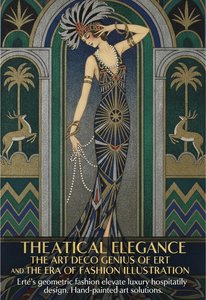
Theatrical Elegance: The Art Deco Genius of Erté and the Era of Fashion Illustration
Explore the theatrical elegance of Erté and the Art Deco era. Discover how his mastery of geometric line and fashion illustration can elevate luxury hospitality design through premium, hand-painted reproductions and bespoke architectural art solutions.

The Gilded Age Reimagined: Exploring the Aesthetic Principles & Enduring Legacy of Art Deco
Explore the captivating world of Art Deco! Discover its origins, defining features, cultural impact & enduring legacy. Expert insights for collectors and design enthusiasts. Shop handmade reproductions at OriginalUniqueArt.

Mariano Fortuny: A Fusion of Art, Fashion & Design – Exploring a Venetian Innovator's Legacy
Explore the captivating world of Mariano Fortuny – artist, designer & innovator. Discover his revolutionary textiles, iconic Delphos gown, and lasting influence on art, fashion & interiors. A collector's guide to a Venetian master.

The Theatrical Elegance of Art Deco: The Line Work and Fashion Genius of Erté
Discover the unparalleled elegance of Art Deco through the lens of Erté. Explore a masterclass in linear precision, theatrical costume design, and high-fashion illustration that continues to define modern luxury and sophisticated interior aesthetics.
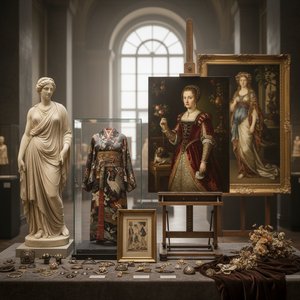
Draped Narratives: Fashion as Symbol & Subject in Historical Art
Explore the fascinating history of fashion as a symbol of power & status in art! Discover masterpieces from Gainsborough to Tissot and learn how clothing shaped societal narratives. Find museum-quality reproductions at OriginalUniqueArt.
